Lifestyle
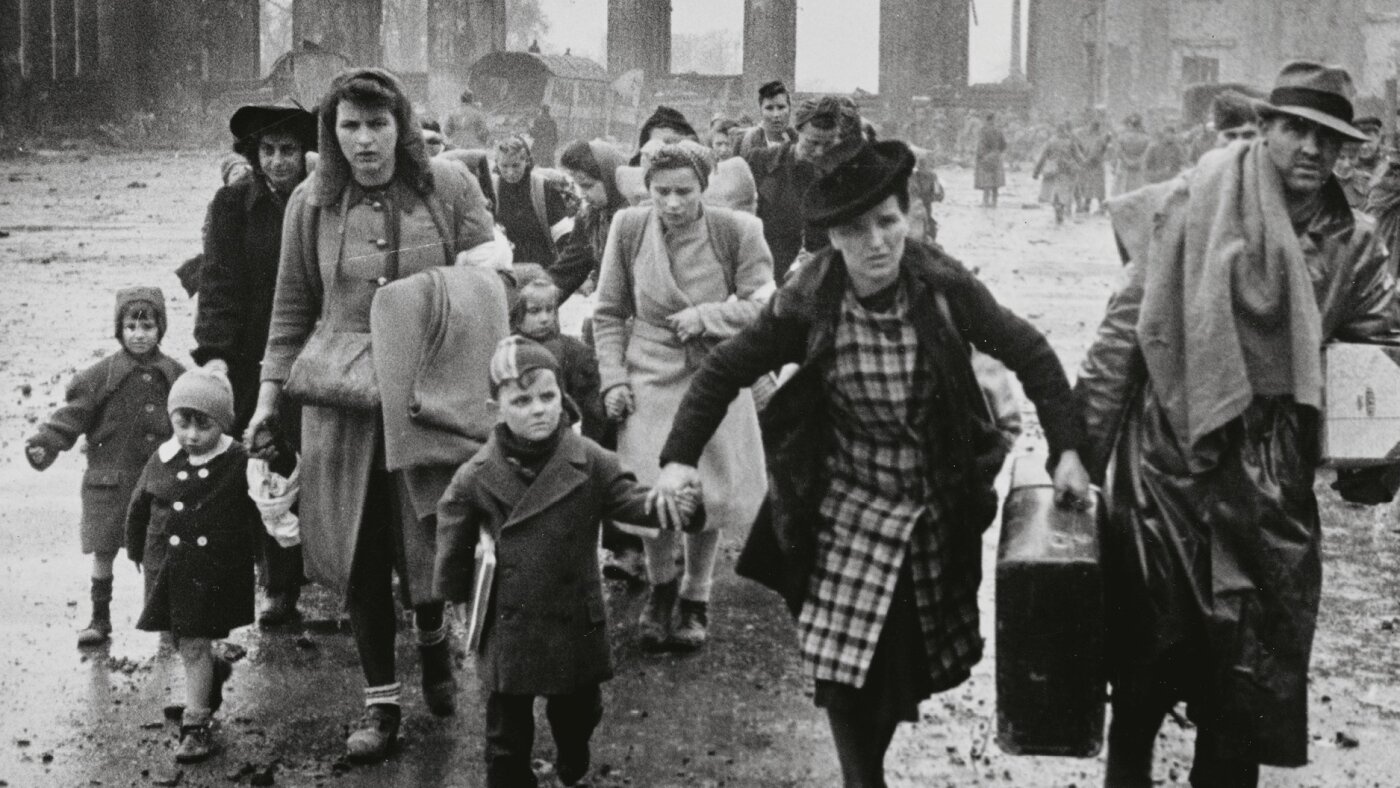
‘Stay Alive,’ about daily life in Nazi Berlin, shows how easy it is to just go along
It’s been 80 years since Adolf Hitler shot himself in his bunker, yet our fascination with the Nazi era seems eternal. By now I’ve read and seen so many different things that I’m always surprised when somebody offers a new angle on what the Nazis wrought.
Ian Buruma does this in Stay Alive: Berlin, 1939-1945, a new book about living in a country where you have no control over what happens. Inspired by the experience of his Dutch father, Leo, who was forced to do factory work in Berlin, Buruma uses diaries, memoirs and some personal interviews — most of the witnesses are dead, of course — to explore how it felt to be in Berlin during World War II. He weaves together a chronicle that carries Berliners from the triumphant days when Germany steamrolled Poland and daily life felt almost “normal” (unless you were Jewish, of course) through the end of the war when bombs pulverized the city, and Soviet soldiers arrived to rape and pillage.
As he writes of air raid drills, food shortages and the incessant deluge of rumors, Buruma has to deal with the difficulty that most ordinary Germans left behind very little record. They kept their heads down and tried to stay alive. And so the book moves among more interesting characters whose multiplicity gives dimension to our usual flattened sense of Nazi Germany.

We meet Coco Schumann, a young Jewish guitarist who risks his life to play the jazz music that Nazis considered degenerate. We meet 15-year-old Lilo, who starts off thinking that Nazi ideals make life beautiful, but comes to admire the greater nobility of those who tried to assassinate Hitler. There’s the dissident intelligence officer Helmuth von Moltke, a conservative who seeks to work from inside against the Nazis (he gets hanged for his trouble). And there’s Erich Alenfeld, a Jew who converted to Christianity and remained a German patriot: He sent a letter to Reichsminister Hermann Göring asking if he could serve.
We also encounter several of the usual suspects, most notably propaganda minister Joseph Goebbels who, when not coercing young actresses into sex, is busy generating false headlines, ordering movie spectacles to distract the masses (he loved Disney films), and monitoring the city’s morale. Always laying down edicts — like ordering Jews to wear the yellow star — he’s the Nazi who may have done most to affect Berlin’s daily life: He even keeps banning and reinstating dancing.

Along the way, Stay Alive is laced with nifty details. How one family trained its parrot to say “Heil, Hitler” to fool the Nazis if they came to arrest someone. How, a crew of filmmakers kept shooting a movie with no film in the camera so they wouldn’t be drafted to fight doomed last ditch battles. How Jewish villas in the posh Grunewald area were bought up or seized by Nazi bigshots, but now belong to Russian oligarchs. And how some of those trying to elude the Nazis became known as U-boats, because they dived into the city’s murky underworld, even hiding out in brothels.
As one who’s written well for decades about historical guilt and denial, Buruma is too savvy to belabor familiar Nazi horrors. That said, he offers two dark truths that strike me as being especially apt in these days when authoritarianism is making a worldwide comeback.

The first is that you can’t live in a dirty system without somehow being corrupted. Whether you were a famous symphony conductor or a cop on the beat, Nazism tainted virtually everyone, forcing people to do and say abhorrent things they often didn’t believe in, and weakening their moral compass. As von Moltke wrote his wife: “Today, I can endure the sufferings of others with an equanimity I would have found execrable a year ago.”
He wasn’t alone. The second dark truth is how easy it is to simply go along. Most Berliners — and even Buruma’s own father — did their jobs, took their pleasures and preferred not to think about the evils under their noses. This, Buruma says, “is disturbing but should not surprise anyone. Human beings adapt, carry on, turn away from things they don’t wish to see or hear.”
If the book has a hero, it’s probably Ruth Andreas-Friedrich, a journalist who didn’t turn away. Along with her partner, the conductor Leo Borchard, she ran a resistance group named Uncle Emil, risking her life to protect Jews, help them escape, and support other groups battling the Nazis. All this makes her much braver than I’ve ever been. But I equally admire her refusal to be sanctimonious about those who, fearing prison or worse, didn’t rise up against the dictatorship. She had the rare virtue of being righteous without being self-righteous.



Lifestyle
Stop and smell the native plants at the L.A. Times Plants booth at Festival of Books
Are you interested in creating a native habitat or have questions about your plants? Come meet experts from the Theodore Payne Foundation and the California Native Plant Society, along with Times staffers, at the L.A. Times Plants booth during The Times’ Festival of Books at USC on April 18 and 19.
In a new location this year — booth 554 in the Red Zone — the L.A. Times Plants booth will be a tribute to L.A. Times plants writer Jeanette Marantos, a passionate supporter of native plants, who died in February.
There will be giveaways of hundreds of 4-inch plants from Theodore Payne and The Times throughout the weekend. Also, anyone who signs up for our free monthly L.A. Times Plants newsletter will receive Jeanette’s Mix, a special packet of sunflower seeds and California poppy seeds that Marantos hoped to offer this year.
Jeanette Marantos at the L.A. Times Plants booth at Festival of Books on April 21, 2024.
(Maryanne Pittman)
We’ll also have colorful plant-inspired stickers and copies of the Weekend print section with Times garden coverage to give away.
Booth visitors will be able to smell and look at plants from the Theodore Payne Foundation and learn how native plants can not only save water but also support local wildlife such as bees, birds and monarch butterflies. Theodore Payne will also have merchandise available for purchase and other seed packets to hand out.
As part of the booth, representatives from the California Native Plant Society will show visitors how to use Calscape, an online database of native plants that allows you to customize your landscape needs based on your ZIP Code.
Stop by the L.A. Times Plants booth (booth 554 in the Red Zone) between 10 a.m. and 6 p.m. on April 18 or from 10 a.m. to 5 p.m. on April 19. The Festival of Books is held on the USC campus. For more information, check the festival’s FAQ page.
Lifestyle
Ziggy Stardust and Hacky Sack: What life was like the last time we went to the moon
David Bowie debuted his Ziggy Stardust persona and released The Rise and Fall of Ziggy Stardust and the Spiders from Mars in 1972 — the last year humans went to the moon.
Evening Standard/Getty Images/Hulton Archive
hide caption
toggle caption
Evening Standard/Getty Images/Hulton Archive
The Artemis II rocket launched on Wednesday, carrying astronauts to the moon for the first time in over half a century.
The four-person crew is headed on a 10-day, 230,000-mile journey around the moon and back — a pivotal test of the Orion spacecraft that NASA hopes will bring future astronauts to the lunar surface as soon as 2028 and Mars after that.
The last time humans went to the moon was the Apollo 17 mission in December 1972.

The final Apollo mission involved three astronauts: Command module pilot Ronald Evans orbited above as Eugene Cernan and Harrison “Jack” Schmitt — a professional geologist, in a notable first — touched down on the moon’s Taurus-Littrow valley.
The pair spent just over three days on the lunar surface, collecting some 250 pounds of moon rock and soil samples. They set multiple records, including the longest stay on the moon (75 hours), the most lunar samples collected and the longest mission duration at 12 days, 14 hours.
NASA astronaut Eugene Cernan, commander of the Apollo 17 lunar mission, is welcomed back to Earth after splashing down in the Pacific Ocean on Dec. 19, 1972.
NASA/Getty Images/Hulton Archive
hide caption
toggle caption
NASA/Getty Images/Hulton Archive
The crew knew they would be the last to visit the moon at least for the foreseeable future, as NASA had decided two years earlier to cancel the remaining Apollo missions, primarily due to budget cuts.
Cernan became the last human to walk on the moon on Dec. 14, 1972. He acknowledged the significance of the moment out loud as he stepped off the lunar surface, seemingly nodding to Neil Armstrong’s infamous words from the 1969 moon landing.
“As we leave the moon and Taurus-Littrow, we leave as we came — and God willing as we shall return: with peace, and in hope, for all mankind,” said Cernan, who died in 2023.
A lot has changed in the 53 years since. Here’s what life was like the last time astronauts launched to the moon.
A banner year for geopolitics, pop culture and technology
Richard Nixon became the first U.S. president to visit China in February 1972.
-/AFP via Getty Images/AFP via Getty Images
hide caption
toggle caption
-/AFP via Getty Images/AFP via Getty Images
The year 1972 is in many ways synonymous with upheaval: the uncovering of the Watergate scandal, “Bloody Sunday” in Northern Ireland, the “Munich massacre” at the 1972 Olympics, North Vietnam’s “Easter Offensive” in the final years of the Vietnam War — and antiwar protests at college campuses and political conventions.
That was the year President Nixon announced that no more draftees would be sent to Vietnam, and the year he visited China in a presidential first.
The Volkswagen Beetle officially surpassed the Ford Model T as the most popular — and most-produced — car in the world. And a gallon of regular gasoline cost 36 cents, or the equivalent of $2.53 a gallon today, according to the AARP.
Herbie, the anthropomorphic Volkswagen Beetle featured in the 1969 Disney film The Love Bug, terrorizes a young woman at a car show in Berlin in June 1972.
Keystone/Getty Images/Hulton Archive
hide caption
toggle caption
Keystone/Getty Images/Hulton Archive
1972 was also a major year for still-beloved cultural creations. It marked the debut of David Bowie’s alter ego Ziggy Stardust, the formation of ABBA, the opening of Grease on Broadway. The top-selling album of the year was Neil Young’s Harvest, and the biggest box office hit was The Godfather, which came out in March.
Fashion was dominated by bold colors and patterns, bell-bottoms, shawls, platform shoes and synthetic fabrics, as part of “the Polyester Decade.” Style icons included Bianca Jagger, Jane Birkin and Diana Ross.
Mick Jagger and Bianca Jagger, pictured in 1972, were among the style icons of the era.
Central Press/Getty Images/Hulton Archive
hide caption
toggle caption
Central Press/Getty Images/Hulton Archive
There was a lot of news, but fewer ways to consume it. Some 95 percent of U.S. households owned televisions, according to Census data, and just three commercial broadcast networks dominated the airwaves: ABC, CBS and NBC. Total print newspaper circulation reached a record 62.5 million, before it began to drop.
And of course, it was a time of innovation — and not just in space. The digital watch made its debut. Atari published “Pong,” the first commercially successful arcade video game. Other key inventions from that year include the floppy disk, the first handheld scientific calculator (the HP-35) and the Hacky Sack. McDonald’s Egg McMuffin entered test markets, and Shrinky Dinks were on the brink of creation.
According to Merriam Webster, some of the words recorded in print for the first time in 1972 include: animatronic, beer pong, bird flu, habanero, garage band, glam rock, lowrider, page-turner, sound bite, spaghetti strap, veggie burger, women’s studies and yard sale. Far out!
Lifestyle
Track your steps? Here’s a less obvious way to improve your health
As far as wellness trends go, small talk isn’t sexy. The same with participating in civic government or helping a neighbor carry their groceries. But connecting with others might be the ultimate form of self-care, according to psychiatrist Joanna Cheek.
Shelf Help is a wellness column where we interview researchers, thinkers and writers about their latest books — all with the aim of learning how to live a more complete life.
In her book, “It’s Not You, It’s the World: A Mental Health Survival Guide for Us All,” published in February, the University of British Columbia professor makes a case for the health benefits of collective care. For example, Cheek cites research that connects altruistic behavior and a sense of purpose with reduced inflammation, as opposed to hedonistic pursuits, which can worsen inflammation.
Perhaps most importantly, Cheek warns how individual solutions aren’t enough to protect and heal us. “Emotional alarms” such as fear, guilt, shame and anger are healthy signals that help us avoid obstacles and find rewards, she says. When it comes to poverty, discrimination, isolation and other systemic problems, a sense of “moral distress” warns us away from harm and toward a more just, equitable society. And taking small steps to connect with others — even as simple as engaging in idle chitchat with a stranger — can be an impetus for broader change.
Portrait of author Joanna Cheek.
(Tegan McMartin)
“I’m constantly trying to think about socializing in the same way I think about exercise or physical activity,” says Cheek. “In the same way I eat a certain amount of vegetables or have a certain amount of quiet time to meditate, I think, ‘Have I had enough social contact today?’”
People obsessively track their steps. They might want to count their social interactions, too, she says. Those moments can build confidence and trust, until the momentum transforms us and the communities we call home.
This interview has been edited for length and clarity.
In the book, you quote the renowned psychiatrist Viktor Frankl, who wrote, “Happiness cannot be pursued. It must ensue.” Why should we focus on cultivating purpose instead of pursuing happiness?
There are a lot of studies that show that cultivating any emotional state — happiness in particular, but also calmness or lack of anxiety — actually backfires. The more we try to feel a certain way, we inevitably won’t, because we don’t have much control over how we feel and then we’ll compare it to some standard of how we should feel, which will only magnify our suffering.
Rather than chase an emotion, which is futile because our emotions are constantly shifting, we can chase purpose, which gives us a lasting sense of accomplishment, because we’re living in line with our values. That’s true wellness.
“It’s Not You. It’s The World” book cover bo Joanna Cheek, MD.
(Hachette Book Group)
How can people who feel isolated take steps toward cultivating purpose with others?
There was a large study that reviewed studies on loneliness. It showed it posed the same risk as smoking 15 cigarettes a day. I was utterly shocked when I read that, and started a deep dive and met [author and professor of psychology at the University of Sussex] Gillian Sandstrom. Her research shows that connections don’t need to be with the love of our life, a tight-knit family or best friends. When we have contact with a barista at the coffee shop, someone delivering the mail or just say hello to a neighbor who’s walking their dog past you, these weak ties actually have similar benefits to having really deep, personal connections. She ran a study with students at her university and found even if they had no friends in class, if they talked to strangers, they felt better and had more wellness indicators.
When we’re separated from others, we haven’t really evolved that fast, so it sets off alarms in our bodies. When you talk to someone at the grocery store, it’s like, “Oh, I’m not alone, I’m OK, I belong to something.” It silences those alarms so they don’t keep going off.
So it’s beneficial for us to have social interactions. How does it help our communities?
The more that we’re connecting with each other, the more we’re talking across differences, the more that we speak with people of different lived experiences, different politics, different cultural backgrounds, different ages, different levels of health and abilities and needs, then we can have more empathy and really take care for each other and make decisions that are based on the truth that we’re all connected.
Building community can start with weak ties. It can be really scary to join a new group in person. When we talk about anxiety, we talk about graduated exposure, where we don’t expose ourselves to the scariest things right away. So sometimes baby steps can help us get comfortable with weak ties. Then, with time, we can move toward deeper contact.
I just had knee surgery this summer, and I ended up doing a lot of water walking in the pool for rehab, and I was amazed at this community pool. There were all these people who were either retired or injured there during the day and I would have so many conversations. And so often we think that these connections don’t matter because we’re not building a friendship that might continue on. What is the point? The point is that through each interaction, we’re building a sense of community for everybody. And it doesn’t have to be more than one interaction. It helps create a sense that we can trust each other and we can learn from each other. It feels good to be in connection and that makes us want to care for one another.
(Maggie Chiang / For The Times)
You mention the term McMindfulness in the book. Could you describe what that means and why it can be damaging?
Yeah, there are a lot of concerns about quick fixes for mental health. I speak a lot about how mental health is really about the health of our entire systems. When we sit with that, it can be overwhelming to recognize that we can’t be well until our systems are well. We can practice wellness, we can do the best we can, but feeling better in a sick world isn’t going to fix us. We need to fix the world. McMindfulness is taking people in a toxic workplace and giving them mindfulness classes and not changing the toxic structures of the workplace. We should ask, “Why are they having these symptoms? And how do we make this workplace healthy so that our workers aren’t constantly falling sick?”
People need a sense of agency to thrive. But examining big problems through a systemic lens can create the impression we don’t have control over our lives. How do you reconcile the two?
Every connection we have, every time we live in a way with care and kindness, when we’re offering mutual aid or caring for our neighbors, those little things become contagious. Day to day, we can choose if we’re going to share our resources, whether that be our time, our care, our inclusiveness. Every time we choose to care for others, it’s contagious. It creates a culture. And every little connection like that matters. So while stress and dysfunction can ripple outward, I think our kindness and our unity and our caring can also ripple outward.
TAKEAWAYS
From “It’s Not You, It’s the World: A Mental Health Survival Guide for Us All”
That sounds wonderfully optimistic.
I think a lot about hope and I think hope has to be active. I think we can’t just passively wish for a brighter future. And so I like to think about what agency I have today. It doesn’t have to be becoming the next world leader or finding a cure for cancer. What matters is every little decision I make to make the world a little bit brighter.
-
South-Carolina5 days agoSouth Carolina vs TCU predictions for Elite Eight game in March Madness
-
Culture1 week agoWil Wheaton Discusses ‘Stand By Me’ and Narrating ‘The Body’ Audiobook
-
Miami, FL1 week agoJannik Sinner’s Girlfriend Laila Hasanovic Stuns in Ab-Revealing Post Amid Miami Open
-
Culture1 week agoWhat Happens When We Die? This Wallace Stevens Poem Has Thoughts.
-
Minneapolis, MN1 week agoBoy who shielded classmate during school shooting receives Medal of Honor
-
Vermont5 days ago
Skier dies after fall at Sugarbush Resort
-
Education1 week agoVideo: Transgender Athletes Barred From Women’s Olympic Events
-
Politics5 days agoTrump’s Ballroom Design Has Barely Been Scrutinized