On Wednesday morning, the Supreme Court heard arguments in Trump v. Barbara, a case challenging President Donald Trump’s 2025 executive order banning birthright citizenship. Justices seemed skeptical of the administration’s argument, but by taking up birthright citizenship at all, they showed how much ground nativists have gained since Trump’s first term. The 14th Amendment is quite clear: “all persons born or naturalized in the United States, and subject to the jurisdiction thereof, are citizens of the United States and of the State wherein they reside.” Trump seeks to overturn this and create a new, effectively stateless American underclass, and he’s gotten alarmingly far.
Technology
Trump’s birthright citizenship ban may fail — but the administration already got too far


Hours after being sworn back into office for his second term, Trump issued an executive order titled “Protecting the Meaning and Value of American Citizenship.” Under the order, children born to undocumented mothers — or to women in the country on non-immigrant visas — would no longer be citizens upon birth, unless the children’s fathers were citizens or permanent residents. The order’s provisions would take effect 30 days after it was issued. It was immediately challenged in court and several federal injunctions prevented its implementation, meaning birthright citizenship remains the law of the land for now.
Trump’s efforts hinge on the meaning of a specific clause: “subject to the jurisdiction thereof.” The administration contends that noncitizens and those who don’t have permanent residency are not subject to the jurisdiction of the United States, since they’re actually loyal to a foreign power. This interpretation would reverse not only centuries of US law but also precedent set by English common law, leaving hundreds of thousands of children without status or stateless upon birth. Karen Tumlin, the director of the Justice Action Center, called the case a “canary in the coalmine for our democracy”: if Trump can end birthright citizenship with the stroke of a pen, then no constitutional protection is safe.
All but the most conservative justices seemed unconvinced. Their questions largely focused on two landmark decisions. One was Dred Scott v. Sandford, the 1857 case in which the court decided that enslaved people were not citizens — which the 14th Amendment was ratified partly to overturn. The other was United States v. Wong Kim Ark, an 1898 case in which the court ruled that, despite the Chinese Exclusion Act, the American-born children of Chinese nationals were indeed US citizens.
After Justice Clarence Thomas asked Sauer how the citizenship clause responds to Dred Scott, Sauer acknowledged that the 1857 decision “imposed one of the worst injustices in the history of this court.” But he argued that Congress specifically ratified the 14th Amendment to grant citizenship to “newly freed slaves and their children” who, according to Sauer, had “a relationship of domicile” to the United States and no “relationship to any foreign power.”
Nineteenth-century legislators, Sauer argued, couldn’t have foreseen the problem of birth tourism. “There are 500 — 500 — birth tourism companies in the People’s Republic of China whose business is to bring people here to give birth and return to that nation,” Sauer said. The current interpretation of birthright citizenship “could not possibly have been approved by the 19th century framers of this amendment,” he said. “We’re in a new world,” he continued, “where 8 billion people are one plane ride away from having a child who’s a US citizen.”
Justice Neil Gorsuch, who was questioning Sauer, appeared unswayed. “It’s a new world,” he agreed, but “it’s the same Constitution.”
“It’s a new world,” Gorsuch said, but “it’s the same Constitution”
Chief Justice John Roberts called Sauer’s examples of existing exceptions — including children of ambassadors or enemies during a hostile invasion — “very quirky” and not necessarily comparable to“a whole class of illegal aliens who are here in the country.” Justice Elena Kagan noted that most of Sauer’s brief focused on people who are temporarily in the country on visas — but Trump’s executive order was clearly intended to restrict immigration, and the president has said so himself.
In 2019, Trump called birthright citizenship a “magnet for illegal immigration.” Last year, presidential adviser Stephen Miller said the US-born children of immigrants are just as much of a problem as the immigrants themselves. “With a lot of these immigrant groups, not only is the first generation unsuccessful,” Miller said in a Fox News interview, citing the Somali-American community, which the administration would soon target in Minneapolis, as an example. “You see persistent issues in every subsequent generation. So you see consistent high rates of welfare use, consistent high rates of criminal activity, consistent failures to assimilate.”
The administration has sought to restrict legal immigration in all its forms: it implemented a steep fee for H-1B work visas, has signaled it may end a work program for international students, and enacted a travel ban on several countries that is even affecting World Cup players. The operation is barefacedly racist. The president famously complained about “all these people from shithole countries” who migrate and expressed his desire to have “more people from Norway.” Last year, he cut the refugee resettlement cap to just 7,500 and prioritized the resettlement of white South Africans. The Department of Homeland Security has linked the “homeland” to a decidedly white vision of Manifest Destiny that, like debates about birthright citizenship, harkens back to the nineteenth century.
Experts are broadly in agreement that most justices weren’t convinced by the administration’s argument, but it’s not clear exactly how the court will rule.
If the court did hand Trump an unexpected victory, a series of grim questions would immediately come into play — starting with when the change kicks in. The order was supposed to be implemented on February 19, 2025, thirty days after Trump signed the order, and would have gone into effect if not for a number of federal injunctions. “If the court sides with Trump, it will have to decide on a date on which to begin applying the president’s interpretation of the 14th amendment,” César Cuauhtémoc García Hernández, a professor of civil rights and civil liberties at the Ohio State University College of Law, told The Verge. “Anyone born on or after that date and described in Trump’s order would be treated as a migrant rather than a U.S. citizen.”
Sauer asked the court to apply Trump’s executive order “proactively” and not retroactively, and backdating the change to 2025 would pose a number of problems, calling the citizenship of millions of children into question.
The Trump administration is trying to narrow who counts as an American while simultaneously pushing for policies that prevent noncitizens from participating in public life. The administration has tried to prohibit states from offering in-state tuition to undocumented immigrants who live there, revoked accreditation for training centers that work with noncitizen truckers, and has broadly sought to turn America into a “papers, please” country.
Trump was in the audience during Wednesday’s arguments, making him the first sitting president to attend oral arguments before the Supreme Court. His presence may have intended to intimidate skeptical justices into taking his side. Norman Wong, a direct descendant of Wong Kim Ark, was also outside the courthouse, according to the New York Times. Wong and his family embody the stakes of this case, and he had a message for the justices: “They will be shamed for history if they get this wrong.”
Follow topics and authors from this story to see more like this in your personalized homepage feed and to receive email updates.



Google’s AI Overviews are running into an interesting problem right now. Earlier on Friday, if you searched for the term “disregard,” the AI Overview section would include a response like what you’d see from a more traditional AI chatbot instead of the typical AI summary, as spotted on X. As you can see in the image at the top of this story, I got an AI Overview response that said, “Got it. If you need anything else or have a new question later, just let me know!”
As of Friday afternoon, however, Google isn’t showing an AI Overview for the term “disregard” at all — instead, it shows a list of news stories about the issue first. Google hasn’t replied to our requests for comment. In a statement to Android Authority, a spokesperson said that “We’re aware that AI Overviews are misinterpreting some action-related queries, and we’re working on a fix, which will roll out soon.”
AI Overviews haven’t just been tripping up over the word “disregard.” When searching for “ignore,” Google’s AI Overview section showed the following message to a Verge colleague:
Message received! I’m here and ready to help. What would you like to focus on today? Just let me know if there’s a specific topic, task, or question you’d like to explore.
When they searched “skip,” the AI Overview section said:
It looks like your message was just a test or a typo! Feel free to ask a question, share a prompt, or let me know how I can help you with your tasks today. I’m ready whenever you are!
As of Friday afternoon, Google is still showing me AI Overviews with broken responses when I search for “ignore” and “skip.”
As funny as this all is, it’s almost certainly just some kind of bug — I expect Google will fix it soon enough. Maybe Google Search itself is tired after everything that happened at Google I/O.
Updates, May 22nd: Google now isn’t showing AI Overviews for “disregard.” Also added a Google statement.

Paul Schrader attends a special screening of “Oh, Canada” at IFC Center in New York City on Dec. 5, 2024. (Dia Dipasupil/Getty Images)
NEWYou can now listen to Fox News articles!
Welcome to Fox News’ Artificial Intelligence newsletter with the latest AI technology advancements.
IN TODAY’S NEWSLETTER:
– Oscar-nominated filmmaker disappointed his AI girlfriend dumped him
– AI layoffs may be backfiring on companies
– Nvidia CEO Jensen Huang warns China has ‘all the chips they need’ despite US bans
BAD BREAK-UP: Dating in the digital era isn’t easy, as one Oscar-nominated filmmaker learned the hard way. Paul Schrader, the screenwriter of Martin Scorsese classics like “Taxi Driver” and “Raging Bull,” revealed in a Facebook post that he had dabbled in developing an “AI girlfriend.”
ROI MIA: A lot of workers have had the same uneasy thought lately: “Is AI coming for my job?” It is a fair question. Companies keep talking about automation, AI agents and lower costs. Some workers hear that and wonder whether their next performance review will come with a chatbot-shaped shadow in the room. However, a new Gartner study suggests the story may be more complicated. Many companies are cutting jobs while adopting AI, but those cuts are not clearly producing better returns.
‘ALL THE CHIPS THEY NEED’: In a stark warning to Washington policymakers, Nvidia CEO Jensen Huang revealed that U.S. technology export bans may be triggering unintended consequences, declaring that China-backed rival Huawei is actively “flourishing in our absence.”
TOUGH CROWD: Former Google CEO Eric Schmidt was met with boos during a University of Arizona commencement speech after discussing artificial intelligence and fears the technology could reshape – or replace – parts of the workforce.
PAINFUL ERROR: Students at Glendale Community College revolted against AI when it was revealed during their graduation ceremony that the robot tasked with announcing the names of the new graduates experienced a glitch and skipped over hundreds of students who were set to hear their names as they walked across the stage.
BATTLE OF THE TITANS: A federal jury ruled against Elon Musk in his lawsuit accusing OpenAI of abandoning its nonprofit roots, finding that neither the tech company nor CEO Sam Altman could be held liable in the matter because Musk waited too long to bring the case.
NEXT-GEN WARFARE: A top U.S. defense contractor pulled back the curtain on AI-powered systems designed to hunt down and destroy swarms of enemy drones as the U.S. rapidly expands its next-generation warfighting capabilities.
‘UNSETTLING’: Standard Chartered CEO Bill Winters on Wednesday walked back comments he made at an investor event Tuesday when he said the bank plans to cut thousands of jobs as it replaces what he called “lower-value human capital” with tech powered by artificial intelligence (AI).
OPINION: There’s a revolution underway in American education, and first lady Melania Trump and the White House are leading the way, Arthur Herman and Beth Herman write.
SLOW DOWN: Waymo is temporarily halting freeway operations for its robotaxi service in several U.S. markets as the company works to address performance issues in construction zones, FOX Business has learned.
‘NOT GOING AWAY’: New York Times staffers got up from their workspaces inside the paper’s New York City headquarters on Wednesday and gathered outside to rally against management, demanding a fair contract and insisting the company puts profits over people. The event, dubbed “Rally for a Fair Contract,” came as the Times Guild is fighting for protections against artificial intelligence, guaranteed hybrid work, affordable health care, pay increases that match the rising cost of living and keeping work within the union.
SWEET MOVE: A Florida community has deployed AI-powered robotic beehives as declining bee populations continue raising concerns about the future of the US food supply.
BLOCKBUSTER DEAL: NextEra Energy is making a massive $66.8 billion bet that America’s artificial intelligence boom will drive a historic surge in electricity demand, announcing plans to acquire Dominion Energy to create the world’s largest regulated utility by market value.
BEAM ME UP: New York City’s LaGuardia Airport is bringing science fiction to the terminal with the debut of an AI-powered hologram concierge designed to help travelers find gates, lounges and baggage claim through face-to-face conversations.
DISAPPEARING ACT: Chatting with AI can feel casual until the question gets personal. Maybe you want to ask about a health concern. Maybe you need help understanding a loan. Or maybe you want career advice without feeling like your question is sitting in a data file somewhere. That is the idea behind Incognito Chat with Meta AI, a new private chat mode Meta says is coming to WhatsApp and the Meta AI app.
APP OVERHAUL: Airbnb is pushing far beyond home rentals, rolling out airport pickups, grocery delivery, luggage storage, car rentals, boutique hotels and exclusive travel experiences as it expands deeper into travel services. The app is also adding boutique and independent hotels in major cities including New York, Paris, London, Rome and Singapore, alongside new AI-powered features like review summaries, listing comparisons and smarter customer support tools.
Subscribe now to get the Fox News Artificial Intelligence Newsletter in your inbox.
FOLLOW FOX NEWS ON SOCIAL MEDIA
YouTube
X
SIGN UP FOR OUR OTHER NEWSLETTERS
Fox News First
Fox News Opinion
Fox News Lifestyle
Fox News Health
DOWNLOAD OUR APPS
Fox News
Fox Business
Fox Weather
Fox Sports
Tubi
WATCH FOX NEWS ONLINE
Fox News Go
STREAM FOX NATION
Fox Nation
Stay up to date on the latest AI technology advancements and learn about the challenges and opportunities AI presents now and for the future with Fox News here.

With Memorial day weekend kicking off the travel season, we’re seeing a lot of deals pop up on travel gadgets, from portable power banks to noise-canceling headphones. One of the best right now is Twelve South’s AirFly Pro 2 Bluetooth adapter, which lets you use your wireless headphones with in-flight entertainment systems so you can enjoy your flight a little more. It’s currently down to $49.99 ($10 off) at Amazon and directly from Twelve South, which is one of its best prices to date.
The Bluetooth transmitter lets you ditch the airline’s wired earbuds in favor of your own Bluetooth headphones or earbuds, which makes for a much better in-flight listening experience. All you need to do is plug the AirFly Pro 2 into the headphone jack on a seatback entertainment system, pair your headphones, and you’re set. It also supports two pairs of headphones at once, so you can watch movies or listen to podcasts with a travel companion.
As Twelve South’s premium AirFly model, the Pro 2 also adds a few welcome improvements that make it even easier to use. That includes the cheaper AirFly SE’s dedicated onboard volume controls as well as an upgraded processor, which enables faster pairing and improved sound quality with less background noise. Its battery should also last up to 25 hours on a single charge, which should comfortably last you through even the longest flights.
The AirFly Pro 2 remains useful long after you land, too. As it works with any standard audio jack, you can also use it to connect your wireless headphones to devices like a Nintendo Switch , older car stereos, and even compatible gym equipment like treadmills.
-

 Health10 minutes ago
Eili Lilly’s Retatrutide Weight-Loss Results Rival Bariatric Surgery
-
 Lifestyle28 minutes ago
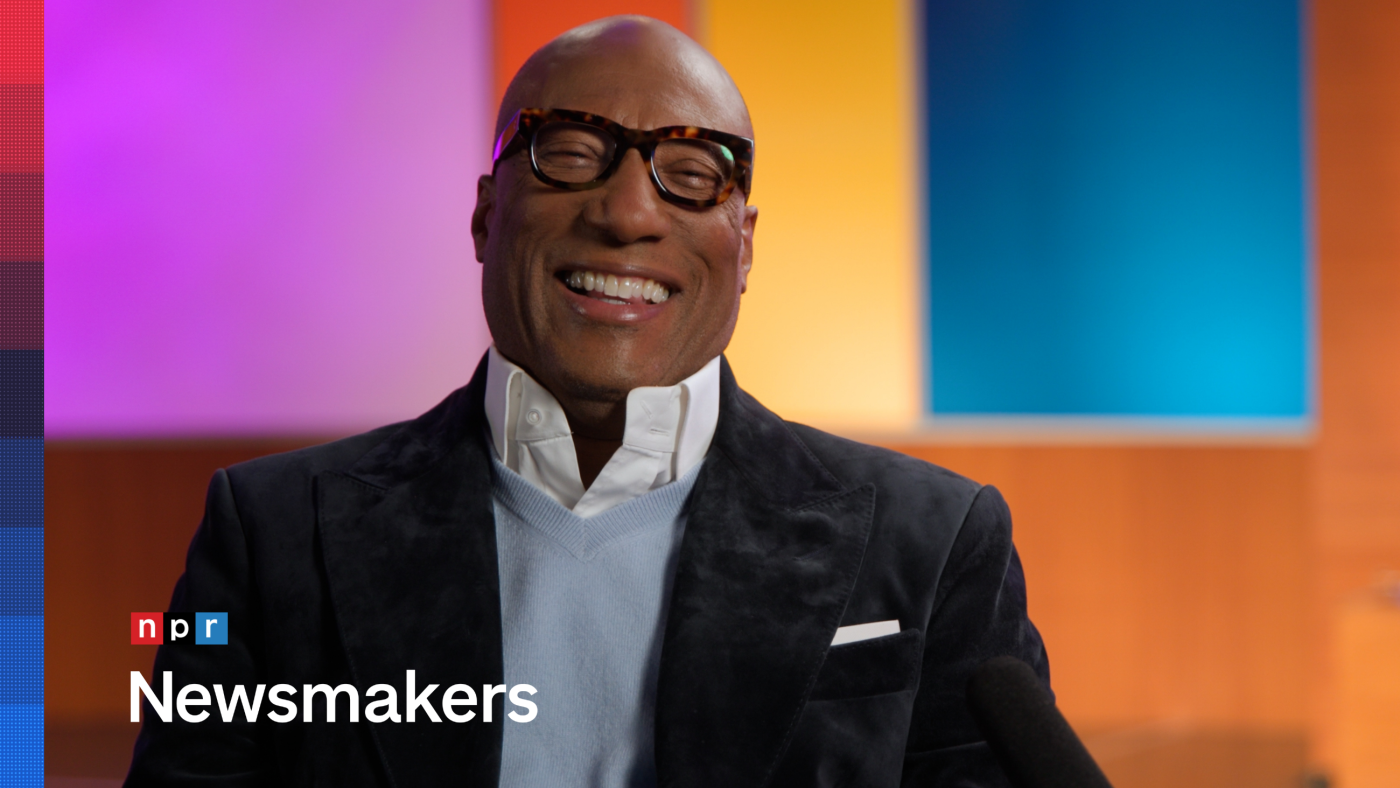
Late night has enough political humor already, says host stepping into Colbert’s slot : NPR’s Newsmakers
-

 Technology40 minutes ago
Google’s AI search is so broken it can ‘disregard’ what you’re looking for
-

 World46 minutes ago
Mojtaba Khamenei using ‘bin Laden template’ to survive, learned from Abbottabad: analyst
-

 Politics52 minutes ago
Military families demand DOJ distribute nearly $800M from French cement company found guilty of bribing ISIS
-

 Health58 minutes ago
Low-impact routine may help adults lower blood pressure at home
-

 Sports1 hour ago
Thunder erase 15-point deficit to take series lead over Spurs as Victor Wembanyama’s 26 points fall short
-

 Technology1 hour ago
Fox News AI Newsletter: AI girlfriend dumps Hollywood filmmaker

