Arizona
Arizona Cardinals roster, depth chart projection after free agency


The primary free agent period is over, and the Arizona Cardinals addressed precious few of their needs.
A year ago, they used this time to add a Pro Bowl edge rusher and two starting defensive tackles to build a roster that looked — on paper — capable of competing for a playoff spot. This time around, their moves have mostly been on the periphery, bolstering their depth without fixing the biggest issues.
As a result, their external perception has rarely been lower. On DraftKings, they are currently +1800 to reach the playoffs — odds twice as bad as any other team. Ten teams have better odds to win the Super Bowl than the Cardinals do to make the playoffs.
So, where does the roster stand? The Cardinals have seven draft picks, most of whom will make the team, but for now, here is our 53-man roster projection.
Offense
Quarterback (2): Jacoby Brissett, Gardner Minshew
Of the two most intriguing quarterback options on the free agent market, the Cardinals missed out on one (Malik Willis) and cut the other (Kyler Murray). Instead, they opted for a backup signing in Minshew, meaning that Brissett remains the presumptive starter heading into draft season. It’s the primary reason that oddsmakers view them as the worst team in the NFL.
Running back (4): Tyler Allgeier, James Conner, Trey Benson, Bam Knight
A week ago, this seemed as if it could be Benson’s backfield. But the Cardinals avoided cutting Conner by re-negotiating his contract, then signed Allgeier to a two-year deal. Now, Benson looks like the third back in a three-man committee. While there is plenty of experience in this room, it’s an odd mix — none of these players profiles as a third-down, pass-catching back.
Wide receiver (6): Michael Wilson, Marvin Harrison Jr., Kendrick Bourne, Jalen Brooks, Xavier Weaver, Andre Baccellia
The Cardinals’ wide receiver corps is among their better position groups, and they augmented it by signing Bourne to a two-year deal. He immediately becomes a reliable third option behind Wilson and Harrison. The issue is further down the depth chart, where none of the Cardinals’ options have any track record of note in the NFL.
Tight end (3): Trey McBride, Elijah Higgins, Tip Reiman
The Cardinals haven’t made any moves at tight end because there’s no need to. McBride is their best player and arguably the best tight end in the NFL. Higgins is a solid yards-after-catch threat who fills his role well as the second tight end. And Reiman is a blocking-first tight end who makes the run game tick. This is Arizona’s best position group.
Offensive tackle (4): Paris Johnson Jr., Elijah Wilkinson, Josh Fryar, Christian Jones
The Cardinals added Wilkinson on a two-year deal in free agency, giving themselves a viable option at right tackle if they don’t find one in the draft. He has primarily been a backup throughout his career, at both guard and tackle, but did fill in suitably as a starter for the Falcons last year. Further down the depth chart, there are some homegrown young players who have shown small flashes in their rare snaps — Fryar, Jones and Demontrey Jacobs. Those players would vie for backup spots, as the roster is currently constructed.
Interior offensive line (6): Isaac Seumalo, Hjalte Froholdt, Isaiah Adams, Jon Gaines, Matt Pryor, Hayden Conner
Seumalo’s three-year deal was the Cardinals’ biggest investment of free agency, and it shores up one guard spot. Center, meanwhile, is secure with Froholdt. The other guard spot, though, looks like a competition between Adams and Gaines. Both players showed positive signs late last season. Pryor, a one-year free agent signing, can play all across the line and will provide depth if he makes the roster.
Defense
Interior defensive line (6): Walter Nolen, Darius Robinson, Dante Stills, Roy Lopez, L.J. Collier, Jonah Williams
The Cardinals made a clear effort to improve their defensive line depth after releasing Dalvin Tomlinson. They brought back Collier on a one-year deal and added Lopez and Williams, the former of whom fills a need at nose tackle. The problem: No one other than Nolen projects as anything close to an impact player. A team can only ride serviceable depth so far.
Edge rusher (5): Josh Sweat, Zaven Collins, Baron Browning, B.J. Ojulari, Jordan Burch
The Cardinals’ edge group is untouched so far this offseason. No additions, no departures. Sweat was excellent in his first season in Arizona, but no one else here has proven to be a high-level sack threat, so the Cardinals could opt for an edge rusher with the No. 3 pick.
Linebacker (3): Mack Wilson, Cody Simon, Owen Pappoe
As expected, the Cardinals released Akeem Davis-Gaither, saving $5.2 million against the cap. But they also have not replaced him, which leaves an awfully thin group. Wilson will likely once again operate the defense as the ‘green dot’ linebacker, but Simon endured some rookie struggles last season. Entrusting him with a starting job from day one of training camp would be a risk.
Cornerback (6): Will Johnson, Starling Thomas V, Garrett Williams, Denzel Burke, Sean Murphy-Bunting, Max Melton
The cornerback room is unique in that it’s the spot where the Cardinals have abundant depth. Every player here could compete for a starting role. And yet, the second outside spot remains a major question mark. Johnson figures to start at one spot, with Williams operating as the nickel when he returns from his torn Achilles. But no one immediately jumps out as a reliable starter opposite Johnson.
Safety (5): Budda Baker, Dadrion Taylor-Demerson, Andrew Wingard, Kitan Crawford, Joey Blount
The Cardinals allowed Jalen Thompson to leave in free agency after seven seasons, then filled his spot on the roster with Wingard, who has mostly served as a backup throughout his career. That serves as a vote of confidence in Taylor-Demerson, who was the third safety over the past two years but will now step into a starting job.
Specialists
Kicker (1): Chad Ryland
Punter (1): Blake Gillikin
Long snapper (1): Casey Kreiter
The Cardinals brought back both Ryland and Gillikin, both of whom were restricted free agents. Gillikin is entrenched at punter, while Ryland will compete with Joshua Karty for the kicker spot, though he appears to have the upper hand. The lone addition to the specialists’ room is Kreiter, who spent the past five years with the Giants. He is also familiar with the new special teams coach, Michael Ghobrial, from their time together in New York.



MARANA, AZ (AZFamily) — Proposals for data centers and ICE detention facilities in Marana are dividing neighbors and turning some against their local leaders.
These are two issues that some Republicans and Democrats are finding themselves agreeing on, as people try to take charge of who and what ends up in their communities.
“Well, first I think everyone on our city council needs to be replaced. What they are doing to Marana and surrounding areas is destroying our future and our kids’ futures,” a Marana resident said.
A recent proposal by the Department of Homeland Security would create an ICE detention center about 3 miles from the community center.
The property proposed for the ICE facility was a minimum-security prison with a capacity of about 500 people. The release said that renovations will increase capacity to 775, but could expand to over 1,300.
DHS officials say the facility would include more exam rooms, a dental area, and other features.
Arizona’s Family asked DHS for some clarification on those numbers and details. DHS released a statement saying, “ICE does not discuss individual pre-decisional conversations, but when a new facility contract is finalized, information will be available on ICE.gov.”
Data center concerns
Meanwhile, a rezoning application for a data center surfaced on the Town of Marana’s website last week.
It’s the second potential data center in the area and has people itching to get to public comment to voice their concerns.
“The detention center- we don’t need that here; no one wants that here. The data center- I mean, we already don’t have water and it’s awful; we don’t need another data center. Look at the ones across the country and what they’re doing,” the Marana resident we spoke with said.
Marana Town Manager Terry Rozema said nothing is set in stone.
“There’s so many factors that could come into considering whether or not something is beneficial to a community,” Rozema said.
Supporters of these projects said they will create jobs.
See a spelling or grammatical error in our story? Please click here to report it.
Do you have a photo or video of a breaking news story? Send it to us here with a brief description.
Copyright 2026 KTVK/KPHO. All rights reserved.

The Pocket Fire burning north of Sedona and sending smoke and ash into Flagstaff has been tricky for firefighters to access because of the steep and narrow terrain through canyons and along cliffsides. These same landscape features mean that many others watching the fire’s rapid progress from afar have worried with little information about which of their favorite hiking trails and scenic viewpoints near Oak Creek Canyon may not look the same again in their lifetimes.
On June 30, the fire perimeter had exceeded 15,000 acres after growing about 4,000 acres overnight. This expansion took the shape of a finger jutting to the west from near the southern edge of the fire while the northern edge broadened along Forest Service Road 9042, where firefighter crews worked to hold it.
For residents of Kachina Village, the community most in the path of the fire’s recent growth and one known to be particularly vulnerable to fire, that northern progress being redirected east and west along the firebreak road was something to celebrate.
For others, fears and questions about singed trails, camping spots, homes and businesses remain.
What is clear is that parts of the distant edge of the popular West Fork trail, which starts at West Fork Trailhead off of U.S. 89A through Oak Creek Canyon and follows West Fork Oak Creek as it twists and turns between stunning red rock canyon walls, are within the Pocket Fire’s active perimeter. The popular panoramic vista from the “Edge of the World” viewpoint in East Pocket off Forest Road 231 was also enveloped by the fire in its early days.
But that doesn’t necessarily mean these areas are unrecoverable as scenic and beloved recreation spots. Wildfires frequently burn discontinuously through forested landscapes, as embers send out new sparks to distant forest patches. So the damage severity from the Pocket Fire in many places is not yet known.
After the Dragon Bravo fire burned 150,000 acres near the North Rim of the Grand Canyon in 2025, a Burn Area Emergency Response team concluded months later that only 1% of the 71,000 park-managed acres within the perimeter showed evidence of a “high severity” burn. The rest had better odds of ecological recovery.
To prevent a need for too much of that in one of the Sedona area’s most treasured spots, though, crews on the Pocket Fire have worked out a “really solid plan to protect all of our identified values and to keep fire out of the bottom of Oak Creek Canyon,” said operations section chief trainee Clyde England of the Southwest Incident Management Team in his morning briefing about the fire on June 30.
England emphasized that crews were focused on keeping the fire out of the West Fork drainage, by conducting backburning efforts and building a buffer on the east side, while limiting progress north toward Kachina Village. They are also working with the Arizona Department of Transportation to remove hazard trees along the roadway, so there is “one less risk we have to worry about” if the fire does jump down into Oak Creek Canyon.
“I want to reiterate that the threat component is still there, as fire is coming down into West Fork,” England said. “There is still a potential for the fire to find some fuels and get some alignment with the winds out of the canyon. We don’t anticipate it. That’s why we still got a big presence up there, just in case some unforeseen event pushes some fire out up on the ridge into that (eastern) corner.”
Another area the team is watching is along the southern edge of the fire in Dry Creek near Bear Sign Canyon, the site of a popular 7-mile hiking trail that passes through “a carpet of ferns with views of white Coconino sandstone cliffs,” according to a nearby business offering lodging for hikers. England said the team has been able to “insert people” into that area over the past few days to build hand lines and work with helicopters on bucket drops to help prevent the fire from spreading to the Seven Canyons area and Enchantment Golf Resort.
The historic Fernow Cabin, a former U.S. Forest Service guard station, is also safe so far, England said, thanks to defensive firing by crews over the weekend that will continue for a few more days to keep the structure intact.
On the northwest edge of the fire, a containment line along Forest Service road 231 is “looking really good,” England said, with a recent expansion of the fire map there reflecting defensive fire efforts rather than wildfire growth. That effort will help protect the power lines to communities in Oak Creek from damage. Fire retardant drops and reinforced dozer and hand lines have helped prevent the fire from progressing over the 536 or 535 roads.
“If we can get it down in this canyon, use the weather patterns, the fuels, the rocky terrain to our advantage, we can find a way to choke that out,” England said. “So our ops are all looking good, our confidence is there.”
Addressing the southwestern corner of the Pocket Fire perimeter, England struck a more somber tone, acknowledging expansion of flames across Round Top Mountain toward Secret Canyon.
That’s the reality of wildfire in the American Southwest, scientists say, in an age of the drying and warming influences of climate change combined with ever-expanding human development and juxtaposed against federal funding cuts.
“The anticipation is that some of this fire will be on the landscape for a while,” he said. “There’s just no access and no way to get folks into that country. You might see that fire and that smoke for a while.”
Joan Meiners is the climate news and storytelling reporter at The Arizona Republic and azcentral.com. Send tips or questions to joan.meiners@arizonarepublic.com or follow her work on Instagram at @joan_bikes_arizona.
Have a news tip? Contact The Arizona Republic and azcentral.com at newstips@arizonarepublic.com.


The Arizona Republic. Here for it. Are you?
You can play a vital role in supporting local journalism that you and your community can trust. Subscribe today.
Arizona Republic
Flags were lowered in Arizona on Tuesday, June 30, in honor of the 19 Granite Mountain Hotshots who died fighting the Yarnell Hill Fire in 2013.
Gov. Katie Hobbs ordered flags be flown at half-staff from sunrise through sunset on Tuesday to honor them on the 13th anniversary of their death.
Sparked by a lighting strike, the Yarnell fire became nationally known as an emblem of tragedy. The crew, which was part of a unique municipal-level firefighting effort, was encircled by flames reaching 2,000 degrees with no way out. All but one of them died.
The blaze was the deadliest for U.S. firefighters since 1933 and the greatest loss of U.S. firefighter life since the Sept. 11, 2001 terrorist attacks.
“Hotshot crews take on dangerous and difficult firefighting to keep Arizona communities safe,” Hobbs wrote in her a statement. “We recognize and honor the sacrifice and bravery of the Granite Mountain Hotshots. This will always be a day we mark with mourning, reflection, and deep admiration for the members of this crew, their families, and the wildland firefighting community.”
Here’s when flags are traditionally lowered in the United States and the difference between half-mast and half-staff.
What is the difference between half-mast and half-staff?
The terms “half-mast” and “half-staff” both refer to lowering a flag to honor or mourn someone, but they are used in different settings.
“Half-mast” traditionally refers to flags flown on ships or at naval stations, while “half-staff” is used for flags flown on land. In the United States, “half-staff” is the term most commonly used for government buildings and public flag displays.
When are flags flown at half-staff in the US?
In the United States, flags are lowered to half-staff on certain national observances and following the deaths of notable public officials.
According to the Arizona state website, the U.S. flag is flown at half-staff on these days:
- Memorial Day, when the flag should be displayed at half-staff until noon only, then raised to the top of the staff.
- Peace Officers Memorial Day, unless that day is also Armed Forces Day.
- Patriot Day.
- National Pearl Harbor Remembrance Day.
- National Firefighters Memorial Day.
The president of the United States may also order flags to be flown at half-staff after the death of a notable public figure. In those cases, the length of time depends on the person’s role:
- 30 days from the death of the president or a former president.
- 10 days from the day of death of the vice president, the chief justice or a retired chief justice of the United States, or the speaker of the House of Representatives.
- From the day of death until the interment of an associate justice of the Supreme Court, a secretary of an executive or military department, a former vice president or the governor of a state.
- The day of death and the following day for a member of Congress.
The governor may also order flags lowered to half-staff after the death of notable current or former government officials or members of the armed forces who die while on active duty.
In Arizona, the governor can also require that the state flag be lowered at all state, institutional and educational buildings. The law also allows the state flag to be lowered on the death of an incumbent elected state officer for seven days beginning on the day following the death of the officer.
Arizona Republic reporter Laura Gersony contributed to this article.
-

 Arizona4 minutes ago
Proposed data centers, ICE facility create mixed emotions in rural Arizona town
-

 Arkansas7 minutes ago
Central Arkansas bike trail breaks ground in Cabot – The Arkansas Leader
-

 California12 minutes ago
California bill to block registered sex offenders from local office rejected by Senate committee
-

 Colorado19 minutes ago
Where to watch Miami Marlins vs Colorado Rockies: TV channel, start time, streaming for July 1
-

 Connecticut22 minutes ago
Lamont signs law in Norwich to stop pay to contractors violating wages
-

 Delaware27 minutes ago
Delaware has gotten these 15 verbal commitments from football recruits
-
 Florida34 minutes ago
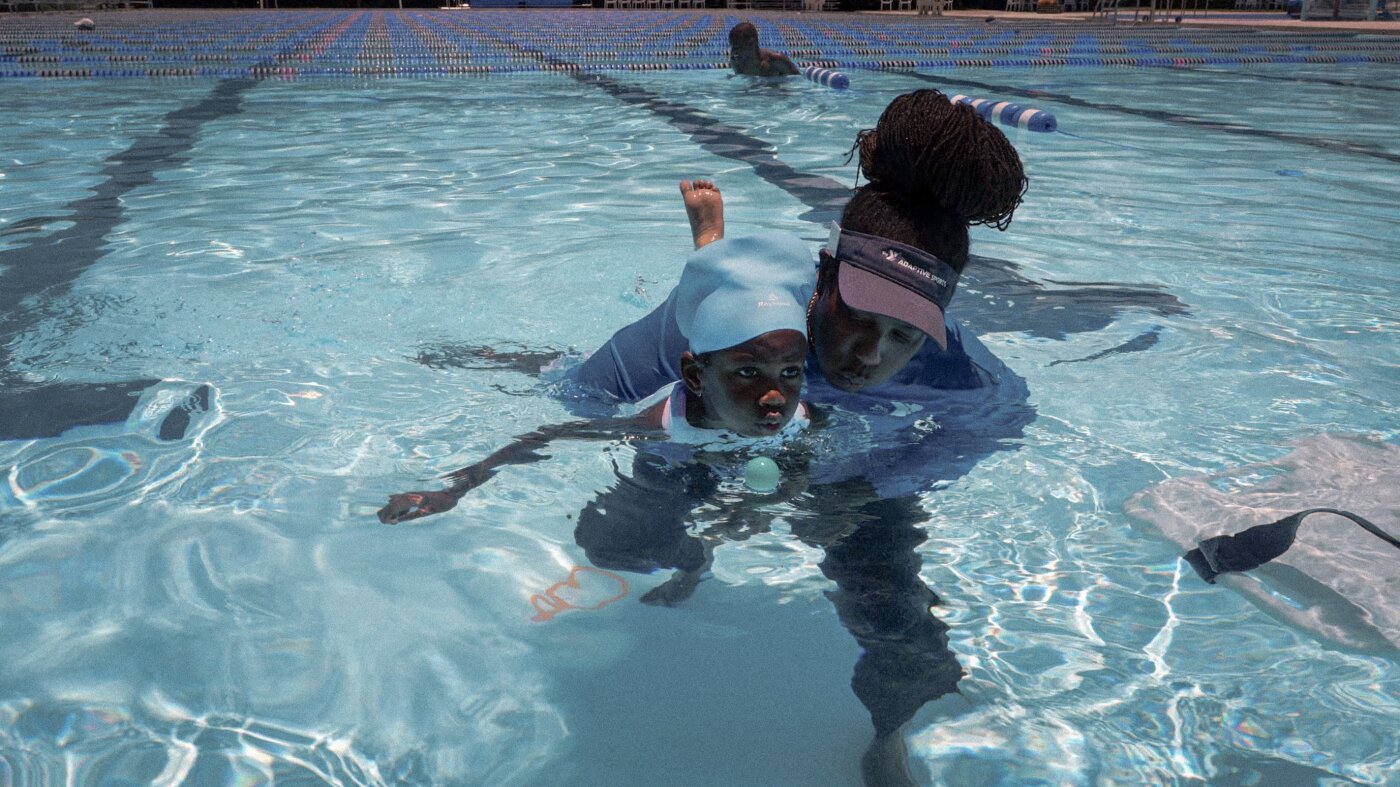
Kids with autism are prone to drowning. Florida is trying to prevent that
-

 Georgia37 minutes ago
Bradenton man wanted for murder is found hiding in Georgia

