San Francisco, CA
San Francisco braces for strong winds and rain during this week’s storms


In San Francisco, there is already concern about potential impacts from rain and winds during the storms expected this week. San Francisco’s Department of Emergency Management said it has been coordinating with the National Weather Service and other agencies since earlier this week to prepare for the storms.
As of Sunday night, rain started to come down hard onto San Francisco streets, where some roadways already saw minor pools of standing water.
The Department of Emergency Management is urging residents to prepare immediately by securing loose items, charging devices, and getting ready for possible power outages. Residents should also expect possible delays in transit and are advised to allot extra travel time.
Even if you’re not traveling on the roads, you may still face travel delays. At the San Francisco International Airport, the duty manager told NBC Bay Area that the airport experienced weather-related ground delays for much of the day on Sunday, and by Sunday night, the average ground delay was four hours and 14 minutes. The duty manager also said that because of the winds coming from the south, aircraft are currently directed to take off and land in a different direction than normal.
San Francisco city crews have been working through the weekend to keep leaves out of storm drains and to respond to downed trees.
In the Amazon Crocker neighborhood, one large portion of a tree came down on Drake Street following what neighbors said was several hours of light to moderate rain. Neighbors said the broken section of the tree blocked off the entire street.
San Francisco Fire crews responded shortly after and were able to clear the roadway. No people were hurt or property was damaged in this incident.
“This is one of the things that San Francisco people should be worried about: trees coming down, the drains getting full, you know — clean the drains, and just keep an eye out for each other,” said Xavier Haro, who lives right across from the tree that fell.
If you see a downed tree in San Francisco, call 311 to report it if it is not an emergency issue. If it is an emergency, call 911.
If you want hyperlocal alerts in San Francisco, you can also text your zip code to 888 777.
A spokesperson for the San Francisco Department of Public Works said that sandbags will be available to residents Monday through Saturday (including on the President’s Day holiday). You can find more details here.



SAN FRANCISCO (KRON) — San Francisco District Attorney Brooke Jenkins announced multiple hate crime charges, as well as assault and vandalism charges against an Oakland man for an incident that happened in the Castro District last month.
On Thursday afternoon, Hans Haken pleaded not guilty to one felony count of assault with a deadly weapon, one count of assault with force likely to cause great bodily injury, one count of vandalism, one count of hit-and-run, and one count of reckless driving.
Prosecutors also allege each of the felony assault counts was a hate crime.
“In San Francisco, we have zero tolerance for any hate, hateful acts, certainly that cross the criminal line, and we will do everything that we can to protect our residents from these types of incidents,” said Jenkins at a Thursday afternoon news conference.
It was on May 16, around 5:30 p.m., when prosecutors say Haken spray-painted a homophobic slur on the wall next to Chartreuse by Roje, a gay-owned floral boutique in San Francisco’s Castro District.
“It was a reminder that even though we’re here in Castro, San Francisco, we live in this well-protected bubble that we have created very passionately and strongly, that that can still happen,” said Jeffrey Dumlao, the owner of Chartreuse by Roje. “If anything, that is what’s scary, that it happened here in broad daylight of all times.”
Dumlao says his store had already closed by that time, but Justin Donnelly, who lives above the store, heard the spray-painting and came down to confront the man and tell him to stop.
“He just became very agitated,” Donnelly said. “I tried to remain calm and just tell him, like, sir, you know, I don’t, I don’t, I’m not involved in any of that. I’m just, I live here, right, and this is, this is my home, and you know, this is vandalism.”
Donnelly says when he took a picture of Haken’s license plate, Haken got in the car and tried to run him over. Then, prosecutors say he got out of the car and punched Donnelly in the jaw while uttering homophobic slurs.
“I’m definitely doing a lot better than I was. It’s been, I don’t know, a month or so,” Donnelly said.
He says the incident has shaken him, but he’s been lifted up by the community’s support and law enforcement.
“A lot of people have said, ‘oh my god, I can’t believe something like this could happen in San Francisco, of all places.’ And the fact is that something like this can happen anywhere, but in San Francisco, we don’t stand for it, and we deal with it, so, so that makes me feel good,” Donnelly said.
In announcing the charges, Jenkins pointed out the climate in this country has become more hostile to the LGBTQ community. She says that makes it even more important for elected officials to protect that community, just like they do every other community.

McKivitz Sends Clear Message on 49ers Future: ‘I Want to Be on That 10-Year Wall’
As Colton McKivitz enters his seventh season with the 49ers, he has his sights set on a milestone that represents trust and commitment to the organization: reaching the organization’s 10-year wall and joining a list of names that includes legends Joe Montana and Bryant Young.
George Kittle Catches FIFA World Cup Action | Off the Field
The 2026 FIFA World Cup is underway, and tight end George Kittle is showing his support for Team USA. Following the 4-1 USA win over Paraguay, Kittle shared his excitement on social media tweeting “4 is good right?”
5 Things to Know: Offensive Lineman Enrique Cruz Jr.
The Chicago native adds size, athleticism, and versatility to the 49ers competitive offensive line room. Here are five things to know about Enrique Cruz Jr.
San Francisco, CA
Artwork quilt unveiled at San Francisco dirt alley that was mistakenly bought at auction

In the fall of 2025, CBS News Bay Area first brought you the story of a Sunset couple that had the winning bid for a piece of property next to their home. They thought they were getting the duplex next door. Instead, they got a small patch of land known as Dirt Alley.
This story has many chapters, but it ended with a community celebration.
The final chapter in the story of Dirt Alley was written Wednesday night as they unveiled the tiles of artwork on the pavement.
“I’m very happy today,” JJ Hollingsworth said. “It’s just amazing that these artists that I’ve been working with and sold the alley to have come through with this incredible art.”
JJ Hollingsworth was the original property owner. She took out $25,000 from her retirement to pay for this parcel in a city auction. She thought she got a bargain for the duplex next door. When she found out it was actually the alley, the stress led to health problems and a lot of anxiety.
“I’m trying to forget, but I caused all this,” she said. “That’s what happened. I caused all this.”
Then came an email that would help her get out of the Dirt Alley nightmare. A group of friends from San Francisco was interested in buying this 82-foot-long alley.
“I know she was really stressed out when she first bought this and kind of didn’t know what she was going to do with it,” Theo Bleier said. “It’s really lucky. We were going to buy a different parcel, and we lost the auction. It was more than we wanted to spend. We felt really lucky the coincidence worked out, and we were able to help out JJ.”
The new owners then had the idea of laying an artwork quilt on the pavement and took submissions online.
“I think we had about one million people visit the website at least,” owner Patrick Hultquist said. “1.2 million, I think is the number of people that visited the website.”
The tiles with the most votes made it onto what is now called Notion way.
“Now, it’s not an official name of the street. It’s an unofficial name, but we did get an official-looking sign,” he said.
JJ Hollingsworth, who is a music composer, wrote a ballad called Notion Way for the special occasion. What started as a horrible mistake ended up bringing the community together.
“It’s really beautiful,” neighbors Tom Goslinga & Nesha Niezrecki said. “It’s how culture gets created in a lot of ways. People kind of being creative with an interesting situation. It’s really cool.”
While Hollingsworth is grateful for how this story ended, she says she learned a valuable lesson from this whole experience.
“Read the fine print and ask a lot of questions,” she said.
-
 Lifestyle10 minutes ago
What does freedom actually look like? : It’s Been a Minute
-

 Technology20 minutes ago
Barret Zoph is out at OpenAI again after just five months
-

 World25 minutes ago
Iran hardliner behind US deal warns Tehran won’t honor agreement if Trump fails to deliver
-

 Politics32 minutes ago
Top GOP lawmaker rallies around conservative school board member facing calls to resign
-

 Sports40 minutes ago
2026 World Cup Odds: How Far Can Mexico Go After Winning Group A?
-

 Technology47 minutes ago
6 in 10 identity crimes now begin with a new account
-
 Business50 minutes ago
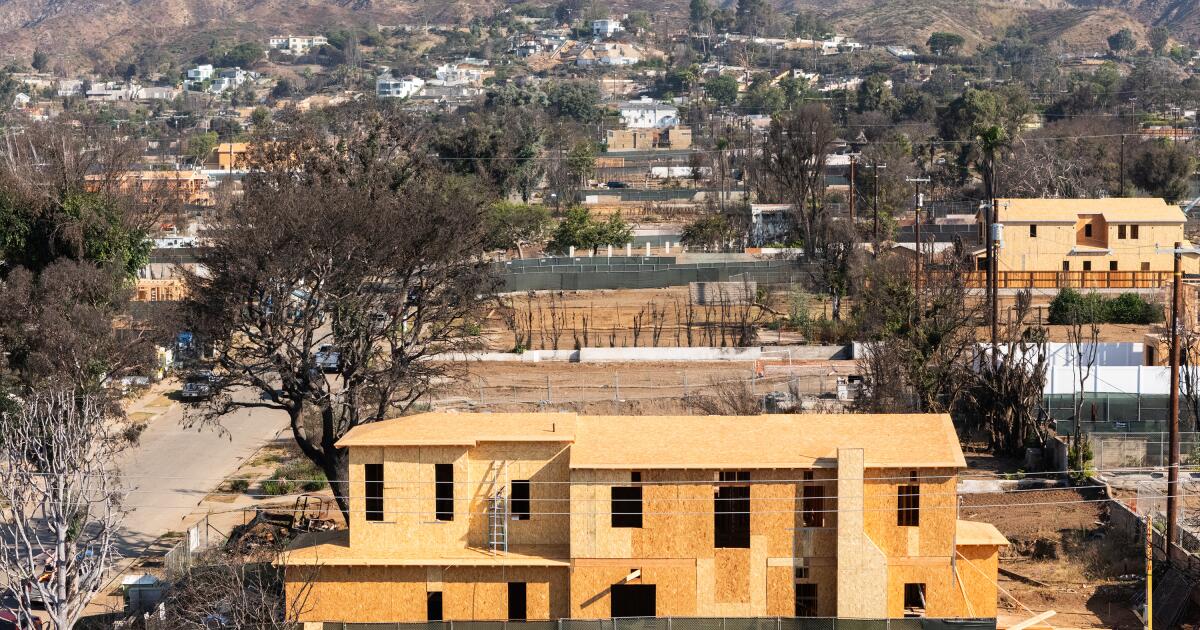
January 2025 wildfire victims seek tougher penalties against State Farm over claims handling
-
 Entertainment55 minutes ago
Review: ‘Sugar,’ with Colin Farrell as an alien private eye, gets a new and improved second season

