Entertainment
Ryan Sickler transforms near-death experience into unlikely comedy mission

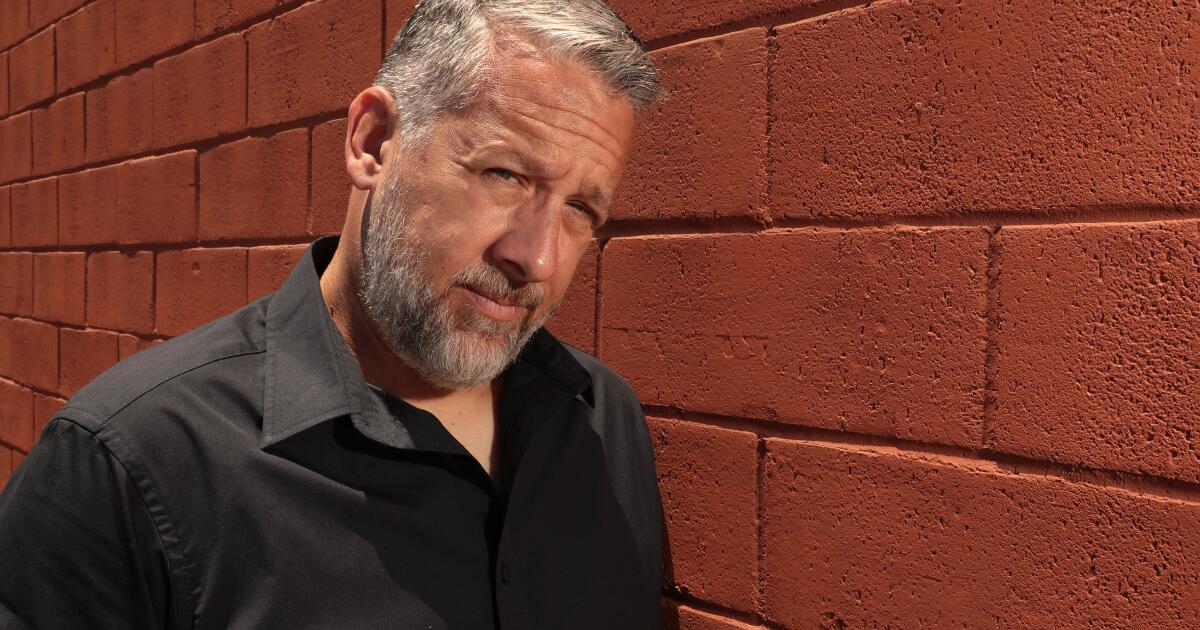
Ryan Sickler is used to asking the question that people are afraid to ask: “Is there anyone here who has ever actually died and come back and would be comfortable talking about it in front of all of us?”
It’s not your typical comedy show crowd work but it has profound results. During his special “Ryan Sickler: Live & Alive” released on YouTube in October, a woman in the audience talked about a near-death experience as a child where she rode her bicycle in front of a neighbor’s station wagon. But Sickler pointed out that this remarkable level of candor in the audience is something he continues to marvel about. In fact, he said they did two shows the night they taped his special and during the second show two people in the crowd said they had near-death experiences.
“When I ask the question, I know there’s someone in the crowd that’s like, ‘There’s nobody in here that’s died and come back,’” Sickler said. “So now they’re all very excited to listen too. Like, what happened to this lady, or what happened to this guy? You know, there’s been some wild ones, some real funny ones out there too.”
Given how many comedy specials are being released on various streaming platforms, he says that “we have lost the specialness of the special.” But Sickler said since coming so close to death and being able to talk about it with candor and relatability, he is still calling his latest self-produced YouTube special, special. It now has more than 1 million views on YouTube. Sickler has been on the comedy scene for more than 30 years and released his comedy special “Lefty’s Son” in 2023. He also hosts the “HoneyDew Podcast.” His comedy career has often incorporated his lived experience with a rare blood-clotting disease called Factor V Leiden that almost killed him.
But these days, he’s grateful to be alive, to have been able to wake up when it looked like he might not, to watch his daughter continue to grow up and the laughs along the way. Sickler has long been candid about his chronic health issues with his comedy but he has found particular meaning in doing crowd work when he performs, that talks about death and what it means to live.
The Times recently spoke with Sickler about his special and how he thinks about his sense of health, humor and mortality.
Ryan Sickler in the studio where he films the “HoneyDew Podcast.”
(Al Seib / For The Times)
What did you want to say this time around in your new special?
My first special was something that was a bit of a hybrid of stuff that had been out there and around, but I didn’t own it. It was out there on people’s platforms. They’re making the money off of it. And so I did a bit of, “Let me get this stuff on my channel where I can control it.” And then the other part of that special was becoming a new single dad, all those things this time, specifically, I really just wanted to talk about what had happened and the results after that. I follow these comedy accounts and in October, there were 31 stand-up specials that hit between Netflix, Hulu, YouTube. November was 30. This month was a little slow because the holidays, but it was still at 18 the last time I checked. So I don’t think there’s anything special about stand-up specials anymore. You’re in an environment now where there’s a stand-up special a day, people are doing that with podcasts. There’s so much content going on out there, and I feel like a lot of it is the same. So I this time wanted to just take something that happened very personal to me, this incident, and then tell the story, not only behind it, but what happened after and I was really proud of being able to just focus on that and make that into this special instead of just my observations on this or my thoughts on that. I’m a storyteller and I really think that’s what art is.
When did you realize you had the courage to write about this near–death experience?
I know I had the courage to write about it a long time ago. When I’m making people laugh at my father’s funeral and things like that, I knew I was comfortable being able to take on the material. But what I didn’t know was, could I make it funny? Could I make it relatable? Could I make this one thing that happened to this one person on this rock in outer space matter to anybody and make them care? Because it’s not like we all had this happen to us. This is just one thing that happened to this one dude. So that was really what I was more worried about, is like, can I get this message across and make it relatable, funny and entertaining at the same time? Which is why I threw in those really expensive light cues.
It can be very challenging to hear about these traumatic [near–death] experiences that people have had. How do you absorb that and not absorb it too much?
I’ve been doing this show for so long that it does start to wear on you a little bit hearing a lot of the trauma. So I created a new podcast a couple years ago called the Wayback, which is just fun, funny, nostalgia. So that also for me, was like, let’s not dig into the tears and let’s just laugh about growing up. So that was one way where I could still keep it in my lane and do my job, where I alleviate that a little bit. But the other thing, and I make fun of myself a little, is I’m like the paramedic at the party now. I’m the guy that’s like “You think that’s bad, wait until you hear this.” “This one guy …” “This one lady …” You know what I mean? So I’ve almost become sort of their voice, and I have absorbed it in a way that isn’t so negative, where I carry it home with me. I always forget the quote how it’s worded, but it’s something to the tune of, if we all stood in a circle and threw our problems in the middle, we’d all take our shit right back. It’s like you know what, that’s what you’re dealing with? I’m gonna go ahead and take mine.
How is hearing all these stories and connecting with the crowd and fans in this way [about near–death experiences] changed how you think about your own sense of mortality?
Even with my close call, like, that one angered me, because you start to think about things. You never know how you’re really going to go. You might have an idea if you’re getting older and cancer runs in your family, whatever, but the fact that you could go to a hospital for a simple surgery, they don’t listen to you, everything’s there in your paperwork. You’re your own advocate. You’re doing all the right stuff by yourself, and you’re among professionals, medical professionals, not Yahoos, and you can still have someone else make a mistake and your life is gone. That started me thinking a lot like, “Oh man, for no fault of my own, I could also be gone.” So I go day by day, and I try to be happy day by day. And I’m not going to lie, I also like to know I got a little something tomorrow too.

Do you think that incorporating death and near–death in your comedy helps people work through their own feelings about death and grief?
I only say yes to that because the amount of emails I get, the amount of feedback we get, the amount of guests that still continue to show up [to support] the Patreon. I’ve definitely found, I would say, a purpose in my people. If you’re someone saying you’re a jerk for laughing at this lady talking about cancer, we’re not laughing at her cancer. We’re laughing at something, some light that she found in the darkness of this and trying to have a moment here together, all about, “Hey, there’s some positive ways to look at things at your lowest.” So I know it’s helped people. I mean, we have, over the years, probably thousands of emails now. We have people telling us how much it’s helped. And I mean just through podcasting, I found out I have this blood disease. I was 42 at the time, and already been podcasting. There’s a lady I went to high school with. She’s like “Ryan, my son is 17. He started clotting.” I said, “Go ahead and check for this.” He listens to the podcast. This kid has it. I said, “Well, bad news. It’s genetic.” Now the whole family’s got to get tested. And if you have it from one parent, it’s not great, but having it from two is bad. The whole family gets tested. The parents have it. She’s got it from both her parents. So I can’t get over the fact that a woman I knew when we were children, 35 years later is like, “Hey, that thing you’re talking about on your podcast, my kids, my family, we all have it.” And then I’ve talked about another disease I also have, called Charcot-Marie-Tooth disease, which is CMT. And from bringing that up, people hit me up on that like “I have it, no one ever talks about that.”
What have you found to be one of the positives — besides surviving — of your near–death experience?
Gosh, so many. I have a child, so getting to see her grow and really taking care of my health and things. Not that I wasn’t before, but just I dove in even deeper. I went and got what’s called a gallery test for prescreening for cancer. I started doing all these blood works and like, “Let’s go find out everything you know, because I didn’t find out that I had this blood disease until I was 42 when I clotted.” I’m living my whole life, not even knowing I have this thing and and if I don’t clot, there are plenty of people out there that live to 100 years old and have it. It’s really made me appreciate life and trying to take things day by day. I also was living in a little single-dad pad at the time. We had no central air. We had tandem parking. We were above dumpsters. Our laundry was outside in a room with quarters. And when I got home — I’m still on a walker — and I was like, “What are we doing? We’re going to die without central air? Are we going to die with a bucket of quarters on the fridge? No more.” And so I moved my home, I moved my studio, I did all these things that are, like, the biggest thing you can do in life. We’re going to roll the dice, scared money don’t win, and we’re just going to go for it. Also, as a comedian and anybody in entertainment will tell you, a lot of times you work scared, you hold that money and you wait until the next thing comes. And also, as a single parent, you know we got to budget. And I was like, no more. We’re not going to go out and buy 10 Porsches. We’re going to be responsible. But I was on point with let’s go get a living will and trust. Let’s make sure we have that life insurance policy. Let’s make sure we have all the proper paperwork and stuff done before we do anything like go on a vacation, you know, let’s get this done now and get it done proper.
What do those conversations look like, if you have them at all, about encouraging your male friends to go to the doctor or encouraging them to take care of themselves, physically and emotionally?
I would say the conversations go something like this. My younger brother is like, “Hey, man, I just went in for a test, and they’re telling me I got to have an old school triple bypass,” and then that’s what we all get tested. “Hey guys, I found I got a blood disease.” “Oh man, we all better look into it now.” That’s usually how it goes. I don’t know many men who are proactive. There are a few of us these days. But it’s usually something horrible happens and then we’ll be proactive about everything else.
Do you have male fans who also say “I [saw] your special … I went to your show, and it made me go [to the doctor]”?
Yeah, but I’m saying, though, it still took them to come see a professional clown to get them to go to the damn doctor. I actually have been very good about going, because everyone in my family died. So I’ve been proactive in the sense that I go get two physicals a year. I’ve been doing that since my 20s. I always tell my doctor, if I can go buy expensive sushi, if I go buy weed, if I go buy all these things, I can put money into myself here and come see you a second time and pay for all that. So I do two physicals a year, and I’ve been doing that forever. But I’ve never done any sort of like gallery test. And now we’re in our 50s, so we got to go get the prostate and all that. That’s when you start hearing about that stuff. There’s a lot of ignorance that goes into it as well. I just had a guest here on the “HoneyDew” and said he didn’t go to a doctor or anything for over 20 years because he was just scared of what they were going to tell him. He was scared to get the bad news. You can kind of get the bad news and you could turn that into good news. It doesn’t need to be deadly news.
How do you know when you’ve been too open?
It usually tends to be a personal thing where someone’s like, “I don’t really appreciate you bringing that up.” So I don’t anymore. I’m always cognizant of [saying] like, “Hey, would it be cool if I talked about this or whatever?” I feel like the question you’re asking me would have been great for me just before I started, like, the “HoneyDew” and stuff because this is what I really want to talk about. Everyone wants to talk about the best and bring their best and I just really do want to hear about, you know, the trauma bond. I want to hear about the worst times in your life. I want to know because, honestly, that tells me so much more about you than you verbally talking about you. You know who you were in those moments, how you reacted, how you behaved, how you’ve adjusted. Those things really end up defining who you are, and that’s more what I want to know about. I don’t want to know your best polished version of yourself.

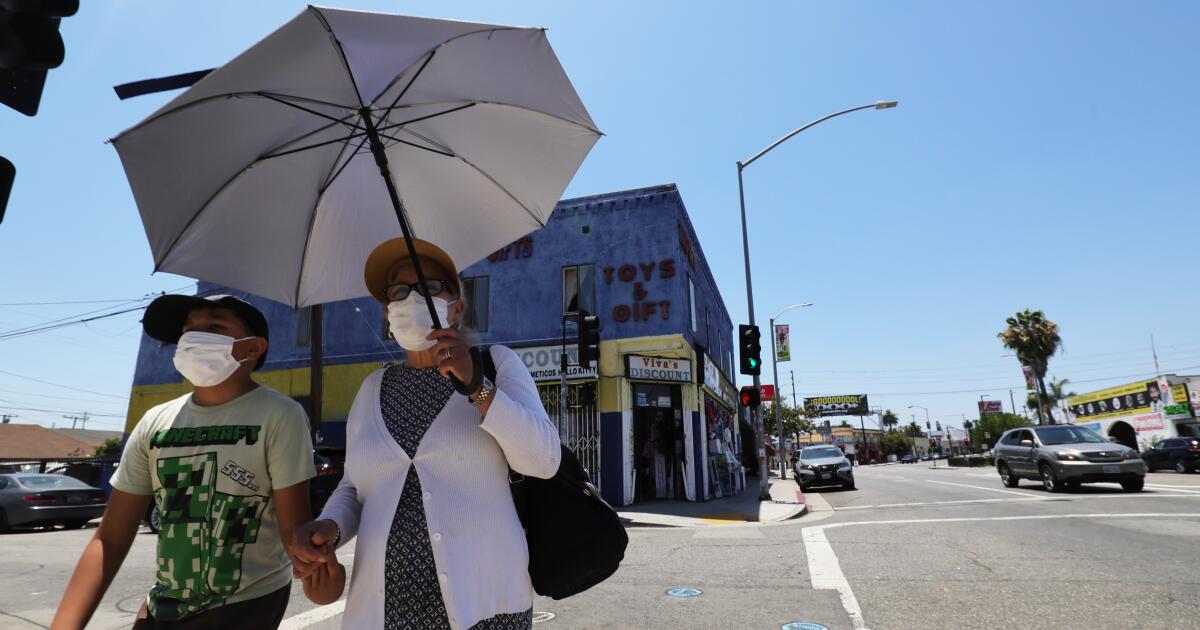
The National Weather Service has issued a heat advisory for this week that includes Los Angeles County and other parts of the Southland, especially in valleys and away from the coast.
Temperatures are expected to rise in the Santa Clarita Valley, the east and west San Fernando Valley, as well as parts of the San Gabriel Valley and northwest L.A. County mountains beginning Tuesday and lasting through Thursday, with warm, seasonably elevated fire weather conditions, according to the National Weather Service.
Forecasts indicate the mercury will reach 90 to 105 degrees in the interior, 80 to 90 degrees in the inland coastal plain — including downtown L.A. — with highs in the 80s and lower 90s in the foothills and canyons of southwest Santa Barbara County.
Rose Schoenfeld, meteorologist with the National Weather Service in Oxnard, said temperatures should be five to 10 degrees above normal for this time of year thanks to a high-pressure system building up over the region.
Though temperatures are expected to drop after Thursday, don’t expect that cooling to last.
“Looking ahead, you might be seeing some outlooks that look pretty favorable, but that heat will linger and redevelop with a pretty impressive heat wave for much of the west, that would be starting next weekend or so,” Schoenfeld said. “It doesn’t seem like we’re out of the woods, even if temperatures start to drop after Thursday.”
The rising mercury coincides a with major marine heat wave across the Pacific Ocean that has the potential to affect weather events around the world, bringing months of warmer oceans, which trigger thunderstorms and extreme heat thousands of miles away.
In recent weeks, record heat waves have baked parts of Europe, with temperatures hitting 104 degrees in some countries. France has reported more than 1,000 heat-related deaths.
In the U.S., record heat has gripped much of the Midwest and East Coast, with temperatures between 110 and 115 degrees in major metropolitan areas, with the National Weather Service issuing an extreme heat warning for much of the Midwest, Mid-Atlantic and Northeast.
The sweltering temperatures have disrupted travel and led to a number of cancellations planned for celebrations over the Fourth of July weekend, including Philadelphia’s Salute to Independence parade. The Great American State Fair, on the National Mall in Washington, was forced to shut down for a few hours.
Amtrak canceled some trains in the Northeast because of excessive heat that could affect the tracks.

The Isolate Thief, 2026.
Directed by John Suits.
Starring Mackenzie Foy, Odeya Rush, Joe Pantoliano, Sean Bean, Jack Kesy, Ty Simpkins, Bryan Martin, and Martin Sensmeier.
SYNOPSIS:
A young woman struggles to conceal the gold she stole from violent outlaws who have seized control of her remote outpost, outwitting them amid a deadly winter where survival becomes a game of cunning and betrayal.

Set at a Union outpost in frigid temperatures, John Suits’ The Isolate Thief transcends what was likely a small budget with a fittingly chilly, oppressive look, and an ensemble that sneaks up on you as not only packed but smartly cast. Front and center is Mackenzie Foy shedding her Twilight and Disney-oriented roots for gritty period-piece work that she handles capably and convincingly, whether it be fending off wolves at the outpost, bandaging a wound, playing a deceitful game for survival, or wielding a firearm.
That’s only the start, though, as Joe Pantoliano shows up as a harmless graverobber only to re-enter the picture as the hostage of a group of Union soldiers led by Sean Bean on a search for gold thought to be discovered by him, which in reality has been hidden away by Mackenzie Foy’s parentless (her father recently died in the war, meaning she is all alone at the outpost), grieving, underestimated caretaker waiting for the right moment to make a break with the gold for San Francisco. The merciless candor with which the Union soldiers are comfortable torturing the drifting graverobber should also be enough to signal that something is off about the group and that our hero probably shouldn’t trust them.

Without giving too much away, Ada (Mackenzie Foy) is up against a violent group of outlaws posing as Union soldiers under orders from Sean Bean’s Fiddler, who will stop at nothing for this gold (accompanied by fellow evildoers played by a range of underappreciated names such as Ty Simpkins and Jack Kesy). In the forest, she also stumbles across a badly injured Emily (Odeya Rush), who has a connection to these outlaws, reduced to being treated as a sex object (they refer to her as an unflattering term for a prostitute, which feels inaccurate given that such a term would imply she has a choice rather than having her agency regularly taken as it is here), so broken by her experiences with them that she advises Ada to give in to their demands as defying them typically results more horrifying outcomes.
Even if the screenplay from Kevin Lefler doesn’t necessarily crackle the way a pressure-cooker story like this should (there’s a lot of The Hateful Eight in the film’s DNA, but without anywhere near that level of character and thematic complexity), the cast elevates the material and provides a quiet intensity simmering underneath the casual conversations and deceptions that we know will eventually blow up in Ada’s face. It’s also a story that isn’t afraid to go to some fairly bleak places and put these women through the wringer as they fight back and try to make it out alive.

What it boils down to is a simplistic cautionary tale of ruthless, misogynistic outlaws underestimating the women they are up against. That is also desperately felt when the women turn the tables in the third act. Effectively accomplishing what it sets out to do. A freezing locale is used for atmospheric advantage (the ground is frozen solid, meaning graves can’t be dug, to give an idea of just how cold it is) while allowing Mackenzie Foy to tap into some new acting tools demonstrating resourcefulness, alongside Sean Bean believably going from calm to terrifying on a dime. The Isolate Thief is a feminist period-piece Western that organically empowers through familiar, albeit competent and engaging, storytelling, culminating in some tense battle-of-the-sexes action.
Flickering Myth Rating – Film: ★ ★ ★ / Movie: ★ ★ ★
Robert Kojder
https://www.youtube.com/watch?v=embed/playlist
Entertainment
Don Was produced the Rolling Stones, Bob Dylan and Ozzy. At 73, he found his voice in Detroit — and the Dead
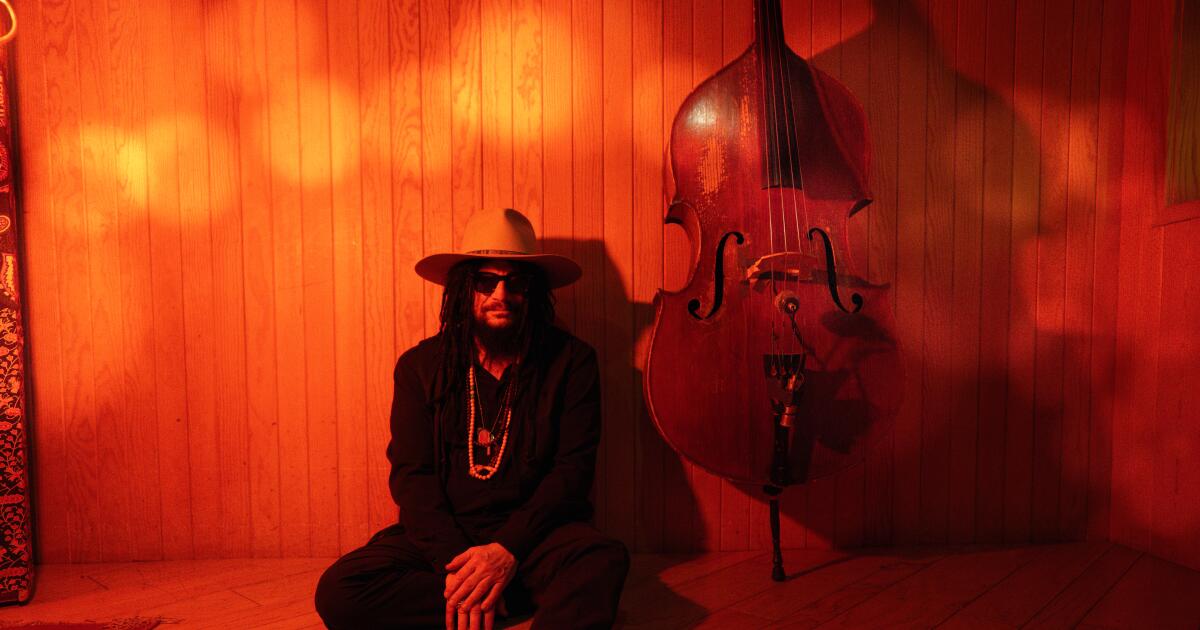
The bass legend and superproducer Don Was didn’t expect to be covering Curtis Mayfield’s Civil Rights-era anthem “This Is My Country” on the road in 2026. But lately, the chaos in the United States made the song seem regrettably apropos.
“It wasn’t supposed to still feel potent. It was supposed to be something that served a moment,” said Was, who included the defiant single on his 2025 album “Groove In the Face of Adversity.”
“It’s shocking to be here in 2026 and, whatever distance we traveled from 1966 until now, to see it all get reset,” Was said. “That song’s a more powerful statement now than it was then. It was inconceivable that it would still be relevant — this is supposed to be the utopian age of Aquarius. This is not the way it was supposed to turn out.”
Was remembers the tumult, violence and hope that came out of that era in his hometown of Detroit. The city’s music, famed for rough-hewn virtuosity from blues to soul to techno, is the spring that waters “Adversity.” It is, remarkably, the 73-year-old’s first solo album after a career spanning the pioneering electro-pop band Was (Not Was) and deep producer relationships with the Rolling Stones, Bob Dylan and Bonnie Raitt.
He also spent years in Bob Weir & Wolf Bros with the late Grateful Dead founder, and will play from the Dead’s landmark “Blues for Allah” on his tour that stops at Lodge Room on July 7.
With a backing band of studio killers dubbed the Pan-Detroit Ensemble, “Adversity” has an expansive modern atmosphere, yet a lived-in, filament-bulb quality in the playing that carries through funk, jazz, rock and R&B. It’s largely a covers record, but you wouldn’t know it from the depth of the revisions — veering from the Yusef Lateef standard “Nubian Lady” to Hank Williams’ “I Ain’t Got Nothin’ But Time,” closing with funk group Cameo’s “Insane.”
“I’ve been carrying it around in my head for 30 years,” Was said. “This first album to me is really a handshake, a ‘nice to meet you,’ this jambalaya of Detroit sounds.” While much of the source material comes from elsewhere, the cumulative mood is extremely personal to an artist who has spent his life helping the greats find true expression.
“I’ve come to admire artists who are willing to go in deep inside their most personal thoughts for the sake of helping the listener understand their own lives,” he said. “To help them deal with the trauma of being human — especially in these times, man.”
Tops on that list is the late Grateful Dead founder Bob Weir — who died in January at 78 — as a model for a band staying fearless and uncompromising. Was, still heartbroken about the loss of his friend and bandmate, recalled their first time on tour.
“When Bobby called asking me to play bass with the Wolf Bros, I thought at the very least, this is going to be a master class in losing self-consciousness and forgetting about fear,” Was said. “If the band stumbled, the audience wouldn’t walk out. They appreciated the fact that you were trying to do something new for them. Then there’d be a couple moments every night with an incredible exchange between the musicians and you can feel the audience becoming a member of the band.”
Playing the Dead’s “Blues for Allah” on this tour — an LP rooted in Middle Eastern scales, pirouetting time signatures and improvisational telepathy — put him in communion with his old friend.
“I used to think that songs like ‘King Solomon’s Marbles’ were just jams and conversations on the spot. But when we really got into it, there’s a form underneath and you can take tremendous liberty with that form,” Was said.
Was’ production career was built on a similar principle.
His early band Was (Not Was) remains a visionary electro-pop act with subtle, salient politics. “Out Come the Freaks” is a favorite on Pride month dance floors — “If you just wanted to do poppers and dance all night, it worked, and if you wanted to think about the government careening out of control, it worked too,” Was said of the band’s club material.
The late Ozzy Osbourne sang on the band’s international hit “Shake Your Head,” alongside a winking, very game Kim Basinger. The actor was a replacement after Madonna backed out, leaving the proto-rave tune one of the era’s most unlikely collaborations.
He recalled Ozzy fondly. “In 1975, this folk group I was in booked us to open for Black Sabbath at the Toledo Sports Arena, playing for a bunch of 14-year-old white boys on amphetamines,” Was said. “They weren’t having it. I’ve heard the tape of that show, and the drummer was bleeding from being hit by so many bottles that we had to stop playing. That was my first exposure to Ozzy, so I was a little afraid to do the session, but he was up for an adventure.”
Don Was and the Pan-Detroit Ensemble
(Gemma Corfield)
A Stones confidant and producer from 1994’s “Voodoo Lounge” up until 2023’s “Hackney Diamonds” (where Andrew Watt took the helm), Was had nothing but praise for the band, and still admits to a twinge of fandom in their presence.
“There’s never been a day in the studio with the Rolling Stones where I didn’t look around the room and go, ‘Oh my God,’” he said. “I’ve known Mick for over 30 years, but the last time they played L.A. at SoFi Stadium, Mick came walking down that stage and I was like, ‘Wow, there he is, it’s 1965 again.’”
With Dylan, he recalled the mercurial genius’ impish side. “I was producing Dylan, and George Harrison came in to play guitar. Bob was messing with him, Bob pushed the engineer aside and he ran the tape machine. George had never heard the song before, didn’t know what key it was in, and Bob just starts the tape. George played a respectable solo, but clearly it was rough. Bob, just to be funny, stopped the machine and said ‘That’s it, perfect.’ George turns to me and said, ‘What do you think, Don?’ And Bob goes, “Yeah, what do you think, Don?’ I’m looking at these two guys and time slowed down. I remembered trying to sell my car to get a ticket to go to New York to see the Concert for Bangladesh. Now they’re asking me what I think. I was paralyzed.”
“A voice appeared in my head,” he said, “Telling me, ‘He’s not paying you to be a fan.‘ So I said to George, ‘It was good, man. Let’s see if we can beat it.’ You can’t allow the iconography to dictate the outcome in the studio. You have to put that aside.”
As president of Blue Note Records, the estimable jazz label he’s led for more than a decade, Was relentlessly looks forward. He’s released restless modern records by Domi & JD Beck, Fathers, Makaya McCraven and Julian Lage (the hotshot jazz guitarist now playing with Dylan). He’s refreshingly optimistic about challenging music in streaming’s ruthless economy.
“Don’t make music for the delivery system,” Was said. “I don’t think about streaming, I think about touching people. If you do that, nothing has changed fundamentally in the music business. If your purpose is to get under people’s skin and make them feel something, that’s the same job it was for Mozart. How people listen can keep changing, but I don’t think the palette of human emotion changes, and that’s who you’re addressing.”
Was came from a working-class industrial city, making music reflective of Detroit’s technological upheaval and economic neglect. “Adversity” is a beacon to keep playing in spite of everything.
“I think that the salvation of musicians is that no matter what happens, what technological advancements come along, there’s still nothing like the experience of being in the same room as people who are playing together,” Was said. “It’s always been tough, man. It’s harder these days to buy a Ferrari as a musician, but I don’t know that that’s necessary. I have total confidence that the opportunity is there for anybody who is willing to give the audience a meaningful experience.”
-

 Technology7 minutes ago
Mr. Lif’s Emergency Rations EP is post-9/11 hip hop at its most daring
-

 World12 minutes ago
Australian healing with ‘beautiful messages’ after losing arm to shark attack
-

 Politics19 minutes ago
Michigan Democrat Mallory McMorrow drops out of Senate race weeks before primary
-

 Health22 minutes ago
‘Tanmaxxing’ trend could come at a dangerous cost, skin cancer experts warn
-

 Sports27 minutes ago
Belgium ‘considering all possible options’ after FIFA clears Team USA’s Folarin Balogun
-

 Technology34 minutes ago
Hi Mom text scam: How to spot fake emergency texts
-
 Business37 minutes ago
‘Minions & Monsters’ tops the box office, but with a lower-than-expected haul
-
Entertainment42 minutes ago
L.A. County heat advisory: When will high temperatures peak in SoCal?

