Utah
Utah ICE arrests more than double in 2025 compared to previous year, most already in jail


SALT LAKE CITY (KUTV) — Federal immigration arrests in Utah more than doubled in 2025 compared with the previous year, according to data provided by U.S. Immigration and Customs Enforcement to the Deportation Data Project.
That data shows ICE made about 1,100 arrests statewide in 2024. But between January and October 2025 alone, arrests climbed to more than 3,000.
The data offers a closer look at who is being detained and how immigration enforcement is playing out across the state.
MORE | ICE
More than half — 55.5% — of those arrested had criminal convictions. About 27.4% had pending criminal charges but no convictions, while 17.2% had no criminal history and were detained solely for immigration violations.
Of the more than 3,000 people detained in 2025, roughly 72%, or just over 2,100 individuals, have already been deported.
In most cases, ICE detention began in local jails or state prisons, where inmates were held temporarily before being transferred to federal custody and removed from the country.
The average time between arrest and deportation in Utah was 26 days, according to the data. The shortest wait was one day for someone who had previously been deported, while the longest detention lasted 247 days, just over eight months.
Most ICE arrests in Utah do not happen in street operations. Instead, they typically involve people who are already incarcerated and turned over to federal authorities rather than being released back to the street. These are typically executed through Utah 287g agreements with ICE, called detention requests.
State data provided by the Utah Department of Corrections shows Utah, as of Jan 30, has 277 individuals in custody who indicated they were here illegally. 229 have ICE detention requests, meaning they will be transferred to ICE custody upon completion of their sentence.
According to the UDC, the daily incarceration rate is $156 and includes operational costs and medical costs. If all 277 illegal immigrant inmates currently in custody in the state served at least a one-year sentence, it would cost about $15.7 million in taxpayer dollars.
The ICE arrest data used in this report did not granularly break down what crimes arrested individuals were convicted of, and whether they were violent offences or not.
Of the 277 illegal immigrants in Utah’s jails and prisons, about 71% were convicted of 1st degree felonies, 22% were convicted of 2nd degree felonies, 6% were convicted of 3rd degree felonies, and less than 1% (2 people) were convicted of capital felonies.
According to new exclusive reporting out of CBS News, using data from the Department of Homeland Security, less than 14% of the illegal immigrants arrested by ICE nationwide had violent criminal offenses. The report states that nearly 60% of people arrested by ICE over the past year had criminal charges or convictions, but the majority of the criminal charges or convictions are not for violent crimes.
Here in Utah, among people already incarcerated in county jails, DUI offenses were the most common charge. For those in state prison, sexual abuse was the most frequent offense.
2News reached out to both the Governor and Lt. Governor for comment on the cost to imprison illegal immigrants at state and local facilities, but did not hear back. We also reached out to Sen. Dan McKay, the chair of the Senate Revenue and Taxation committee, but he was not available for an interview.
_____


SALT LAKE CITY — Utah football’s first official visit weekend of the 2027 recruiting cycle has already produced a payoff, as Morgan Scalley has landed the commitment of three-star offensive lineman Sire Stewart.
Stewart, a 6-foot-5, 255-pound offensive tackle out of Chandler High School in Arizona, became one of the key names to watch coming into the weekend.
Utah hosted several offensive line targets as part of its first official visit group, and Stewart leaving Salt Lake City committed gives the Utes a tangible recruiting win at a priority position.
A Fast Win For Utah’s New Recruiting Operation
Utah’s first official visit weekend under Scalley was always going to be about more than hosting prospects. It was the first major chance for the new regime to show recruits and families what the program looks like with Scalley as head coach and D’Orazio helping guide the roster-building operation.
Stewart’s commitment gives Utah an early return from that effort.
The Utes need momentum in the 2027 class, and official visit weekends are where that momentum often starts. Landing an offensive lineman from Arizona also reinforces one of Utah’s most important recruiting priorities: continuing to build regionally while identifying prospects who fit the program’s developmental model.
Stewart had official visits scheduled to Washington State and Boise State but elected to give his pledge to the Utes instead.
Utah Got In Early
Utah’s pursuit of Stewart did not begin this weekend. Offensive line coach Jordan Gross offered Stewart in early February, with the Utes becoming his 10th offer and third Power Four opportunity behind Duke and Arizona. Since then, Stewart has added offers from Oklahoma State, Baylor and Cal, while also making an unofficial visit to Arizona State.
Utah was not late to the evaluation. The Utes identified Stewart early, prioritized him and then got him on campus for the first official visit weekend of the cycle. In modern recruiting, that kind of early relationship-building is important.
Gross may be new to college coaching, but this is a good first recruiting win. He gives Utah a unique offensive line pitch. He played at Utah, became one of the program’s best examples of development translating to the NFL, and now gets to sell that same path to recruits. For a prospect like Stewart, Utah can offer both a developmental plan and a real example of what that plan can become.
Building The Class Up Front
Stewart’s commitment also continues a clear early theme for Utah. The Utes are prioritizing the trenches, particularly from the high school ranks.
Utah has long built its program around line-of-scrimmage play, and that identity is not expected to change under Scalley. If anything, it appears to be one of the first pieces of the roster construction plan being emphasized in the 2027 class.
Stewart gives Utah a developmental offensive line prospect with the frame to grow into a Big 12 lineman. Listed by 247Sports at 6-foot-5 and 255 pounds, he still has room to add strength and mass, but the foundation is there.
This commitment gives Utah momentum, but particularly with the offensive linemen they’re in pursuit of. Utah will continue to push for fellow offensive linemen Lincoln Mageo, Ian Aloisio, Tye Kennedy, Damian Anyasodo, Gecova Doyal, and Amaziah Siale.
Mageo and Doyal were also part of the visit with Stewart, giving Utah an added presence to recruit those two. Kennedy and Anyasodo will officially visit the Salt Lake City this weeend, while Siale has been a big priority for Utah and will visit at the end of the month.
The Bottom Line
Sire Stewart’s commitment is not just another name on Utah’s 2027 board. It is the first real proof point from the Utes’ opening official visit weekend under Scalley.
Utah identified him early, got him to campus and closed. That is what good recruiting operations are supposed to do.
For Stewart, the commitment gives him a clear developmental home in a program that has long valued offensive line play. For Utah, it adds another piece to a 2027 class that needs to reflect the new regime’s roster-building vision.
The Utes have always believed in winning up front. Stewart’s commitment shows that message is still central to how Utah plans to build.
Steve Bartle is the Utah insider for KSL Sports. He hosts The Utah Blockcast (SUBSCRIBE) and appears on KSL Sports Zone to break down the Utes. You can follow him on X for the latest Utah updates and game analysis.
Take us with you, wherever you go. Download the new & improved KSL Sports app from Utah’s sports leader. You can stream live radio, video and stay up to date on all of your favorite teams.

SALT LAKE CITY — Lucas Horns points over a fence on Main Street toward an empty lot with a blue shipping container on it, tucked between downtown Salt Lake City’s tallest buildings.
That container, he explains, will serve as a makeshift bar on Thursdays and Fridays through the remainder of summer, set up next to a live music stage and a space that will be dedicated to various lawn games for people of all ages. The Utah Museum of Contemporary Art will provide some art as part of an outdoor sculpture and food and drink venue combination aimed to liven up an otherwise dead space.
“Our hope is just to add to the ecosystem,” said Horns, program director for the Blocks, a joint venture between Salt Lake City and Salt Lake County to develop arts and culture programs within the downtown area.
The Blocks is launching what it calls the “Art Garten” in the lot of the old Utah Pantages Theater, 144 S. Main, beginning this week. It’s a free event that blends a beer garden with live music, art and games for all ages.
A DJ will be spinning hits from 5 p.m. to 8 p.m. on Thursday, while live music from the steps of the Eccles Theater across the street will fill the air during the same hours on Friday. A rotating list of DJs and live bands will fill in the space during the same hours twice a week for the next few months.
The event will include a rotating food truck lineup, along with cornhole, giant chess and other lawn games for people of all ages. The Blocks didn’t want to compete with bars and restaurants, so the hours hit around happy hour, while also being friendly for people with families, Horns said.
“We were interested in adding something new to downtown,” he told KSL. “There aren’t a lot of spaces where families can go, and the parents can grab a beer and hang out while their kids play lawn games. That’s kind of a rarity in Utah, and especially downtown, so I think we’re filling an important niche.”
At the same time, it livens up a piece of Main Street that’s been lifeless for years.
The Utah Pantages Theater was demolished in 2022, amid a last-second effort to preserve the century-old building. Salt Lake leaders approved a $0 sale of the building to international real estate firm Hines and local developer Joel LaSalle in 2019, setting the stage for a proposed 31-story residential high-rise on Main Street.
However, the project stalled with the market. “Unprecedented market changes,” such as record inflation, emerged at approximately the same time as the theater was demolished, making it difficult to secure financing for the project off the ground, a spokesperson for Hines told KSL in 2024.
The situation hasn’t changed much since then, leaving Main Street with a vacant lot blocked off by a large wooden board for years. Some of the lessons from “Open Streets” and other downtown activation events helped piece together an event to use the space while it remains vacant.
“We’re excited just to be able to do a pop-up park like that in that location on Main Street, with programming unlike anything else we’ve done on Main Street,” said Dee Brewer, director of the Salt Lake City Downtown Alliance. “I’m really excited to see how the public responds.”
Hines cleared the space for the event, which will continue on Thursdays and Fridays through the end of September. Horns and Brewer say they expect the venue to return next year and potentially longer, depending on how long the tower project remains on pause.
It may not be the perfect solution to a development holdup, but they believe it’s an upgrade from the current situation.
“A blank, empty wall is never good for walkability or for the urban environment,” Horns said.
The Key Takeaways for this article were generated with the assistance of large language models and reviewed by our editorial team. The article, itself, is solely human-written.

SALT LAKE CITY — A law designed to prevent so-called “dumpster babies” is now 25 years old — and one of the individuals it was designed to save is now close to the same age.
Utah‘s Newborn Safe Haven law was designed to give pregnant moms a safe alternative where they could leave a baby they could not or would not be able to care for. The original sponsors of the bill say they don’t know how many children have been saved over the years, but one of them, Sam Peterson, was on hand to mark Monday’s special anniversary.
He said the law means everything to him.
“It is something that has given me my life! It’s my privilege to be a part of this law,” Sam said.
He stood next to his mother, Heather Peterson, who said she gets emotional talking about the law allowing her and her husband to adopt Sam.
“We feel like a miracle happened. We feel like you came to us in the most amazing way and you have an amazing story and we think it’s important that other people hear it,” she said.
Heather and Sam agreed that the Newborn Safe Haven allowed them to become a family.
It was a bill originally sponsored by former Utah Senator Patrice Arent a quarter century ago. Arent said she felt compelled to act after hearing too many stories about so-called “dumpster babies.”
“Babies that had been left to die in unsafe places like dumpsters or public toilets,” Arent explained, “Or even someone who left their baby in a drawer in their bedroom in Cottonwood Heights. I heard these stories and I just knew I had to try to find a way to provide a safe alternative.”
So Arent, a Democrat, worked with former Republican lawmaker John Valentine to sponsor and help pass Utah’s Newborn Safe Haven law.
Arent said it was a true bipartisan collaboration.
“It allows our birth parents to legally give up custody of an infant. It’s anonymous and it’s in a hospital. There will be no questions asked, and the baby then ends up in a safe, loving home,” she said.
Less than a year after the law went into effect, Sam’s birth mother left him at a Utah hospital. Heather said she and her husband adopted him three days later. Sam is now 24.
“We are living proof that Safe Haven works, because we didn’t know anything about his birth mom… It was like he just dropped out of heaven,” Heather said.
Sam said he is eternally grateful.
“It’s given me a family, it’s given me friends, it’s given me an opportunity to go to college. Day three, I was with my mom, and so she will always be my mother, and I will always cherish that,” he said.
Sam said he will be graduating next year from BYU with an engineering degree.
-
 Lifestyle1 minute ago
Vintage-obsessed millennial parents are driving L.A.’s booming kids’ clothing resale market
-
 Politics6 minutes ago
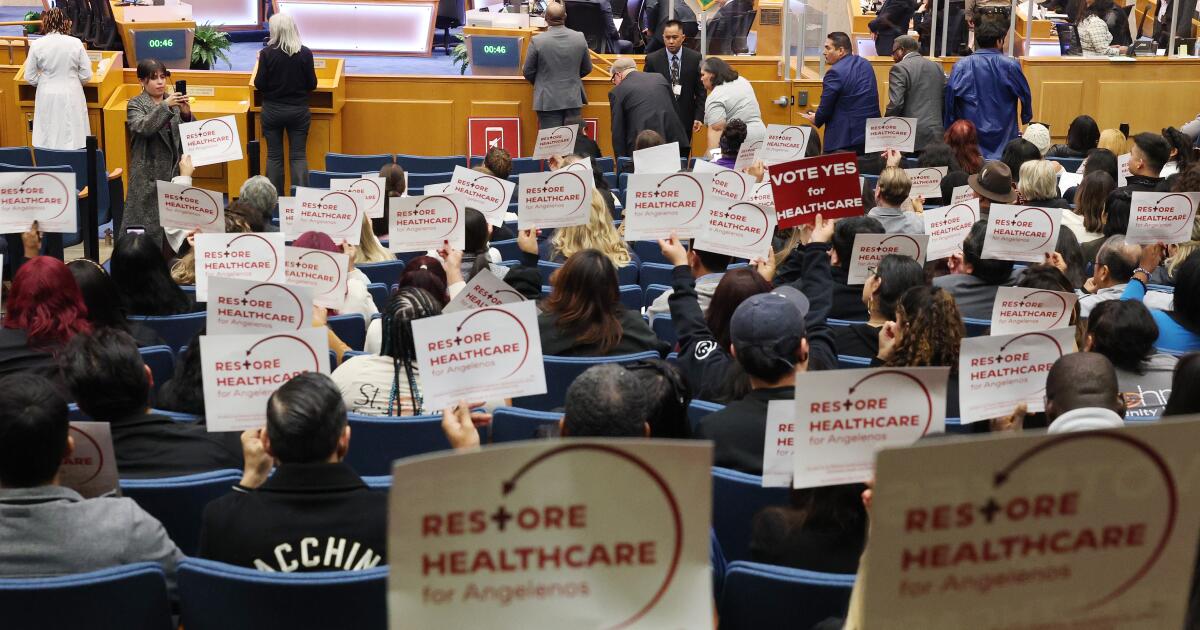
Early returns indicate L.A. County voters have doubts about healthcare sales tax measure
-
 Sports16 minutes ago
Nelly Korda, Michelle Wie West and more: Who to watch at U.S. Women’s Open
-

 World28 minutes ago
EU launches major tech push to break US and China dependence
-
 News51 minutes ago
California’s primary for governor is undecided as candidates vie to be in the top two
-

 Los Angeles, Ca2 hours ago
California primary election results: governor and L.A. mayor races
-

 Detroit, MI3 hours ago
Another bribery scandal hits Detroit. It involves the People Mover
-

 San Francisco, CA3 hours ago
What’s Worth More Than Cash in San Francisco Real Estate? Anthropic Stock

