World
Putin should make concessions before direct talks with Europe: Kallas


Russian President Vladimir Putin should make tangible concessions before the European Union picks up the phone to re-establish direct communications, High Representative Kaja Kallas said on Thursday as more European leaders call for direct engagement with the Kremlin as part of the Russia-Ukraine peace process currently being brokered by the White House.
“We can’t be the demandeurs here that, you know, we go to Russia (and say) talk to us,” Kallas said on Thursday after a meeting of foreign affairs ministers in Brussels.
“The concessions that the Americans are putting on Ukraine are quite strong,” she added, referring to reports that Washington is asking Kyiv to give up the areas of the Donbas still under Ukrainian control in exchange for security guarantees.
“I don’t think there is anything that we can offer to Russia on top of what they already get in their understanding with the Americans, which means that why should they talk to us? Because they get what they want in this relationship.”
Kallas pointed to the fact that in the recent round of trilateral talks in Abu Dhabi between Ukrainian, Russian, and American officials, Moscow was represented by a military officer, General Igor Kostyukov, rather than a political envoy “with the right to make decisions”.
Both Kyiv and Moscow described the talks as constructive, though their stances differ.
Instead of focusing on who should talk to Putin, Kallas added, European countries should devote their energy to further crippling his war machine, which has plunged Ukrainians into blackouts at sub-zero temperatures. Brussels aims to approve a new package of sanctions on Russia around the war’s fourth anniversary on 24 February.
“What we are working on is putting more pressure on Russia so that they would go from pretending to negotiate to actually negotiate, and also to take into account the worries that we have with Russia that this war will not continue and this war will not expand to other territories,” Kallas said in reply to a Euronews question.
“I think this is important to understand.”
To talk or not to talk
The contentious issue of re-engagement with Russia is high on the agenda after public backing from French President Emmanuel Macron and Italian Prime Minister Giorgia Meloni, who argued the EU needed to speak with a unified voice vis-à-vis Putin.
“I believe the time has come for Europe to also speak with Russia,” Meloni said. “If Europe decides to take part in this phase of negotiations by talking only to one of the two sides, I fear that in the end the positive contribution it can make will be limited.”
The Italian leader suggested the EU appoint a special envoy to lead the conversation on behalf of all 27 member states, though she did not put forward a specific name.
The European Commission, a long-standing advocate of the strategy of diplomatic isolation, later admitted that direct talks will happen “at some point” but not yet.
On Thursday, before heading into the ministerial meeting that Kallas chaired, Luxembourg’s Foreign Minister Xavier Bettel told Euronews that discussions with the Kremlin should not be off the table.
“We need to talk with them if we want a solution,” Bettel told Euronews’ flagship morning programme Europe Today. “And if I am too small to do it, then President Macron or someone else (should be) able to represent Europe, because they don’t want to talk to Kaja Kallas,” he added.
Bettel, who met Putin in Moscow in 2015 while serving as Luxembourg’s Prime Minister, said he did not have the “ego” to say he is the “right person” to act as an EU envoy.
“But if people are convinced that I could be helpful I will do it in any position,” he explained. “And I don’t need to be on the front of the scene. I can do it also in the back.”
Still, the idea of re-engaging with Putin remains unpalatable for some capitals, who fear the EU would fall into a trap and legitimise a president accused of war crimes.



Published on •Updated
The bloc’s foreign policy chief Kaja Kallas has criticised the overwhelmingly male nature of peace negotiation teams, linking it to contemporary diplomacy’s tendency toward short-term results.
ADVERTISEMENT

ADVERTISEMENT
“This is a bigger problem we see around the world with different peace talks when we see that they don’t actually address the issues of long-standing peace,” she said at a press conference in Tallinn, Estonia on Sunday.
The ceasefires many talks yield, she said, too often simply declare hostilities over without resolving the “underlying issues” that perpetuate future violence.
Another problem, she said, is the lack of female input.
“There are also studies that show that when women are part of the negotiations, these peace (efforts) last longer,” Kallas expanded, adding that “the picture that we saw from the US China talks, (was) a lot of masculinity in the room”.
“Women have a role,” she said.
Various studies and international bodies, including the UN Security Council, argue that women’s participation in conflict resolution improves outcomes, but mediators and negotiating parties often leave women out of their teams.
According to data compiled by the Council on Foreign Relations, women represented only 16 percent of negotiators in active peace processes led or co-led by the United Nations in 2022.
Security and defence analyst Iana Maisuradze of the European Policy Centre think tank argues that the EU is a firm supporter of the UN resolution calling for more female participation during conflict resolution – and that it is not “sexist argument” to believe that women are beneficial to negotiations. She told Euronews the data backs this up.
“The argument is that women focus on things that male-dominated negotiators are not focusing on such as education, health, victims’ rights, social reconciliation (and) community: things that really bring people together rather than a zero-sum game, which men tend to do,” Maisuradze said.
“Having women at table works because we also bring different perspectives to the resolution of the conflict, and also to the implementation of peace agreements.”
A seat at the table
Kallas’ comments came amid wider chatter in the Belgian capital regarding whether the EU should have a seat at the table for negotiations between Russia and Ukraine – and who should represent the bloc if so.
Putin recently floated appointing former German Chancellor Gerhard Schröder as the EU’s lead negotiator in potential peace talks on Ukraine. This notion was widely dismissed by European heads of state, and the discussion of who Europe’s mouthpiece should be continues.
Diplomatic sources in Ukraine have said that Russia would “never” accept a woman as lead negotiator.
A diplomatic source in Brussels reiterated this, saying there is no possibility a female figure is being considered as part of the discussions. But another source in the Belgian capital told Euronews that “equality is an important factor”.
Regardless of their differences on the gender issue, most EU officials argue that appointing any envoy before a major European Council (EUCO) summit in June could be unrealistic.
European Commission spokesperson for foreign affairs Anitta Hipper said in response to a question by Euronews on Monday that Kallas is a “feminist” and “has a lot of practice back home”. She was the first female prime minister of Estonia from 2021 to 2024.
Hipper said the Commission could not comment on whether Russia would want a woman at the table, but reiterated that European heads of state will meet in Limassol in Cyprus in the coming weeks to discuss what form any future talks with Ukraine, Russia and Europe might take before June’s EUCO.
“What will be discussed is what our position is in terms of the demands and the ask and what unity we have in demanding our lists of asks from Russia,” Hipper said.
“This is something that we will be looking into – into the what, and not into the who.”

HONG KONG (AP) — Asian stocks mostly retreated and oil prices jumped on Monday after U.S. President Donald Trump warned Tehran that the “clock is ticking” as U.S.-Iran negotiations over a permanent end to the war stall.
U.S. futures fell and markets in Japan and South Korea pulled further back from their records. Tokyo’s Nikkei 225 fell 1% to 60,815.95, a decline led by technology-related stocks. It reached all-time intraday high levels last week above 63,000.
The yield on the 10-year Japanese government bond surged to as high as 2.8%, its highest level since the late 1990s, part of a shift toward higher yields as the Bank of Japan gradually raises interest rates and higher energy costs raise expectations of rising inflation. That’s up from around 2.55% just one week ago.
Seoul’s Kospi climbed 0.3% to 7,516.04 after trading lower earlier in the day. It crossed the 8,000 mark for the first time on Friday, supported by buying of technology shares driven by the boom in artificial intelligence, but later declined partly on profit-taking by investors.
Hong Kong’s Hang Seng lost 1.4% to 25,596.68. The Shanghai Composite index edged 0.1% lower to 4,131.53, after China reported weaker-than-expected retail data for April.
Australia’s S&P/ASX 200 declined 1.5% to 8,505.30.
Taiwan’s Taiex dropped 0.7%, while India’s Sensex fell 0.1%.
Oil prices rose after Trump warned Iran in a social media post that “the Clock is Ticking, and they better get moving, FAST, or there won’t be anything left of them” following a call with Israeli Prime Minister Benjamin Netanyahu.
Trump has set deadlines for Iran and then backed off, so investors have remained cautious about the situation in the Strait of Hormuz and how it is impacting global energy flows, including oil and gas. The strait is still mostly closed, and the U.S. has also imposed its own sea blockade on Iranian ports since last month.
A drone strike over the weekend on a United Arab Emirates’ nuclear power plant added to worries over a potential escalation in the conflict.
Brent crude, the international standard, gained 0.7% to $110.02 per barrel. It was trading at roughly $70 a barrel in late February before the start of the Iran war. Benchmark U.S. crude was trading 0.8% higher to $106.31 per barrel.
“Re-escalation risks are increasing,” ING commodities strategists Warren Patterson and Ewa Manthey wrote in a research note. While there has also been a pick up on shipping activities over the past week around the strait, they said, “this can change quickly.”
The pair also noted that the oil market was reacting to the lack of tangible results on the Iran war after last week’s widely-watched summit between Trump and Chinese President Xi Jinping in Beijing, even as the White House said both the U.S. and China had agreed that the Strait of Hormuz must remain open.
U.S. officials had hoped that Beijing could use its influence, given its economic ties with Iran, to help broker a peace agreement and reopen the strait. Trump said last week in an interview that Xi told him China “would like to be of help” in negotiating an end to the war. So far it’s been unclear how Beijing might do that.
The yield on the U.S. 10-year Treasury was at around 4.60%, up from 4.47% last Thursday and sharply higher than the nearly 4% level it was holding at before the Iran war.
On Friday, the benchmark S&P 500 dropped 1.2% from the record it set the day before. The Dow Jones Industrial Average fell 1.1% and the technology-heavy Nasdaq composite lost 1.5%.
In other dealings early Monday, the U.S. dollar rose to 158.86 Japanese yen from 158.62 yen. The euro was trading at $1.1635, up from $1.1622.
World
Canada confirms hantavirus case linked to cruise ship outbreak that has killed three passengers

Hantavirus outbreak on cruise ship sparks concern as passengers return to US
Fox News senior medical analyst Dr. Marc Siegel discusses the Hantavirus outbreak aboard the MV Hondius cruise ship, where three deaths occurred. Siegel explains that while human-to-human spread is rare, it’s not impossible. The segment highlights the return of passengers to the U.S. from locations like Tenerife and Praia, raising new public health concerns and emphasizing the need for containment.
NEWYou can now listen to Fox News articles!
Canadian health officials on Sunday confirmed that one of four Canadians who returned from the MV Hondius cruise ship, the subject of an international Andes hantavirus outbreak, tested positive for hantavirus. Three people connected to the outbreak have died.
The Public Health Agency of Canada confirmed the positive test after British Columbia’s top public health officer previously described the case as a “presumptive positive.”
“One individual’s sample was confirmed positive for hantavirus,” the agency said in a statement.
Officials said additional testing will be conducted at a national laboratory. It was not immediately clear whether that testing was for confirmation, strain characterization or another purpose.
CRUISE SHIP PASSENGER DESCRIBES UNCERTAINTY AFTER 3 DEATHS AMID HANTAVIRUS PROBE
Experts say cruise outbreaks get more attention due to public reporting rules, but many travelers still plan to sail as booked. (Myloupe/Universal Images Group)
The development comes as global health officials continue monitoring the rare hantavirus outbreak tied to the MV Hondius, which has sickened multiple passengers.
As of May 13, the World Health Organization said 11 cases had been identified in connection with the cruise outbreak, including eight confirmed cases, two probable cases and one inconclusive case. Those figures included three deaths. The Associated Press later reported that the Canadian confirmation brought the number of people from the ship who had tested positive to 10.
Canadian health officials said four Canadians returned home from the MV Hondius, though only one has tested positive for the virus.
RARE HANTAVIRUS HUMAN-TO-HUMAN TRANSMISSION SUSPECTED ON LUXURY CRUISE SHIP WHERE 3 HAVE DIED
The rare Andes virus, which was linked to the MV Hondius cruise ship outbreak, is the only known hantavirus strain that has the capability to spread from person to person, usually through prolonged close contact. (Andres Gutierrez/Anadolu)
The confirmed patient and a traveling companion — identified as a Yukon couple in their 70s — returned from the cruise together. The companion later tested negative, officials said.
A third person in their 70s from Vancouver Island remains in isolation, along with a British Columbia resident in their 50s.
So far, no confirmed U.S. cases tied to the cruise ship have been reported, though WHO said as of May 13 that one U.S.-repatriated passenger had inconclusive laboratory results and was undergoing retesting.
HANTAVIRUS DEATHS ON CRUISE SHIP HIGHLIGHT DANGERS OF RODENT-BORNE DISEASE
Pictured is the MV Hondius, the cruise ship tied to a hantavirus outbreak after a stop in Argentina that left three passengers dead. (Europa Press Canarias via Getty Images)
Last week, however, health officials in Ontario County, New York, announced they were investigating a suspected locally acquired hantavirus case unrelated to the cruise ship.
The Ontario County Public Health Department said there was no risk to the general public. Officials also said the strain typically seen in the United States is not known to spread from person to person.
The outbreak linked to the MV Hondius began after the Dutch cruise ship, carrying 147 passengers and crew members, departed Argentina on April 1 for a South Atlantic voyage.
TRAPPED CRUISE SHIP PASSENGER SHARES UPDATE ON CLEANLINESS OF SHIP AMID DEADLY HANTAVIRUS OUTBREAK
The outbreak has prompted heightened precautions internationally, including in the Netherlands, where Radboud University Medical Center quarantined 12 staff members after officials said a hantavirus patient’s blood and urine were not handled under the strictest protocols recommended for the virus strain.
The outbreak has also sparked comparisons to the coronavirus pandemic. However, Fox News senior medical analyst Dr. Marc Siegel previously told Fox News Digital there is “no comparison.”
He noted hantavirus is difficult to spread.
Passengers evacuated from the hantavirus-stricken Hondius cruise ship walk with their belongings after disembarking at Eindhoven Air Base, Netherlands, on May 12. (Piroschka van de Wouw)
“It’s not airborne … in terms of respiratory droplets hanging in the air,” he said. “It’s very difficult to transmit.”
While coronavirus “moved in the direction of humans in a significant way,” hantavirus has not, except for “very rare” cases of human-to-human transmission, he added.
The World Health Organization has assessed the risk to the global population as low, while noting that current evidence suggests subsequent human-to-human transmission may have occurred on board. Andes virus is the only hantavirus known to have documented person-to-person transmission, though such spread is considered rare.
CLICK HERE TO DOWNLOAD THE FOX NEWS APP
Siegel also noted hantavirus cases have been reported in the United States for decades, though they remain “very rare.”
Fox News Digital’s Brittany Miller and Angelica Stabile, along with The Associated Press, contributed to this report.
-

 Technology3 minutes ago
Amazon recall text scam comes with red flags
-
 Business9 minutes ago
Jury rejects Elon Musk’s lawsuit, sides with OpenAI in bitter feud over AI future
-
 Entertainment15 minutes ago
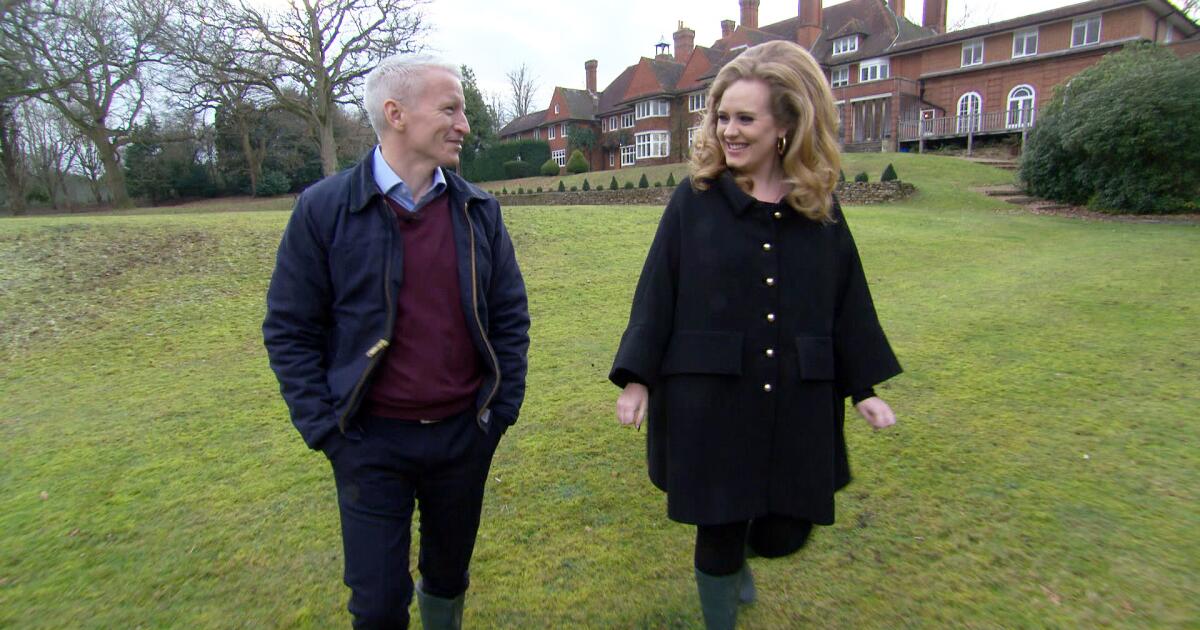
Anderson Cooper bids ’60 Minutes’ a final goodbye
-
 Lifestyle21 minutes ago
In her Silver Lake ADU, this L.A. artist turns glass and clay into something magical
-
 Politics27 minutes ago
Trump DOJ creates $1.7-billion fund for victims of legal ‘weaponization,’ prompting outrage
-
 Science33 minutes ago
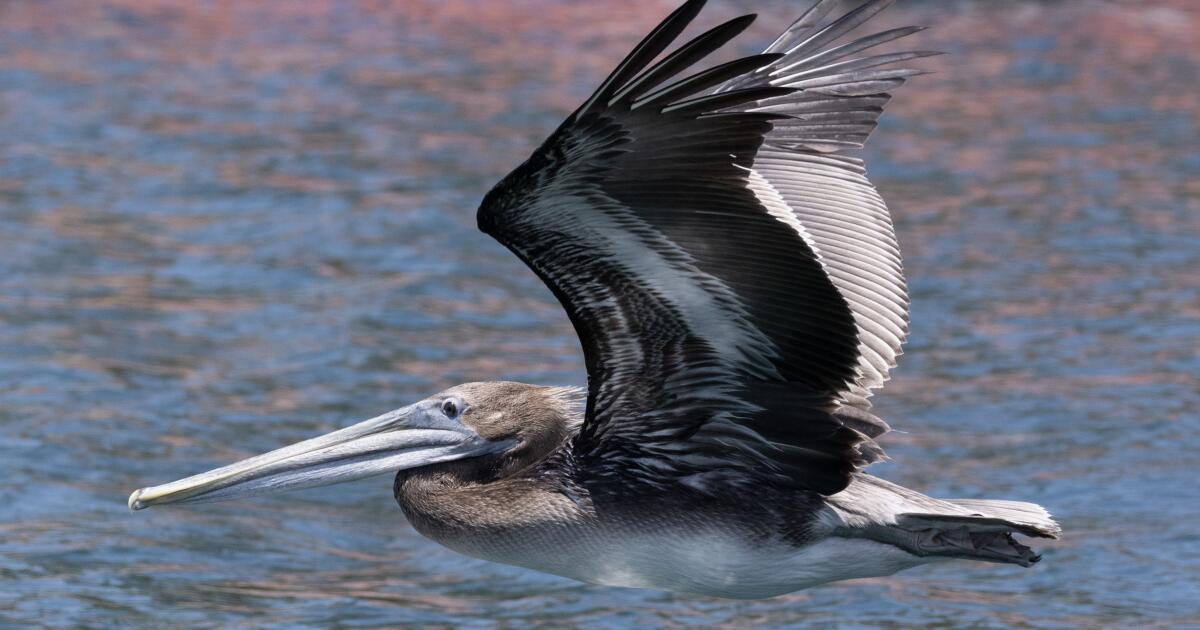
As ocean temperatures spike, more dead sea birds are washing up on California shores
-
 Sports39 minutes ago
Artists, community come together to welcome World Cup to Inglewood with murals and more
-

 World51 minutes ago
‘Feminist’ top diplomat Kallas takes aim at male-dominated diplomacy

