


Ahead of the 2026 Maccabiah Games, an event often called the “Jewish Olympics” and the largest Jewish sporting competition in the world, which are set to begin next week, social media influencer, dancer, and singer, Montana Tucker expressed her excitement to be hosting the delegation parade at the event and said that the games were taking place at a critical point for the global Jewish community.
Montana
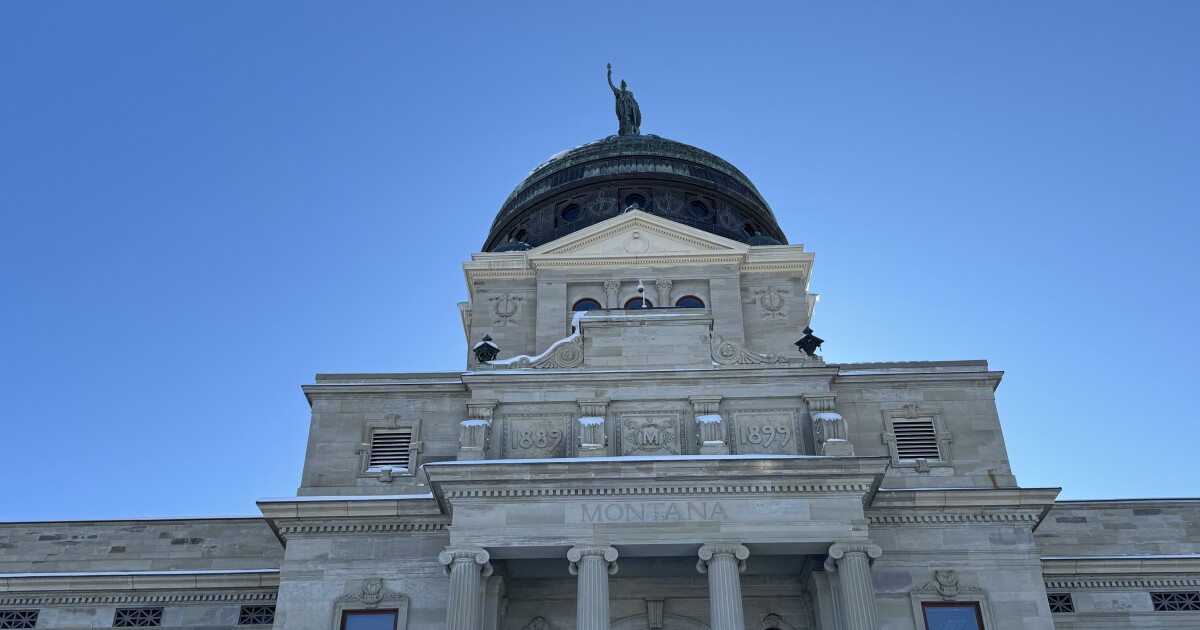
Secretary of State postcard complaint dismissed • Daily Montanan


A postcard that came under fire from Montana Secretary of State Christi Jacobsen is not a violation of Montana’s code of ethics or other campaign laws, Commissioner of Political Practices Chris Gallus said Friday in response to a complaint.
In a letter rejecting the complaint, Gallus said the mailing could be viewed as partisan but that doesn’t mean it creates a violation under his jurisdiction.
Last week, a Harlowton voter filed a complaint alleging the Secretary of State’s Office should not have used taxpayer dollars to pay for the postcard, which said “only citizens should be allowed to vote.”
The Secretary of State’s Office has not responded to a question about the cost of the postcard or how many Montanans received it. Montana has nearly 785,000 registered voters.
The postcard announced a partnership with the federal government to “strengthen election security” and featured a picture of Secretary Christi Jacobsen and President Donald Trump.
The complaint said the postcard pushed a false narrative that “elections are rigged” and “someone other than citizens” are voting.
However, Gallus said the complaint does not clearly allege any violation of statute over which he has jurisdiction. He also said elected officials have a responsibility to communicate with citizens, and voters elected the Secretary of State based in part on her political leanings.
“Expecting that all communication following an election would be devoid of a political bent so as to avoid any criticism or open debate is unreasonable and impracticable,” Gallus wrote in the letter.
Gallus said he wanted to address the complaint in detail because his office has received numerous inquiries about the postcard in relation to “the use of government funds or resources.”
“Montana’s elected officials routinely provide communications to Montana citizens which under a certain lens may appear to be political,” Gallus wrote. “Montana laws do prohibit the use of public resources for political purposes.”
But he said he and staff in his office reviewed the mailer, and it does not appear to violate any provision of the Montana Code of Ethics or any campaign regulation because it “does not have a political purpose” as defined by law.
In making that determination, he said, he looks for words that solicit support or opposition to any political committee; nomination or election of a person to public office; or passage of a ballot issue. That means language such as “vote,” “oppose,” “support,” “elect,” “defeat,” or “reject.”
Gallus said his office also looks at whether material depicts a clearly identified candidate, party or ballot issue “in a manner that is susceptible of no reasonable interpretation other than as a call for the nomination, election or defeat” of the candidate or issue.
Gallus said it is a high bar, and the postcard doesn’t meet the threshold. He said neither Jacobsen or Trump are currently running for office, and the mailing doesn’t include any express words of support.
“Public officials have associated duties, which include communicating with constituents,” Gallus wrote. “For Montana’s Secretary of State, this means communicating with all voters regarding elections, voting and the SOS positions on citizen only voting, which she appears to be doing here.”
In a subsequent news release, the Secretary of State’s Office said it had identified 23 potential non-citizens who had voted. A spokesperson did not answer questions about when they most recently voted, what counties they had voted in, or what the next steps would be.
Missoula County Elections Administrator Bradley Seaman said earlier the 23 potential non-citizens indicated the current system is working well; it represented 29-one-thousandths of 1 percent of voters.
Seaman also said it is important to address those findings as soon as possible. He pointed to a recent tied vote in Missoula County where one vote would have made a difference. (In that case, a council race, the Missoula City Council made the appointment.)
To vote in Montana, people need to be a U.S. citizen, at least 18 years old before the election, and a Montana resident for at least 30 days before the next election.
Jacobsen mailer question_Beley response letter (1)

Montana
Social media star Montana Tucker to host Maccabiah Games delegation parade | The Jerusalem Post

“Israel has gone through a lot, Israelis have gone through a lot, Jews have gone through a lot around the world,” Tucker told The Jerusalem Post on Tuesday. “What’s going on is not just happening in Israel; it’s really happening all around the world with our Jewish community. So, an event like the Maccabiah Games is showing the world that we are strong, we are united, and we don’t give up, and we keep fighting.”
According to Maccabiah, the games bring together more than 10,000 athletes from at least 80 countries in Israel every four years to compete in over 45 sports. The Maccabi World Union says the games are the second-largest sporting event in the world after the Olympics.
The 2026 Maccabiah Games, the 22nd of their kind, were initially scheduled for last year but were postponed due to the security situation involving Iran and its regional proxies.
“This was supposed to happen last year, and about a month away, we had to cancel it due to the war,” Tucker recalled. “And so I am so grateful that it is happening this year, because we truly do need this now more than ever.”
She also said she was excited to debut her new song “We’re Not Strangers” at the event.
“It’s all about unity and building bridges and bringing people together. And some of the lyrics say ‘we may pray to different saviors, but we’re not strangers,’” she told the Post. “Our world is so divided right now. I think that we really just need to come together and have more unity and compassion and understanding of one another. And if we really talk to people who look differently than us, act differently than us, have a different religion than us, we’ll realize we’re actually more similar than we think.”
Montana Tucker: Sport ‘truly unites the world’
Sports, she said, was an ideal method to build these bridges, adding she viewed it as something that “truly unites the world.”
The Maccabiah Games this year, though, will be the first since the Hamas-led massacres in southern Israel on October 7, 2023. The attacks sparked a regional eruption with Israel fighting wars against Hamas in Gaza, Hezbollah in Lebanon, and the Islamic regime in Iran.
“We always have to talk about what happened on October 7,” Tucker said. “We should never stop talking about it. And I think it is so important that Maccabiah is utilizing this platform to talk about it. I know they actually have a former hostage, Daniella Gilboa, who’s going to be performing, which is so powerful.”
Tucker also highlighted the value of the games, saying they were a powerful tool to dispel disinformation about the Jewish state.
“What’s shown on the news nowadays is just all the negativity. Most of it is just propaganda and lies about what Israel is, and I think the Maccabiah just debunks every possible propaganda and lie about Israel,” she said. “When people say the word ‘Israel,’ it comes with so many different connotations, and I think we can show them this. This is Israel. This is what being Jewish means.”
A key element in showing the world what Israel and being Jewish mean, she reiterated, meant showcasing Jewish unity at a time when, in the wake of the October 7, the global Jewish community has faced a worldwide rise in antisemitism.
The games themselves are being held under the slogan, “More Than Ever,” according to Maccabiah, to emphasize “the importance of strengthening the bond between [Jewish] communities worldwide and the State of Israel.”
The Montana Lottery offers multiple draw games for those aiming to win big.
Here’s a look at June 23, 2026, results for each game:
Winning Mega Millions numbers from June 23 drawing
48-51-60-63-66, Mega Ball: 20
Check Mega Millions payouts and previous drawings here.
Winning Big Sky Bonus numbers from June 23 drawing
06-21-22-31, Bonus: 13
Check Big Sky Bonus payouts and previous drawings here.
Feeling lucky? Explore the latest lottery news & results
When are the Montana Lottery drawings held?
- Powerball: 8:59 p.m. MT on Monday, Wednesday, and Saturday.
- Mega Millions: 9 p.m. MT on Tuesday and Friday.
- Lucky For Life: 8:38 p.m. MT daily.
- Lotto America: 9 p.m. MT on Monday, Wednesday and Saturday.
- Big Sky Bonus: 7:30 p.m. MT daily.
- Powerball Double Play: 8:59 p.m. MT on Monday, Wednesday, and Saturday.
- Montana Cash: 8 p.m. MT on Wednesday and Saturday.
- Millionaire for Life: 9:15 p.m. MT daily.
Missed a draw? Peek at the past week’s winning numbers.
This results page was generated automatically using information from TinBu and a template written and reviewed by a Great Falls Tribune editor. You can send feedback using this form.

We cover lots of hard news here at The Drive. Y’know, the stuff that keeps you updated on the automotive industry and enthusiast scene. Other times, we don’t. Other times, we write silly car-related stuff because it’s fun. This is one of those times. A giant banana recently got pulled over in Montana, and as the Cowboy State Daily put it, it wasn’t its first time.
According to the Montana State Police, the giant banana car and its driver, Steve Braithwaite, were pulled over near Billings because part of the license plate was blocked. He did not receive a ticket. Also, the plate reads “SPLIT.”
“We’ve stopped speeders, distracted drivers, and even a few unusual vehicles… but this one definitely stands out.
The Big Banana Car was stopped cruising near Billings today. While it may be apPEALing, traffic laws still apply to fruit. 😎 🍌
Safe travels, Montana,” said the Montana State Police’s Facebook page.
According to the report, Braithwaite has been pulled over hundreds of times over the decade he’s been driving his banana car across the country. In fact, he believes that during the first few years he had the thing, he was one of the most frequently pulled-over men in America.
“Driving around in a banana and having all these people, all these smiles and waves, affects me. It actually does something fantastic,” he told the outlet.
He even claims to have been pulled over once for “peeling out,” which was, of course, a joke.
Another report claims that Braithwaite began working on the fiberglass banana in 2008 and finished it in 2011. It’s based on a 1993 Ford F-150 and is a bout 23 feet from tip to tip.
Keep on keepin’ on, Steve.
Got a tip? Email us at tips@thedrive.com
-

 World2 minutes ago
Will the UK rejoin the European Union? MEPs debate Brexit on The Ring
-
News27 minutes ago
Federal judge bars Trump from implementing proof of citizenship requirement to vote
-

 Los Angeles, Ca2 hours ago
Clue may identify SUV in Long Beach hit-and-run that left woman injured
-

 Detroit, MI2 hours ago
Ilitch Companies creates gaming platform, expands beyond Detroit
-

 San Francisco, CA2 hours ago
First of its kind queer museum in San Francisco Chinatown amplifies Chinese LGBTQ artists
-

 Dallas, TX2 hours ago
These children were sold for sex. Then the system failed them again
-

 Miami, FL3 hours ago
Hard Rock Cafe lets Downtown Miami lease lapse after 30-plus years
-

 Boston, MA3 hours ago
Federal judge in Boston bars Trump from implementing proof of citizenship requirement to vote – The Boston Globe


