Business
California crypto company accused of illegally inflating Katy Perry NFTs and fraud


Four years ago, California startup Theta Labs’ cryptocurrency was soaring, and its future appeared bright when it landed a partnership with pop star Katy Perry.
The Bay Area company had built a marketplace for digital collectibles known as nonfungible tokens, or NFTs, and had teamed up with Perry to launch NFTs tied to her Las Vegas concert residency. Its THETA token jumped by more than 500% in early 2021, reaching a peak of more than $15, making it one of the world’s most valuable cryptocurrencies. Later in the year, the spotlight shone on the company when it announced the Perry partnership.
“I can’t wait to dive in with the Theta team on all the exciting and memorable creative pieces, so my fans can own a special moment of my residency,” Perry said in a June 2021 news release.
Today, like many cryptocurrencies, THETA is 95% off its 2021 peak. It took a hit this week after former executives accused it of manipulating markets to dupe consumers into buying its products. On Tuesday, it was trading at less than 30 cents.
Two former executives from Theta Labs sued the startup, alleging in separate lawsuits that the company and its chief executive, Mitch Liu, engaged in fraud and manipulated the cryptocurrency market for his benefit. Liu retaliated against them after the employees refused to engage in deceptive business practices and raised concerns, the lawsuits say.
Some of the alleged misconduct involved placing fake bids on Perry’s NFTs, engaging in token “pump and dump” schemes and using celebrity endorsements and “misleading” partnerships with high-profile companies such as Google to deceive the public, according to the December lawsuits filed in Los Angeles Superior Court.
Perry is not accused of any wrongdoing in the suit, and Theta denies the charges.
The lawsuits against Theta Labs are the latest controversy to rattle an industry beset by scandals.
Cryptocurrency exchange FTX collapsed, and its founder, Samuel Bankman-Fried, was sentenced to 25 years in prison in 2024 after being found guilty of multiple fraud charges. Binance founder and former Chief Executive Changpeng Zhao also got prison time after he pleaded guilty to violating money laundering laws, but President Trump pardoned him this year.
The U.S. Securities and Exchange Commission previously charged celebrities such as Kim Kardashian, Lindsay Lohan, Jake Paul and Ne-Yo for promoting crypto without disclosing they were paid to do so.
Theta Labs created a network that rewarded people with cryptocurrency for contributing spare bandwidth and computing power to enhance video streaming and lower content delivery costs. The company describes Theta Network as a “blockchain-powered decentralized cloud for AI, media and entertainment.” The network has two tokens: THETA, used to secure the network, and TFUEL, used to pay users for services and power operations.
The whistleblowers suing Theta Labs are Jerry Kowal, its former head of content, and Andrea Berry, previously the company’s head of business development.
“Liu used Theta Labs as his personal trading vehicle, perpetrating fraud, self-dealing, and market manipulation,” said Mark Mermelstein, Kowal’s attorney, in a statement. “His calculated ‘pump-and-dump’ schemes repeatedly wiped out employee and investor value. This suit is about demanding accountability and proving no one is above the law.”
Theta, Liu and its parent company, Sliver VR Technologies, deny the allegations and “intend to prove with evidence the fallacy of the stories being told in the lawsuits,” according to Kronenberger Rosenfeld, the law firm representing the defendants. The lawsuits are an attempt to paint the company in a negative light in hopes of securing a settlement, a lawyer for the firm said.
Kowal has sued his former employers before. In 2014, he accused Netflix of spreading false claims that he stole confidential information and Amazon of wrongful termination.
The latest lawsuits allege that Liu profited from buying and selling THETA tokens using insider knowledge about partnerships with celebrities, studios and others in the entertainment industry.
“Liu’s true motive in pursuing such partnerships was not to develop a sustainable content business but to generate publicity that could be used to artificially inflate token prices for Liu’s personal gain,” Kowal’s lawsuit says.
Kowal worked for Theta from 2020 to 2025.
In 2020, Liu traded and sold tokens knowing that the company would close a content licensing deal with MGM Studios, according to the lawsuit. After the deal’s announcement, THETA token’s market capitalization increased by more than $50 million in just 24 hours, the lawsuit says.
When NFTs started to take off in 2021, Kowal closed deals with high-profile partners such as Perry, Fremantle Media and Resorts World Las Vegas for the startup’s NFT marketplace.
As part of the deal with Perry, the singer received $8.5 million and additional warrants for the right to license her image and likeness for the NFTs.
To inflate the price and demand for these digital collectibles, Liu allegedly made bids on NFTs and directed employees to do the same. This led to people overpaying for the Perry NFTs.
Representatives for Perry didn’t immediately respond to a request for comment.
Multiple examples of alleged manipulation are outlined in the lawsuits. In one instance from 2022, the startup launched a new token called TDROP that employees also received as part of a bonus.
Liu gained control of 43% of the supply of the cryptocurrency, according to Kowal’s lawsuit. When the TDROP token reached a high, he then sold the token, and its price collapsed by more than 90% within months.
Berry’s lawsuit also alleges that Theta Labs announced “misleading” or fake partnerships with high-profile companies such as Google and entities including NASA to pump up the value of the THETA token. Theta paid for Google Cloud products but claimed it was a partner when it was a Google customer, according to the lawsuit.

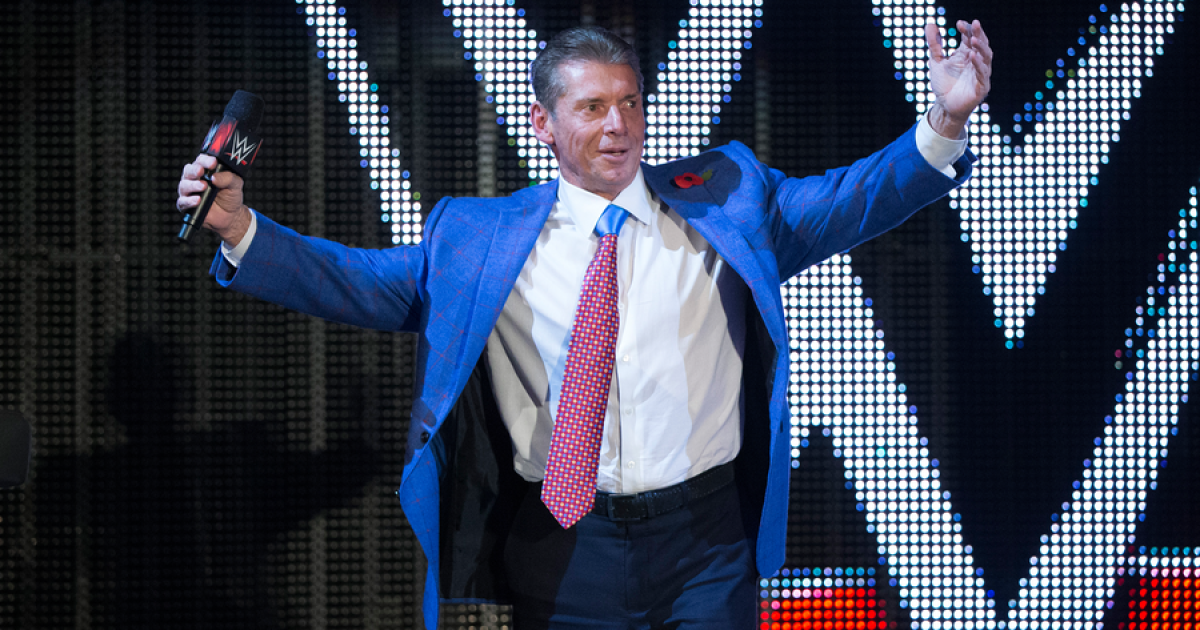
A Delaware Court of Chancery judge delivered a blow to wrestling impresario Vince McMahon and other World Wrestling Entertainment officials earlier this week.
Judge J. Travis Laster, vice chancellor of the Delaware Court of Chancery, issued sanctions for “spoliation of evidence” in the shareholder lawsuit over the 2023 merger between Ultimate Fighting Championship and WWE.
Laster ruled on Tuesday that WWE executives destroyed evidence by using the auto-delete setting on the messaging app Signal, enabling potentially relevant communications to be deleted.
The ruling means the court will operate under the assumption that five potentially damaging statements are true while allowing the defendants to rebut them.
The statements, according to the ruling, include that McMahon’s decision on the merger was “influenced” by Endeavor Executive Chairman Ari Emanuel’s “promise” to provide him with a continued role at the company and to indemnify him and provide legal support as federal investigators were looking into claims of alleged sexual misconduct.
McMahon pursued a deal with Endeavor in 2022 before WWE initiated its strategic review process, and both McMahon and then-WWE President Nick Khan worked with The Raine Group, a strategic financial advisor, “to steer the process to Endeavor and away from other potential bidders,” the ruling states.
In September 2023, entertainment giant Endeavor, the parent company of UFC, acquired WWE and merged the two sports entities to form a new, publicly traded company, TKO Group Holdings, in a deal worth $21.4 billion.
A month later, a group of shareholders filed suit against McMahon and other company officials in Delaware Chancery Court, claiming McMahon orchestrated a “sham sale process.”
Representatives for McMahon, WWE and TKO were not immediately available for comment.
According to the suit, McMahon, WWE’s controlling shareholder, turned down higher offers and excluded other bidders who would have ousted him and instead chose a deal that favored Endeavor’s Emanuel, a “close friend and longtime ally,” enabling McMahon to continue running WWE and shielding him from federal investigations related to a raft of sexual misconduct claims.
The complaint also alleges that the $21.4-billion deal undervalued the company and was “far below the offers” WWE’s board could have received from other interested parties had they “made any effort to negotiate in good faith.”
The litigation is related to the 2022 investigation by WWE’s board that found that McMahon made at least $14.6 million in payments between 2006 and 2022 for “alleged misconduct.” McMahon has denied claims of misconduct.
The settlements were made to women, including WWE employees, who alleged that McMahon initiated unwanted sexual contact and coerced women into performing sexual acts on him. In one case, first reported by the Wall Street Journal, a woman claimed that McMahon sent her unsolicited nude photos of himself.
McMahon’s alleged misconduct became the subject of ongoing investigations by the Securities and Exchange Commission and the U.S. Department of Justice.
“I am confident that the government’s investigation will be resolved without any findings of wrongdoing,” McMahon said in a statement to The Times in 2023.
Last January, the SEC announced it had settled charges against McMahon alleging he had violated federal securities laws by failing to disclose a pair of settlement agreements to WWE worth $10.5 million.
McMahon agreed to pay more than $1.7 million in a civil penalty and in reimbursement to WWE, without admitting or denying the agency’s findings. Federal prosecutors also have dropped their criminal investigation.
In January 2024, McMahon resigned as executive chairman of the board of TKO Group, one day after a former WWE employee, Janel Grant, sued the company, McMahon and former head of talent relations John Laurinaitis, alleging sexual assault, trafficking and emotional abuse.
Grant claimed that McMahon agreed to pay her $3 million in exchange for her silence.
The shareholder trial is set to begin on June 8. McMahon, Emanuel, Khan, TKO President Mark Shapiro, and WWE Chief Content Officer Paul “Triple H” Levesque are expected to testify.

In a high-stakes decision that will shape California’s economy for years, air officials late Friday approved a sweeping overhaul of the state’s signature climate program, cap-and-invest.
The 10-3 vote from the California Air Resources Board determines how aggressively the Golden State will curb planet-warming greenhouse gas emissions in the years ahead — and how billions of dollars in revenue will flow through communities, businesses and public programs statewide.
Cap-and-invest was nation-leading when it launched in 2013. The program forces major polluters to pay for their share of emissions by buying allowances at auctions or being granted them for free. It uses the revenue to fund public transit projects, wildfire prevention, affordable housing, clean energy, electric vehicles and safe drinking water.
The pollution limit — or cap — declines each year, reducing the total amount of emissions in the state and helping California reach its ambitious climate targets, including 100% carbon neutrality by 2045.
The Legislature voted last year to extend cap-and-invest through 2045. Officials at the Air Resources Board then spent the last several months drafting and revising the plan voted on this week, which received considerable feedback from oil and gas companies, environmental groups, lobbyists and lawmakers all jockeying for different priorities.
Some 200 people testified in person during the marathon two-day meeting preceding the vote, and the final proposal received more than 1,000 written comments.
Industry groups warned that capping emissions too much and too quickly would push refineries out of the state and drive up already soaring energy costs. But environmentalists and other stakeholders said giving too many concessions to fossil fuel interests would defeat the program’s purpose, which is to drive down emissions along a pathway consistent with what scientists say could preserve a recognizable climate.
The program was always planned to become stricter as the years unfolded, to give businesses more time to make the stronger reductions in their emissions.
Officials were under legal, market and budgetary pressure to pass a plan without delay, and also said it’s important for California to signal market certainty.
“It is no secret that climate policy is at a crossroads — under attack by an openly hostile and well-funded opposition and upended by global economic upheaval,” CARB chair Lauren Sanchez said during the meeting. “At a moment of uncertainty at the federal and international levels, California has the opportunity to lead with consistency.”
Among the key updates to the program are the removal of 118 million pollution permits, or allowances, from the market by 2030, and 900 million after 2030. Officials say this will amount to a steep, 11% annual lowering of the cap by the end of this decade, and 7% from 2031 to 2045, in keeping with the state’s mandated targets.
Critically, however, the update will also create a new pool of 118 million allowances above the cap that polluters can apply for and receive if they invest in decarbonization projects, a program dubbed the Manufacturing Decarbonization Incentive.
The incentive program is intended to discourage regulated industries from leaving the state. Two major refineries have announced exit plans in recent years, including Valero’s Benecia refinery and Phillips 66’s Los Angeles refinery, which shut down in 2025.
But many critics — including transit, affordable housing, environmental justice and clean water groups — said this amounts to a dismantling of the program.
“CARB has proposed creating exactly 118.3 million additional allowances … outside the cap, the precise number of allowances that must be removed from the cap to keep us on track for our 2030 targets,” said Caroline Jones, a senior analyst with the nonprofit Environmental Defense Fund. “This undermines the cap’s role in actually limiting climate pollution, which is the core function of this program.”
The board approved the decarbonization incentive but committed to additional workshops and evaluations of the program before issuing any allowances for it.
Other updates include more free allowances for industrial facilities and refineries, which regulators said will help reduce pressure on gasoline prices. Critics described the free permits as subsidies for oil and gas.
The update will also shift some allowances from gas to electric utilities, and increase funding for the California Climate Credit, a rebate that appears automatically on people’s utility bills.
But perhaps most controversial is how the update will affect the program’s multibillion-dollar revenue, which flows into the state’s Greenhouse Gas Reduction Fund each year and is distributed to various programs. Cap-and-invest has delivered $35 billion for climate projects in California since its inception.
The new incentive pool will mean the loss of $2 billion annually to the fund, or roughly half the amount it has received in recent years, according to an analysis from the Legislative Analyst’s Office.
While the Air Resources Board does not determine how the fund is divvied up — that’s the Legislature — opponents warned that this could amount to significant cuts for the Affordable Housing and Sustainable Communities Program, the Low Carbon Transit Operations Program, the SAFER drinking water program and the Community Air Protection Program, among many others that rely on revenue from cap-and-invest.
“This could create serious consequences, including a potential zeroing out of the state’s support for critical emission reduction programs,” said Phillip Fine, executive officer at the Bay Area Air District. “Striking the right balance is critical, but all consequences must be fully considered.”
It was a sentiment echoed by many who delivered comments during the board meeting.
“These additional allowances would not only endanger our emissions targets, they would also flood the auction market and depress cap-and-invest revenues,” said Pam Odell of the group Climate Action California. “These revenues fund vital programs, promote climate resilience, clean transit and transportation, and public health, especially in the most heavily exposed front-line communities.”
Some groups came out in support of the update, however, including Southern California Edison and Pacific Gas & Electric. The plan strikes a “balance between program stringency and affordability,” Fariya Ali, air and climate policy manager with PG&E, said during the meeting.
Assemblymember Jacqui Irwin (D-Thousand Oaks), who authored the bill that reauthorized the program last year, was cautiously supportive, noting that she would like to see more guardrails around the incentive program to ensure it aligns with state climate targets. But delaying the update would only create more uncertainty at a time when the Trump administration is already canceling clean energy funds and revoking California’s authority to set clean vehicle standards, she said.
“If we fail now to adopt the proposed amendments to cap-and-invest, it would be without a doubt the greatest victory that the Trump administration could possibly hope for to achieve against California’s climate policies this year,” Irwin said.
Oil and gas groups were tepid. Jodie Muller, chief executive of the Western States Petroleum Assn., said the update provides some near-term relief for refineries, but leaves too much uncertainty after 2030 to drive continued investment.
Brian McDonald, regulatory affairs manager with Marathon Petroleum Corp., said similarly that the oil company is “deeply concerned that the current proposal does not go far enough to provide the regulatory certainty needed to sustain in-state fuel production.”
In a briefing ahead of the vote, California climate economist Danny Cullenward said the update threatens both the “cap” aspect of the program by introducing the new allowance pool, and the “invest” aspect by threatening to reduce the program’s revenues.
The proposal is “being presented as a compromise when in fact it is sacrificing both of the key goals of the program,” he said.
The new plan is slated to go into effect Sept. 1.
Layoffs have continued with another tech company saying it was cutting people to enable it to use more artificial intelligence.
Groupon announced in a security filing this month that it will cut up to 400 jobs, or nearly 25% of its worldwide workforce, as part of a broader restructuring plan to make the platform AI-native. The Chicago company plans to carry out the layoffs in the coming months.
Earlier the company’s Chief Executive Officer Dušan Šenkypl had said the company “fell short of our expectations” last quarter.
Since 2022, more than 800,000 tech workers have been laid off, according to Layoffs.fyi, a website that tracks job cuts.
The surge in pink slips started in 2023, when companies that had gone on hiring sprees during the COVID-19 pandemic began to cut back. From January to April this year, U.S. tech employers announced 85,411 job cuts, up 33% from the same period last year, according to global outplacement and executive coaching firm Challenger, Gray & Christmas.
Groupon said in the filing that the decision to shift toward an AI-based company is to “better deliver on our mission, serving both customers and merchants.”
The company said the layoffs will cost it as much as $13 million, but save it more than $20 million per year.
This announcement comes as many e-commerce companies are shifting their business models to AI to reduce costs by automating many roles.
Artificial intelligence has also triggered fierce competition for top talent and is also fueling tens of thousands of layoffs this year. The result is that the class divide is widening in Silicon Valley as a tiny group of employees are landing unprecedented packages for AI skills, while many others struggle to find work.
The have-nots are doing everything that used to guarantee great jobs — refreshing resumes, optimizing LinkedIn profiles and doing interviews — but companies are much more picky these days. The tech jobless are rethinking their lives. Some are taking pay cuts, while others are leaving tech. Some are going back to study or launch startups. Some have retired.
Groupon shares, which have fallen 27% over the last 12 months, slipped 1% on Thursday to $21.20.
-

 Texas1 minute ago
Live Updates: Lady Vols Softball vs. Texas Tech in the Women’s College World Series
-

 Utah8 minutes ago
Man guilty of crash that killed Utah CEO and his daughter gets maximum sentence – East Idaho News
-
 Vermont11 minutes ago
Fallen solar panels in Vermont prompt environmental concerns – Valley News
-

 Virginia16 minutes ago
Manhunt underway for suspect in Virginia accused of killing sheriff’s deputy
-

 Wisconsin26 minutes ago
11 Wisconsin Towns With A Slower Pace Of Life
-

 West Virginia31 minutes ago
West Virginia Racing Heritage Festival showcases state’s dirt track racing history at Pennsboro Speedway
-
 Wyoming38 minutes ago
Lummis family could cash in on Microsoft data center expansion through Cheyenne land sales
-

 Crypto41 minutes ago
What is a ‘wrench attack,’ and why are they on the rise globally?

