The shortest day of the year, also known as the winter solstice, is Sunday. Maine ranks among five states with the shortest winter daylight, with about 8.5 hours. Averaging day length across the year, Maine is also near the bottom, with roughly 11.5 hours, second only to Alaska.
Day length varies strongly with latitude, even within Maine. On Sunday, Fort Kent will see almost a half hour less daylight than Portland, with 8 hours, 28 minutes compared with 8 hours, 56 minutes.
Why acknowledge the solstice?
Advertisement
The sun sets over West Grand Lake, marking the end of an early winter day. Credit: Susan Bard / BDN
The winter solstice serves as both a scientific marker of Earth’s orbit and a cultural symbol of the cycle of darkness and light. It is a time to look forward to longer days and opportunities for outdoor recreation, including winter-specific activities.
Watch the sunrise or sunsetThe sun rises over Pocomoonshine Lake in Down East Maine, casting a golden glow across the winter landscape. Credit: Susan Bard / BDN
With such a short day, take time to appreciate the daylight we do have. Head to a scenic spot near Bangor, such as Black Cap Mountain or the Waterfront, or for a longer drive, visit Bass Harbor Head Light in Acadia National Park or Mount Battie in Camden. Watch the sun rise or set over the winter landscape. Cross-country ski or snowshoe these areas to make the outing even more exciting. Rent equipment if needed, and carry a headlamp. Don’t let the waning light shorten your plans.
Visit holiday-themed lights
The Stillwater River Trail in Orono features a free light display with tunnels and wrapped trees, open nightly from 4 p.m. to 9 p.m.
Holiday lights line the Stillwater River Trail in Orono, creating a festive winter display. Credit: Susan Bard / BDN
For those willing to travel farther, the Gardens Aglow display at Coastal Maine Botanical Gardens in Boothbay lights up nature-themed paths with thousands of beautiful lights.
L.L. Bean in Freeport is always decorated with lights and holiday music, and the Cape Neddick Light in York has lights outlining its tower, keeper’s house and surrounding buildings.
Advertisement
Evening walkers are drawn to the Stillwater River Trail in Orono, lit by festive holiday lights. Credit: Susan Bard / BDN
Make winter crafts
After the sun sets, residents can mark the winter solstice with indoor activities such as creating seasonal crafts using Maine materials.
A handcrafted Christmas wreath made with Maine balsam fir brings natural holiday cheer to any home, and can be embellished with other natural trimmings like turkey feathers. Credit: Susan Bard / BDN
Options include wreaths and simple candle holders made from evergreens, pinecones and berries.
Many Maine land trusts allow public access to conserved forests and trails, providing materials for crafts with a permit. Creating your own wreaths and decorations is not only rewarding; they also make great gifts and are traditions worth starting.
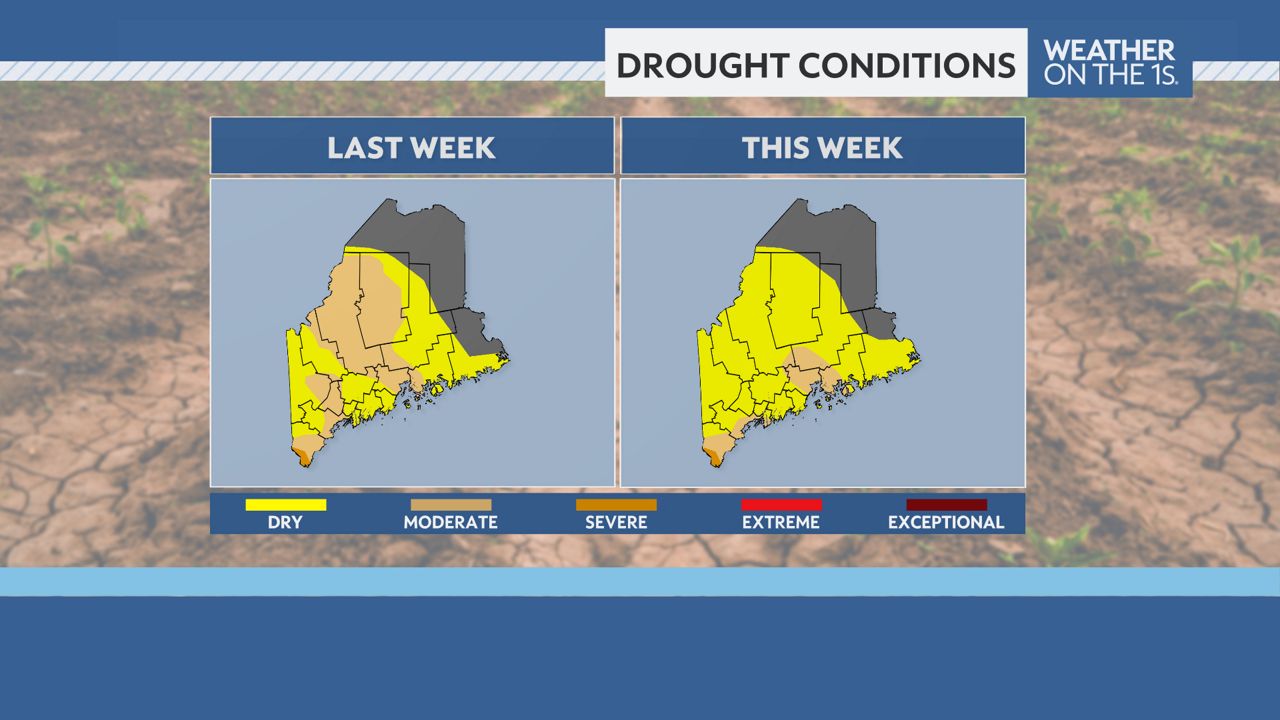
The recent rain in Maine is easing the drought that parts of the state have been experiencing since the fall.
Scott Dean, a Spectrum meteorologist, said much of Maine has been at least “dry” for several months. Parts of the state, including Portland, Bangor and Bar Harbor, are under a “moderate” drought.
Much of the country is also experiencing a drought, Dean added. The Southeast is seeing extreme levels of drought, and the West coast has been under a drought for years. There are many factors that go into this, including climate change, weather patterns like El Niño and La Niña and other factors.
And, when an area does experience drought, it can become a feedback loop. With less moisture in the ground and atmosphere, the drought can “feed upon itself,” Dean said.
Advertisement
“It takes a while to get into a drought and it also takes a while to get out of one,” Dean said.
But, the rainy days in Maine have been alleviating the drought, Dean said. And, the trend is likely to continue — the forecast is predicting above average levels of precipitation for the next three to four weeks.
“Hopefully, we are continuing to head in the right direction as the drought has eased in these areas,” Dean said.
In fact, if these rains do continue, Maine could come out of the drought sometime this summer.
STANDISH – Craig J. Ahlemeyer, 48 of Standish, passed away unexpectedly, Saturday, June 13, 2026.A memorial service will be held at 1 p.m., Saturday, June 27 th at Standish Congregational Church, 25 Oak Hill Road in Standish. A reception will follow.To see Craig’s full obituary, share a memory or leave the family an online condolence, please visit http://www.athutchins.com.
“Do you ever think we could find some woods to walk in?” my outdoorsy 12-year-old asks me, every now and again. As a kid growing up in New York City, Anton appreciates all the skate parks and bagel shops, but he also really craves nature, like in his bones.
So, when school got out, I offered to take him for a weekend in Maine, a place with not only woods but also lakes and rocks and periwinkles that come out of their shells when you hum. We were both really excited.
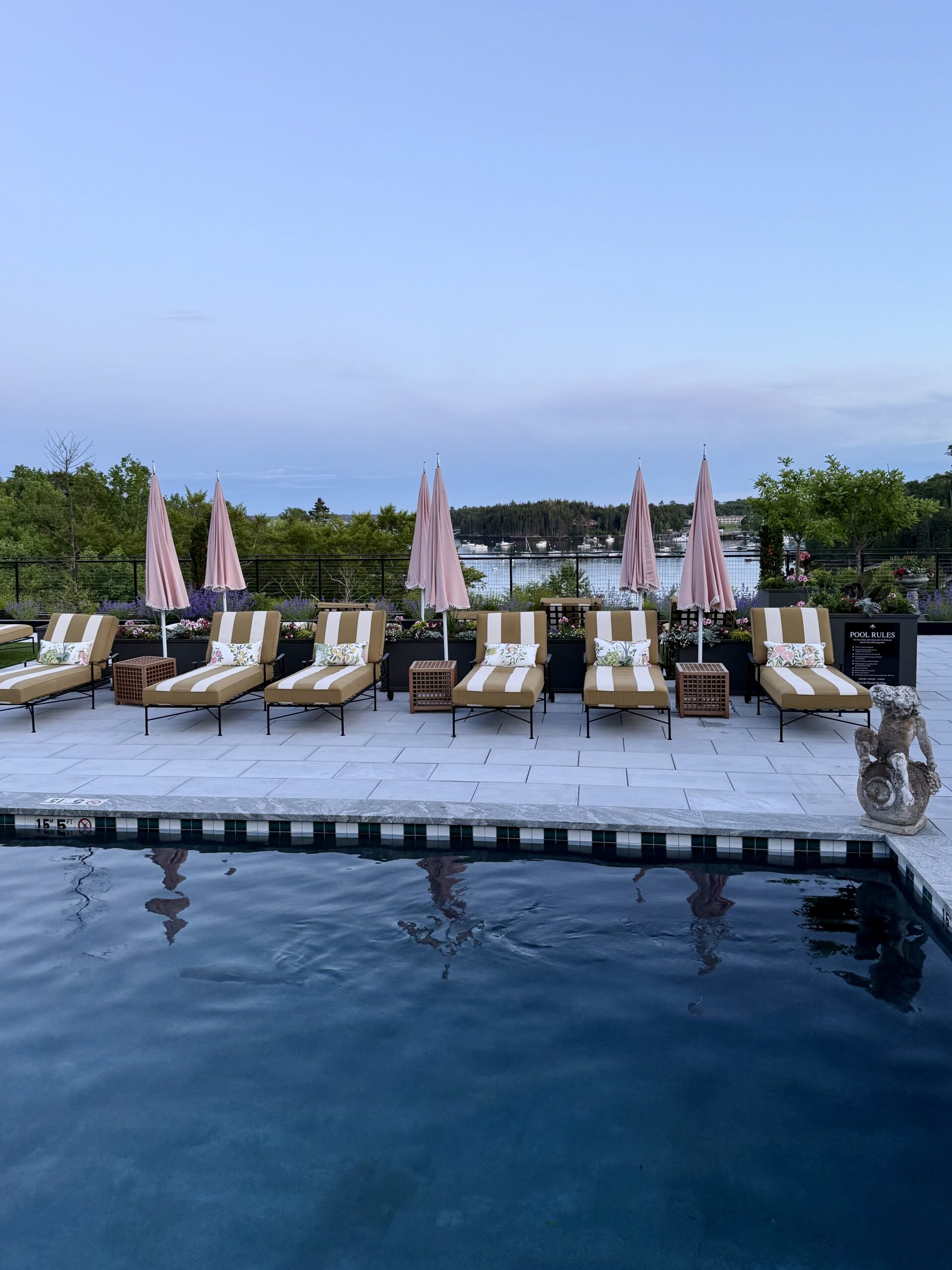
The first night, we were lucky enough to snag a room at Aragosta, a beautiful small hotel in Deer Isle that Alison had recommended.
The chef-owner, Devin Finigan, is famous for her seasonal tasting menus, but we focused on the breakfast that came with the room, including these Maine blueberry pancakes. I don’t even usually like pancakes and these blew my mind.
Advertisement
We also played a LOT of chess on our little travel board.
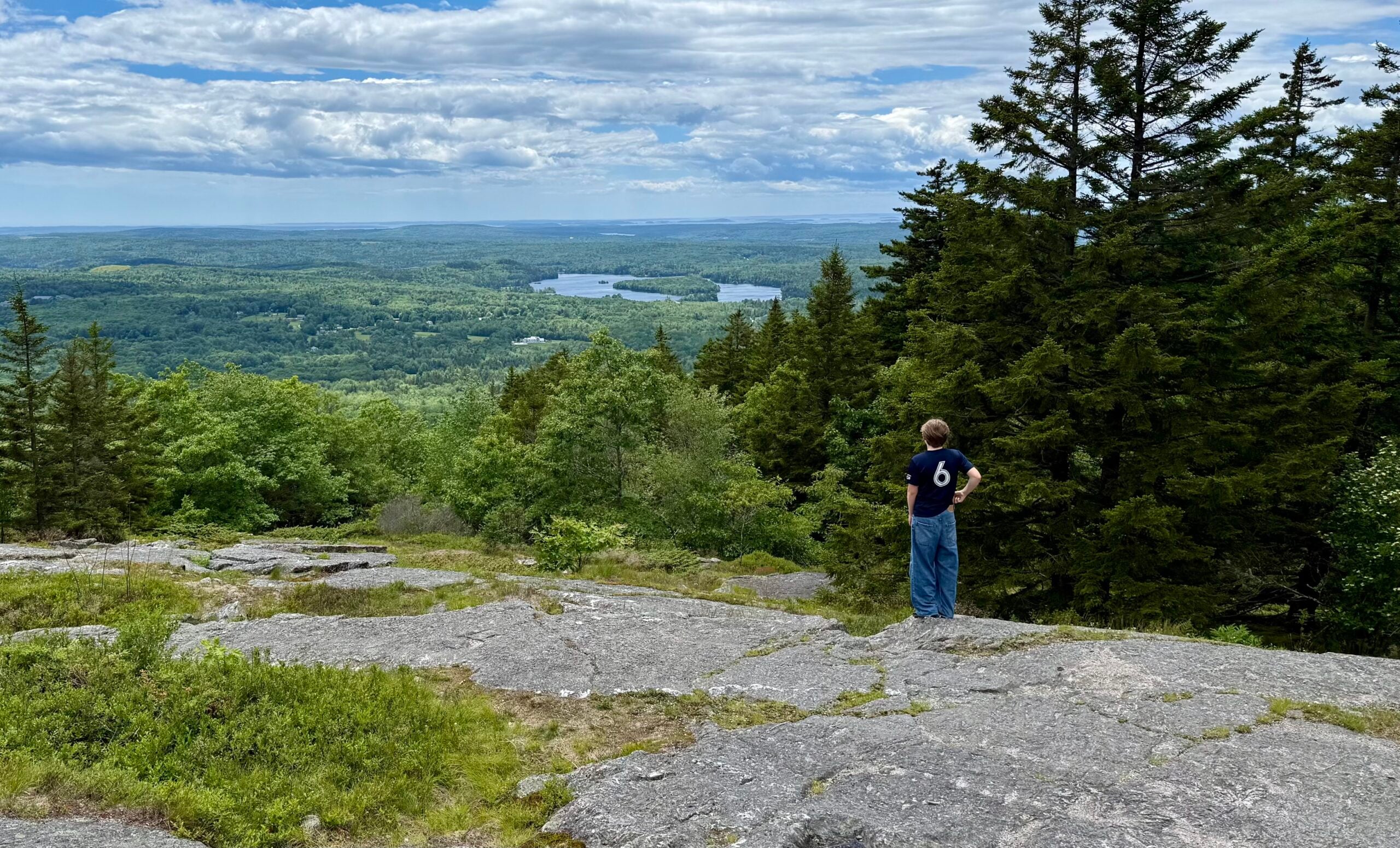
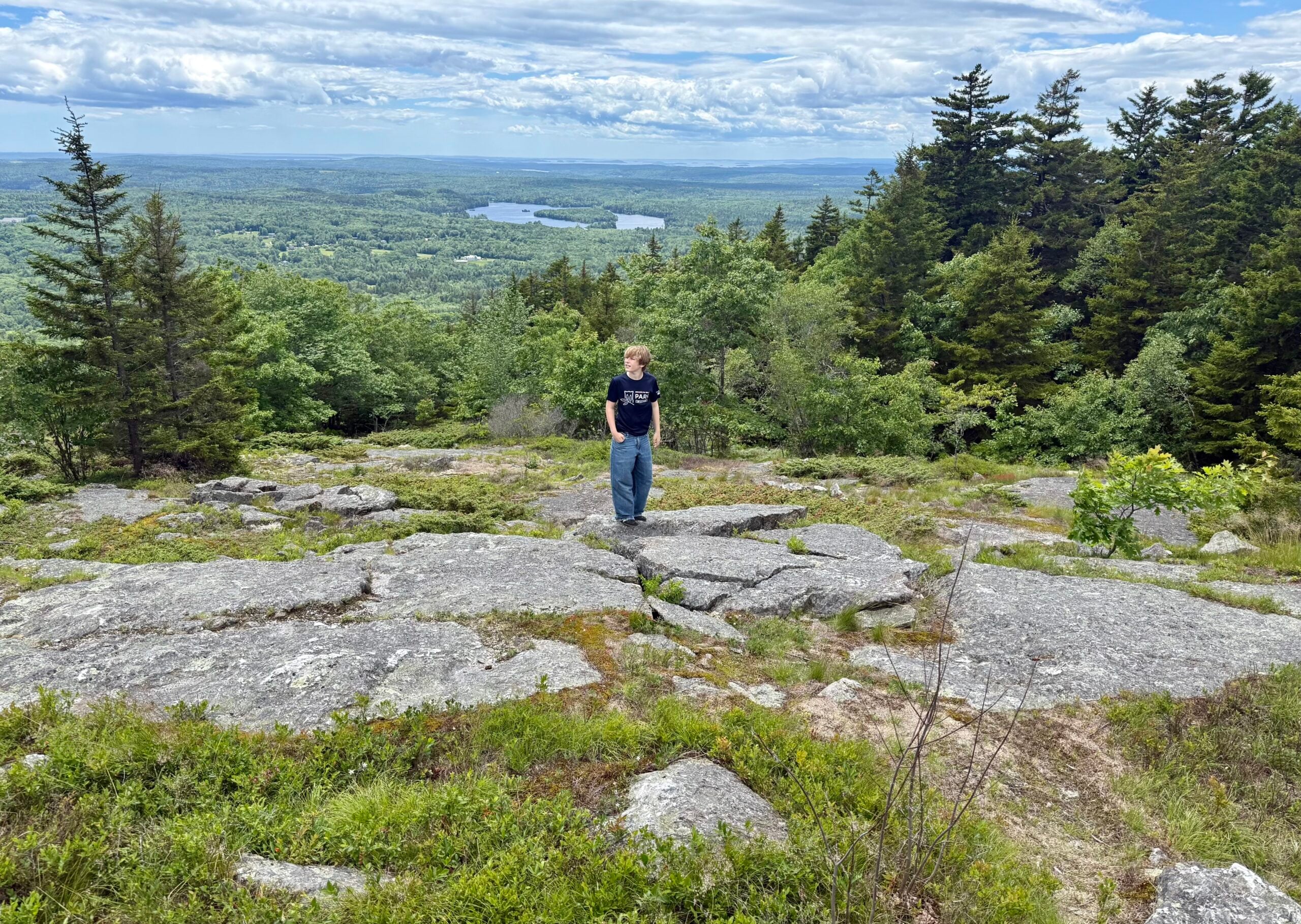
After breakfast, we set out to hike up Blue Hill Mountain.
Here’s the summit!
In the afternoon, we explored the charming fishing village of Stonington…
…then joined my friend Julie (of Rudy Jude fame) and her family for dinner at the Burnt Cove Boil.
Advertisement
Basically, a crab gets plonked down in front of you, followed by a corn on the cob, then a lobster, then a classic ice-cream sandwich. Julie and her husband Anthony taught us how to get all the meat out. (Their kids were already pros.)
Afterward, the four boys scrambled around on the rocks, while the adults chatted. It’s always such a treat to hang out with people who live in the place you’re visiting, don’t you think? Julie and Anthony described how they brought their recently hatched chicks into their home to keep them warm, and all the peeping was sooooo loud — and then a cricket got into the house and added to the noise and no one could find it and everyone was going nuts, haha. Very different from city life!
The next day, Anton and I stayed at the lovely Asticou Hotel near Acadia National Park.
We drove to a couple trailheads but they were PACKED — you had to stand in a long line, just to start the hike! Luckily, we found a quieter area and took a long walk around Jordan Pond, playing Would You Rather and Categories along the way. Do you have any favorite travel games?
Finally, we skimmed stones on our last afternoon before heading back to Brooklyn.
Advertisement
Epic travel buddy
Oh, Maine, what a magical place! Not pictured, of course: traffic, grumpy preteen moments, locking our keys in the rental car, etc., but all that’s to be expected.
Have you been to Maine? Do you live there? What parts do you love? Any pro tips? I’d love to hear. xoxo
P.S. Our Maine trip — and another amazing hotel — when the boys were much younger, and a Maine home with a bedroom looking over water.