Lifestyle
Clair Obscur: Expedition 33 sweeps The Game Awards — analysis and full winners list


Performers onstage at The Game Awards 2025 at the Peacock Theater on December 11, 2025 in Los Angeles, California.
Frank Micelotta/Picturegroup
hide caption
toggle caption
Frank Micelotta/Picturegroup
The first minutes of The Game Awards set the mold for the next three hours. Clair Obscur: Expedition 33 won best independent game during the preshow, beating out acclaimed sequels like Hades 2 and Hollow Knight: Silksong. Moments after, the main stage opened with operatic singers and a full orchestra (plus the obligatory electric guitar!) belting out music from the game.

Clair Obscur was already the favorite to win the grand prize — but kicking off the show with the game front-and-center felt like an anointing. It triumphed in nearly every category it competed in, picking up nine awards in total. By the time it won “Game of the Year,” Clair Obscur had surpassed The Last of Us: Part 2 to become the most decorated game in the Awards history.
As predictable as the night became, the game it honored was anything but. Clair Obscur came from an independent French studio composed of developers who had worked for the French gaming behemoth Ubisoft. Instead of chasing trendy genres like battle royales or open-world action games, Clair Obscur drew inspiration from turn-based role-playing games like the classic Final Fantasy titles. It paired an intimate and existential story with a setting that was both whimsical and epic. And it cast motion-capture icon Andy Serkis alongside game actor veterans like Ben Starr and Jennifer English, who delivered the night’s most rousing speech when she accepted the award for best performance.
“I just want to say to every neurodivergent person watching in this room, because I know there’s probably quite a lot of you,” English said. “To all of you that feel like life is stuck on hard mode, this is for you, and thank you so much to the games community and industry for giving us, so many of us, a home.”

Jennifer English, also known for her leading role in 2023 Game of the Year winner Baldur’s Gate 3, accepts her best performance award onstage at the Peacock Theater on December 11, 2025.
Frank Micelotta/Picturegroup
hide caption
toggle caption
Frank Micelotta/Picturegroup
Clair Obscur’s victories fit with two themes of the night: the rise of independent studios and the internationalization of the awards themselves. Half of the “Game of the Year” nominees were indie games, even as the term has stretched to include titles with sizable budgets and publisher partnerships.
This semantic squishiness is a result of The Game Awards’ outsourced voting process, which polls over 150 international media outlets (including NPR) to determine a list of nominees. These outlets decide for themselves how to define categories like an “independent game” or “action adventure game.” After the shortlist is tallied, they’ll pick their favorites in each category, which are weighted against an open online voting system that makes up a 10th of the total score. As the jury has expanded outside of the U.S., which now only represents roughly 15% of outlets, award winners have become both more global and more mainstream.
Still, Clair Obscur’s ubiquity speaks volumes. Even as it swept other deserving indies aside, the game demonstrates the outsized impact a small team can have on the broader market. No longer seen as just a niche, prestige title, Clair Obscur rose to prominence thanks to strong word-of-mouth and its inclusion on the Xbox Game Pass Service, which allowed regular gamers and critics alike to try the game out without committing to a full purchase.

Guillaume Broche, Tom Guillermin, Nicholas Maxon-Framcombe, and François Meurisse accept the Game of the Year award for Clair Obscur: Expedition 33.
Frank Micelotta/Picturegroup
hide caption
toggle caption
Frank Micelotta/Picturegroup
Big companies still took home prizes, however. After being completely shut out last year, Nintendo earned a few awards for Switch 2 exclusives, with Donkey Kong Bananza winning best family and Mario Kart World winning best sports/racing. Grand Theft Auto 6 won most anticipated game for the second year in a row. Wuthering Waves, a Chinese game with a huge mobile audience, won the Players’ Voice award, the only category completely determined by public online votes.
Here are the full nominees and winners for the 2025 Game Awards (winners in bold):
Game of the year
Clair Obscur: Expedition 33 (Sandfall Interactive/Kepler Interactive)
Death Stranding 2: On The Beach (Kojima Productions/Sony Interactive Entertainment)
Donkey Kong Bananza (Nintendo EPD/Nintendo)
Hades II (Supergiant Games)
Hollow Knight: Silksong (Team Cherry)
Kingdom Come: Deliverance II (Warhorse Studios/Deep Silver)
Best game direction
Clair Obscur: Expedition 33 (Sandfall Interactive/Kepler Interactive)
Death Stranding 2: On The Beach (Kojima Productions/Sony Interactive Entertainment)
Ghost of Yōtei (Sucker Punch Productions/Sony Interactive Entertainment)
Hades II (Supergiant Games)
Split Fiction (Hazelight Studios/EA)
Best narrative
Clair Obscur: Expedition 33 (Sandfall Interactive/Kepler Interactive)
Death Stranding 2: On The Beach (Kojima Productions/Sony Interactive Entertainment)
Ghost of Yōtei (Sucker Punch Productions/Sony Interactive Entertainment)
Kingdom Come: Deliverance II (Warhorse Studios/Deep Silver)
Silent Hill f (NeoBards Entertainment/KONAMI)
Best art direction
Clair Obscur: Expedition 33 (Sandfall Interactive/Kepler Interactive)
Death Stranding 2: On The Beach (Kojima Productions/Sony Interactive Entertainment)
Ghost of Yōtei (Sucker Punch Productions/Sony Interactive Entertainment)
Hades II (Supergiant Games)
Hollow Knight: Silksong (Team Cherry)
Best score and music, leveled up by Spotify
Christopher Larkin, Hollow Knight: Silksong
Lorien Testard, Clair Obscur: Expedition 33
Darren Korb, Hades II
Toma Otowa, Ghost of Yōtei
Woodkid and Ludvig Forssell, Death Stranding 2: On The Beach
Best audio design
Battlefield 6 (Battlefield Studios/EA)
Clair Obscur: Expedition 33 (Sandfall Interactive/Kepler Interactive)
Death Stranding 2: On the Beach (Kojima Productions/Sony Interactive Entertainment)
Ghost of Yōtei (Sucker Punch Productions/Sony Interactive Entertainment)
Silent Hill f (NeoBards Entertainment/KONAMI)
Best performance
Ben Starr, Clair Obscur: Expedition 33
Charlie Cox, Clair Obscur: Expedition 33
Erika Ishii, Ghost of Yōtei
Jennifer English, Clair Obscur: Expedition 33
Konatsu Kato, Silent Hill f
Troy Baker, Indiana Jones and the Great Circle
Innovation in accessibility
Assassin’s Creed Shadows (Ubisoft)
Atomfall (Rebellion)
Doom: The Dark Ages (id Software/Bethesda Softworks)
EA Sports FC 26 (EA Canada/EA Romania/EA)
South of Midnight (Compulsion Games/Xbox Game Studios)
Games for impact
Consume Me (Jenny Jiao Hsia/AP Thomson/Hexacutable)
Despelote (Julián Cordero/Sebastián Valbuena/Panic)
Lost Records: Bloom & Rage (Don’t Nod Montreal/Don’t Nod)
South of Midnight (Compulsion Games/Xbox Game Studios)
Wanderstop (Ivy Road/Annapurna Interactive)
Best ongoing
Final Fantasy XIV (Square Enix)
Fortnite (Epic Games)
Helldivers 2 (Arrowhead Game Studios/Sony Interactive Entertainment)
Marvel Rivals (NetEase Games)
No Man’s Sky (Hello Games)
Best community support
Baldur’s Gate 3 (Larian Studios)
Final Fantasy XIV (Square Enix)
Fortnite (Epic Games)
Helldivers 2 (Arrowhead Game Studios/Sony Interactive Entertainment)
No Man’s Sky (Hello Games)
Best independent game
Absolum (Guard Crush Games/Supamonks/Dotemu)
Ball x Pit (Kenny Sun/Devolver Digital)
Blue Prince (Dogubomb/Raw Fury)
Clair Obscur: Expedition 33 (Sandfall Interactive/Kepler Interactive)
Hades II (Supergiant Games)
Hollow Knight: Silksong (Team Cherry)
Best debut indie game
Blue Prince (Dogubomb/Raw Fury)
Clair Obscur: Expedition 33 (Sandfall Interactive/Kepler Interactive)
Despelote (Julián Cordero/Sebastián Valbuena/Panic)
Dispatch (AdHoc Studio)
Megabonk (Vedinad)
Best mobile game
Destiny: Rising (NetEase Games)
Persona 5: The Phantom X (Black Wings Game Studio/Sega)
Sonic Rumble (Rovio Entertainment/Sega)
Umamusume: Pretty Derby (Cygames Inc.)
Wuthering Waves (Kuro Games)
Best VR/AR
Alien: Rogue Incursion (Survios)
Arken Age (VitruviusVR)
Ghost Town (Fireproof Games)
Marvel’s Deadpool VR (Twisted Pixel Games/Oculus Studios)
The Midnight Walk (MoonHood/Fast Travel Games)
Best action
Battlefield 6 (Battlefield Studios/EA)
Doom: The Dark Ages (id Software/Bethesda Softworks)
Hades II (Supergiant Games)
Ninja Gaiden 4 (Platinum Games/Team Ninja/Xbox Game Studios)
Shinobi: Art of Vengeance (Lizardcube/Sega)
Best action/adventure
Death Stranding 2: On the Beach (Kojima Productions/Sony Interactive Entertainment)
Ghost of Yōtei (Sucker Punch Productions/Sony Interactive Entertainment)
Indiana Jones and the Great Circle (MachineGames/Bethesda Softworks)
Hollow Knight: Silksong (Team Cherry)
Split Fiction (Hazelight Studios/EA)
Best RPG
Avowed (Obsidian Entertainment/Xbox Game Studios)
Clair Obscur: Expedition 33 (Sandfall Interactive/Kepler Interactive)
Kingdom Come: Deliverance II (Warhorse Studios/Deep SIlver)
The Outer Worlds 2 (Obsidian Entertainment/Xbox Game Studios)
Monster Hunter Wilds (Capcom)
Best fighting
2XKO (Riot Games)
Capcom Fighting Collection 2 (Capcom)
Fatal Fury: City of the Wolves (SNK Corporation)
Mortal Kombat: Legacy Kollection (Digital Eclipse/Atari)
Virtua Fighter 5 R.E.V.O. World Stage (Ryu Ga Gotoku Studio/Sega)
Best family
Donkey Kong Bananza (Nintendo EPD/Nintendo)
LEGO Party! (SMG Studio/Fictions)
LEGO Voyagers (Light Brick Studios/Annapurna Interactive)
Mario Kart World (Nintendo EPD/Nintendo)
Sonic Racing: CrossWorlds (Sonic Team/Sega)
Split Fiction (Hazelight Studios/EA)
Best Sim/Strategy
The Alters (11 Bit Studios)
FINAL FANTASY TACTICS – The Ivalice Chronicles (Square Enix)
Jurassic World Evolution 3 (Frontier Developments)
Sid Meier’s Civilization VII (Firaxis Games/2K)
Tempest Rising (Slipgate Ironworks/3D Realms)
Two Point Museum (Two Point Studios/Sega)
Best sports/racing
EA Sports FC 26 (EA Canada/EA Romania/EA)
F1 25 (Codemasters/EA)
Mario Kart World (Nintendo EPD/Nintendo)
Rematch (Sloclap/Kepler Interactive)
Sonic Racing: CrossWorlds (Sonic Team/Sega)
Best multiplayer
Arc Raiders (Embark Studios)
Battlefield 6 (Electronic Arts)
Elden Ring Nightreign (FromSoftware/Bandai Namco Entertainment)
Peak (Aggro Crab/Landfall)
Split Fiction (Hazelight/EA)
Best adaptation
A Minecraft Movie (Legendary Pictures/Mojang/Warner Bros)
Devil May Cry (Studio Mir/Capcom/Netflix)
The Last of Us: Season 2 (HBO/PlayStation Productions)
Splinter Cell: Deathwatch (FOST Studio/Ubisoft/Netflix)
Until Dawn (Screen Gems/PlayStation Productions)
Most anticipated game
007 First Light (IO Interactive)
Grand Theft Auto VI (Rockstar Games)
Marvel’s Wolverine (Insomniac Games/Sony Interactive Entertainment)
Resident Evil Requiem (Capcom)
The Witcher IV (CD Projekt Red)
Content creator of the year
Caedrel
Kai Cenat
MoistCr1TiKaL
Sakura Miko
The Burnt Peanut
Best Esports game
Counter-Strike 2 (Valve)
DOTA 2 (Valve)
League of Legends (Riot)
Mobile Legends: Bang Bang (Moonton)
Valorant (Riot)
Best Esports athlete
brawk – Brock Somerhalder (Valorant)
Chovy – Jeong Ji-hoon (League of Legends)
f0rsakeN – Jason Susanto (Valorant)
Kakeru – Kakeru Watanabe (Street Fighter)
MenaRD – Saul Leonardo (Street Fighter)
Zyw0o – Mathieu Herbaut (Counter-Strike 2)
Best Esports team
Gen.G – League of Legends
NRG – Valorant
Team Falcons – DOTA 2
Team Liquid PH – Mobile Legends: Bang Bang
Team Vitality – Counter-Strike 2
Players’ voice
Clair Obscur: Expedition 33 (Sandfall Interactive/Kepler Interactive)
Dispatch (AdHoc Studio)
Genshin Impact (HoYoverse)
Hollow Knight: Silksong (Team Cherry)
Wuthering Waves (Kuro Games)


Can you say no to a friend’s wedding?
Getty Images/Getty images
hide caption
toggle caption
Getty Images/Getty images
Are we spending too much on other people’s weddings?
Going to a friend’s weddings can be so fun and meaningful… but it can also really hurt your wallet. A survey by LendingTree found that 31% of people who had been to a wedding in the past five years had accrued debt to attend. So what’s driving up the cost of weddings for guests? And what makes it so hard to say no to these expenses?
Brittany breaks it down with Allyson Rees, senior analyst at trend forecasting firm WGSN, and Annie Joy Williams, assistant editor at The Atlantic.
This episode was produced by Liam McBain, with additional support from Corey Antonio Rose. It was edited by Neena Pathak. Our Supervising Producer is Cher Vincent. Our Executive Producer is Barton Girdwood. Our VP of Programming is Yolanda Sangweni.

After the eight-day-long fire in a 500,000-square-foot Boyle Heights warehouse, eastern Los Angeles residents are contending with putrid smells, soot and potentially hazardous airborne chemicals after heavy plumes of smoke spread throughout the city. But those who grow food in nearby neighborhoods may also be wondering: How will the fires affect the plants and produce in my garden?
The Boyle Heights warehouse, owned by Lineage — a global temperature-controlled storage facility operator — housed 85 million pounds of frozen food and other products. In the days since the fire, local emergency visits for smoke inhalation and throat pain spiked while agencies still scramble to measure the amount of PM 2.5 — harmful fine particles — and heavy metals, like lead and arsenic, in the air.
According to researchers, any toxic airborne chemicals would likely stem from the charred foam insulation, metal exterior, burned solar panels and any lithium batteries that might have been present inside the warehouse.
After a fire, heavy metal particles can spread through ash and smoke over gardens and inhibit growth, said Olukayode Jegede, an agricultural toxicologist and assistant professor at UC Davis. Since the warehouse fire is so recent and cleanup has just begun, Jegede said the precise impact on gardens can’t be measured until comprehensive soil tests are conducted in the area.
While the L.A. city government hasn’t announced plans for soil testing, the Contaminant Level Evaluation and Analysis for Neighborhoods project at USC is offering free contaminant testing for Boyle Heights and East L.A. residents. Residents can collect soil samples and deliver them to Boyle Heights City Hall and other locations for an evaluation of lead, arsenic, chromium and mercury levels.
The good news is produce, plants and roots can still be preserved. According to Jegede, many of the soil tests conducted last year in the Altadena area after the Eaton fire showed that gardens and poultry were not as contaminated as one might expect.
“Quite a number of the soils we tested [in Altadena] were not really contaminated,” Jegede said. “We weren’t seeing many soils with concerning elevated levels of metal, so gardeners should not be too alarmed when these things happen.”
Nevertheless, there are several measures that gardeners can take to keep themselves, their children, plants and produce safe from potentially harmful contaminants stemming from the fire. Researchers, gardening experts and horticulturists offered some guidance on the handling, recultivation and cleanup that can keep you and your garden in good health.
How do I remove ash and contaminants from my garden?
Altadena horticulturist Leigh Adams said Boyle Heights plants and produce already live in a difficult environment, surrounded by industrial warehouses that spread contaminants daily.
“That area has been used industrially for 100 years, and the soil is impacted by many, many, many things,” Adams said. “Low-income neighborhoods and gardens usually don’t have a lot of resistance against dominant manufacturing.”
This means that the contamination of gardens in eastern L.A. won’t be as catastrophic as compared with those in Altadena, a more suburban environment, Adams said. But fallen ash still poses major health risks if ingested or inhaled.
An advisory from University of California Agricultural and Natural Resources last year recommended suiting up in an N95/KN95 mask, long sleeves, pants, close-toed shoes and gloves before attempting to deal with ash in the garden to limit exposure to potentially toxic contaminants. The advisory added that individuals should make sure all of this gear is cleaned thoroughly before bringing it back inside.
Once in the proper gear, Adams recommends removing the top two inches of topsoil from gardens, where the highest concentration of contaminants will settle after a fire. Using a plastic bag to collect the soil and disposing of it in the garbage — not green yard waste bins — will help to reduce the spread of airborne chemicals.
Gardeners with raised beds are advised to remove approximately six inches of soil, because excess ash can raise the pH level and prevent nutrients from soaking into the soil bed.
After this, watering the garden gently but plentifully will help to promote soil health and get rid of most of the ash present on plant leaves and stems. Adams said replacing the top two inches of soil with store-bought mulch or straw will help to contain any remaining ash and prevent it from spreading any further.
Experts say to avoid using leaf blowers if ash is present in the garden because they can send particles airborne. Doing so will increase the likelihood of heavy metal particles, which can carry lung irritants and carcinogens, being spread and inhaled.
A Boyle Heights resident keep a watchful eye on the fire at the 5,000-square-foot commercial building, which stores 85 million pounds of frozen food.
(Genaro Molina / Los Angeles Times)
Is it safe for me to eat produce from my garden?
Several studies, including one from the UC Cooperative Extension of Sonoma County, have shown that consuming produce in a fire-affected area poses minimal health risks.
Jegede said most root vegetables like potatoes and carrots, along with any fruit that has an outer layer, can be washed to remove potential contaminants, even if they were covered in ash. Peeling the outer layer of your produce can also help to reduce potential risks, he said.
Lettuce and other leafy foods with multiple layers pose a higher risk of contamination, but with a vigorous wash and peeling the outer layers, even the greens can be saved. The County of Los Angeles Department of Public Health recommends soaking leafy produce and fuzzy fruits like peaches in a 10% white vinegar and 90% water mixture.
Jegede said if the leaves or fruit are too delicate to wash or ash is still visible, it would be best to dispose of the produce.
How can I tell if my soil is contaminated?
After ridding your garden of visible ash, you might wonder how to tell if your plants will still thrive in the soil.
At-home soil tests that measure for alkaline, fertility and pH levels are widely available and can be purchased for $15 to $100 (for more detailed results) online. But Jegede said these tests can’t tell the full story of soil health.
Comprehensive soil testing is “something you can’t do properly at home,” Jegede said. “In labs, we are testing for metals like lithium and zinc, stuff that an at-home test will not show … If it comes to the point that you’re worried about your soil, I would just send it out to a lab.”
Wallace Laboratories in El Segundo, Babcock Laboratories in Riverside, Waypoint Analytical in Anaheim and other labs offer more detailed soil tests that measure heavy metal particles in addition to other fertility factors. Prices at Wallace Laboratories can range from $115 to $295 for a complete compost test.
The soil below two inches should be unharmed, Adams said, so long as new compost is set and plants are watered plentifully, which will promote natural biological cycles.
“What you’re doing is capping the soil, so that moisture stays in there, and instead of being dirt, it’s a living system called soil,” Adams said. “The more carbon we can get into our soil, the better.”
What can I do to help my soil recover?
For the last 12 years, Adams has been working with Metabolic Studio, a Los Angeles-based art and research hub focused on environmentalism, on methods for bioremediation, the practice of using additional fungi, plants and compost to decontaminate ash and break down contaminants.
Adams said straw, mushrooms, corn, rye and sunflowers are great bioremediators that can help to repair damage to soils. She said certain samples she’s worked on with Metabolic Studio have gone from testing at high heavy metal levels to nearly contaminant-free.
But for a more immediate fix, wash your produce, water your plants and have a little patience during ash cleanups. Your garden should look better in no time, Adams and Jegede said.

Inde Navarrette and Michael Johnston in Obsession.
Focus Features
hide caption
toggle caption
Focus Features
Two big horror films, Obsession and Backrooms, just smashed all box office expectations. So much of their success has been driven by Gen Z, which is now the biggest moviegoing demographic. But what makes a movie a Gen Z movie? Today we’re bringing you an episode of NPR’s It’s Been a Minute. Host Brittany Luse talks about this trend with Sam Adams and Reanna Cruz.
If you want to hear more about these movies, check out these episodes:
In ‘Obsession,’ love hurts. It really, really, really hurts.
‘Backrooms’ brings YouTube horror to the big screen
Zendaya brings ‘The Drama,’ we bring the spoilers
Connect with Pop Culture Happy Hour:
Letterboxd / Facebook
Our weekly newsletter
Support Pop Culture Happy Hour+
-

 Alaska5 minutes ago
Climate Change Is Helping an Invasive Predator Wreak Havoc on Iconic Alaskan Fish
-

 Arizona8 minutes ago
Arizona man pleads guilty after illegally living in forest for years among ‘1,000lbs of trash’
-

 Arkansas13 minutes ago
Army names intelligence facility for Arkansas Tech graduate
-

 California20 minutes ago
How California Effectively Legalized an Open-Air Sex Market
-

 Colorado23 minutes ago
Julian Lewis Says Deion Sanders’ Colorado ‘Wasn’t Really Looking at Defenses Much’ Last Season
-
 Idaho28 minutes ago
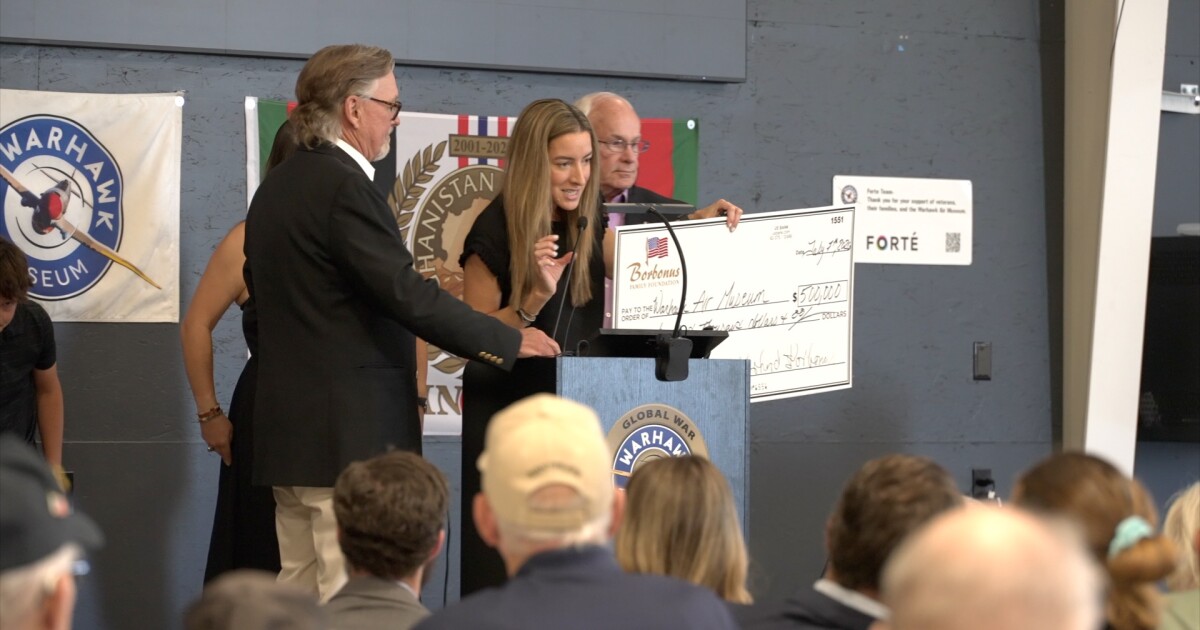
Warhawk Air Museum receives $500K grant honoring fallen Idaho soldier
-

 Connecticut28 minutes ago
Several beaches closed to swimming due to potential bacteria in the water
-

 Delaware35 minutes ago
Delaware Libraries Introduce Digital Literacy Specialists Program – State of Delaware News

