
Connect with us

West

Iranian refugee builds world-ranked American winery rooted in heritage and health

Published

on

Iranian refugee builds world-ranked American winery rooted in heritage and health

NEWYou can now listen to Fox News articles!

One American winemaking family believes exceptional wine doesn’t require shortcuts.

After decades of quiet persistence in their trade, global recognition recently arrived for Maysara Winery, located in the rolling hills of Oregon wine country. It currently ranks as the No. 23 vineyard worldwide.

“We were informed we were chosen [to be among] the top 50 vineyards in the world,” founder Moe Momtazi told Fox News Digital in an interview. 

NASHVILLE’S HIDDEN ‘WINE COUNTRY’ PROVIDES TASTE OF TENNESSEE IN WHISKEY BARRELS

Advertisement

His middle daughter, Naseem Momtazi, president of sales, said, “You can have beautiful American-made, quality-made wines coming from an actual family, an actual farm and an actual story.”

The winery has partnered with the Fox News Wine Shop on a 2017 pinot noir.

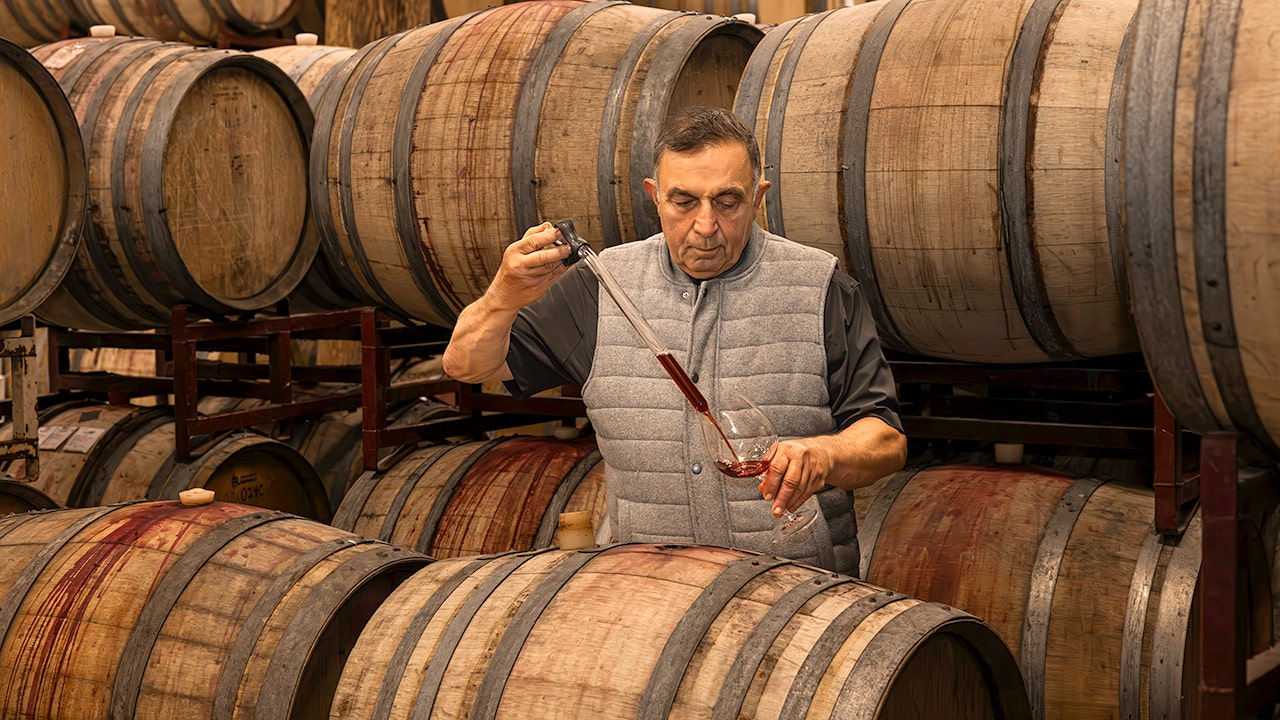
Moe Momtazi started out as a chemical engineer, but his longtime passion was farming. Today, he and his family run a winery in Oregon. (Direct Wines Inc.)

Even so, when Moe Momtazi talks about his life, he starts not in Oregon — but in the turmoil of post-revolution Iran. His story of escape, new life in America and, ultimately, a winemaking philosophy rooted in heritage and health, became the foundation for Maysara Winery.

Though he came to the U.S. in 1971 to study engineering, his life took a dramatic spin after he returned to Iran in the late 1970s. “Things got pretty ugly” amid the 1979 revolution, he said.

Advertisement

TEXAS WINERY BEATS NAPA ELITES WITH SMALL-TOWN SAVVY AND TOP-NOTCH TASTE

“So, in 1982, myself, with my wife — she was eight months pregnant — we escaped from Iran,” Momtazi continued, recalling his “difficult journey” to the U.S. by way of Pakistan, Spain, Italy and Mexico.

The new parents finally arrived in 1983 and initially settled in Texas, where Momtazi applied for political asylum and returned to civil engineering. But farming was his long-term dream.

Middle daughter Naseem recalled her father’s interest in farming.

Momtazi moved to Oregon with his wife, center, and established a winery — where all three daughters work. They’re all pictured here. (Karissa Williams Photography)

Advertisement

“I remember as a kid, he would just buy small parcels when he could, because they didn’t have much when they came to the United States,” she told Fox News Digital. “With whatever he could save, he would buy land.”

In 1990, Momtazi left engineering and moved his family to Oregon. Seven years later, the family purchased an abandoned wheat farm that would become their winery’s home. 

“It was my mission to farm holistically.”

Today, the property spans roughly 563 acres of “amazing elevation,” daughter Naseem said.

Momtazi’s wife and all three daughters work at the winery.

Advertisement

‘Need to produce better’

From the beginning, Momtazi envisioned a farm built on biodynamic agriculture.

NAVY VET-TURNED-WINEMAKER INFUSES MILITARY GRIT INTO POWERHOUSE POURS

“It was my mission to farm holistically and just not to use any kind of material from outside,” he said.

The method, grounded in the early 20th-century teachings of Rudolf Steiner, emphasizes natural cycles and soil vitality.

The Momtazi family’s winery spans roughly 563 acres of “amazing elevation” in Oregon, the family said. (Direct Wines Inc.)

Advertisement

One such unconventional method involves filling cow horns with manure and burying them in the ground.

Naseem Momtazi summed it up as “the most natural, holistic way to produce wine.”

‘MY WHOLE LIFE WAS A LIE’: FORMER VEGAN CHEF SINKS HER TEETH INTO CATTLE RANCHING

She added, “We do need to produce and consume better as people,” tying the winery’s methods to broader concerns about modern food production.

Moe Momtazi is even more uncompromising about how wine should be made.

Advertisement

Momtazi founded Maysara Winery in 1997. The entire family helps in the effort. (Direct Wines Inc.)

“We absolutely do not manipulate our wine… no use of commercial yeast or enzymes or adjusting acidity or adding sugar,” he said.

TEST YOURSELF WITH OUR LATEST LIFESTYLE QUIZ

Some customers have told them that their “wine is medicine,” Naseem said, reflecting the differences between Maysara wines and heavily processed wines.

Advertisement

“If you drink too much, you’re going to get drunk,” she added. “But if you consume a moderate amount of our wine, I truly do say that you’re not going to get the same effects.… So much wine is manipulated.”

Momtazi’s Maysara Winery has partnered with the Fox News Wine Shop on a 2017 pinot noir. (Direct Wines Inc.)

American-made wine

A defining trait of Maysara wines is that they’re aged far longer than most American wines, the family said. 

CLICK HERE FOR MORE LIFESTYLE STORIES

“We truly believe in holding back the wines and releasing [them] when ready,” Naseem Momtazi said — noting that Maysara wines aren’t released chronologically. 

Advertisement

“That is not a natural concept for American wine,” she said. 

Learn more about the Fox News Wine Shop here. 

Read the full article from Here

Utah

Rock Canyon fire doubles in size overnight near Arizona-Utah border

Published

on

Rock Canyon fire doubles in size overnight near Arizona-Utah border


FLAGSTAFF, AZ (AZFamily) — The Rock Canyon Fire, burning in northern Arizona near the border with Utah, doubled in size overnight to 4,512 acres and was 5% contained.

The fire has caused firefighters to evacuate hikers and campers in the area, and some roads in the Kaibab National Forest are closed.

People in Jacob Lake — less than 20 miles from the Rock Canyon Fire — say the new fire is stirring up anxiety after last year’s devastating fire season. They say they’re confident in firefighters, but after the trauma, they’re still holding their breath.

Memories of last year’s fires

For over 100 years, Jacob Lake Inn has been serving cookies to guests who want to visit the North Rim of the Grand Canyon or explore the Kaibab National Forest. Melinda Rich Marshall’s family has owned the inn since 1923.

Advertisement

Last year, they were evacuated during the White Sage Fire that burned close to 60,000 acres, and then the Dragon Bravo Fire, which destroyed nearly 150,000 acres, shut down the North Rim.

Now the Rock Canyon Fire has already burned thousands of acres north of the inn.

“I mean, honestly, our reaction was not again,” Rich Marshall said. “I mean, that’s really what it was.”

Rich Marshall said last year was hard enough, so once they heard about this new fire, it brought back bad memories.

“I’d say we have a little PTSD from it, seeing smoke and smelling smoke and all those things,” she said.

Advertisement

Fire burning in old burn scar

The Rock Canyon Fire was sparked over the weekend by a lightning strike.

Parts of it are burning in the White Sage burn scar. Bureau of Land Management spokesperson Dolores Garcia said old burn scars will usually slow down a new fire, but this time it’s actually fueling the flames.

“In some of those areas, we’re seeing quite a bit of fuels,” Garcia said. “We’re not seeing that the burn scar is helping much, especially with the winds as strong as they’ve been in some days and as dry as it’s been, those fuels are just tender and cured and really flammable.”

She said firefighters are attacking it from the ground and the air, but the high winds are limiting their ability to make water drops.

Hikers and campers were evacuated from the area. Garcia said she knows how stressful this must be to the surrounding communities after last year’s fires.

Advertisement

“We still understand that, it’s still a very fresh wound to many of the people who live up there, who’ve recreated up there for years,” she said. “That’s definitely at the forefront of our minds.”

Rich Marshall said while it’s scary, they have full trust in the firefighters.

“We’re really just grateful to see them and know the work that they are doing,” she said.

Rich Marshall said this is usually their peak season, but they’ve seen a bit of a slowdown even after the North rim reopened. She said people can support them by staying there or even just stopping in and getting some of their famous cookies.

See a spelling or grammatical error in our story? Please click here to report it.

Advertisement

Do you have a photo or video of a breaking news story? Send it to us here with a brief description.

Copyright 2026 KTVK/KPHO. All rights reserved.


Source link

Continue Reading

Washington

Washington State University Vancouver faculty, staff anxiously await details of 15% budget cuts

Published

on

Washington State University Vancouver faculty, staff anxiously await details of 15% budget cuts


Washington State University Vancouver faculty, staff anxiously await details of 15% budget cuts – OPB

“),r.close()),!r)throw Error(“base not supported”);var a=r.createElement(“base”);a.href=n,r.getElementsByTagName(“head”)[0].appendChild(a);var i=r.createElement(“a”);return i.href=t,i.href}finally{e&&e.parentNode.removeChild(e)}}());var l=i(t||””),f=function(){if(!(“defineProperties”in Object))return!1;try{var e={};return Object.defineProperties(e,{prop:{get:function(){return!0}}}),e.prop}catch(t){return!1}}(),h=f?this:document.createElement(“a”),m=new o(l.search?l.search.substring(1):null);return m._url_object=h,Object.defineProperties(h,{href:{get:function(){return l.href},set:function(e){l.href=e,r(),u()},enumerable:!0,configurable:!0},origin:{get:function(){return”origin”in l?l.origin:this.protocol+”//”+this.host},enumerable:!0,configurable:!0},protocol:{get:function(){return l.protocol},set:function(e){l.protocol=e},enumerable:!0,configurable:!0},username:{get:function(){return l.username},set:function(e){l.username=e},enumerable:!0,configurable:!0},password:{get:function(){return l.password},set:function(e){l.password=e},enumerable:!0,configurable:!0},host:{get:function(){var e={“http:”:/:80$/,”https:”:/:443$/,”ftp:”:/:21$/}[l.protocol];return e?l.host.replace(e,””):l.host},set:function(e){l.host=e},enumerable:!0,configurable:!0},hostname:{get:function(){return l.hostname},set:function(e){l.hostname=e},enumerable:!0,configurable:!0},port:{get:function(){return l.port},set:function(e){l.port=e},enumerable:!0,configurable:!0},pathname:{get:function(){return”https://www.opb.org/”!==l.pathname.charAt(0)?”https://www.opb.org/”+l.pathname:l.pathname},set:function(e){l.pathname=e},enumerable:!0,configurable:!0},search:{get:function(){return l.search},set:function(e){l.search!==e&&(l.search=e,r(),u())},enumerable:!0,configurable:!0},searchParams:{get:function(){return m},enumerable:!0,configurable:!0},hash:{get:function(){return l.hash},set:function(e){l.hash=e,r()},enumerable:!0,configurable:!0},toString:{value:function(){return l.toString()},enumerable:!1,configurable:!0},valueOf:{value:function(){return l.valueOf()},enumerable:!1,configurable:!0}}),h}var c,s=e.URL;try{if(s){if(“searchParams”in(c=new e.URL(“http://example.com”))){var f=new l(“http://example.com”);if(f.search=”a=1&b=2″,”http://example.com/?a=1&b=2″===f.href&&(f.search=””,”http://example.com/”===f.href))return}”href”in c||(c=undefined),c=undefined}}catch(m){}if(Object.defineProperties(o.prototype,{append:{value:function(e,t){this._list.push({name:e,value:t}),this._update_steps()},writable:!0,enumerable:!0,configurable:!0},”delete”:{value:function(e){for(var t=0;t1?arguments[1]:undefined;this._list.forEach(function(n){e.call(t,n.value,n.name)})},writable:!0,enumerable:!0,configurable:!0},toString:{value:function(){return r(this._list)},writable:!0,enumerable:!1,configurable:!0}}),”Symbol”in e&&”iterator”in e.Symbol&&(Object.defineProperty(o.prototype,e.Symbol.iterator,{value:o.prototype.entries,writable:!0,enumerable:!0,configurable:!0}),Object.defineProperty(u.prototype,e.Symbol.iterator,{value:function(){return this},writable:!0,enumerable:!0,configurable:!0})),s)for(var h in s)s.hasOwnProperty(h)&&”function”==typeof s[h]&&(l[h]=s[h]);e.URL=l,e.URLSearchParams=o}(),function(){if(“1”!==new e.URLSearchParams([[“a”,1]]).get(“a”)||”1″!==new e.URLSearchParams({a:1}).get(“a”)){var r=e.URLSearchParams;e.URLSearchParams=function(e){if(e&&”object”==typeof e&&t(e)){var a=new r;return n(e).forEach(function(e){if(!t(e))throw TypeError();var r=n(e);if(2!==r.length)throw TypeError();a.append(r[0],r[1])}),a}return e&&”object”==typeof e?(a=new r,Object.keys(e).forEach(function(t){a.set(t,e[t])}),a):new r(e)}}}()}(self);}).call(‘object’ === typeof window && window || ‘object’ === typeof self && self || ‘object’ === typeof global && global || {});

document.createElement(“picture”);


Source link

Continue Reading

Wyoming

250 Portraits self-portrait exhibition now on display throughout downtown Jackson

Published

on

250 Portraits self-portrait exhibition now on display throughout downtown Jackson


JACKSON, Wyo. – Jackson Hole Public Art (JHPA) is proud to announce the
public installation of 250 Portraits, a community art project featuring self-portraits created and submitted by Wyoming residents from across the state. Launched in honor of the nation’s 250th anniversary, the project invited Wyomingites of all ages and backgrounds to submit portraits of themselves or other Wyoming residents, resulting in a vibrant and deeply personal collection of artwork.

Portraits were submitted by artists ranging in age from 5 to over 80, representing residents from 16 of Wyoming’s 23 counties. Participants included individuals, families, school groups, and educators who worked with their students to take part. The result is a wide-ranging snapshot of the people who call Wyoming home, from young children just beginning to express themselves through art to lifelong residents reflecting on decades of experience and identity.

The portraits are now on display in five large-scale grid installations located throughout downtown Jackson. They can be found at the Center for the Arts, JH Book Trader, the Antler Inn, the alley at Pinky G’s, and the Jackson Hole Elks Lodge. The exhibition will remain on view throughout the summer, giving locals and visitors alike the opportunity to take in the full collection at their own pace.

The exhibit, 250 Portraits, was designed to highlight both individual identity and collective belonging, weaving together faces from communities large and small into a single, statewide visual portrait of Wyoming’s people. By placing the work in accessible, high-traffic locations in downtown Jackson, JHPA hopes to spark conversation among residents and visitors about what it means to be part of a community that spans such a wide and varied landscape.

Advertisement

A self-guided walking map is available to help visitors navigate between the five sites and experience other public art projects throughout Jackson. For more information and to access the 2026 Public Art Map, visit https://www.jhpublicart.org/art/2026map.

Pair your portrait with an audio story! Please consider adding your voice to another state-wide project celebrating the stories of everyday Wyomingites: Re-Storying the West.


Source link

Advertisement
Continue Reading
Advertisement

Trending
