Politics
Congress approves an economic lifeline for rural schools in California and elsewhere

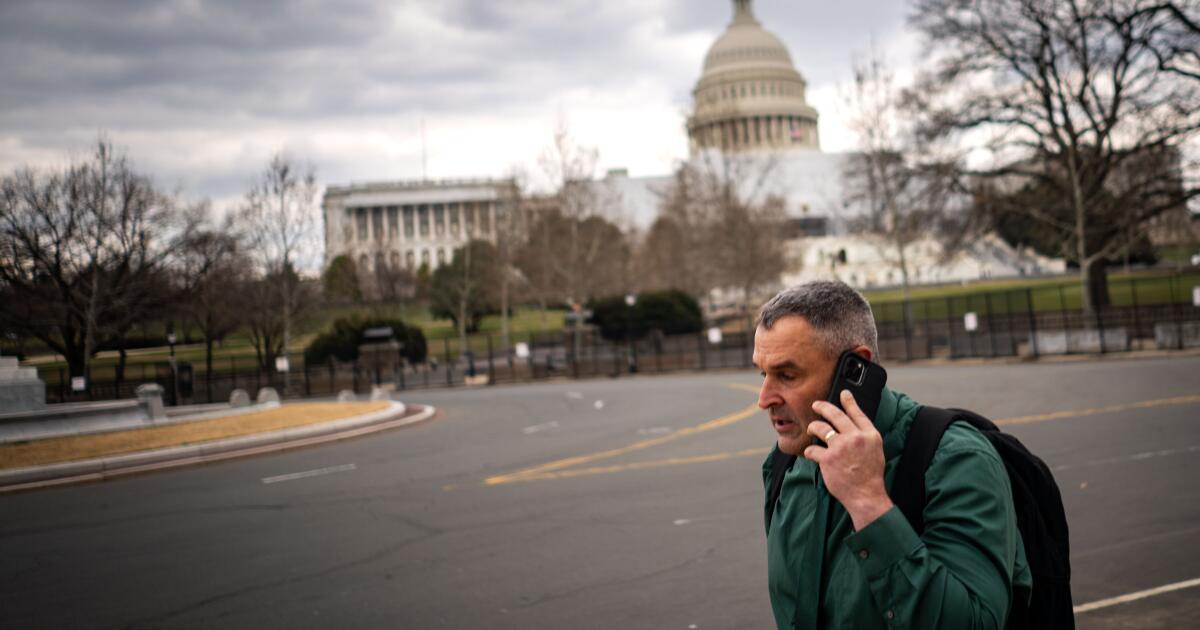
In February 2023, Jaime Green, the superintendent of a tiny school district in the mountains of Northern California, flew to Washington, D.C., with an urgent appeal.
The Secure Rural Schools Act, a longstanding financial aid program for schools like his in forested counties, was about to lapse, putting thousands of districts at risk of losing significant chunks of their budgets. The law had originated 25 years ago as a temporary fix for rural counties that were losing tax revenue from reduced timber harvesting on public lands.
Green, whose Trinity Alps Unified School District serves about 650 students in the struggling logging town of Weaverville, bounded through Capitol Hill with a small group of Northern California educators, pleading with anyone who would listen: Please renew the program.
They were assured, over and over, that it had bipartisan support, wasn’t much money in the grand scheme of things, and almost certainly would be renewed.
But because Congress could not agree upon how to fund the program, it took nearly three years — and a lapse in funding — for the Secure Rural Schools Act to be revived, at least temporarily.
On Tuesday, the U.S. House overwhelmingly voted to extend the program through 2027 and to provide retroactive payments to districts that lost funding while it was lapsed.
The vote was 399 to 5, with all nay votes cast by Republicans. The bill, approved unanimously by the Senate in June, now awaits President Trump’s signature.
“We’ve got Republicans and Democrats holding hands, passing this freaking bill, finally,” Green said. “We stayed positive. The option to quit was, what, layofffs and kids not getting educated? We kept telling them the same story, and they kept listening.”
Green, who until that 2023 trip had never traveled east of Texas, wound up flying to Washington 14 times. He was in the House audience Tuesday as the bill was passed.
In an interview Tuesday, Republican Rep. Doug LaMalfa, who represents a vast swath of Northern California and helped lead the push for reauthorization, said Congress never should have let the program lapse in the first place.
The Secure Rural Schools Act, he said, was a victim of a Congress in which “it’s still an eternal fight over anything fiscal.” It is “annoying,” LaMalfa said, “how hard it is to get basic things done around here.”
Sen. Alex Padilla (D-Calif.), greets Supts. Jaime Green, of Weaverville, and Anmarie Swanstrom, of Hayfork, on Capitol Hill in February 2023.
(Kent Nishimura / Los Angeles Times)
“I’m not proud of the situation taking this long and putting these folks in this much stress,” he said of rural communities that rely upon the funding. “I’m not going to break my arm patting myself on the back.”
Despite broad bipartisan support, the Secure Rural Schools Act, run by the U.S. Forest Service, expired in the fall of 2023, with final payouts made in 2024. That year, the program distributed more than $232 million to more than 700 counties across the United States and Puerto Rico, with nearly $34 million going to California.
In 2024, reauthorization stalled in the House. This year, it was included in a House draft of the so-called One Big Beautiful Bill Act but was ultimately dropped from the final package.
While public school budgets are largely supported by local property taxes, districts surrounded by untaxed federal forest land have depended upon modest payments from the U.S. Forest Service to stay afloat.
Historically, that money mostly came from logging. Under a 1908 law, counties with national forests — primarily in the rural West — received 25% of what the federal government made from timber sales off that land. The money was split between schools, roads and other critical services.
But by the early 1990s, the once-thriving logging industry cratered. So did the school funding.
In 2000, Congress enacted what was supposed to be a short-term, six-year solution: the Secure Rural Schools & Community Self-Determination Act, with funding based on a complex formula involving historical timber revenues and other factors.
Congress never made the program permanent, instead reauthorizing versions of it by tucking it into other bills. Once, it was included in a bill to shore up the nation’s helium supply. Another time, it was funded in part by a tax on roll-your-own-cigarette machines.
The program extension passed Tuesday was a standalone bill.
“For rural school districts, it’s critically important, and it means stability from a financial perspective,” said Yuri Calderon, executive director of the Sacramento-based Small School Districts’ Assn.
Calderon said he had heard from numerous school districts across the state that had been dipping into reserve funds to avoid layoffs and cutbacks since the Secure Rural Schools Act expired.
Calderon said the program wasn’t “a handout; it’s basically a mitigation payment” from the federal government, which owns and manages about 45% of California’s land.

Rep. Jared Huffman (D-San Rafael) meets with a group of superintendents from rural Northern California in February 2023.
(Kent Nishimura / Los Angeles Times)
On Dec. 3, LaMalfa and Democratic Rep. Joe Neguse of Colorado, alongside Idaho Republican Sen. Mike Crapo and Sen. Ron Wyden, an Oregon Democrat, spearheaded a letter with signatures from more than 80 bipartisan members of Congress urging House leadership to renew the program by the end of the year.
The letter said the lapse in funding already had led to “school closures, delayed road and bridge maintenance, and reduced public safety services.”
In Trinity County, where Green’s district is located, the federal government owns more than 75% of the land, limiting the tax base and the ability to pass local bonds for things like campus maintenance.
As the Secure Rural Schools Act has been tweaked over the years, funding has seesawed. In 2004, Green’s district in Weaverville, population 3,200, received $1.3 million through the program.
The last payment was around $600,000, about 4% of the district’s budget, said Sheree Beans, the district’s chief budget official.
Beans said Monday that, had the program not been renewed, the district likely would have had to lay off seven or eight staff members.
“I don’t want to lay off anyone in my small town,” Beans said. “I see them at the post office. It affects kids. It affects their education.”
In October — during the 43-day federal government shutdown — Beans took three Trinity County students who are members of Future Farmers of America to Capitol Hill to meet with House Speaker Mike Johnson’s staff about the program.
After years of back and forth, Green could not go on that trip. He did not feel well. His doctor told him he needed to stop traveling so much.
Before hopping on a flight to Washington this weekend, the 59-year-old superintendent penned a letter to his staff. After three decades in the district, he was retiring, effective Monday.
Green wrote that he has a rare genetic condition called neurofibromatosis type 2, which has caused tumors to grow on his spinal cord. He soon will be undergoing surgeries to have them removed.
“My body has let me go as far as I can,” he wrote.
In Green’s letter, he wrote that, if the Secure Rural Schools Act was extended, “financially we will be alright for years to come.”
On Monday night, the district’s Board of Trustees named Beans interim superintendent. She attended the meeting, then drove more than three hours to the airport in Sacramento. She got on a red-eye flight and made it to Washington in time for the Secure Rural Schools vote on the House floor.
When Green decided a few weeks ago to step down, he did not know the reauthorization vote would coincide with his first day of retirement.
But, he said, he never doubted the program would eventually be revived. Coming right before Christmas, he said, “the timing is beautiful.”


NEWYou can now listen to Fox News articles!
Sen. Ron Wyden, D-Ore., suddenly found himself on the defensive at a budget hearing on Wednesday when, amid levying accusations of the Trump administration’s “corrupt” dealings, Treasury Secretary Scott Bessent fired back by bringing Wyden’s son’s investments into the exchange.
“We would like to hear what Adam Wyden and Jeffrey Epstein talked about,” Bessent said, referring to unearthed emails drawing a connection between the senator’s son and the disgraced financier.
“Did your son and Jeffrey Epstein talk about pole dancing as he begged him for money?”
The moment continues the political fallout for the many names associated with Epstein that — despite not amounting to proof of wrongdoing — continue to prompt embarrassment and scandal at even the smallest mention.
TOP FIERY MOMENTS AS DEMOCRATS CLASH WITH TREASURY SECRETARY BESSENT IN CHAOTIC HILL HEARINGS
Treasury Secretary Scott Bessent, left, pictured along Sen. Ron Wyden, D-Ore, right. (Aaron Schwartz/Bloomberg via Getty Images; Chip Somodevilla/Getty Images)
Epstein, a former financier, died while in prison on charges of sex trafficking minors in 2019, leaving behind questions of whether he facilitated illegal sexual encounters for his vast network of rich and powerful figures.
Amid public demands for transparency on the matter, the Department of Justice released troves of documents on Epstein late last year, unveiling a slew of new names with all manner of ties to the infamous figure ranging from purely innocuous to alarming.
Among them, emails surfaced indicating that Adam Wyden, Ron Wyden’s son, went to Epstein, hoping to gain his support for a business venture.
UNEARTHED EMAILS REVEAL DEM SENATOR’S SON WANTED EPSTEIN TO JOIN HIS FUND: ‘ENJOYED OUR CONVERSATION’
Sen. Ron Wyden leaves a Senate Democratic meeting at the U.S. Capitol Building in Washington, D.C., on Oct. 3, 2025, as the federal government shuts down after Congress and the White House failed to reach a funding deal. (Kevin Dietsch/Getty Images)
“Jeffrey, I wanted to thank you for taking the time to meet with me. I thoroughly enjoyed our conversation and hope my passion and dedication for my business came through in the meeting. I live and breathe this business and take my returns, integrity and reputation quite seriously,” the younger Wyden said in an email in April 2016.
“I intensely appreciate like-minded individuals and would very much look forward to having you join us at the fund.”
The emails came after Epstein pleaded guilty to soliciting a minor for prostitution in Florida in 2008.
It’s unclear what the business venture discussed by Adam Wyden and Epstein may have been or what, specifically, had been discussed in their conversations.
Even so, Bessent reminded viewers that the younger Wyden had a history of investing in off-color markets at Wednesday’s hearing.
DEMOCRATS ARE HAMMERING REPUBLICANS ON EPSTEIN, BUT ONE SENATOR BRUSHED OFF THE ISSUE YEARS AGO
Treasury Secretary Scott Bessent addresses a press conference in Rosenbad after trade talks between the U.S. and China concluded in Stockholm, Sweden, on July 29, 2025. (Magnus Lejhall/TT News Agency/AFP via Getty Images)
CLICK HERE TO DOWNLOAD THE FOX NEWS APP
“Your son’s largest investment position was Rick’s Cabaret,” Bessent said, referring to a series of strip clubs.
Wyden, who has widely panned the Trump administration and its many officials for their own connections to Epstein, didn’t respond to Bessent’s jabs.

As election officials continued tallying ballots Wednesday, Republican Steve Hilton and Democrat Xavier Becerra continued to lead in the unsettled race to replace termed-out Gov. Gavin Newsom, with billionaire Democrat Tom Steyer hoping for a surge in late-arriving votes to push him into one of the top-two spots to advance to the November general election.
Hilton, a British immigrant and former Fox News commentator, told reporters outside the state Capitol in Sacramento Wednesday morning that he was “very encouraged” by the latest results, though he stopped short of declaring victory.
“It does look as if change is coming to California, and that is good news for everyone, every small business, every working family, everyone who wants to see our state set back on track,” he said.
Becerra and Steyer did not hold public events as of Wednesday afternoon.
Election data analyst Paul Mitchell said it would be nearly mathematically impossible for Steyer to close the gap.
“As we start to get more data, the runway is going to get shorter and shorter,” he said.
He said Steyer, to finish in the top two in the primary, would have to get about 30% of the remaining uncounted votes while Becerra would need to be limited to 15%. The self-funded billionaire has “a very high hill to overcome, and the challenge gets steeper and steeper as we get more data from the counties,” Mitchell said.
Once mired near the bottom of a crowded pack of Democrats in opinion polls, Becerra, a former Biden administration cabinet member, rocketed ahead of his rival candidates after former Rep. Eric Swalwell dropped out of the race in April amid allegations of sexual assault and misconduct. The scandal triggered an upswing of voter interest in California’s once sluggish governor’s race and in Becerra, who seized the moment.
“Here in Hollywood’s hometown, we love a good underdog story,” Becerra told cheering supporters at his election night party at La Plaza de Cultura y Artes in downtown Los Angeles.
Becerra spoke about his Mexican immigrant parents and becoming the first in his family to attend college. Though a longtime California politician, Becerra said that his campaign for governor was outspent and that he faced calls to drop out of the race.
“The underdog stayed in the fight,” he said. “Like my parents, I never gave up. … Never stopped believing in the beacon-light goodness of California and thankfully, neither did you.”
Steyer, who spent more than $216 million of his wealth on the race, has not conceded defeat.
His campaign manager, Heather Hargreaves, wrote in a letter to supporters Wednesday that “we’re going to give democracy time to work. County election officials are still counting ballots and don’t expect to know how many people voted in total until” Thursday, when officials are required to report the estimated number ballots left to process.
The billionaire former hedge fund owner campaigned against the corporate and special interests that have a powerful presence in Sacramento and often spend heavily in elections, including this year against Steyer.
Billionaires “do everything they can to hoard their wealth and avoid paying taxes, and we see corporations continue to rig the system for themselves — raising your prices to juice their profits. Screw that,” Steyer said at his election watch party at the Regency Ballroom in San Francisco.
Other candidates in the race included Republican Riverside County Sheriff Chad Bianco and Democrats including former Rep. Katie Porter, San José Mayor Matt Mahan, former Los Angeles Mayor Antonio Villaraigosa and state Supt. of Public Instruction Tony Thurmond.
Villaraigosa, Mahan and Porter conceded the race Tuesday night.
California’s 2026 race for governor started slow but ended with a flourish, including the demise of a scandal-ridden Democratic favorite, the anointing of a Republican by Trump and Becerra’s unexpected rise from the depths of the candidate field.
Unlike gubernatorial elections in the last quarter of a century, this year’s race lacked a clear crowd-pleasing front-runner able to win over voters, such as movie star Arnold Schwarzenegger or Jerry Brown, a sage of the California electorate and scion of a storied political family. But it unfolded at a time when the state’s residents are overwhelmed by high housing costs, steep gas prices and overall unaffordability that threatens the “California dream” that once drew millions of people to the state.
“Normal people are not living and breathing politics on a daily basis,” said Tim Rosales, a strategist who ran Republican John Cox’s unsuccessful 2018 gubernatorial campaign. In today’s information-saturated environment, Rosales said, the race and its roster of “extremely milquetoast candidates” didn’t break through until the Swalwell scandal grabbed voters’ attention.
The 2026 gubernatorial primary has been one of the most unpredictable and expensive in decades and a race that was shaped early on by a number of heavyweight Democrats staying on the sidelines.
Though supporters urged them to run, former Vice President Kamala Harris, Sen. Alex Padilla and Atty. Gen. Rob Bonta passed on the race. It was in a state of limbo for months last year as Harris, one of the state’s most high-profile politicians, weighed whether to jump in.
“I don’t ever recall a playing field that looks like this one. Usually there’s a clear front-runner,” said veteran Democratic strategist Darry Sragow. “It’s easy to say that it reflects a lack of talent [but] that’s absolutely not true. Almost any of the candidates running could make a good governor.”
Still, candidates struggled for months to break through to voters.
In February, polls showed the crowded field of Democrats splitting liberal voters and opening a statistical possibility that the party would be boxed out of November under California’s open, top-two primary, which places all candidates on the same ballot. Only the first- and second-place finishers in the primary advance to the general election, regardless of their party affiliation.
Just when Swalwell appeared on the cusp of becoming the Democratic front-runner the San Francisco Chronicle and CNN published allegations that he sexually assaulted a former staffer and acted inappropriately with other women. Swalwell suspended his campaign.
It was Becerra who benefited the most. In less than two months, he vaulted from polling in the low single digits to the top of the field of candidates, according to surveys conducted by UC Berkeley’s Institute of Governmental Studies that were co-sponsored by the Los Angeles Times.
“Becerra caught lightning in a bottle,” Rosales said. “It could have easily gone to any of the other candidates,” but many had baggage. Videos of Porter losing her temper hurt her image, the source of Steyer’s wealth and his unbridled campaign spending weighed on voters’ minds, and Villaraigosa and Mahan were “more centrist than what most Democrats wanted, and so Xavier Becerra was really the safe choice,” Rosales said.
Before Democratic voters began to narrow down their choices, Trump endorsed Hilton in early April. It helped the former Fox News host break away from Bianco, his main GOP rival.
In the days before the primary election, the race solidified into a three-way contest involving Becerra, Steyer and Hilton.
Steyer stepped up his fight in the remaining days, seeking to squeeze into one of the top two spots by battering Becerra in ads and at campaign rallies as a politician propped up by corporate special interests.
“We cannot afford to have a governor who’s been bought off by Big Oil. Period,” he said at a Sunday rally in Los Angeles.
Corporations, along with labor unions and interest groups including the California Assn. of Realtors, had spent more than $18.7 million to boost Becerra, according to the election spending tracker California Target Book. Many of the same groups also gave money to a committee intended to attack Steyer.
As the election neared, Becerra sharpened his attacks against Steyer, calling the billionaire a “liar” and accusing him of trying to buy the election.
“We are not going to let a billionaire or Trump’s handpicked candidate take over this state,” he said during a Sunday rally in Long Beach.
If Becerra faces off with Hilton in November he’ll have a distinct advantage. Democratic voters outnumber Republicans nearly 2 to 1 in left-leaning California.
Winning the general election would make the 68-year-old Becerra the first elected Latino governor of California. At roughly 40% of the state’s population, Latinos are California’s largest ethnic group but have not been represented in the governor’s mansion since 1875, when then-Lt. Gov. Romualdo Pacheco was elevated to fill a 10-month vacancy.
Times staff writers Iris Kwok, Susanne Rust, Andrew Khouri and Christopher Goffard contributed to this report.

new video loaded: Steve Hilton Holds Slim Early Lead in California Governor’s Race
transcript
transcript
Steve Hilton Holds Slim Early Lead in California Governor’s Race
Steve Hilton, a Republican and former Fox News host, held a narrow lead in early votes over two Democratic opponents in California’s nonpartisan primary for governor. The top two candidates will advance to the general election in November.
-
“Change is coming to California, and it’s long overdue. I want to just say something from my heart to every single person who’s voted for me. We’re not — We’re not there yet, but it’s looking good.” [cheers] “Tonight, the people of the great state of California, in the greatest nation on earth, have spoken. [cheers] Loudly and proudly. [cheers] And while I take nothing for granted, there are lots of ballots left to be counted, it appears that we are on track to advance to November.” [cheers] “It might take some time to figure out where this is going. We’re going to wait until every ballot is counted. We’re going to give democracy a time to work, and we know we finished really strong.” [cheers]
By Axel Boada
June 3, 2026
-

 Los Angeles, Ca56 minutes ago
Man claiming to be armed robs Culver City bank, gets away with $10,000
-

 Detroit, MI1 hour ago
Fired Detroit TV anchor Taryn Asher files sex discrimination lawsuit against old station, claims new GM protected men
-

 San Francisco, CA1 hour ago
San Francisco family devastated as they face nearly 90% rent increase
-

 Dallas, TX2 hours ago
Wings’ top pick Azzi Fudd hosts clinic as Cash App donates to Dallas nonprofit
-

 Miami, FL2 hours ago
Patients left scrambling for care after Miami-Dade woman accused of operating an unlicensed surgery recovery center
-

 Boston, MA2 hours ago
Clover plans to reopen some locations after sudden closure, thanks to an anonymous investor
-
 Denver, CO2 hours ago
New report finds Denver metro home buyers and sellers experiencing ‘unattainability fatigue’
-

 Seattle, WA2 hours ago
Seattle mayor grilled over public safety, affordability, CCTV

