Arizona
Arizona volleyball finishes opening weekend undefeated


If energy was a problem in the early going of Arizona volleyball’s match on Saturday, the Wildcats had fixed that problem by Sunday’s match against Fresno State. They were active and aggressive from the start in a 3-0 (25-20, 25-16, 25-20) victory over the Bulldogs.
“It was something that I wanted, especially after yesterday’s game,” Arizona head coach Rita Stubbs said. “I didn’t feel like we started off with a lot of energy (yesterday). So it was good.”
The win pushed Arizona’s winning streak to 14 straight matches stretching back to last year. The last time the Wildcats lost was a home match to Kansas State. After a players’ meeting, they took out No. 8 Kansas in the next match and didn’t lose again.
The 14-match winning streak matches the longest in program history. Arizona last won 14 straight matches in 2000.
“I think that’s pretty cool,” said sophomore setter Avery Scoggins. “We definitely want to get a lot more wins in the future, so we’re gonna work hard to accomplish more than that.”
Oustide hitters Jordan Wilson and Carlie Cisneros once again led the way.
Wilson was not only effective, she was also highly efficient. Despite being subbed out at 11-9 in the third set, the senior ended with 12 kills on 20 swings. She had just one hitting error, ending the day with a .550 hitting percentage.
Just as she did in the other two matches this weekend, Wilson had an impact in most aspects of the game. While she struggled a bit on serve, committing three service errors without an ace, she had a block and five digs. She ended with 12.5 points.
Wilson’s efficiency has been especially noticeable in the first weekend. She has improved each season at Arizona, hitting .215 as a sophomore and .249 last year, but has started especially strong this year.
Over the first three matches, Wilson is hitting .353 and has 4.0 kills per set. Last year, she hit .260 over the first weekend and was subbed out in the second match after just one set with six errors on seven swings without a kill.
“I think that, one, she wants to play professional so she knows there are some things that she needs to do to put herself in a position to be seen favorably by those out there that’ll be making those decisions,” Stubbs said. “But more importantly, she just wants to be the leader on the team and the one that’s willing to carry the load, and she knows in order to do that, she has to be consistent with her level of play so people can look to her and not worry if she struggles.”
Cisneros led the team with 13 kills. She did it on .270 hitting. She was second in the match with three total blocks, trailing only Arizona middle blocker Adrianna Bridges. Cisneros threw in a service ace to lead the team with 15.5 points. She also had two assists.
Bridges was once again Arizona’s other primary offensive weapon. The sophomore had four kills, two service aces, and four total blocks for eight points.
Stubbs once again subbed liberally. All three of the opposites on the roster saw at least some court time, as did all three of the healthy middle blockers. Four of the five libero/defensive specialists played.
The two bring different things to the table, with Heath being quicker and Carlson being a bigger block at the net and more effective when the team is out of system.
“That’s where Ana kind of gets hurt every time,” Stubbs said. “It’s because I think she’s too aggressive in most situations. But you gotta understand the personnel of it, because Jordan is extremely aggressive out of system, but she brings something different to the table, and her level of confidence and being comfortable there is a lot different.”
Stubbs believes they need to be able to use both of them without missing a beat and is not set on one of them being the primary player at the position yet.
Freshman outside hitter Paige Thies came into the match for Wilson in the third set. She had three kills on seven swings without an error. She also had a dig.
Bridges played the whole match at middle blocker. Sydnie Vanek and Maya Flemister split time on the court, with Flemister coming in during the final set.
The variety of teammates she is setting for is something Scoggins is still working through. While she got to play with all of them except Thies during the spring, it is still a learning experience when the games count.
“I think it’s something that takes time getting used to, and I feel…like I need to work on my connections with everybody and everything can always get better,” Scoggins said.
She did feel that her connections with the middles was getting better. Bridges did not play much last year, Vanek is new to the position at the college level, and Flemister is a freshman, so that is a focus for Scoggins and the middle blocker group.
“For me today, I thought, obviously, there’s a lot of sets that I could have cleaned up,” Scoggins said. “I haven’t been the most consistent this past weekend, but that’s a good thing, because now I can clean it up going forward, in the future, and knowing what specific sets that I need to work on. I thought the middle connection today was pretty solid. I thought overall, everybody did really good. We didn’t make a lot of unforced errors, which is good. And overall, I thought the team did really well. There’s still stuff to work on, but that’s a good thing. We want stuff to work on right now.”
Arizona dominated in all statistical categories. The Wildcats’ blocking and serving games gave the Bulldogs a lot of problems. While UA only ended with five total blocks on the stat sheet, their block touches set a tone, especially in the early going.
In the service game, Arizona kept Fresno State’s serve receive off balance. The Wildcats had eight aces to 10 service errors, sticking pretty close to the desirable one-to-one mark.
The Wildcats led for almost the entire match. Fresno State’s only leads came early in the third set. The last one was at 5-4.
Addison Haluska led Fresno State with a match-high 15 kills. The downside is it took her 40 swings and nine errors to get there. Haluska also had two total blocks to lead the match with 17 points.
The Wildcats go on the road next week to play in the Boise State Tournament against the host Broncos, former Pac-12 foe Oregon State, and UC San Diego. Their only other home match in nonconference play comes against UTEP on Sept. 16. They play seven of their 11 nonconference matches on the road or at neutral sites before starting Big 12 play with two road matches.
0 Comments

Continue Reading
Arizona
Arizona boy named Disneyland’s one billionth guest on his 8th birthday in memorable ceremony

An Arizona boy received the present of a lifetime while celebrating his birthday at the Happiest Place on Earth when he was honored as the one billionth guest at the California theme park.
Andres Robles, 8, walked through the gates of Disneyland Resort Friday morning ready to celebrate his 8th birthday with his parents when he received the heartfelt surprise, DisneyParksBlog reported.
The birthday boy and his parents Alejandra and Jose attended a ceremony at the Main Street USA train station platform where the beaming 8-year-old unveiled a sign showcasing the updated population of the theme park.
“Population 1,000,000,000,” read the sign.
Fittingly, Mickey and Minnie Mouse were in attendance for the special ceremony, as well as their friends Daisy and Donald Duck.
The birthday celebrations for the youngster continued after the ceremony when he was gifted with a VIP tour guide for the day — which can start at a whopping $3,500 for the luxury service.
The lucky family was treated to a tour of Walt Disney’s private apartment located on park grounds as well as the new Soarin’ Across America attraction commemorating America’s 250th birthday.
“The Robles family visit is just one of the many lifelong memories that have been created here at Disneyland Resort,” the blog wrote.
“From vacations and reunions to birthdays and more, generations of families and friends have come to Disneyland Resort to have fun together.”
Disneyland Resort — which encompasses Disneyland and Disney California Adventure — celebrated its 70th anniversary last year.
Known as the Happiest Place on Earth, Disneyland “has served as the inspiration behind the creation of more Disney theme parks and experiences across the globe,” according to DisneyParksBlog.
“Today, Disneyland continues its legacy as a worldwide icon and industry leader in entertainment and theme park experiences.”
“The resort continues to invest in creativity, technology and innovation to bring storytelling to new heights, while fulfilling Walt Disney’s vision that ‘Disneyland will never be complete as long as there is imagination left in the world,’” the blog added.


Why Brewers’ Jacob Misiorowski is unlikely to appear in all-star game
Milwaukee Brewers ace Jacob Misiorowski probably won’t pitch in the all-star game despite his amazing season, and here’s why
PHOENIX – The Milwaukee Brewers begin an 11-game, 10-day road trip by taking on the Arizona Diamondbacks on July 3.
Follow along for live updates as Kyle Harrison (8-1, 2.57) faces Jose Cabrera (0-1, 3.60) in the pitching matchup.
What time is the Brewers game tonight?
Time: 8:45 p.m. CT.
What channel is the Brewers game on?
AppleTV+
What is the Brewers record?
53-32.
Brewers lineup
TBA
Diamondbacks lineup
- Ketel Marte 2B
- Geraldo Perdomo SS
- Corbin Carroll RF
- Gabriel Moreno C
- Lourdes Gurriel Jr. LF
- Nolan Arenado 3B
- Ildemaro Vargas 1B
- LuJames Groover DH
- Tommy Troy CF
Brewers probable pitchers and schedule

Your language, your news, sign up for La Voz newsletter
If you want to stay informed and connected with the best information in Spanish, sign up for the La Voz newsletter: straight to your email.
Leer en español
What affects our families and our future deserves to arrive straight to your email inbox. That is the principle behind the newsletter from La Voz Arizona, a publication dedicated to serving the state’s Spanish-speaking community since 2000.
The weekly digest, now available for subscription, is designed specifically for the Latino community, providing useful information on education, immigration, sports, entertainment, health, technology and comprehensive coverage of events in Arizona, across the country, and the most newsworthy moments from Mexico and Latin America.
La Voz Arizona’s focus has always been to connect, share, and contribute to the development of its communities by providing accurate and timely information .
The team, Nadia Cantú, Claudia Núñez and Paula Soria also highlights the work of Latino residents who shape Arizona, from restaurant owners offering a taste of home to artists beautifying Valley streets and local festivals important to Mexican, Colombian, and Salvadoran communities .
If you want to stay informed, make better decisions, and stay connected with the best information in Spanish, this newsletter is for you. La Voz: straight to your email, with what you need to know, when you need it.
Subscribe today at azcentral.com/newsletters and click on La Voz.
-

 Fitness2 minutes ago
The Fitness Secrets of Wimbledon’s Top Tennis Pros
-

 Movie Reviews10 minutes ago
1986 Movie Reviews – About Last Night, Big Trouble in Little China, The Great Mouse Detective, Howling II, Psycho III, Under the Cherry Moon | The Nerdy
-

 World15 minutes ago
Turkey's Erdogan Says Israel Must Not Scupper US-Iran Deal
-
 Lifestyle1 hour ago
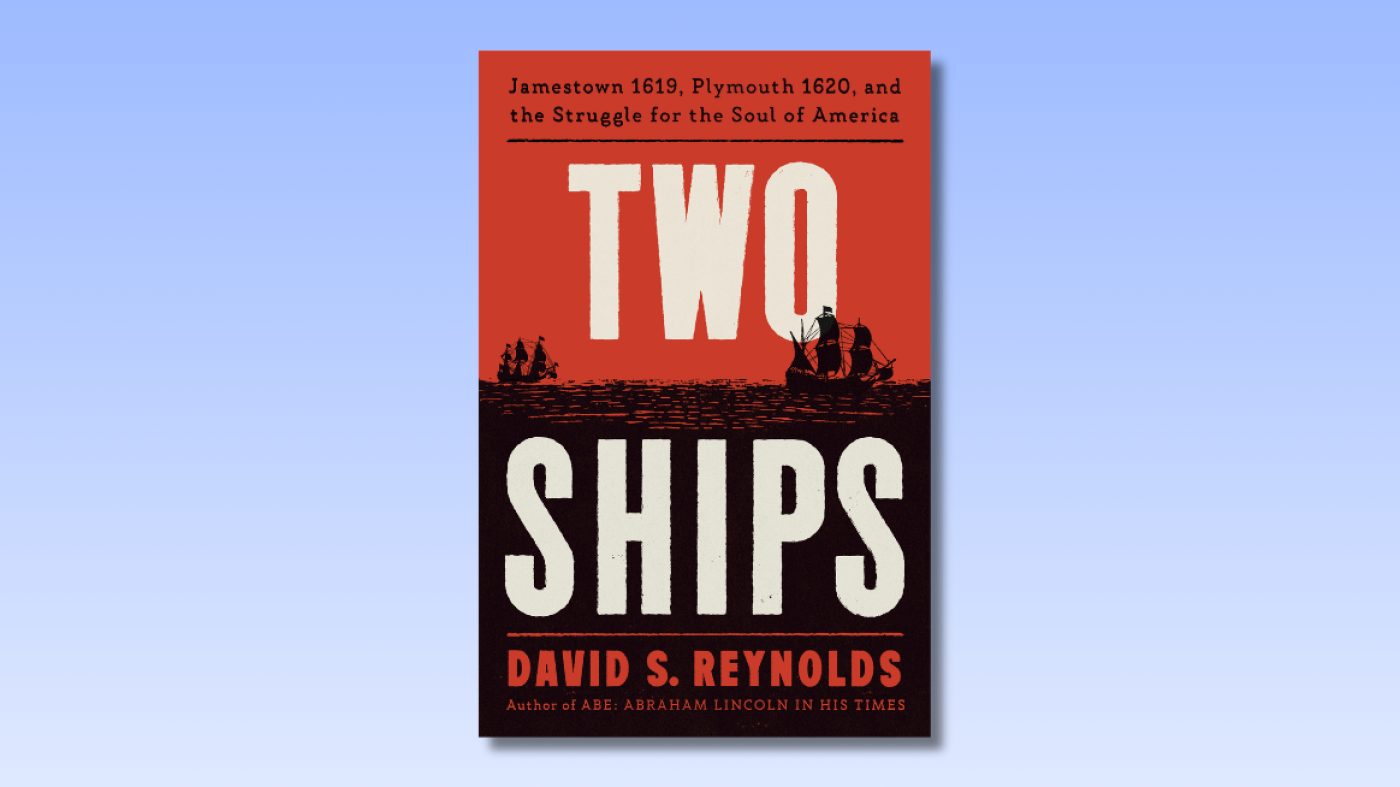
You know the Mayflower. What about the White Lion? Here’s the story of ‘Two Ships’
-

 Technology1 hour ago
Flatbush Zombies’ Erick the Architect misses his BlackBerry keyboard
-

 World1 hour ago
Waltz calls out Iranian diplomat at UN following drone strikes on Bahrain and Kuwait
-

 Politics1 hour ago
Top Trump official touts how DC makeover is proof America is rejecting ‘decline by choice’
-

 Health1 hour ago
Fourth of July fireworks pose hidden health risk for certain Americans, experts warn

