After a six-day trial and more than 22 hours of jury deliberations, a Dublin firefighter arrested on rape charges in a US city last year remains behind bars, his fate still in limbo.
A Boston judge declared a mistrial and the jury “hung” on Friday, sending the jury of eight men and four women home, and Terence Crosbie (38) back to the Nashua Street Jail.
If a retrial moves forward, Mr Crosbie will once again face charges for raping a 29-year-old attorney.
The allegedassault was first reported to authorities by the woman at a hospital in the early hours of March 15th, 2024.
Advertisement
The night began at The Black Rose, an Irish pub in the city on one of the busiest nights for the bar, leading up to St Patrick’s weekend.
The Black Rose Irish pub in Boston
The woman alleged she returned to the hotel room of a Dublin firefighter she met at the bar for a night of consensual sex. She was with a man she described as a little shorter than herself, bald, white, with an Irish accent and who authorities later identified as Liam O’Brien.
Mr Crosbie and Mr O’Brien had travelled to Boston as part of a Dublin Fire Brigade contingent that was due to march in the city’s St Patrick’s Day parade.
The woman claimedshe fell asleep in the other bed and woke up to another man who “was not bald” but who “also had an Irish accent” raping her. The man, she claimed, mocked Mr O’Brien and insisted that she “wanted it”.
All this occurred to the “dull background soundtrack”, as a prosecutor put it, of Mr O’Brien’s continuous snoring.
Advertisement
“Our nightmares belong in our sleep,” prosecutor Daniela Mendes told the jury in her opening statement on the first day of trial.
“Her nightmare began as she woke up.”
Throughout, Mr Crosbie was steadfast in his insistence that he was wrongly accused and had been held behind bars for 15 months, unable to make bail or afford living costs in the foreign country.
“I’m going to ask you to consider Mr Crosbie’s nightmare. I’m going to ask you to end that nightmare,” said defence attorney Daniel C Reilly in his closing argument to the jury.
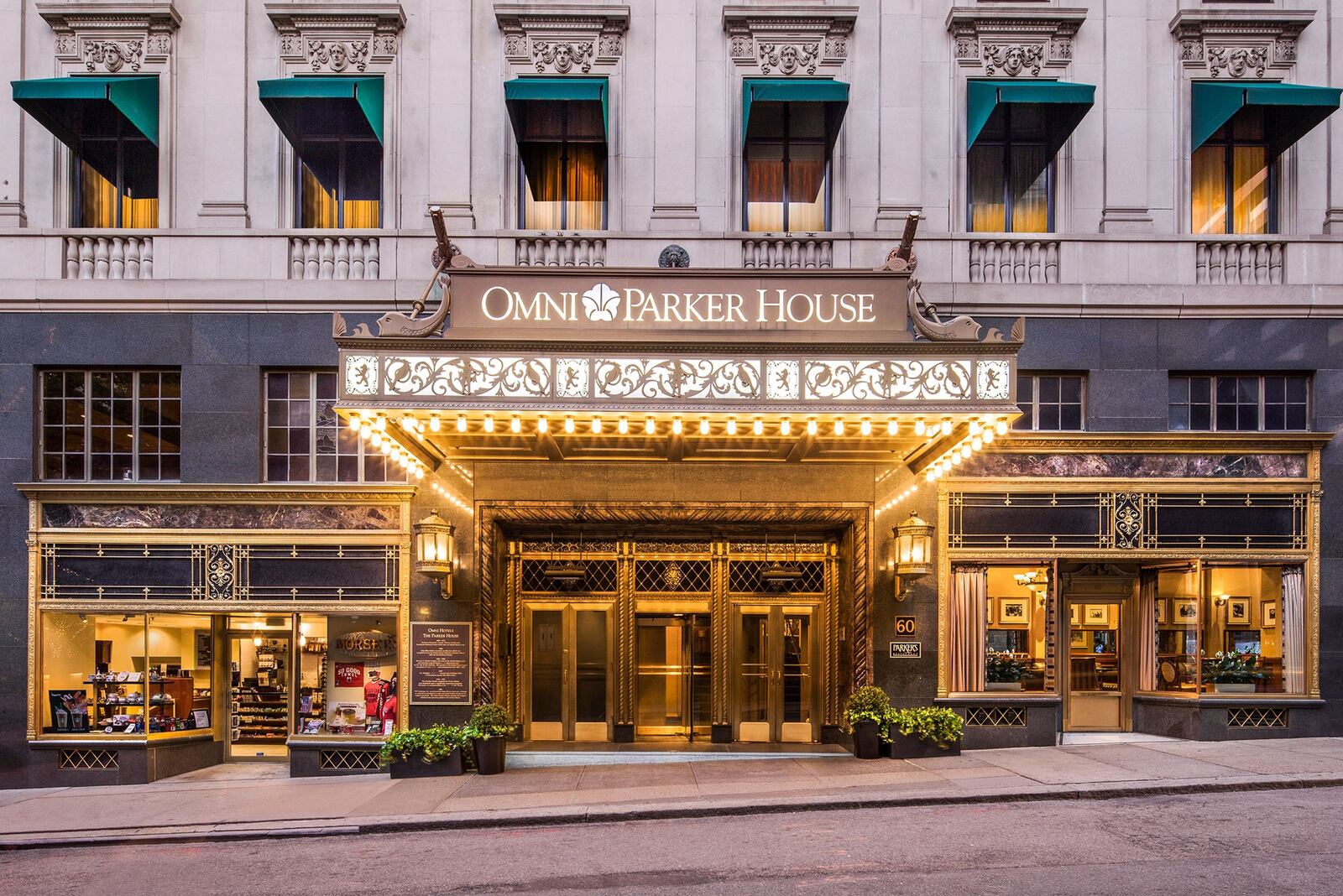
The assault allegedly took place at the historic Omni Parker House, the hotel made famous as the location where a young US politician named John F Kennedy proposed to Jacqueline Bouvier. The case was heard blocks away at the Suffolk Superior courthouse, an art deco relic with marbled hallways and wood panel courtrooms in the heart of Boston.
Advertisement
The Omni Parker House hotel in Boston
The jury heard testimony from the woman and Mr Crosbie, with assistance from a transcript, at times, to parse Mr Crosbie’s accent.
His defence team alleged the woman was a “less than reliable reporter due to intoxication and memory lapses”. They argued that she did not remember Mr O’Brien’s first or last name or having ever met Mr Crosbie. They made insinuations about her promiscuity and questioned her about psychiatric medication on the stand.
On the other side, the prosecution alleged Mr Crosbie’s testimony was “rehearsed and insincere”.
The woman was the prosecution’s first witness. She testified that on Thursday, March 14th she had been hosting a social work gathering, went to a restaurant with colleagues afterwards and then to The Black Rose with a coworker.
In cross-examination, Mr Crosbie’s legal team asserted she had been out drinking for more than 10 hours.
Dublin Fire Brigade member Terence Crosbie (centre) alongside his defence lawyers Daniel C Reilly (left) and Patrick Garrity during his trial in a Boston court. Photograph: Susan Zalkind
A witness for the defence – Dr Chris Rosenbaum, who serves as the director of medical toxicology for Newton Wellesley Hospital – testified that the complainant reported a “prior history of binge drinking” in her medical documents and that her blood alcohol level at the time she reported the assault the next morning can “correlate with memory loss and impairment”.
He said she could have been almost three times the legal driving limit at the time of the alleged assault.
Advertisement
Prosecutors argued that she had her wits about her. They played CCTV video of The Black Rose from the evening in question. In the witness box, she pointed herself out in the video to jurors as the individual dancing “very awkwardly” and trying to get others to join in.
She said Mr O’Brien and his colleagues were wearing T-shirts identifying themselves as members of the Dublin Fire Brigade.
CCTV video later showed her and Mr O’Brien entering the hotel, just before midnight, taking the elevator and walking towards room 610.
Other video footage showed Mr Crosbie walking to a lobby area on the sixth floor, adjust the chair and scroll through his phone for the next two hours.
Terence Crosbie. Photograph: X
The woman said she didn’t know Mr O’Brien had a roommate. CCTV video and hotel records later supported Mr Crosbie’s testimony that they met briefly at the bar and he was briefly in the room when the woman and Mr O’Brien first arrived, and that he “read between the lines” and quickly left the room.
She testified that after having sex with Mr O’Brien she went to the bathroom and left the light on. When she returned Mr O’Brien was already asleep and taking up the majority of the bed, so she got into the other bed and fell asleep, intending to leave and work from home the next day.
Advertisement
She told the court she “woke up to somebody on top of me” raping her, she told the court, in tears.
“This person was taller than Liam and was not bald and I could hear Liam snoring,” she said.
The woman testified that the man, who prosecutors said was Mr Crosbie, also disparaged Mr O’Brien, while assaulting her, saying that Mr O’Brien “can’t even do this for you – what a loser”.
She testified that she could feel his weight on top of her and she told him to “stop!” But he didn’t, the court heard.
When she eventually managed to manoeuvre her legs off the side of the bed and break free, and started to collect her clothes, she testified that Mr Crosbie continued to follow her around the hotel room, trying to kiss her.
Advertisement
She said she went to the bathroom and that Mr Crosbie tried to get in and “was jiggling the handle” after she locked the door.
Under cross-examination, defence attorney Mr Reilly noted that she initially reported that the assailant was about her height and her testimony did not include details about Mr Crosbie’s birthmarks or tattoos.
“I was trying not to look,” she said.
The prosecution noted that she texted a friend at 2.18am as she left the hotel.
“I hate everyone,” she wrote. “What the f*** is wrong with people.”
Advertisement
“I woke up and a guy was inside of me telling me I wanted it and telling me how pathetic it was that his friend couldn’t give that,” the court heard.
She then walked home, changed and went to hospital, bringing the clothes she wore in the hotel. There she reported the rape.
DNA analyst Alexis Decesaris testified that the evidence collected from the woman was “consistent” with there being “two individuals” separate from her who were both male.
There was a high likelihood that one of those male profiles belonged to Mr O’Brien, the court heard, but due to the limited amount of material collected it was unclear if the second set of male DNA, obtained from the woman’s genitals, was deposited by Mr Crosbie.
The defence argued that the testing “did not identify Terence Crosbie’s DNA”.
Advertisement
Prosecutors argued that the finding of two male profiles matched the woman’s account.
The jury heard from Mr Crosbie twice, in a recorded police interview before his arrest, and as the concluding witness when he took the stand in the trial.
“I 100 per cent didn’t do this. I’ve done nothing wrong,” Mr Crosbie said.
“I had no physical or sexual contact with her at all.”
He said he knocked on the door when he returned to the hotel and shouted for Mr O’Brien. He said the room was dark and he “heard no reply”. He said he used the torch on this phone to find his way to his bed and the complainant wasn’t there.
Advertisement
“There was nobody in my bed, my bed was empty,” he told the court. He said he brushed clothes off his bed, and crawled under the covers in his boxer shorts.
About a minute and a half after he got into bed he testified that he heard someone “rummaging around the room” and assumed the woman was collecting her things to leave.
He disputed the woman’s account that he called Mr O’Brien a loser; this was not “an Irish term” that he would use, he argued.
Mr Crosbie claimed he attempted to fly back to Dublin on an early flight home because he was “scared like a rabbit in the headlights” after being questioned by police.
When Mr Crosbie took the stand, prosecutors also played a portion of his interview with police that had been previously redacted in which he told detectives he had masturbated in the hotel room and asked whether his DNA could have got on the complainant that way. A pair of Mr Crosbie’s underwear with semen on it was later collected as evidence.
Advertisement
In cross-examination, prosecutors pointed out that Mr Crosbie would not have had time to masturbate alone in his room until after the alleged assault. Mr Crosbie’s defence team stressed that his story about masturbation was “hypothetical”.
In closing arguments, prosecutor Erin Murphy told jurors that they “might not agree” with or “relate” to the complainant’s choice to go to the hotel with Mr O’Brien but that it was “her choice”.
“That doesn’t mean that that man’s hotel roommate gets to rape her,” she said.
Mr Crosbie is not the “unluckiest man in the world; he is the man who raped [the woman] and he is the man who got caught”, she told the jury.
Mr Reilly argued that prosecutors had not met their “high burden” of proof beyond a reasonable doubt.
Advertisement
“I suggest to you there are multiple reasonable doubts in this case,” he said.
BOSTON (WHDH) – A 20-year-old man is dead, and an 81-year-old man will face criminal charges following a wrong-way crash on Interstate 93 in Boston late Saturday night, officials said.
Troopers responding to a reported multi-vehicle crash on Route 93 northbound before Exit 15A around 11:45 p.m. determined a driver in a 2004 Cadillac Escalade got on the highway in the wrong direction and nearly struck two vehicles — a Honda Odyssey and an Audi A4 — causing both to swerve and crash into each other, according to state police.
The occupants of the Honda Odyssey, a family of four, were transported to a Boston-area hospital for evaluation.
Shortly after the initial crash, the wrong-way driver, later identified as Antone Carvalho, of Somerset, collided head-on with a Chevrolet Cruze.
Advertisement
The driver of the Chevrolet Cruze, a man in his 20s from Haverhill, died from his injuries. His name has not been released.
Carvalho will be issued a summons to appear in court at a later date.
This is a developing news story; stay with 7NEWS on-air and online for the latest details.
(Copyright (c) 2026 Sunbeam Television. All Rights Reserved. This material may not be published, broadcast, rewritten, or redistributed.)
Join our Newsletter for the latest news right to your inbox
BOSTON (WHDH) – It’s the fall of 1974 in South Boston, and four generations of the Moran family are rushing to church for baby Lila’s baptism. The moment is filled with great anticipation, and one of the most memorable images frozen in time in Constantine Manos’s “Where’s Boston” series.
Now, more than 50 years later, that photograph has taken on a new meaning.
The Boston Athenaeum has revived the landmark exhibition first shown during Boston’s Bicentennial celebration in 1976. To mark America’s 250th anniversary, the library has paired Manos’s photographs with 12 newly recorded oral histories, giving the people captured in the images a chance to tell the stories behind them.
“These images show one moment in time, but when you talk to someone and ask them to reflect on it, you learn so much more about them and their larger family history,” said Boston Athenaeum curator Lauren Graves. “Then somehow that history, too, ends up relating to a larger Boston history.”
Advertisement
In their oral history, George and Carolyn Moran reflected on the social upheaval surrounding Boston’s bussing crisis, when court-ordered school integration sparked intense racial conflict across the city.
While the baptism photograph captures a day of celebration, the Moran family said it also stirs memories of another pivotal moment: their decision to leave the South Boston neighborhood they had long called home.
“Around the corner came a huge swarm of people being chased by police on horseback with clubs,” George Moran said. “Apparently earlier that day there had been a stabbing around the corner of South Boston High School, and the town was in total turmoil over that incident.”
Fearing for their children’s safety as tensions escalated, the two Boston Public Schools teachers made the difficult decision to move their family to Brookline.
“We were very careful in making our decision because we did have a strong allegiance to the schools and to education,” Carolyn Moran said. “I would say our concerns about the education of our daughters was our primary reason for making the move.”
Advertisement
Courtesy Boston Athenaeum
Many of Manos’s seemingly innocuous photographs reveal the city’s deeply segregated spaces that shaped Boston a half-century ago. An Italian religious process in the North End, young Black men unwinding at Franklin park, and a father looking lovingly at his son at a Chassidic center in Brookline each offer a glimpse into communities that rarely intersected.
But even amid turmoil and division, Manos found beauty in life’s small moments—a bride leaving a church on her wedding day, a young man absorbed in a game of chess, and a father flying a kite with his son.
Courtesy Boston Athenaeum
“The exhibit shows some of the terrible times of protest, but it also shows the moments of joy,” Carolyn Moran said. “They’re all juxtaposed, and that’s life—these difficult times as well as beautiful times.”
Advertisement
As the nation celebrates its 250th anniversary, curators hope the exhibition encourages visitors to reflect on not just how far the city has come, but also the work that still needs to be done in the coming decades.
“We thought this was a unique moment to look back at the Bicentennial, to look back 50 years and think about this recent past,” Graves said. “What do we want for Boston today? What do we want for the future? And what do we want for the future of the country itself?”
Visitors are also invited to become part of the exhibition by filling out comment cards reflecting on where Boston is today.
The Boston Athenaeum says it is still identifying people featured in Manos’s photographs and plans to continue expanding the exhibition’s online oral history collection.
“Where’s Boston” is open until December 12.
Advertisement
(Copyright (c) 2026 Sunbeam Television. All Rights Reserved. This material may not be published, broadcast, rewritten, or redistributed.)
Join our Newsletter for the latest news right to your inbox
The 24-year-old forward had a career-high 68 points (27 goals, 41 assists) in 2024-25 with the Sabres before getting traded to Utah in June, 2025. Peterka posted 47 points (25 goals, 22 assists) through 82 games in his first year with the Mammoth.
“He’s got an elite shot. Probably gives us another look on the elbows in a power play situation. His power play minutes dipped a little bit last year; his 5-on-5 production has been really good, plays both wings, can probably play with a couple different types of centers,” Sweeney said.
Peterka had a similar assessment for himself.
“I think a pretty fast game, likes to score goals,” he said. “Just overall, exciting player that loves to make plays.”
Advertisement
Sweeney also sees a versatility in Peterka’s game that can benefit his new teammates up and down the lineup.
“I think he fits into a good group age-wise because he’s able to have played in the league with all the experience he’s had, the success he’s had, so he can ride shotgun with David because he has had scoring,” Sweeney said. “He can go down and drive a line, which he has done.”
The prospect of him playing with someone like David Pastrnak is something that excites both Sweeney and Peterka.
“That would be pretty sick, not going to lie,” Peterka said. “If you have that caliber of a player, I think everyone wants to play with him. From the past, playing against him, even watching him, was always super special. I would be super honored, for sure.”
While Peterka has already played four full seasons in the NHL, he still has his whole career in front of him. He joins a young new wave of Bruins players – alongside the likes of Reichel, Fraser Minten, Marat Khusnutdinov and James Hagens – who will carve the future identity of the team. The ceiling is high for Peterka.
Advertisement
“In JJ’s case, he has had success. We have to come in and put him in the right situations so he continues to score at the level we think he can. Morgan [Geekie] is a great example,” Sweeney said. “Did we think he was going to score 39 goals when we first acquired him? No. But that’s always the hope – that a player will take advantage of a new opportunity and playing with different types of players than what they were in their other environment.”
Peterka is ready for the challenge and to prove that he has another gear to his game to help the Bruins win.
“I think it’s always nice to have a fresh start. I think especially after the year I had last year where I wasn’t really happy with the performance I put on the ice,” Peterka said. “For me, I feel like it’s a fresh start. And for a team like Boston, it couldn’t be any better.”