San Diego, CA
Impassioned students, activists plead to save services after mayor delivers budget plan


Students and residents made impassioned pleas at a meeting of the San Diego City Council on Monday, hoping to keep the city from reducing recreation center hours and closing libraries on Sundays and Mondays.
“Here we are begging for crumbs in your budget,” one student yelled at councilmembers.
“A lot of us learned to dance at El Toyo Park,” said another woman. “And I learned how to play tennis at MLK Park.”
The proposed cuts are part of Mayor Todd Gloria’s budget plan to make up a nearly $260 million budget deficit. He presented his final budget proposal to councilmembers on Monday.
Community advocate Francine Maxwell urged councilmembers not to rubber-stamp the budget. She urged council to cut people and not programs.
“At a minimum, you should be cutting deputy-level salaries,” Maxwell said. “Be bold leaders and cut them. We need our services. The middle management bloat is wrong.”
With the budget now in the council’s court to start making amendments, Councilmembers Sean Elo Rivera and Henry Foster said they’re looking to prioritize rec centers and libraries, especially after protests against plans to merge the Carmel Valley police station resulted in that proposal being scrapped, with nearly $800,000 restored to the police department.
“Keeping folks safe is our top priority, but that requires more than just, you know, putting cops on the street or firefighters on engines,” Elo-Rivera said. “That’s important. And if young people don’t have a place to go, a safe place to go after school, that makes us less safe.”
Elo-Rivera suggested keeping libraries and rec centers open full-time with the $11 million expected to roll in next year from paid parking at Balboa Park. He’d also like to see out-of-towners pay for parking at the zoo, new revenue that could help students focus on their future full-time at San Diego area libraries.
“I live in a house with five other people,” said high school senior Jaime Lopez Gill. “It’s always chaotic. There’s no personal space. Going to these study rooms, I can focus on myself and put the best I can out there toward my education.”
The council will meet over the next three weeks to make amendments to the mayor’s proposed budget. Councilmembers will vote on the final budget on June 10.



Copyright 2026 San Diego Union-Tribune. All rights reserved. The use of any content on this website for the purpose of training artificial intelligence systems, algorithms, machine learning models, text and data mining, or similar use is strictly prohibited without explicit written consent.

Shane van Gisbergen earned his sixth career pole and second of the 2026 season on Saturday, rocketing to pole position around NASCAR’s all-new 3.4-mile street course at Naval Base Coronado. He even touched the wall twice on his fast lap, pushing to the absolute limit.
“A little bit (surprised),” said Van Gisbergen, who went out with the first group of qualifiers. “I thought the track would be better, and I thought people would execute a bit better. As I said, it’s just so difficult. There’s three or four corners you’re seeing for the first time of the day, and it’s on your heater. Amazing. The Red Bull Chevy is really good. Thank you to Trackhouse for doing a great job from yesterday, and we just need to get the driver a bit better,” he concluded with a smile.”
Watch: SVG surprised to win Busch Light Pole at San Diego
Van Gisbergen bested Carson Hocevar by 0.0156s with a fast lap of 2:14.788s. Ryan Blaney will start third, Zane Smith fourth, and Todd Gilliland fifth. Blaney was a little bit quicker than SVG for most of his lap, but lost it through the final set of corners.
Daniel Suarez, Ryan Preece, Connor Zilisch, Michael McDowell, and Austin Hill will out the remainder of the top ten on the starting grid.
Project 91 driver Kevin Magnussen qualified 21st for his NASCAR Cup debut. Notably, championship leader Tyler Reddick spun out, but still reached 17th on the grid. Denny Hamlin is just 19 points behind him, and will start 26th.
Watch: Reddick loops it in Turn 2 during qualifying
Some other notable drivers very deep in the field include William Byron in 27th, Chase Elliott 30th, and an injured Christopher Bell 37th. He will have Brent Crews on standby, and may finish the race for Bell on Sunday.
Jimmie Johnson was the first driver to set a time, and showed just how tricky things were as he had to use the runoff area in Turn 2 to avoid an incident. Erik Jones also smacked the wall at the exit of Turn 16, but there were no red flags during the session.
NASCAR Cup San Diego ‘Anduril 250’ Full Starting Lineup
San Diego, CA
Neymar expected to return from right calf injury and play for Brazil in World Cup against Scotland

Neymar is expected to return from a right calf injury and play for Brazil in its final World Cup group match, coach Carlo Ancelotti said Friday night.
Neymar missed Brazil’s first two games of the tournament, including Friday’s 3-0 win over Haiti.
Ancelotti said Neymar would go through individual training on Saturday, train with the team on Monday and “will be available” for Brazil when it closes Group C play against Scotland on Wednesday in Miami Gardens, Florida.
Neymar is Brazil’s career scoring leader with 79 goals in 129 international appearances.
The 34-year-old midfielder has yet to practice in full sessions with the team since reporting to Brazil’s squad while nursing the calf injury.
Looking to play in his fourth World Cup, Neymar had tests on his calf last Monday to determine the progress of the injury that he sustained while playing for Brazilian club Santos on May 17.
There was widespread debate in Brazil over whether Neymar, whose first World Cup was on home soil in 2014, should have been called up for the tournament. He has struggled since returning from tearing the ACL in his left knee in October 2023 in a World Cup qualifier.
Neymar has four goals and two assists in eight matches for Santos this year.
-
Wyoming5 minutes ago
How Investors May Respond To Black Hills (BKH) Customer‑Funded Wyoming Data Center Infrastructure Plan
-

 Crypto12 minutes ago
Latam Insights: Inside Argentina’s Tax Relief for Exchanges and El Salvador’s Growing Bitcoin Stack
-

 Finance15 minutes ago
San Diego County finances teetering toward structural deficit, watchdog study finds
-

 Fitness20 minutes ago
At 31, I’m the Strongest I’ve Ever Been—This Female-Focused Training Plan Is to Thank
-

 Movie Reviews30 minutes ago
‘Bob and David Climb Machu Picchu’ Tribeca 2026 Review: A Travelogue of Old Friends, Older Knees, and Same Absurd Timing
-
World42 minutes ago
In Taylor Swift’s beach town, every clue becomes a wedding rumor
-
 Lifestyle1 hour ago
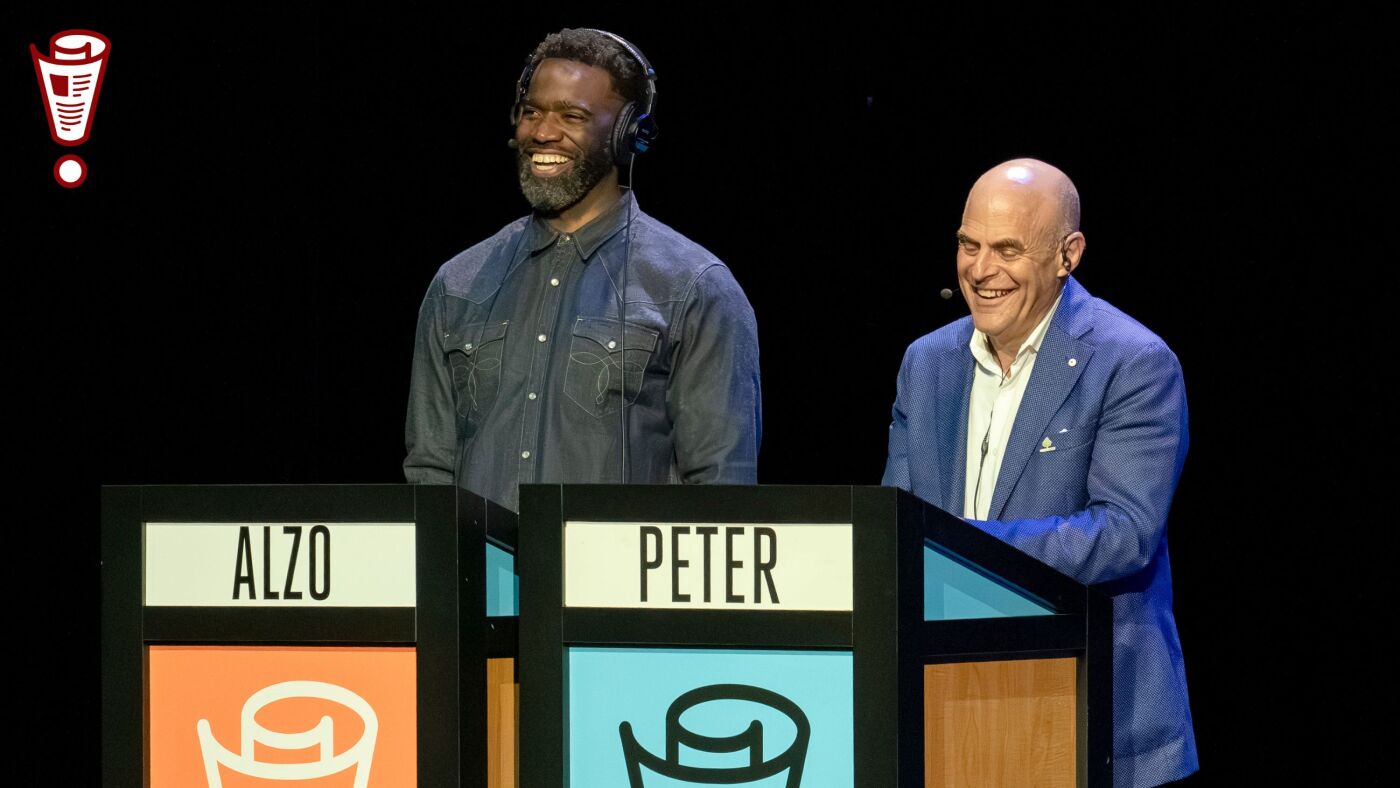
‘Wait Wait’ for June 20, 2026: With Not My Job guest Caro Claire Burke
-

 Technology2 hours ago
Sony’s Xperia 1 VIII is still a phone for the fans


