Arizona
How would an alert for missing indigenous people in Arizona work?


The murder of an indigenous Arizona teen could soon bring change at the state level.
14-year-old Emily Pike was reported missing out of a Mesa group home, she was later found killed near Globe. There have been no arrests in her murder.
Pike’s death has inspired a push for a statewide system similar to AMBER Alerts for missing indigenous people. There is already one in California called the Feather Alert.
“If someone is missing and we had this alert in Indian Country, we can get the information out there, we can work together,” said Elisia Manuel, the founder of Three Precious Miracles in the Valley.
California’s Feather Alert has been in place since 2023. The California Highway Patrol handles those types of alerts, including six others, just as the Arizona Department of Public Safety would here should a system be put in place for missing indigenous peoples in the state.
All the alerts are posted on CHP’s social media sites. Sometimes, if it is time-sensitive and area-specific, they get pushed to your cell phone with that loud ringing tone.
“All of the alerts that we activate are always on the behalf of the investigating agency,” said Captain Melissa Kittell, who works with CHP’s Emergency Notifications and Tactical Alert Center.
There are specific requirements for CHP to issue a Feather Alert, including that the missing person has to be indigenous. Also, if law enforcement or the tribe believes the person is in physical danger, in danger of human trafficking, or suffers from a mental or substance abuse disorder.
CHP provided ABC15 with some numbers: In 2023, there was one Feather Alert activation and one person was recovered. The next year, there were 14 activations where 11 were recovered safely, two remain missing and one was found dead. In 2025, there were 10 activations where nine persons were recovered.
CHP says these success rates are by and large thanks to the public’s response.
“It’s someone got the WEA on their phone or they follow CHP Alerts and they saw a picture and they were driving by a bus stop and saw a person that looked familiar,” said Kittell.
For Manuel, who works with group home and foster youth in the Valley, it is something she hopes can succeed here.
“There’s such a higher rate of our kids that are in the system across the board to be trafficked, murdered,” said Manuel.
HB 2281’s main sponsor tells ABC15 that the Arizona bill will likely be discussed in the State Senate later this week, then head to the Senate floor for a vote next week.
One amendment to the bill would name the system in Arizona the Turquoise Alert; another would name the law after 14-year-old Emily Pike, whose case has rocked indigenous communities in Arizona and across the country.


Believe it or not, the 2026 All-Star Game voting process has already begun, as of Wednesday. Fans who want to see their favorite members of the Arizona Diamondbacks take the field in the midsummer classic this season can begin voting for their stars.
There are certainly some deserving players on this Diamondbacks club, which is currently 32-28 and occupying the third Wild Card sport in the National League.
Here’s how and where you can vote for your hometown heroes:
How to vote for Diamondbacks players to make All-Star Game
Fans can utilize the following link to vote for members of their team on dbacks.com. Fans are permitted to fill out and submit as many as five ballots per day, selecting as many or as few players as they choose.
This period of the fan vote constitutes Phase 1 of All-Star voting, which will run from Wednesday, June 3 through Thursday, June 25 at 9:00 a.m. Arizona time (12:00 p.m. Eastern time).
Following Phase 1, the two overall top vote-getters will receive automatic berths into the All-Star lineups. If those two are not Shohei Ohtani and Aaron Judge once again, that would be an upset.
When and where is the 2026 All-Star Game?
The 2026 All-Star Game will take place at Citizens Bank Park, home of the Phillies in Philadelphia. All-Star week begins on June 10, with a full slate of activities, before the game is played on Tuesday, July 14 at 8:00 p.m. Eastern time (5:00 p.m. Arizona time).
The full schedule of events are as follows:
- Friday, July 10: HBCU Swingman Classic
- Saturday, July 11: 2026 MLB Draft
- Sunday, July 12: All-Star Sunday, MLB Futures Game, MLBx All-Star 3-on-3
- Monday, July 13: T-Mobile Home Run Derby (8:00 p.m. ET)
- Tuesday, July 14: All-Star Red Carpet, All-Star Game
Which Diamondbacks are deserving All-Stars?
| Mark J. Rebilas-Imagn Images
So, who should Diamondbacks fans vote for? Obviously, you may fill out the ballot however you choose. That can include a full roster of Diamondbacks, regardless of their stats or notoriety this season.
Still, here are some of the top performing D-backs who might have a leg up on an All-Star berth:
OF Corbin Carroll
Corbin Carroll is having another All-Star worthy season. He’s hitting .289/.380/.545 with a .925 OPS and eight home runs, while playing good right field defense. He has the eighth-most bWAR (2.7) among position players, fifth-most in the National League, and third-most among all pure outfielders.
2B Ketel Marte
If Marte wins the NL second base fan vote, it will be his third straight season starting the All-Star game. Despite such a slow start to the year, that feels possible again. Marte is hitting .259/.315/.456 with 10 homers and is playing the best defense of his career.
3B Nolan Arenado
Nolan Arenado is quietly putting together one of his better seasons of the 2020s, slashing .269/.351/.467 with eight homers and flashing his elite third base glove at nearly as good a pace as ever. His name still carries a lot of weight in third base conversations; he’ll get some votes, no matter what.
1B Ildemaro Vargas
Vargas’ bat has cooled down quite a bit since his historic start to 2026. He’s still hitting a sturdy .290/.318/.454, but feels more likely to be considered as a reserve selection than a leading vote-getter.
Honorable Mention: LHP Eduardo Rodriguez
Pitchers are not selected by the fan vote. They are selected by player ballots and the All-Star Game managers. The National League’s manager will be Dave Roberts of the Dodgers, again.
The National League has quite a few talented pitchers, but Eduardo Rodriguez currently holds the fifth-best starting pitcher ERA (2.24) among NL hurlers. It’s going to be difficult to dethrone Christopher Sanchez or Jacob Misiorowski, but Rodriguez could find his way into the pitching pool, especially after his WBC heroics for Team Venezuela.
 Add us as a preferred source on Google
Follow

Arizona State has added Michael White to its coaching staff for the upcoming 2026-2027 season. White will join the program as an assistant coach and recruiting coordinator.
“I am incredibly honored to return to my home state and join this elite program,” White said. “I’m proud to say that I am coming home. I can’t thank Coach Herbie enough for the opportunity to join his incredible staff and help these young athletes grow and develop into the best individuals they can be. There are so many friends and mentors who have left their mark on this program, and I’m excited for the opportunity to leave mine and help take this program to new heights. Go Devils!”
White arrives with the Sun Devils after most recently spending the last three seasons with Alabama as an assistant. The Alabama women finished 11th at the 2026 NCAA Championships while the men were 24th.
Prior to arriving at Alabama, White spent the 2022-2023 season as a volunteer assistant at Wisconsin. He primarily coached the freestyle, breaststroke and distance groups for the Badgers. In addition to coaching the Badgers, he also was an assistant senior coach with the Madison Aquatics Club for the year. He began his coaching career at Juniata College in Pennsylvania as a volunteer assistant from 2019-2021.
White spent his collegiate career at St. Bonaventure in New York. There he was a 7x individual Atlantic-10 champion and swam to three school records as a senior with a 1:47.30 200 IM, 3:52.18 400 IM, and a 1:47.70 200 fly. He also was team captain for two season and helped the team capture the 2014 A-10 team title.
The Scottsdale, Arizona native will return to his home state. He was a 2012 AIA Division I state champion in the 100 breast and 200 IM as a senior for Dobson High School.
White joins the coaching staff led by head coach Herbie Behm, who is already known to be an innovative coach. Behm spoke of White’s innovation as well saying, “Mike is one of the best young coaches in the NCAA. His interview blew me away with the innovative ideas he presented. I can’t wait to start implementing those ideas and continue our growth at ASU.”
Arizona State swept the 2026 Big 12 team titles, and the men went on to finish 4th at 2026 NCAAs while the women were 37th. Rising senior Ilya Kharun captured the NCAA title in the 200 fly with a 1:37.66.

Arizona is ranked 18th in the nation when it comes to racial equality in the classroom, according to WalletHub.
The personal finance website compiled its 2026 list of Best States for Racial Equality in Education by looking at differences between Black and white students when it comes to test scores, college attainment and high school graduation rates.
The rankings are based on a weighted average of six metrics, but did WalletHub not provide a breakdown of each category.
However, statistics from the Center for the Future of Arizona support the idea that Arizona has work to do when it comes to racial equality. African American students in Arizona have an average college attainment rate of 38%, while white students have an average rate of 54%.
That difference is also evident in other education areas, with a gap of 11 percentage points between Black and white high schoolers in graduation rate.
WalletHub analyst Chip Lupo called the high school graduation rate the most “alarming” data set for the Arizona. He said if the study included the state’s large Hispanic population, the results might have been different.
“It would be interesting, if those numbers were included, where the gaps would be. Again, Arizona has a high Hispanic population, as [does] New Mexico, and New Mexico was at number three. So maybe Arizona could take a look at what their neighbors are doing there to kind of bridge those gaps,” he said.
How can Arizona increase racial equality in the classroom?
Lupo said Arizona can boost its ranking and improve racial equality in schools by increasing the representation and funding for public education.
“One thing [to] do is to build more diversity within the school system. More Black administrators and more Black teachers kind of create more of a familiarity for Black students and more mentors. … Increased funding and a more concerted effort to increase diversity among the school systems, I think, would go a long way in bridging that gap,” he said.
WalletHub ranked Wyoming, West Virginia and New Mexico as the best states for racial equality in the classroom, with New Jersey, Connecticut and Wisconsin at the bottom of the list.
Funding for this journalism is made possible by the Arizona Local News Foundation.
-
 Sports6 minutes ago
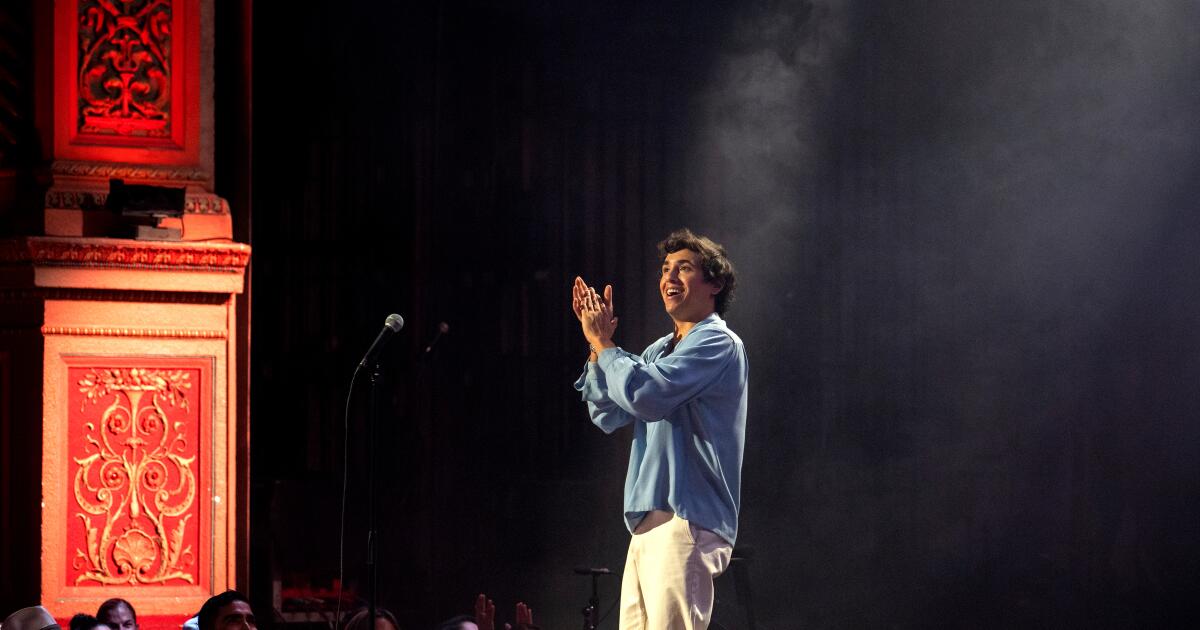
‘SNL’ star Marcello Hernández to host 2026 ESPYs as show leaves L.A. for New York
-

 World16 minutes ago
US House passes Iran war powers resolution in rare moment of Trump backlash
-

 News43 minutes ago
House votes to rein in Trump on Iran as war loses GOP support
-

 Los Angeles, Ca2 hours ago
Police investigate deadly stabbing in Tarzana; suspect in custody
-

 Detroit, MI2 hours ago
Detroit Tigers sweep Tampa Bay Rays in win as Dillon Dingler stays hot
-

 San Francisco, CA3 hours ago
Retired San Francisco firefighter dies from lung cancer after Blue Shield denies treatment claims
-

 Dallas, TX3 hours ago
Trackdown: Dallas 7-Eleven robbery suspect wanted
-

 Miami, FL3 hours ago
This new Italian restaurant in Brickell only has 10 items on the menu

