Lifestyle
L.A. Affairs: My ‘Eat, Pray, Love’ life failed. Would returning to L.A. work out this time?


I had just slipped back into bed after our infant daughter’s 4 a.m. feeding when my partner, Sean, turned over and said, “We should go now. I smell smoke.”
Our air-quality monitor leaped from green to yellow. My breath dried my throat.
We hadn’t gotten an evacuation notice yet. “Let’s wait a bit,” I said, as if staying in bed meant the Eaton fire wasn’t real.
In L.A.’s brittle landscape of concrete rectangles and choking freeways, Eaton Canyon, just seven miles from where we live, was a sanctuary to thousands of people. It saved my life many times. And it was now ablaze, with the fire spreading rapidly.
From our dark bedroom, we scanned our phones for information, zooming in and out of the slow-loading Cal Fire evacuation map. The red perimeter pushed against the yellow warning zone that our Eagle Rock house fell under.
The evening before, I’d reported the burned acreage aloud to my partner as LAist updated its website: “400 acres, zero containment.” Then, “800 acres, zero containment,” my voice trembling as if the burn map was of my own skin. The next morning the number of acres on fire had reached the thousands.
I looked at pictures we’d taken at Eaton Canyon on New Year’s Day, a week before the fire: Our baby wrapped against my chest smiling her toothless grin; my feet planted in the stream.
The Arroyo Seco, “dry stream” in Spanish, comes down from the San Gabriel Mountains in Angeles National Forest and runs along the two-lane freeway in Pasadena. In the last few years, this oft-parched waterway gained depth because of unprecedented rainfall. Three inches of water became three feet, and swimming holes appeared.
Eaton Canyon trail hikers showed up in their bathing suits, carrying towels. A waterfall and swimmable creek nestled in a shady canyon is a Southern California unicorn. And it welcomed dogs!
During the pandemic, families, tiny day-camper explorers and the public en masse hit the trails in their masks and basketball sneakers; it suddenly felt like Disneyland. Portable speakers drowned out the creek music. The litter irritated me, as did waiting in line to log-cross the creek. But the crowds also meant something important: Eastside Angelenos had a place to put their fear and worries during a time when we were afraid just to breathe.
I’d started hiking the Altadena trails after my divorce a decade earlier. I offered my loneliness and heartbreak to the live oaks and sycamores, refuse they could make into something useful the same way they convert carbon dioxide into oxygen. Nature became my refuge. It gobbled up my sorrows with its gaping mouth of everything-ness.
I’d start on a trail, breathe in the sweet sage brush and dust and feel myself fall into a harmonic unfolding that had nothing to do with me personally.
With the end of my marriage, California’s raging drought and wildfires and the impending 2016 elections, I fled to Berlin. At the time, I didn’t know how to grow a new life for myself in L.A. The brown hills past the 134 Freeway made me lonely. I bolted to a city of more verdant environs. Green meant hope.
When I returned a year later, the man I had not voted for was still president, my “Eat, Pray, Love” experiment had notably failed and I was certain that, at 38, I’d never find love again or have children. I showed up at the Arroyo most days, sometimes to a half-dry, cracked creek bed. I realized then that nature feeds us in two ways. The first is through recreation and adventure. The other is when we are grappling with the unknown and surrounded by chaos. Then, nature presents its cycles as consolation, reminding us that, whatever is happening, we can rely on things to change.
Eventually, the drought passed, as did the one in my heart. The waterfall went from trickle to spout. I baptized my pregnant belly in the Arroyo waters. I would bring my new-mother-overwhelm there. And 12 days after her birth, I introduced my newborn to the Arroyo, beaming as though she was meeting a grandparent. I wanted to show her what I learned: that we are never alone among the tadpoles, silt and stones, that we belong to nature too.
As the Eaton fire raged, lashing palm trees and devouring the Craftsmans of our L.A. neighbors, our daughter slept in her bassinet, unaware of airborne toxins. Sean and I shoved her rompers and sleep sacks into a backpack, rummaged through our clothes and grabbed enough underwear for an indeterminable amount of time away. I scooped my jewelry into a shoebox with my passport. We dressed for the day, then returned to bed for a couple of hours of fitful sleep, ready to go when we needed to.
Sean looked at me as if I had lost my mind when I grabbed the dog’s leash at 7 a.m., opened our door to a screen of tawny haze and pulled our confused pet behind me. A thin, rusty coil of sun smoldered through a patch in the clouds.
The nursery rhyme that goes “Ladybird, ladybird, fly away home, your house is on fire, your children are gone” cruelly repeated in my head. It’s all going to be gone, I thought with a shudder.
By 9 a.m., we were sitting in evacuation traffic on the 5 Freeway, heading to family in Orange County. The fire had not jumped the freeway into Eagle Rock, but an evacuation warning appeared on my phone beside dozens of frantic texts from my San Marino moms group: “Don’t come to Joshua Tree! Power’s out. No gas or groceries!,” “Unsafe water alert for Pasadena!” and a slew of links to resources for formula, diapers and wipes.
With our daughter and dog, Sean and I shuttled back and forth between my mother-in-law’s and parents’ houses for the next two weeks. I downloaded the Environmental Protection Agency’s air-quality app. I still keep careful watch on the stats. Now we’re back in our house and the fires have ceased, but we no longer open the windows when cooking for fear of polluted air. Instead of off-leash sloshing up the Arroyo, I take the baby and dog to the park and worry because neither of them can wear masks. Once again, life feels chaotic. I’m afraid to breathe.
I know healthy forests need regular burnings, but it is not natural for whole communities to be leveled overnight, for fire insurers to abandon their patrons and for people to lose their homes and what they love most about living in them.
I tell myself that nature’s gift in hard times is to remind us of its perpetual cycles. Today it is raining. The air will be breathable again one day. Spring will come, but I don’t know if there will be green leaves this year in the canyon.
The author is a writer, educator and mother who’s working on a memoir. She’s on Instagram: @sophiecsills
L.A. Affairs chronicles the search for romantic love in all its glorious expressions in the L.A. area, and we want to hear your true story. We pay $400 for a published essay. Email LAAffairs@latimes.com. You can find submission guidelines here. You can find past columns here.


Lonnie Bunch III is the 14th Secretary of the Smithsonian. He’s pictured above in September 2017.
J. Scott Applewhite/AP
hide caption
toggle caption
J. Scott Applewhite/AP
In a memo addressed to staffers sent Tuesday, the secretary of the Smithsonian, Lonnie G. Bunch III, defended the institution after the White House issued a 162-page report that characterizes the National Museum of American History as a place which has become “subject to institutional capture by a radical, activist ideology that is fundamentally opposed to telling the noble, honest story of the great country we know and love.”
In his email, which NPR has obtained, Bunch wrote in part: “While there will always be room for improvement, this report is not a fair characterization of the work and totality of the National Museum of American History. At the Smithsonian, our work is driven by scholarship, accuracy and an uncompromising commitment to tell the fullness of America’s story. As public servants and the keepers of this institution, we are charged with helping a nation find understanding, hope and clarity and as part of that duty, we are dedicated to excellence, reflection and growth.”

He continued: “We remain focused on what grounds us: a steadfast commitment to scholarship, nonpartisanship, independence, accuracy and integrity. For nearly 180 years, the Smithsonian has worked alongside partners across government — from the White House to Congress to our governing Board of Regents — guided by our enduring mission to increase and diffuse knowledge. That purpose remains: to pursue knowledge with rigor and to serve the American public with clarity and care.”
The White House report was issued on July 4 by the Domestic Policy Council under the title “Saving America’s Story: How Ideological Capture at the Smithsonian Institution’s National Museum of American History Erases Our Heritage.”

The council faults the National Museum of American History on a multitude of fronts, saying it underemphasized the Founding Fathers and early colonial and Revolutionary history; was not sufficiently celebratory of the country’s 250th anniversary; and that it engaged in “anti-white,” “illegal alien” and transgender activism.
It also accuses the museum of trying to “indoctrinate” teachers and students through its exhibitions, programming and teaching resources.
In the report, the council also specifically criticizes museum director Anthea Hartig, who has led the National Museum of American History since 2019 and is concurrently the president of the Organization of American Historians, calling her “an activist advancing an ideological agenda contradictory to the museum’s founding purpose of fostering patriotism.”

The Trump administration has made the Smithsonian museums one of its primary targets in its efforts to reshape cultural narratives to align with its viewpoints. In August 2025, the White House requested a “comprehensive internal review” of eight Smithsonian museums, including the National Museum of American History, following an executive order issued by President Trump in March 2025 in which he called for the removal of “improper ideology” from the Smithsonian’s offerings.
According to the Smithsonian’s charter, all of its 21 museums, 14 education and research centers, and the National Zoo are meant to be run independently of the federal government. The Smithsonian is overseen by Bunch and a board of regents, which includes Vice President Vance, Supreme Court Chief Justice John Roberts and other members appointed by Congress.
In an interview with NBC’s Meet the Press on Sunday, Bunch spoke about the Smithsonian’s 250th anniversary special exhibition at the Smithsonian Castle, which is called “American Aspirations.”
He told NBC: “It’s really important for people to understand that America is much an ideal as it is a place, that it’s a series of aspirations that have really shaped who this country is. And so for me, what is so powerful is to say, ‘Let us honor the words of Thomas Jefferson and the founders, but let us use those to challenge us to be better.’”
Jennifer Vanasco edited this story.

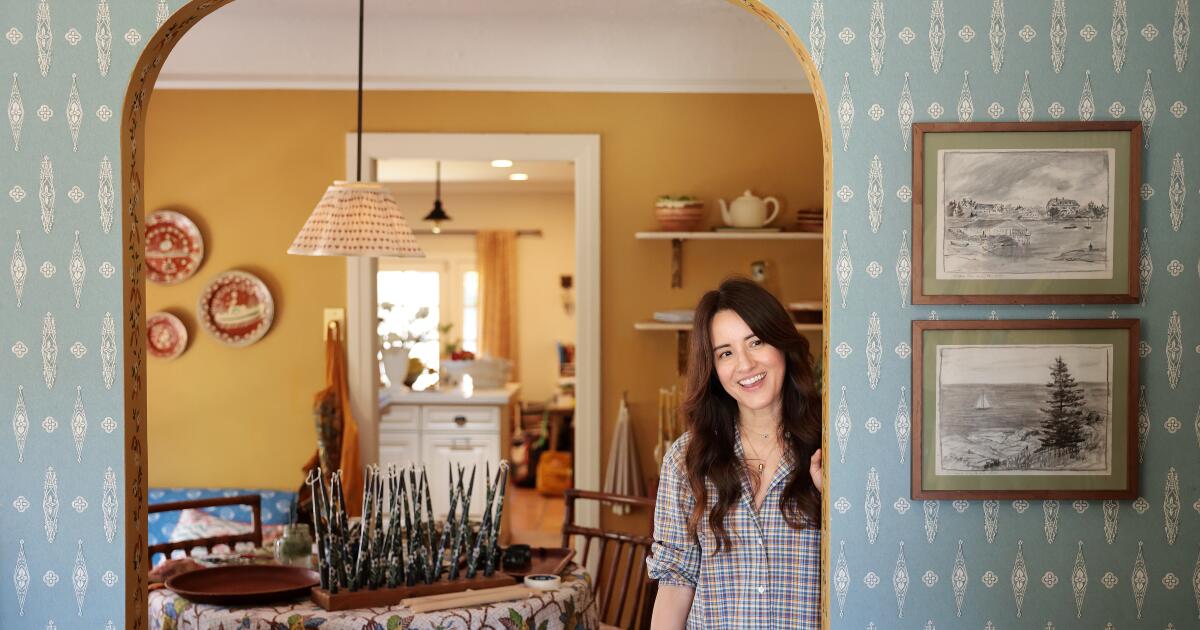
It was after the death of her son, Laith, that Esme Saleh decided to become a folk artist.
She had always been creative, experimenting with watercolors and learning to sew and embroider at a young age.
“I had a creative inkling,” she said, “but I never pursued it.”
Everything changed on Aug. 17, 2013.
In this series, we highlight independent makers and artists, from glassblowers to fiber artists, who are creating original products in and around Los Angeles.
When Saleh was nine months pregnant, she woke up with stomach pains and presumed she was in labor. She and her husband, Nasim, immediately went to the hospital, where doctors checked her and put the baby on a heart monitor. Saleh’s blood pressure was high, however, and the baby’s heart rate kept dropping. After about an hour, his heartbeat stopped. Doctors rushed her in for an emergency C-section, but it was too late. Laith did not survive.
Saleh lost a tremendous amount of blood and developed postpartum HELLP syndrome, a dangerous form of preeclampsia, but doctors were able to stabilize her.
When she woke up, the first thing she asked was, “How’s my baby?”

After losing her son in 2013, Esme Saleh left her job as a television producer. Since then, she has sold her hand-painted candles to local designers in Los Angeles and to LVMH in Paris.
“Aug. 17, 2013, was the most difficult day of my life, and Aug. 22 was the second most difficult, the day we drove home with an empty car seat,” she said of her and her husband’s new reality.
They named their son Laith Finn Saleh.
“His first name means ‘lion’ in Arabic. His middle name is an ode to Huckleberry Finn — sharp wit, kind heart, strong moral compass — all the attributes he’s imparted on us in spirit,” said Saleh, 45.
After such a devastating loss, she found it difficult to trust the world again. “It was hard to trust anything,” she said. “The medical system. Myself. It made me realize the fragility of bringing anything to life. We take so much for granted.”
So after years of working as a television producer, Saleh left broadcast journalism and leaned into her creative spirit.
She grew up in San Diego. Her mother was raised on a farm in Mexico, and her father moved from Tijuana to Los Angeles to be near her mother, who started working for a family in Sherman Oaks at 16. They eventually settled in San Diego, where Saleh’s father, now a church deacon, worked as a car salesman.


“The word Mystic has also become a driving force of what this journey means to me,” Saleh says. “A magical, otherworldly journey that has led me to some beautiful friendships, projects and unlimited well of curiosity. When I paint each pair of candles, it feels like I’m imparting a piece of that magic.”
“He always wanted to be a weatherman on TV,” she said, explaining how he hoped to get his big break on television by doing a weather report from the car lot.
Saleh wanted to be a broadcast journalist as her father had. After graduating from San Diego State, she interned in the sports department at CBS affiliate KFMB-TV although she didn’t know much about sports. She enjoyed sharing information with people, learned how to write plays of the week and felt she had found the right career.
But during a summer class at Mesa College, she started to think journalism might not be for her.


Saleh’s home is filled with her artwork. “My home expresses a lot of the things that I do,” she says. “If it works here, then I feel like I can put it out in the world.”
“I’m an empath — a sensitive soul — so when I was reading news about death and destruction, my eyes could not lie,” she said. Her professor told her, “This may not be your thing.” But when she arranged flowers on camera, she really came alive. She decided to work behind the scenes as a producer.
Her professor helped her get her first network news job in 2003, and she moved to Los Angeles, working on hard news and entertainment coverage.
After losing Laith a decade later, she couldn’t keep doing red-carpet interviews and acting like everything was fine. “It all felt so different, superficial and hard,” she said. “I felt like there was a bigger purpose out there for me. It’s in the small things that we find the big things.”
She started by painting folk art-inspired invitations for a friend’s baby shower. She painted delicate flowers, oranges and leaves on glass, leather and even lampshades. She created a logo. “I was just trying to say yes to things that were really scary,” she said. “Laith gave me the courage to do that.”

“I was just trying to get out of hole,” Saleh says of taking up painting after her son died.
Her first son, she said, became “a catalyst for painting.”
Then, at the first Thanksgiving during the COVID-19 pandemic when people could gather again, she had a light-bulb moment. “I was setting the table and didn’t have flowers or anything to add to decorate, so I thought, ‘I have these candles. I’m going to paint them and make them fancy,’ ” she said.
Her guests were impressed.
As time went on, painting taper candles helped her find joy again, and others noticed too.
“The one thing I hear when people pick up a pair of my candles is, ‘This makes me so happy. It makes me feel like there’s life here,’ ” she said.
1

2

3

1. Saleh sometimes leads painting workshops where participants can decorate items like ornaments and lampshades.
2. Leather napkin rings Saleh has painted for Nathan Turner. 3. Saleh’s hand-painted candles retail for approximately $42 to $50.
One of the hardest parts of losing a child “is that you’re not just grieving the person, you’re grieving the future you imagined with them,” said Chicago-based grief specialist Carla Harvey. “A lifetime of love suddenly has nowhere to go. Creating art doesn’t erase grief, but it can become a way to carry it.”
Saleh created her brand Mystic by Esme in 2021, but it took her some time before she could gather the courage to try to sell them.
When she brought a shoebox full of samples to Nickey Kehoe, the L.A. store agreed to carry her candles. “I was beside myself,” Saleh said.
“Her candles were absolutely beautiful, and she had a fantastic spirit that made selling them a no-brainer,” said interior designer Todd Nickey, co-founder of Nickey Kehoe.

Saleh gets a surprise kiss from her dog Olive while painting candles at her dining room table.
Saleh viewed her new side project as a way to earn extra money for piano lessons for her 11-year-old son Linus, who is an entrepreneur like his mother. “I felt proud painting the candles while he was in lessons in the next room,” she said. “It became this circular economy, and it led to bigger opportunities for me.”
Last year, luxury conglomerate LVMH commissioned Saleh to paint 465 pairs of candles, or 930 candles in total, for its Chaumet jewelry brand. The collection was unveiled at an elaborate event at the Abbaye des Vaux de Cernay, just outside Paris.
“It was fun,” Saleh said about the process, which took six months from conception to delivery. “I felt like I was dressing my candles up for a party.”
Always a hard worker, which she attributes to being a first-generation child of immigrant parents, Saleh has now created a candle collection for Pierce and Ward in Los Feliz, leather napkin holders for interior designer Nathan Turner and pomegranate wrapping paper for Olive Ateliers. The candles retail between $42 to $50 for a pair, and recently, she developed a handsome pewter candle shaver that will be released in the winter.

Her dining room can sometimes feel like “an assembly line,” Saleh says.

Saleh holds a pair of candles she has embellished with florals.
Occasionally, she leads painting workshops, and she loves helping others tap into their creativity. The most meaningful one for her was an ornament workshop attended by several victims of the 2025 Los Angeles wildfires. “Without saying anything, we understood each other,” she said. “I understood that they were trying to create memories.”
Saleh knows what it means for things not to last — “impermanence,” she calls it — whether it is homes, candles or life itself.
She paints every day in the art-filled dining room of her home (unless it’s Little League season), surrounded by her family, candles and her two dogs, Lennon and Olive. ”Painting is like meditation,” she said. “You can sit in your dining room and tune everything out and just be in the moment.”

Even the family’s summer bucket list receives an artistic flourish.

An arch inside Saleh’s home receives a personalized touch.
She knows painting candles isn’t new, but she believes her motivation and the care she puts into each candle makes them special beyond their looks.
She has learned to look at the world that way, that painting in her dining room has offered her healing and joy, that she can trust herself and her body, that continuing to be inspired by her two boys — “one in spirit and the other here on Earth” — means that Laith will always be with her.
Many people think healing means moving on, said grief specialist Harvey, but “it’s really about finding ways to move forward while keeping the people we love woven into our lives. That’s what I see in her candles, not an ending, but an ongoing relationship with her son.”
“I feel like my son is channeling through this medium,” Saleh said, her voice breaking as she painted a taper. “He’s whispering to me, ‘Mom, this is your path.’ That has been my driving force. We’re going to grow this together.”
Lifestyle
Terry Tempest Williams on why women with big ideas get labeled ‘crazy’ : Wild Card with Rachel Martin
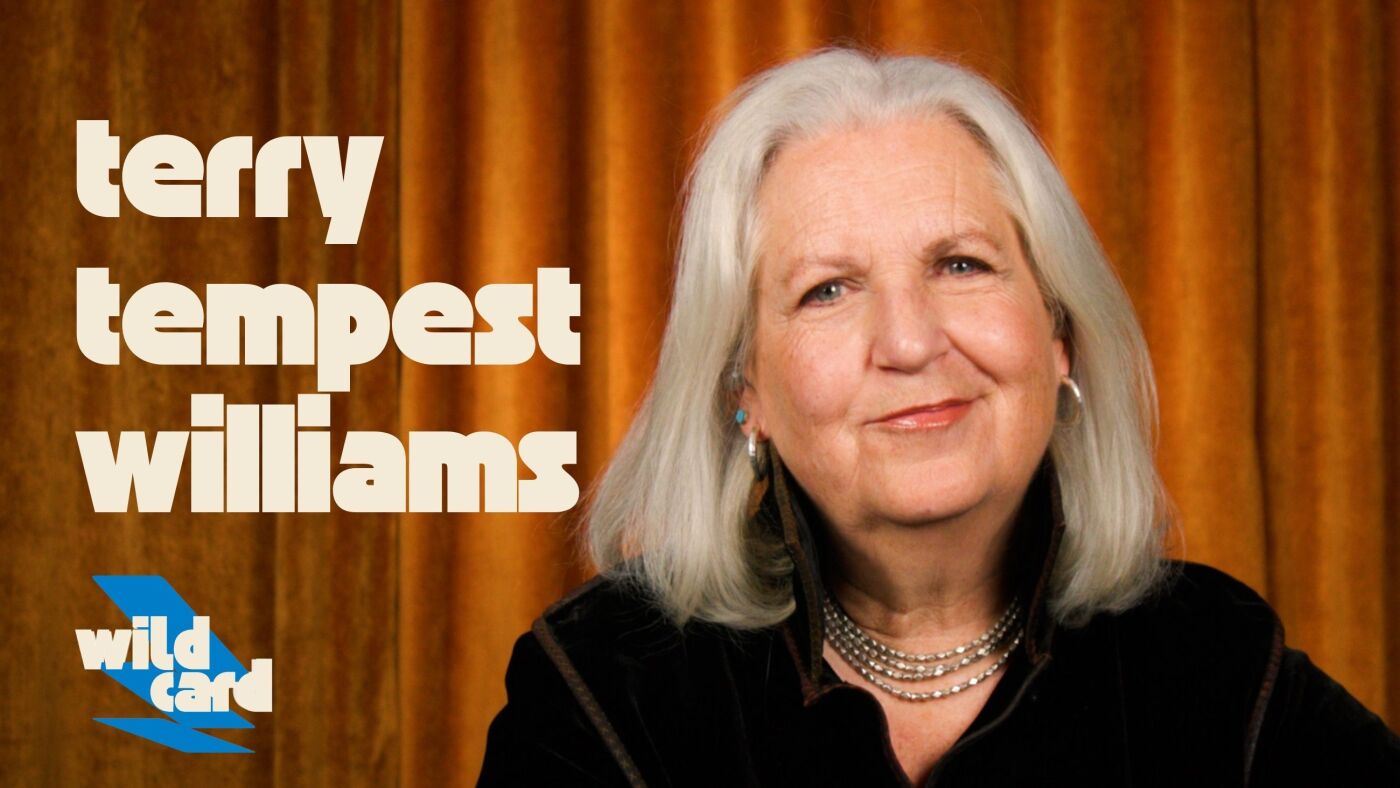
A note from Wild Card host Rachel Martin: I met Terry Tempest Williams about 25 years ago at a writer’s conference in Yosemite Valley. I was a young reporter who was there to do a story about how literature was addressing climate change and she made such a huge impression on me. I had never heard someone talk about the natural world the way Terry did and she had a spiritual depth I hadn’t encountered in my life at that point.
To this day, Terry’s writing always reorients me towards what is good, what is beautiful, and what is true. Her newest book is called “The Glorians.”
-

 New Mexico1 minute ago
New Mexico’s ban on liquor ‘minis’ yields mixed results five years later
-

 North Carolina4 minutes ago
NC state budget includes $27M for Madison County’s new public service complex
-

 North Dakota10 minutes ago
The Women’s College Fan Guide To 2026 Junior Nationals – FloWrestling
-

 Ohio16 minutes ago
Ohio reports nearly 200 cases of ‘explosive diarrhea’ illness
-

 Oklahoma19 minutes ago
Every Oklahoma State Cowboys’ College Football 27 Preseason Player Rating
-

 Oregon24 minutes ago
Illicit massage businesses shut down in Washington County
-
Pennsylvania31 minutes ago
Man arrested over alleged antisemitic threats to Gov. Josh Shapiro | The Jerusalem Post
-

 Rhode Island34 minutes ago
Aquatic Weed Treatments Planned for 2 RI Ponds, 1 Lake


