Business
Google and Meta used to champion DEI efforts. Why Big Tech is pulling back

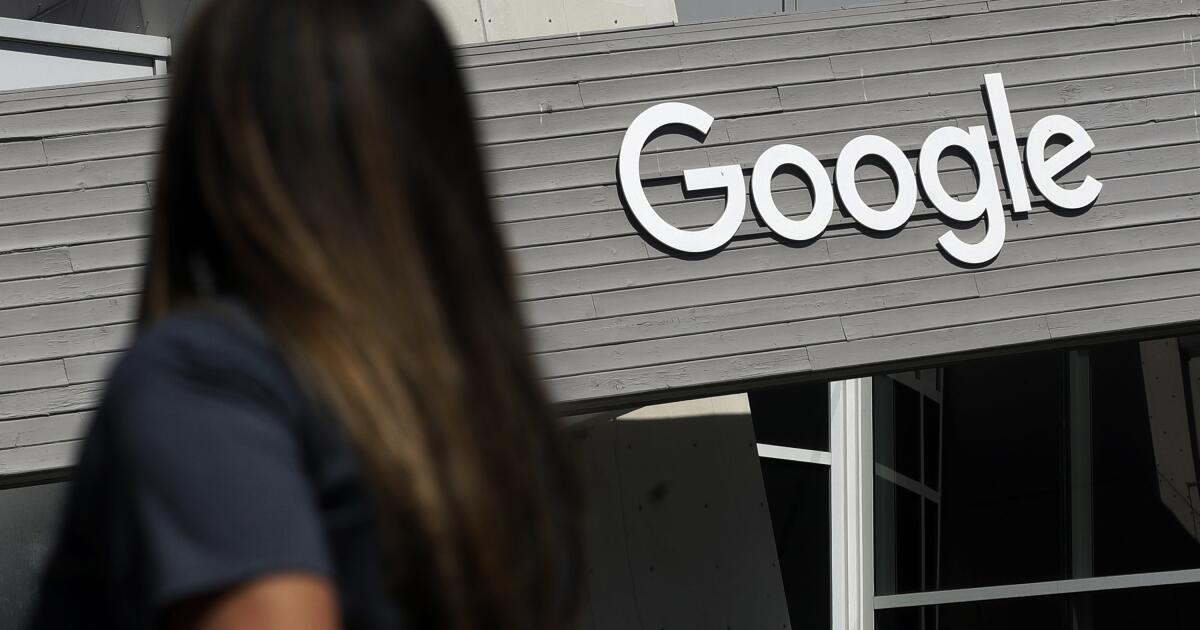
More than a decade ago, outcries about the lack of diversity in the tech industry reverberated across major Silicon Valley companies from Facebook to Google.
Women and minorities spoke out about feeling out of place in male-dominated professions, civil rights activists urged businesses to do more and tech workers like Tracy Chou, who was a software engineer at Pinterest at the time, pushed companies to release diversity data.
“There was already some movement in that direction, at least a feeling like we should do this,” said Chou, who wrote a viral Medium post in 2013 about the lack of female engineers. “What I happened to crystallize was a line of thinking that really resonated with the more data-driven side of the industry.”
For diversity advocates like Chou, the tide has now turned. Facing more political pressure and legal risks during President Trump’s second administration, tech companies that previously championed diversity including Google, Meta (Facebook’s parent company) and Amazon are scaling back, scrapping or rethinking their diversity, equity and inclusion (DEI) efforts.
It’s part of a broader retrenchment across the business community. About 20% of companies in the Standard & Poor’s 100 have retreated from DEI commitments since Trump was elected, according to a Bloomberg News analysis. Those include Target Corp., McDonald’s Corp. and Disney.
Trump and Elon Musk, who spent more than $200 million to help elect the president to a second term, have been vocal critics of DEI programs. In a fact sheet about Trump’s executive order, the White House said many corporations use DEI as “an excuse for biased and unlawful employment practices,” sending a message to businesses that they could get sued. Companies such as Google and Amazon also contract with federal agencies.
“They’re reading the room, especially with Trump and Elon running the country,” said Chou, now the chief executive of Block Party, a tool that helps users combat online harassment.
Corporate pledges to fight racism including from Musk’s company Tesla heightened after the 2020 police murder of George Floyd, sparking massive protests against police brutality.
But legal threats emerged in 2023 after the U.S. Supreme Court struck down race-based affirmative action in college admissions. As tech companies cut thousands of jobs, the massive cuts also hit DEI teams.
Spending on DEI roles at S&P 500 companies started to fall in 2022 as mass layoffs swept the tech industry, data from Revelio Labs show. In November 2024, these businesses spent an estimated $1.3 billion on DEI roles, down 10% compared to the same month in 2022.
From December 2022 to December 2024, tech companies including Google’s parent company Alphabet, Netflix and Amazon spent less on roles that promoted diversity and inclusion.
During this period, Tesla’s DEI spending was down by 84% and Meta’s DEI spending declined by 53%, according to Revelio Labs, which analyzes data from various sources including online profiles on sites like LinkedIn or Jobcase.
Tech companies have pointed to legal risks in internal memos about why they’re rethinking how they approach their DEI programs.
“They wanted to keep President Trump on their good side, because they don’t want to deal with any legal ramifications from the federal government,” said Jared Slater, partner at Ervin Cohen & Jessup.
The White House didn’t respond to a request for comment.
Meta’s Chief Executive Mark Zuckerberg, a former Trump critic who also said previously that improving diversity in tech is important, has in recent months aligned himself with the president and talked about the benefits of “masculine energy.” The company told its employees in an internal memo that the legal and policy landscape surrounding DEI changed and pointed to Supreme Court decisions.
“The term ‘DEI’ has also become charged, in part because it is understood by some as a practice that suggests preferential treatment of some groups over others,” said Janelle Gale, Meta’s head of human resources, in an internal memo.
The company said it wanted to serve everyone and would no longer use its “diversity slate approach” in which hiring managers consider candidates from underrepresented backgrounds when interviewing for an open role.
Meta also ended representation goals for women and minorities, a program to source supplies from diverse-owned businesses and scrapped its DEI teams. Maxine Williams, Meta’s chief diversity officer, became the vice president of accessibility and engagement.
Websites for Meta’s unconscious bias training and TechPrep, a resource hub for underrepresented people and their parents to learn about computer science, are no longer online.
Meta declined to comment but confirmed the memo, first published by Axios.
Google said this month it was reevaluating its DEI programs “following recent court decisions and executive orders on this topic.” The company said it would no longer set hiring targets tied to improving diversity after previously setting a goal of increasing by 30% the proportion of “leadership representation of underrepresented groups” by 2025.
And Amazon told its employees that it’s “winding down” certain programs after evaluating their “effectiveness, impact and ROI [return on investment]” but didn’t specify which ones.
In a December memo to employees reviewed by The Times, the company’s Vice President of inclusive experiences and technology Candi Castleberry told employees that the company is focused on “programs with proven outcomes” while also aiming to “foster a more truly inclusive culture.” Amazon shared the memo.
Amazon Studios — which announced a series of ambitious inclusion goals in June 2021 — also has been making changes. Last September, the Culver City-based studio removed a public-facing inclusion playbook from its website along with a goal that films or series with three or more people in above-line roles such as directors and producers included at least 30% women and 30% members of an underrepresented group.
“We’ve said from the beginning that our efforts to ensure diverse and inclusive storytelling would be fluid and change over time,” Amazon spokesperson Brad Glasser said in a statement. He added that the company strives to “tell the very best stories, while empowering diverse voices in our storytelling wherever possible.”
Meanwhile, some tech companies such as Apple are fighting back against anti-DEI proposals from conservative shareholders. The National Center for Public Policy Research, a conservative think tank, is asking that Apple consider ending its DEI programs, policies, departments and goals.
“The risks to the company’s bottom line stem from potentially getting sued by individuals for discrimination, potentially getting legal action from the government for violating civil rights law, and then the market backlash,” said Stefan Padfield, executive director of the center’s Free Enterprise Project.
Apple recommended that shareholders reject the proposal at the company’s annual shareholder meeting on Feb. 25.
Apple didn’t respond to a request for comment, but the company said in a document to shareholders that the anti-DEI proposal was “unnecessary” partly because its board and management oversee legal and regulatory risks.
Netflix has remained committed to DEI after Trump’s executive order, stating in its annual report that a “major focus” is “fostering a work environment that is culturally diverse, inclusive and equitable” because it wants more people and cultures to see themselves reflected on screen.
The Los Gatos-based streaming giant said in its annual report released in January that it educates its recruiters on how to hire more inclusively.
A Netflix spokesperson didn’t respond to a request for comment.
“What we need to do in this moment in time is to stand up, to speak up, to be strategic and to keep moving forward,” said Vernā Myers, former Netflix vice president of inclusion strategy and founder of the Vernā Myers Co., a consultancy on diversity, equity and inclusion. “We can’t allow this kind of bullying to make us so fearful that we are paralyzed and that we draw back from our core values.”
The backlash against DEI is not only affecting workplace culture, but nonprofits focused on recruiting more women and minorities into the tech industry.
Last year, Women Who Code, a nonprofit that got its start in California, closed because of a lack of funding. AnitaB.org, which brings together women in tech at its annual Grace Hopper Celebration, cut its workforce in 2024 and pointed to a downturn in corporate DEI investments.
Some diversity advocates like Freada Kapor Klein, co-chair of the Kapor Center, question whether some tech companies ever took DEI that seriously.
Tech giants seemed more open to diversity efforts in times of talent shortages because it helps open up a pool of potential hires, she said. Now they’re rolling back DEI efforts amid layoffs and a political climate in which Republicans hold more power.
“It is now fashionable to be anti-DEI. It’s now fashionable to talk about masculine energy. It’s now fashionable … to align oneself with MAGA interests,” she said. “So you have to kind of ask, what is it that people actually, really and truly believe?”


The luxury shopping center in Pacific Palisades will reopen next month after more than $100 million in renovations forced by the January 2025 wildfire that devastated the Los Angeles neighborhood.
Palisades Village will reopen Aug. 15, owner Rick Caruso announced Wednesday. The outdoor center survived the blaze that destroyed homes and other businesses but needed refurbishment to eliminate contaminants that the fire could have spread.
Crews are putting finishing touches on mall buildings after tearing them down to the studs, treating the wood and rebuilding the walls, Caruso said.
“Everybody’s working, and stores are moving their products in,” he said. “It’s a really cool feeling that people have really locked arms and are working together.”
An electrician installs lighting for a restaurant at Rick Caruso’s Palisades Village on Thursday. The shopping center is scheduled to reopen mid-August.
(Myung J. Chun / Los Angeles Times)
Pacific Palisades resident Allison Polhill, who is rebuilding the home of 30 years that her family lost in the blaze, said she is “thrilled” at the prospect of returning to the mall she used to frequent. Its comeback is a boost for the community, she said.
“Every single step that we make to reopen our commercial corridors is going to bring more people back into the Palisades,” said Polhill, who expects to move back into her home at the end of August.
A total of 6,822 structures were destroyed in the Palisades fire, including more than 5,500 residences and 100 commercial businesses, according to the California Department of Forestry and Fire Protection.
Caruso previously attributed the mall’s survival to the hard work of private firefighters and the fire-resistant materials used in the mall’s construction.
The $200-million shopping and dining center opened in 2018 with a movie theater and a roster of upmarket tenants, including Erewhon, which may be the only grocer in the heart of the fire-ravaged neighborhood when it opens.
Caruso’s company was able to fill the mall with tenants despite the long shutdown.
Palisades Village is 99% leased, with the majority of tenants returning, said Jackie Levy, chief financial and revenue officer. Nearly one-third of the shops and restaurants are new to the property.

A firefighter carries a hose back to his rig while walking through a destroyed home from the Palisades fire in Pacific Palisades on Jan. 7, 2025.
(Genaro Molina / Los Angeles Times)
Last year, Pacific Palisades-based fashion designer Elyse Walker said she would reopen her eponymous store in Palisades Village after losing her 25-year flagship location on Antioch Street to the inferno.
Other neighborhood shops destroyed in the fire that are reopening at the mall include K Bakery and Loomey’s Toys, which caters to children up to age 12 and used to be across the street from Palisades Elementary Charter School.
“It’s been a journey and I’m excited because I wasn’t sure that there was going to be a place to come back to,” said toy store owner Amanda Rastegar. “Hopefully we can bring some of that magic back.”
Rastegar’s home in the Palisades survived but was damaged by the fire. The family returned about eight weeks ago. Her last memory of the fire was a burning supermarket.
“I just couldn’t wrap my brain around what was happening,” she said. “By the time I left, Gelson’s was on fire.”
Among the returning tenants is Angelini Ristorante & Bar. Well-known Los Angeles chef Gino Angelini said he will be in the kitchen next month for a return of the Italian restaurant.
“We won’t do a big celebrity open,” he said. “We want to have a very soft opening and see our customers come back.”

Construction takes place at Rick Caruso’s Palisades Village on Thursday. The shopping center is scheduled to reopen mid-August.
(Myung J. Chun / Los Angeles Times)
An elaborate celebration would not feel “correct for me,” Angelini said, because the devastation has been “very sad” for so many.
Other new tenants include local chef Nancy Silverton, who has agreed to move in with a new Italian steakhouse called Spacca Tutto. Women’s activewear retailer LESET will open its first West Coast location.
Caruso said he is optimistic that customers will return to the center, even though many Pacific Palisades residents are still dispersed. One tracking system estimated that about 30% of the Village’s customer base was impacted by the fire, he said.
“That means 70% did not get impacted, so there’s a lot of customers still left out there,” Caruso said. Historically, the center drew customers from as far away as Beverly Hills and Calabasas, as well as Malibu, Brentwood and Santa Monica.
He also hopes many will be inspired to visit the revived mall.
“I believe in the goodness of people and I believe that people are going to want to support the Palisades,” he said. “They’re going to want to be there and support the businesses that have had the courage and the heart to reopen.”

Walmart is rapidly expanding its network of electric vehicle chargers designed for customers to use while they shop.
The network could help fill gaps in EV infrastructure in states with greater need for chargers. Walmart, which has more than 5,000 locations in the U.S. and hundreds in California, says more than 90% of Americans live within 10 miles of one of its stores.
The chargers also offer an incentive for customers to choose Walmart — Walmart Plus members will receive a 10% discount off an average price of $0.46 per kilowatt-hour of energy at the company’s chargers.
Walmart chargers are already available at more than 75 locations in 17 states, with Texas boasting the most charging stations, followed by Florida and Arizona.
Matthew Nelson, Walmart’s director of energy policy, said last week on LinkedIn that the network will soon reach 29 states, including California.
“We are delivering on the promise of affordable, reliable and convenient charging,” Nelson said in his post.
According to Walmart’s website, six charging stations are coming to California soon, though the company did not offer a specific timeline.
The chargers will be installed at stores in Antelope, Brea, Fresno, Stockton, Suisun City and Vallejo.
Most charging sites in California will include eight to 16 fast-charging stalls, said Walmart spokesperson Kelsey Bohl.
The company first announced plans in April 2023 to install its own EV chargers at Walmart and Sam’s Club stores, with a goal of installing thousands of chargers by 2030. Partnering with ABB E-Mobility and Alpitronic, it added 25 new charging sites this past May and six more in June.
“Walmart is building a leading retail-integrated EV fast-charging network, focused on delivering an affordable, reliable and convenient charging experience where customers already shop,” Bohl said in an emailed statement. “Customers can charge while they shop, access stations through the Walmart app they already use, and benefit from affordable pricing.”
The charging stations already available include 612 individual charging stalls using 400-kilowatt chargers. Each stall has a dual charging cord with both Combined Charging System and North American Charging Standard connectors. The standard connectors, designed by Tesla, are smaller and lighter than the combined systems.
The primary way to pay for the chargers is through the Walmart app, but the company is also experimenting with built-in credit card readers to allow those without the app to use the stations.
Customers can check charger availability on the Walmart app. The company said the chargers will be available 24 hours a day.

Robotaxis could be turning into robocops.
A self-driving Waymo reported two teens to San Mateo, Calif., police on Monday after they were found drinking alcohol and shooting toy guns in the back of the vehicle.
According to a social media post from the San Mateo Police Department, officers detained two 15-year-olds after the Waymo they were riding in contacted the department and stopped in a parking lot until law enforcement arrived.
“Parents do you know where your teens are?” the San Mateo Police Department wrote on Facebook following the incident. “Waymo does!”
Officers removed both teens from the vehicle and determined they were using toy guns to shoot Orbeez out the windows. Orbeez are small, water-absorbing beads sold at toy stores.
“Toy guns, water guns, and BB guns all pose real dangers, especially to an untrained eye,” the Police Department said. “The simple handling of them can cause fear in [passersby].” “
A video posted on Facebook shows at least five officers and a police dog responding to the scene and approaching the Waymo with their weapons raised.
Waymo did not immediately respond to a request for comment.
Waymo vehicles have internal cameras and microphones that may be used in an emergency or to “promote safety and security,” according to Waymo’s online support page.
The cameras are also used to ensure the vehicles are clean and to help find lost items, according to the support page.
The company said it does not use facial recognition or other biometric identification technologies to identify individuals.
“In more urgent circumstances, support may access live video during a trip,” the Waymo page said.
The San Mateo Police Department’s Facebook post has garnered nearly 60 comments, with one user accusing Waymo of “snitching.”
“At least they got a designated driver?!” one user commented.
-
 Lifestyle24 minutes ago
We unpack the 2026 Emmy nominations : Pop Culture Happy Hour
-

 Technology32 minutes ago
Get a $30 credit when you reserve Samsung’s upcoming Galaxy phones
-

 World39 minutes ago
Critics say Turkey’s verbal attacks on Israel have crossed into antisemitism
-

 Politics42 minutes ago
WATCH: Dana White drops 2028 hints while raving about his favorite Trump cabinet secretary
-

 Health47 minutes ago
Katie Couric couldn’t remember the year or the president during frightening brain episode
-

 Sports54 minutes ago
Justin Verlander announces he will retire after this season: ‘I’ve realized that time has come’
-

 Technology56 minutes ago
Apple AI security update proves hackers move fast
-
Business1 hour ago
Fire-damaged Pacific Palisades shopping center sets reopening date

