Midwest
Don Lemon defiant after pleading not guilty in Minnesota church case, vows he will ‘not be intimidated’

NEWYou can now listen to Fox News articles!
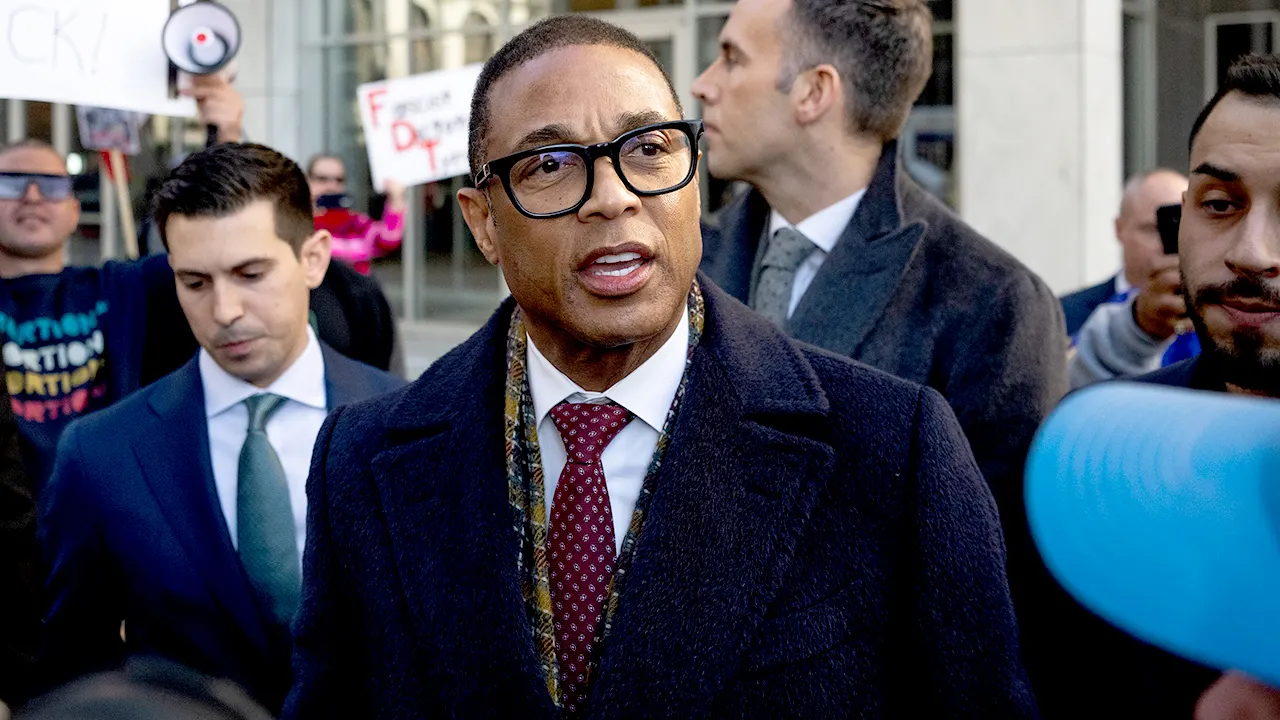
Former CNN host Don Lemon remains defiant after he pleaded not guilty to charges related to the viral protest takeover of a Minnesota church last month.
“This isn’t just about me. This is about all journalists, especially here in the United States,” Lemon said outside the courthouse Friday.
“For more than 30 years I’ve been a journalist, and the power and protection of the First Amendment has been the underpinning of my work,” Lemon told reporters. “The events before my arrest and what’s happened since show that people are finally realizing what this administration is all about. The process is the punishment with them.”
“And like all of you here in Minnesota, the great people of Minnesota, I will not be intimidated. I will not back down. I will fight these baseless charges and I will not be silenced,” he added.
DON LEMON FORMALLY ARRAIGNED, PLEADS NOT GUILTY ON CHARGES STEMMING FROM VIRAL MINNESOTA CHURCH STORMING
Journalist Don Lemon (C) leaves with his legal team after an arraignment hearing at the Warren E. Burger Federal Building and U.S. Courthouse on Feb.13, 2026, in St. Paul, Minnesota. Lemon has pleaded not guilty to charges of conspiring to violate someone’s constitutional rights and violating the FACE Act. (Stephen Maturen/Getty Images)
Lemon, who last month livestreamed anti-ICE agitators storming St. Paul’s Cities Church under the suspicion that its pastor had collaborated with U.S. Immigration and Customs Enforcement (ICE), was charged with conspiracy to deprive religious freedom rights and a violation of the FACE Act. Prosecutors did not seek to detain Lemon.
Lemon was arraigned alongside far-left agitators including William Kelly and Nekima Levy Armstrong, who have been accused of helping organize the church takeover. All five people arraigned on Friday pleaded not guilty.
DON LEMON’S LENGTHY HISTORY OF ANTI-ICE RHETORIC
Don Lemon has seen a spike in social media subscribers, appeared on “Jimmy Kimmel Live!” and been feted at the Grammy Awards since his arrest. (Stephen Maturen/Getty Images)
Lemon has insisted he was working as a journalist and was not part of the group that harassed churchgoers. He is represented by Abbe Lowell, who previously represented Hunter Biden, and Joe Thompson, who was the lead prosecutor who helped uncover the massive $250 million Feeding Our Future food fraud case tied to the state’s Somali community. Thompson resigned from the U.S. Attorney’s Office in January.
CLICK HERE FOR THE LATEST MEDIA AND CULTURE NEWS
While documenting the hostile invasion of the church, Lemon called it a “clandestine mission.”
“You have to be willing to go into places and disrupt and make people uncomfortable. That’s what this country is about,” Lemon said.
Don Lemon went viral for livestreaming the anti-ICE protest at St. Paul’s Cities Church last month. (Don Lemon/YouTube)
Agitators disrupted the religious service and “intimidated, harassed, oppressed, and terrorized the parishioners, including young children, and caused the service to be cut short,” according to a federal affidavit.
Churchgoers told law enforcement that members of their parish attempted to retrieve their children from a childcare area located downstairs, but the agitators were blocking the stairs, and the parents were unable to get to their children. One churchgoer later expressed fear that the agitators may have guns underneath their jackets and noted that aisles were blocked, making it difficult to leave.
The FACE Act makes it a federal crime, with potentially steep fines and jail time, to use or threaten to use force to “injure, intimidate, or interfere” with a person seeking reproductive health services, or with a person lawfully trying to exercise the First Amendment right of religious freedom at a place of religious worship. It also prohibits intentional property damage to a facility providing reproductive health services or a place of religious worship.
Lemon, who was fired by CNN in 2023 and then went the independent route, has seen his profile grow since the arrest, including an appearance on “Jimmy Kimmel Live!” and a surge in his subscribers.
Fox News’ Brian Flood contributed to this report.
Read the full article from Here



(WLUK) — Northeast Wisconsin community groups that helped during historic spring flooding can now apply for relief.
Applications for the United Way Fox Cities and Community Foundation for the Fox Valley Region Flood Relief fund are now open.
The grants are available to local nonprofits and churches serving residents in Outagamie, Calumet, Shawano, Waupaca, and the Neenah/Menasha area of Winnebago counties who are engaging in relief efforts both short-term and long-term.
Grants are available to:
- 501(c)(3) nonprofit organizations
- Groups fiscally sponsored by a qualified 501(c)(3)
- Churches and other public entities able to receive tax-deductible contributions
These grants are not available to private foundations, individuals or businesses directly, labor unions, or 501(c)(4), 501(c)(5), or 501(c)(6) organizations.
The funding provided to these community organizations will help with housing and safe shelter, food, health and well-being, and financial assistance.
For individual homeowners and renters seeking relief, you can apply for FEMA assistance.
President Trump recently approved $22.6 million in federal aid for Northeast Wisconsin. The request made earlier this year asked for $27 million.

The Detroit Red Wings announced on Wednesday that Steve Yzerman is stepping down from his role as GM and executive vice president.
Yzerman will continue working with the organization as a senior advisor to Red Wings governor and CEO Chris Ilitch.
The Red Wings are now searching for a new head of hockey operations.
“Steve’s lifetime of contributions to the Red Wings has meant more to this franchise than words can truly express, and I have the highest level of respect for his continued commitment to our organization,” Ilitch said in a statement. “We are thankful for Steve’s hard work and dedication as General Manager and are grateful knowing Steve will remain where he belongs – here with the Red Wings family.”
Yzerman returned to Detroit in April 2019 after a successful front office career with the Tampa Bay Lightning, replacing longtime GM Ken Holland.
“I am sincerely grateful to Chris and the entire Ilitch family,” Yzerman said in a statement. “This organization has given me incredible opportunities, from my time as a player to the privilege of returning as General Manager. I’ve appreciated every experience throughout the years, and I’m extremely proud to remain part of this great franchise.”
As the Red Wings commence their search for Yzerman’s replacement, Yzerman will remain in his current role to facilitate the day-to-day of hockey operations until a replacement is named. The organization says it will consider both internal and external candidates for the role.
“Clearly, we are not where we and our fans expect to be as an organization,” Ilitch said. “I’m looking forward to bringing in new leadership to build the championship-caliber organization Hockeytown deserves.”
“My commitment to the Red Wings and this community will never waver, and I look forward to supporting the organization in whatever role is needed to achieve our collective goals,” Yzerman said. “I want to thank our passionate fanbase for their support, as they are what makes Detroit and the entire state of Michigan a very special place in the hockey world.”
This is a developing story and will be updated.

The City of Chicago has awarded a $3 million Community Development Grant for the redevelopment of the former Grace’s Furniture building at 2618 N. Milwaukee. Planned by Bluestar Properties and Marc Realty, the building was built in 1914 as a storage warehouse and sits within the Logan Square Boulevards District.
2618 N. MilwaukeeGoogle Maps
With K2 Studio serving as the architect, the existing structure will be converted into a four-story health club with a ground floor restaurant and cafe. Set to be known as Logan Square Athletic Club, the health club will be operated by Chicago Athletic Clubs.
The redevelopment will rehabilitate the existing brick facade along N. Milwaukee Ave while creating a new brick facade on the south elevation.

2618 N. MilwaukeeK2 Studio
The $11 million development will be supported in part by the $3 million Community Development Grant, which is funded through the city’s Housing and Economic Development bond.
According to Block Club Chicago, the project is expected to begin construction in Fall 2026 with construction expected to last for one year, with the gym set to open in late 2027.
-

 Wisconsin8 minutes ago
Flood relief grant applications now open for nonprofits, churches in Northeast Wisconsin
-

 West Virginia14 minutes ago
New law allows employers to provide benefits for independent contractors in West Virginia
-

 Wyoming20 minutes ago
Election Q&A: Jessica Crowder for Wyoming House District 43
-

 Crypto26 minutes ago
Blackrock Becomes World’s First $15 Trillion Asset Manager, Unleashes Tokenization Blitz
-
 Finance32 minutes ago
Big financing steps forward for The 78, Foundry Park projects
-

 Fitness38 minutes ago
More Muscle, Less Fat—Is This High-Tech Workout A New Fitness Answer?
-

 Movie Reviews50 minutes ago
Film Review: “The Odyssey” – MediaMikes
-
World1 hour ago
Movie Review: In Christopher Nolan’s ‘The Odyssey,’ an ancient epic is reborn


