Oklahoma
Oklahoma’s New State School Report Cards: 5 Takeaways


State school report cards are out, and eight Oklahoma City schools have been graded with an F for the last school year. These report cards look at how public schools are serving Oklahoma students.
1. Oklahoma struggles nationally in education
Oklahoma traditionally ranks near the bottom nationally in education. U.S. News and World Report places Oklahoma second to last in the country for education. The Oklahoma State Report card allows state leaders and educators to learn why the state struggles and potential ways to fix problems.
2. Oklahoma Schools get a C for Academic Achievement
Schools in Oklahoma improved slightly in English and math achievement, according to the State Report Card website. However, the overall grade for academic achievement stayed the same with a C from the previous school year.
3. Oklahoma City Schools had fewer “F” graded schools
An Oklahoman analysis looked at 526 campuses in 10 counties in central Oklahoma. The analysis found 12 schools in Oklahoma County with an F grade and eight of those schools within Oklahoma City Public Schools. However, their analysis found that OKCPS improved by 20 percent from the previous school year.
OKCPS released a statement that said —
“This year, eight schools across our district raised their letter grades, and several others demonstrated remarkable growth, with eight sites increasing their overall scores by more than 10 points. One standout achievement is Classen SAS at Northeast High School regaining its “A” designation, showcasing a continued tradition of academic excellence.
“These milestones highlight the tireless efforts of our educators and staff, our commitment to high-quality instruction, and our focus on leveraging data to drive impactful changes. While challenges remain, with eight schools, including three alternative education sites, receiving an F designation, this represents a reduction from last year. It is a signal that the strategic support and interventions we’ve put in place are working.
“Our dedication to lifting our most underperforming schools remains unwavering because we believe every student deserves a world-class education. At OKCPS, we are building momentum and staying true to our vision of ensuring that every student graduates ready to be employable, enrolled, or enlisted.
“This year’s progress is a testament to what’s possible when we come together with purpose and determination. To our educators, staff, and community: thank you for your partnership and belief in the success and future of our students. The future is bright, and we’re not stopping now.”
4. OKCPS is trying to improve chronic absenteeism
The pandemic changed the education landscape and contributed to more chronic absenteeism – that’s students who miss 10 percent or more of the school year. The Oklahoma State Department of Education gave the state an F grade for attendance for the 2022-2023 school year. Oklahoma City Public Schools superintendent Jamie Polk told News 9 last September they were focused on meeting students who need extra support.
“It’s a high concern I have. We would like to do better,” said Polk, during a September 2024 interview with News 9. “This is a major problem.”
Chronic Absenteeism during the 2023-2024 school year improved to a D grade.
“Each child should be guaranteed one year of growth. That’s our role,” Polk said. “I also have hope. We say we have a seat for every child. That means something to us.”
5. Chronically absent students also face economic disadvantages
Data from the Oklahoma State Report Card shows students who face economic challenges are most likely to miss class time. According to OKCPS’s Statistical Profile report, 92% of the students who attend OKCPS schools face economic disadvantages.
Polk said academic progress hinges on resources for students who don’t have the support to make it to class. Last fall, Polk announced her district is working with Oklahoma County District Attorney Vicki Behenna’s office to find more solutions to keep students in school.



What you need to know about Oklahoma ahead of the College World Series
North Carolina will face a dangerous Oklahoma team that is on a roll.
Oklahoma (41-22) has been just as dominant. The Sooners, making their 13th College World Series appearance and first since 2022, surged through the postseason as road warriors. They won the Atlanta Regional by upsetting No. 2 seed and ACC champion Georgia Tech in the final, then swept Big 12 champion and No. 15 seed Kansas by a combined score of 21-3 in the Lawrence Regional.
The Sooners, who are 3-0 in Omaha after beating No. 7 seed Alabama and knocking off No. 3 seed and SEC champion Georgia twice, are seeking their third national championship. Oklahoma won titles in 1951 and 1994 and finished as runner-up to Ole Miss in 2022.
Here are a few things to know about Oklahoma:
Best player: Catcher Deiten LaChance
LaChance is Oklahoma’s most powerful hitter. He is batting .333 with 12 doubles, two triples and team highs of 16 home runs and 65 RBIs.
Throughout the postseason, he is hitting .326 with four home runs and 15 RBIs. In Omaha, he is 5-for-14 (.357) with one home run and five RBIs.
Strengths
Like North Carolina, Oklahoma is a balanced team that is good at a little bit of everything and is built to frustrate opponents.
Oklahoma is a balanced hitting team like UNC, but the Sooners have hit a few more homers with 91, compared to the Tar Heels’ 82. That is largely due to the Sooners smashing 26 home runs in their 10 postseason games. In Omaha, OU has homered eight times, including five homers in its win over Georgia in its previous game.
The Sooners have stolen 129 bases this season. That is good for 24th nationally and second in the SEC.
Pitching-wise, OU is 18th nationally in strikeouts per nine innings and leads the SEC in shutouts.
Weaknesses
The most glaring weakness is the pitching staff, despite its ability to strike out opposing batters and record shutouts.
The Sooners have a 4.98 ERA as a staff. Only one pitcher with 10 or more appearances has an ERA under 3.60.
They also allow 4.51 walks per nine innings, which ranks 138th nationally.
Follow us @TarHeelsWire on X and like our page on Facebook to follow ongoing coverage of North Carolina Tar Heels news, notes and opinions.

It was a Friday Night Lights in June kind of moment for the Oklahoma State Cowboys as Israel “Izzy” Hammons made his commitment announcement.
The Choctaw, Okla., rising senior announced his decision to commit to Oklahoma State on Friday during an Instagram Live session. The Cowboys beat out a roster of schools vying for the linebacker, most notably Texas.
Hammons made just two official visits — one to OSU and one to Texas last week.
His commitment pushed the Cowboys’ 2027 recruiting class back to nine players after the defection of Mount Carmel (Chicago, IL) offensive lineman Chase Clark to Purdue.
Commitments are non-binding. The earliest that Hammons can sign with OSU is in December.
Izzy Hammons to OSU
Hammons is the first four-star player to commit to the Cowboys this cycle. Their previous commitments all came from three-star players. The 6-3, 225-pound linebacker was considered a Top 200 player in the country by both On3/Rivals and 247Sports. Both services had him ranked as a Top 10 player in the state of Oklahoma at any position. He’s also considered the No. 1 linebacker in the state.
He also runs track and field, competing in the high jump and the 100-meter days, with a personal best of 11.30 seconds in the latter.
The Longhorns came in hot at the end but already had linebackers committed to the program this cycle. For the Cowboys getting a pledge from a player like Hammons is key to shore up a position where they didn’t have a commitment and where they plan to use senior transfers as starters in 2026. That means OSU and head coach Eric Morris must start building a pipeline now.
OSU’s Class of 2027
After Clark’s decommitment the Cowboys were down to eight recruits for 2027 entering Friday, most of which were on the offensive side of the ball and starting with Iowa Colony (Texas) quarterback Carson White, who was the cycle’s first commitment in April.
Up front, OSU has two offensive line commitments Jake Baker of Ensworth High School in Nashville, Tenn., and Sonny Mullen of Troy, Texas. When it comes to skill positions players the Cowboys have three commitments as well, including two wide receivers — Cooper Hooker of Pryor (Quapaw, Okla.) High School and Ake O’Neal of Argyle, Texas. Oklahoma State also has a pledge from tight end Talan Scott of Queen City, Ariz.
Defensively, the Cowboys have commitments from safeties Chayce Davis of Euless (Texas) Trinity High School and Bryson Brown of Broken Bow, Okla.
Follow

OKLAHOMA CITY (KOKH) — As an Oklahoma utility company seeks a multimillion-dollar rate increase, two Oklahoma state representatives are asking the Oklahoma Supreme Court to give customers a voice.
The Oklahoma Corporation Commission is currently deciding on a $29 million rate increase for Oklahoma Natural Gas.
If approved, officials say it would mark the fourth rate hike the OCC has approved for ONG in the last four years and has led to an $128 million increase in customer bills.
Rep. Tom Gann, R-Inola, and Rep. Kevin West, R-Moore, have filed an appeal with the Oklahoma Supreme Court, saying customers weren’t given a chance to participate in the case.
“The OCC has gone completely off the beam,” ONG customers Gann and Kevin West told the Supreme Court in their June 17 petition.
In the filing, they claim that the OCC set a March 27 deadline to intervene in ONG’s rate case but only set it after the deadline had already passed.
They say ONG’s customers weren’t notified about the case until late April.
“This case was rigged from the start to keep ONG ratepayers out,” said Gann. “The federal courts have said utility customers have constitutional due process rights – including a right to timely and adequate notice about these cases. We are asking the Supreme Court to uphold customers’ rights and require the OCC to change its rules to respect them. ONG ratepayers should be allowed to exercise their right to participate without being muzzled.”
The commissioners are expected to make a final decision on the $29 million rate increase later this year.
BE THE FIRST TO COMMENT
ONG, the OCC, and the attorney general have 30 days to respond to Gann and Kevin West’s latest ONG appeal.
-

 Idaho3 minutes ago
8,600-Acre Wildfire Decimates Massive Idaho Salvage Yard With 8,000 Cars
-

 Illinois8 minutes ago
Illinois GOP chair says Obama Center is political operation on public land | Fox News Video
-

 Indiana15 minutes ago
Madam Walker Legacy Fest block party celebrates Black excellence with food, music, and community
-

 Iowa18 minutes ago
Blocked Iowa HHS director resigns but is appointed deputy director
-
 Kansas23 minutes ago
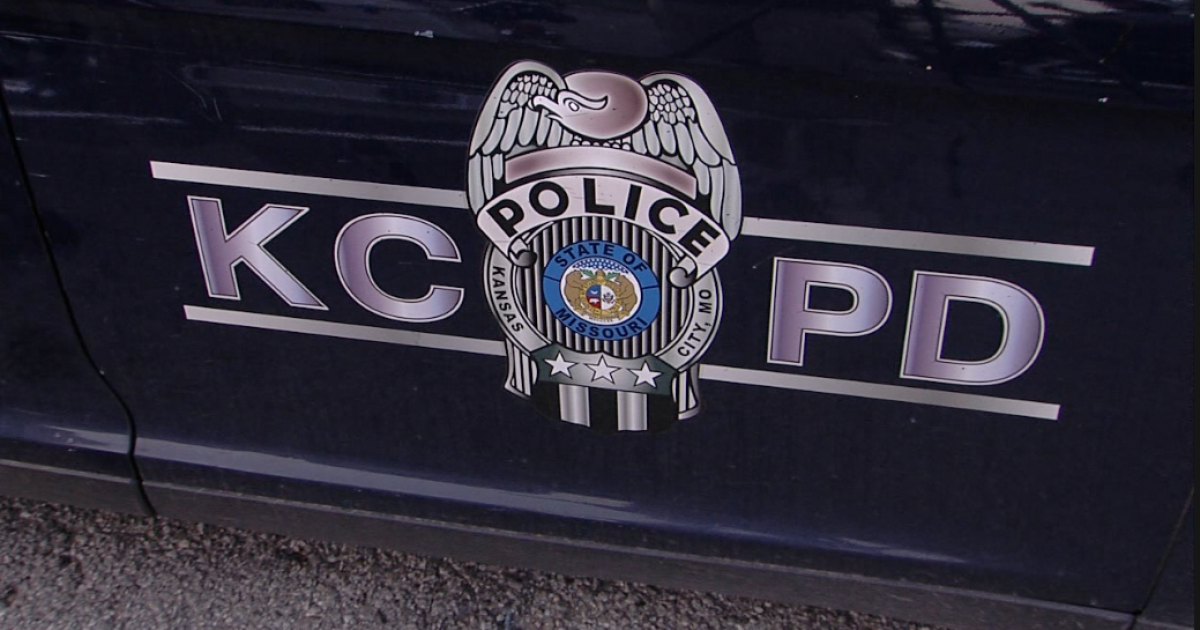
1 man dies after being shot June 9 in Kansas City, Missouri; police working to identify person of interest
-

 Kentucky30 minutes ago
Tornado ripped through Florence area during storms, NWS confirms
-

 Louisiana33 minutes ago
How Louisiana nitrogen gas executions could be affected by court ruling on Alabama
-

 Maine38 minutes ago
Two charged with assault after boater dies overboard in Hurricane Sound

