Oklahoma
The man behind Route 66’s Totem Pole Park: The history of a 90-foot Oklahoma landmark


Just miles off Route 66 in Rogers County stands one of Oklahoma’s most unusual roadside attractions: a 90-foot concrete totem pole built largely by one man over more than a decade.
Ed Galloway’s Totem Pole Park is home to what is widely described as the world’s largest concrete totem pole, created by Oklahoma folk artist Nathan Edward Galloway during his retirement years.
The park sits near Chelsea and continues to draw visitors traveling Oklahoma’s stretch of Route 66.
A project decades in the making
Credit: Rogers County Historical Society
According to the National Park Service, Nathan Edward Galloway was born in 1880 in Springfield, Missouri. He later worked as a manual arts teacher at Sand Springs Home before retiring in 1937 to property near present-day Chelsea in Rogers County.
After retiring, Galloway began building what would become Totem Pole Park. Using concrete, steel rebar, wood, and red sandstone, he created a series of colorful, highly decorated totems and structures across the property.
Atlas Obscura reports that Galloway began construction in 1938 with the goal of building durable totem poles from sturdy materials, and he surrounded his land with tapered concrete monuments and decorative features.
Between 1937 and 1948, Galloway constructed the park’s centerpiece: a 90-foot-tall totem pole carved with bas-relief designs. Travel Oklahoma describes it as a Route 66 icon and a state landmark.
Eleven years and 90 feet of concrete

Credit: Rogers County Historical Society
The main totem took roughly 11 years to complete, according to Atlas Obscura. The structure is made of red sandstone framed with steel and wood, then covered with a thick concrete exterior.
The tower features more than 200 carved images, including representations of birds and Native American figures facing the four cardinal directions. Near the top are four nine-foot figures representing different tribes.
Galloway’s version differs from traditional totem poles of the Pacific Northwest, which are generally carved from red cedar.
The structure rises from the back of a large, three-dimensional turtle. The turtle base was carved from a broad sandstone outcrop on the site and painted in bright colors.
The totem is hollow and rises about nine stories, with the ground level measuring about nine feet in diameter. Inside, plastered walls feature painted murals of mountain-and-lake scenes and bird totems, along with Native American shields and arrow points. At the top, the cone is open to the sky.
Picnic tables supported by small concrete totems, a totem barbecue fireplace, and gate structures designed to resemble fish fill the park grounds.
The Fiddle House

Credit: Rogers County Historical Society
Beyond the towering pole, Galloway’s artistic interests extended into music and woodworking.
An 11-sided structure known as the “Fiddle House” sits on the property and resembles a Navajo hogan, according to the National Park Service. The building houses many of Galloway’s hand-carved fiddles and other creations.
The Rogers County Historical Society says the Fiddle House Museum retains many of Galloway’s handcrafted violins and artifacts.
From neglect to restoration

Credit: Rogers County Historical Society
Galloway continued working on the park until his death in 1961. After he died, the site gradually fell into disrepair.
In 1989, the Rogers County Historical Society acquired the property. A major restoration effort took place from 1988 to 1998, with art conservators and engineers studying the structures and repairing damaged materials.
Additional repainting and preservation projects began in 2015.
Today, Totem Pole Park is listed on the National Register of Historic Places. It remains open year-round with free admission and is managed by the Rogers County Historical Society.


In this week’s Your Vote Counts, Jason Dunnington and Sen. Paul Rosino discuss the importance of Oklahoma’s runoff election, Oklahoma insurance lawsuits, and mental health issues.

This tracker will be updated as the MLB Draft progresses throughout the weekend.
Oklahoma is still basking in the shine of capturing the program’s third national title last month.
The players have spread out to participate in summer leagues across the country, and head coach Skip Johnson has been hard at work finalizing the roster for next year through the transfer portal and rounding out the coaching staff, which now includes his son Tyler Johnson to fill the void left by Todd Butler, who departed for Florida.
A handful of OU upperclassmen will have big decisions to make.
The MLB Draft got underway on Saturday, meaning a few Sooners will have to decide whether to return to school for an additional year or start their professional careers.
Here are the Oklahoma players who have been selected in the draft.
|
Player |
Position |
Round |
Pick |
Team |
|---|---|---|---|---|
|
Brendan Brock |
C/OF |
3 |
99 |
New York Yankees |
|
Jaxon Willits |
INF |
5 |
141 |
Los Angeles Angels |
|
LJ Mercurius |
RHP |
5 |
148 |
Arizona Diamondbacks |
|
Deiten Lachance |
C |
6 |
184 |
Cleveland Guardians |
|
Camden Johnson |
INF |
9 |
269 |
Kansas City Royals |
Sign up to our free newsletter and follow us on Facebook and X for the latest news.
Oklahoma’s Draft Picks
- Brendan Brock did a bit of everything for the Sooners. He started 65 of OU’s 66 games either at catcher, in the outfield or as the Sooners’ designated hitter. He hit .302 for the year, totaling 74 hits, 11 doubles, two triples and he scored 60 runs. Brock bashed 13 home runs, finished with 55 RBIs and stole 28 bases. He hit .400 in the Men’s College World Series, which included a home run, a double and three RBIs.
- Oklahoma shortstop Jaxon Willits was the second Sooner off the board. The junior started 64 games and hit .313 with seven home runs, 55 RBIs, 20 doubles and three triples. Willits truly shined in the World Series. He was named the Most Outstanding Player in Omaha. Willits went 13-for-26 at the plate, setting the school record for hits in a single MCWS, and he had a home run, four doubles and seven RBIs. He’s the son of OU associate head coach Reggie Willits, and his brother, Eli, was the first-overall pick in the 2025 MLB Draft.
- Right-handed pitcher LJ Mercurius was selected a few picks after Willits. The junior transferred to OU from UNLV and was able to play alongside his brother, Xander. LJ began the year as one of Oklahoma’s starters, landing him on the Golden Spikes Award Midseason Watch List, but later in the year he transitioned to a bullpen role, where he thrived. He ended the year with a 4.43 ERA in 83 1/3 innings. He started 12 games and made 22 appearances, ending with a 7-7 record and four saves. He struck out 103 batters and issued 27 walks while also hitting 10 batters. Mercurius held opponents to a .235 batting average against him in 2026.
- A member of the MCWS All-Tournament Team, catcher Deiten Lachance was the man for the big moment throughout the postseason. He finished the year batting .327 with 18 home runs and 69 RBIs in 65 appearances, and he also added 12 doubles and two triples. Lachance homered three times at the World Series, including a pair of bombs in the first contest of the Championship Series against North Carolina.
- Camden Johnson started 62 games at third base and appeared in all but one game for the Sooners. He hit .298 for the season with 11 doubles, three triples and nine homers, and Johnson drove in 48 runs. He also stole 31 bases.
Follow

New Oklahoma laws on abortion, insulin access go into effect July 1
New Oklahoma laws on a permanent classroom phone ban, barring abortion referrals and boosting access to insulin go into effect on July 1.
An out-of-state anti-abortion group successfully lobbied to change Oklahoma law after it was rejected for public funding from a program that encourages women to keep their unplanned pregnancies.
Human Coalition is a Texas-based nonprofit that uses internet marketing to connect women with crisis pregnancy centers and social workers. The group has pushed for several states to expand anti-abortion programs. About two-thirds of the group’s revenue in the 2025 fiscal year — $20.7 million — came from government grants, according to tax records. The group spent about $7.5 million on advertising and $241,728 on lobbying nationwide.
Human Coalition applied for funding from Oklahoma’s Choosing Childbirth program in 2024. The State Department of Health rejected the group because it determined that its lack of a physical presence in Oklahoma didn’t comply with state law.
The Choosing Childbirth program has become a key part of Oklahoma’s strategy to support young children and pregnant women since the state enacted a near-total abortion ban in 2022. Oklahoma nonprofits can get taxpayer-funded grants through the program to provide things like employment assistance, parenting education and diapers.
Senate Bill 1503 removes the requirement for a nonprofit to have a location in the state. Sen. Julie Daniels, R-Bartlesville, and Rep. Mark Lepak, R-Claremore, sponsored the bill. A handful of groups headquartered out of state already receive Choosing Childbirth funding, but all awardees maintain a physical location in Oklahoma.
Daniels said the legislation was written with only Human Coalition in mind. She first came in contact with Human Coalition through her involvement in the conservative model legislation group American Legislative Exchange Council. She met with two lobbyists for Human Coalition at the council’s December policy summit and learned it had been unable to participate in the last round of Choosing Childbirth funding.
“I said, ‘Well, tell me more.’ And we realized it would be a very simple change in the law, and so that’s what we did,” Daniels said.
Daniels said she thinks Human Coalition’s online model can engage women who might not seek out services at crisis pregnancy centers on their own. She also said it’s “doubly sad” that Human Coalition didn’t receive funding because three crisis pregnancy centers in the state said they’d like to work with the group and wrote letters of support.
In Oklahoma, Human Coalition lobbied to boost funding for the state’s Choosing Childbirth program by about sixfold, from $3 million to $18 million in 2024, Lauren Enriquez, a spokesperson for the nonprofit, said in a statement.
“When Human Coalition advocates and provides care services, funding grows and families gain real, expanded choices,” Enriquez said in the statement. Human Coalition declined an interview after multiple requests from The Frontier and StateImpact.
Human Coalition has five active lobbyists in Oklahoma. Three work for Oklahoma consulting and lobbying firm CMA Strategies, and two work directly for the nonprofit.
Lobbyist Pat McFerron said in an email that the firm is proud to support Human Coalition’s efforts to expand access to “life-affirming care,” but he didn’t answer questions from The Frontier and StateImpact.
“We are pleased with the progress made to expand Oklahoma’s Choosing Childbirth program, including SB 1503, and look forward to building on that momentum,” McFerron said.
Programs in seven states
Human Coalition runs government telecare programs in seven states and has several pregnancy centers throughout the U.S., according to its most recent annual report.
Florida lawmakers awarded Human Coalition $500,000 this fiscal year to facilitate a statewide telecare network for “women who are challenged with unexpected pregnancies,” though the group asked the Florida House of Representatives and Senate for more money.
Human Coalition operates a statewide telecare network for the state of Louisiana, providing services for pregnant women and families. The organization is set to receive up to $3 million in state funding through the end of next year.
Whitney LaFrance, a spokesperson for the Louisiana Department of Children and Family Services, said in an email that the agency recently celebrated the first birthday of a child “saved through Human Coalition’s services,” and that the group has exceeded the state’s expectations.
Human Coalition first applied in 2020 to serve as Oklahoma’s Choosing Childbirth grant administrator, a role that would allow the group to distribute state funding to other service providers. But the State Department of Health contract was ultimately awarded to another nonprofit, Oklahoma Pregnancy Care Network. The agency determined Human Coalition would have used most of the state funding to support its telehealth program instead of direct services in the state, Erica Rankin-Riley, a spokesperson for the Health Department, said in an email.
Service providers and watchdog groups have raised concerns about Human Coalition’s work in some states.
The liberal watchdog group Campaign for Accountability sent a letter to North Carolina officials in 2019, alleging that Human Coalition had improperly used state funding for religious purposes. According to the letter, Human Coalition’s website at the time said mentoring was “a vital part” of its program “that helps connect our clients to the church.” The North Carolina Department of Health and Human Services didn’t respond to a question about whether the complaint was resolved.
North Carolina lawmakers still expanded Human Coalition’s funding from $1.2 million a year between 2019 and 2021 to $3.2 million a year between 2021 and 2023. The nonprofit was allocated more than $3.2 million for the 2027 fiscal year.
Texas Pregnancy Care Network, a nonprofit that contracts with service providers as part of the state’s alternatives to abortion program, said in 2018 that it declined to contract with Human Coalition because the group used advertising that appeared to be from an abortion provider but instead connected women to a crisis pregnancy center.
“TPCN requires that any advertising or marketing of a provider accurately describe and depict the services that the organization offers,” the group wrote in an application for funding. “TPCN does not tolerate any degree of deception or trickery in provider advertising.”
Human Coalition is now a separate service provider through the alternatives to abortion program, and it’s continued to secure growing amounts of state funding. A 2023 fiscal year program report indicates that Human Coalition had received a Texas state contract for more than $10 million. According to a report from the 2025 fiscal year, Human Coalition was awarded another state contract of more than $18 million and said it had recently “expanded its grassroots efforts” into the Austin, Houston, San Antonio and El Paso areas.
Similar services are already offered in Oklahoma
Another provider is already offering services in Oklahoma that are similar to those of Human Coalition.
Her First Women’s Health — an anti-abortion telehealth brand created by Dallas-based nonprofit Heroic Media — also uses online ads that encourage women considering abortion to contact a call center where they’re routed to local resources. It’s been awarded nearly $900,000 in Choosing Childbirth funding since 2024 and has locations listed on its website in Guthrie and Oklahoma City.
Oklahoma’s 211 hotlines are also now required to prioritize referrals to crisis pregnancy centers, adoption agencies and “other life-affirming resources” to support expectant mothers.
The new law opening up Choosing Childbirth funding to groups without a physical presence in Oklahoma takes effect Nov. 1. Newly eligible nonprofits can start applying for grants next year. Human Coalition said it will evaluate any future funding opportunities as they arise.
The Frontier is a nonprofit newsroom that produces fearless journalism with impact in Oklahoma. Read more at www.readfrontier.org.
-

 New York58 minutes ago
How a Family of 5 Lives on $46,000 a Year in Wakefield
-

 Los Angeles, Ca1 hour ago
Southern California braces for 110-degree heat, thunderstorms this week
-
 Detroit, MI1 hour ago
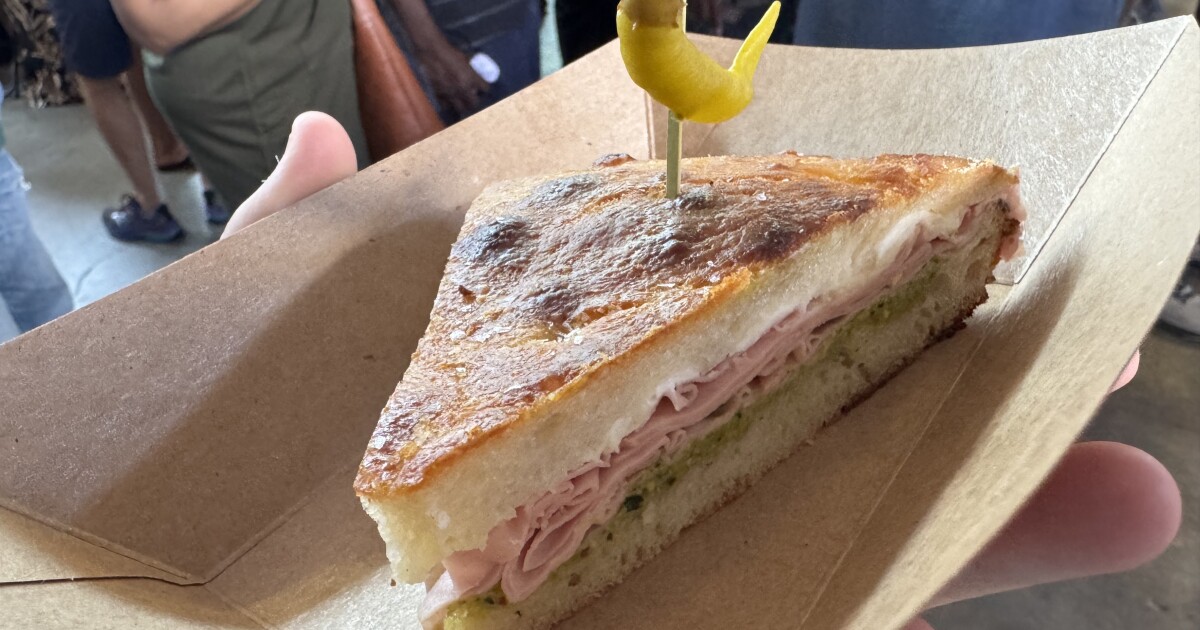
Detroit Sandwich Party returns to Eastern Market on Sept. 6
-

 San Francisco, CA2 hours ago
A Leak of San Francisco Police Drone Footage Exposes the New Reality of Urban Surveillance
-

 Dallas, TX2 hours ago
Viral East Dallas coffee shop fears major sales drop amid six-week road closure
-

 Miami, FL2 hours ago
3 hurt in fire on Lincoln Road that started underground
-

 Boston, MA2 hours ago
Rideshare driver charged in Logan airport passenger assault to appear in court
-

 Denver, CO2 hours ago
Denver area events for July 13

