West
Republicans cut into Dem voter registration advantage in crucial swing state as early vote wraps up

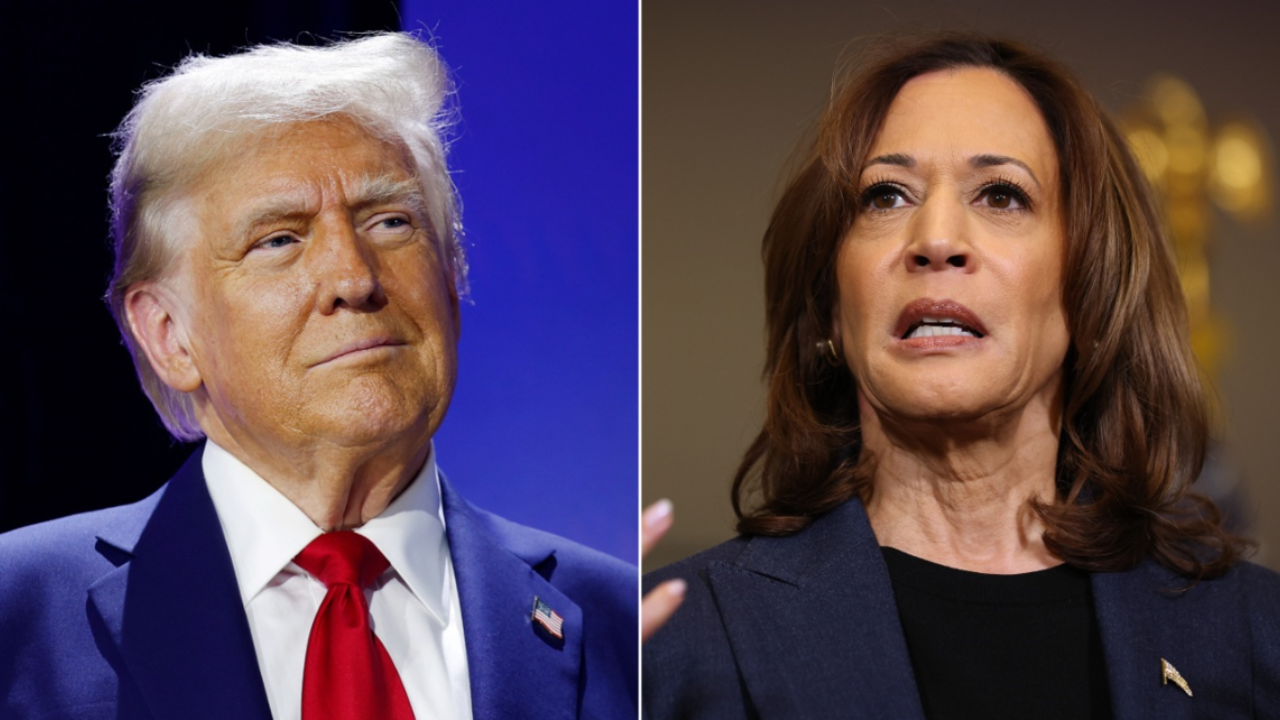
New numbers released in a key swing state show that Republicans have virtually erased the Democrat voter-registration lead, on top of historic early-voting numbers for Republicans, which one expert tells Fox News Digital is part of an effective strategy on the ground targeting a key demographic.
Figures released by the Nevada Secretary of State on Friday showed that Democrats hold a 9,200-vote lead in registrations over Republicans after October data was added. Four years ago, Democrats held an advantage of roughly 86,000 votes heading into Election Day.
On top of significantly narrowing the registration gap, Republicans have had a historically high early-vote turnout and lead Democrats by about 5% in the early vote, which ended in person on Friday, while trailing in mail-in votes.
Early voting concluded in Nevada with 393,811 votes cast for Republicans, 344,539 for Democrats, and 287,762 for other affiliations, according to the Secretary of State website.
‘HAS DONE NOTHING’: GOP SENATE HOPEFUL RIPS DEM OPPONENT FOR NOT HOLDING BIDEN-HARRIS ACCOUNTABLE ON KEY ISSUE
Former President Donald Trump and VP Kamala Harris (Getty Images)
The roughly 49,000 vote advantage that Republicans had over Democrats at the end of the week is a stark contrast from 2020, when Democrats ended early voting with a 43,000-vote advantage.
Biden won Nevada by roughly 34,000 votes in 2020.
The Democratic turnout advantage in the state in years past has been driven by what is known as the “Reid Machine” that late Democratic Sen. Harry Reid, the U.S. Senate majority leader from 2007 to 2015, established to help pool resources to maximize support for candidates up and down the ballot.
His approach tapped into networks that extended well beyond the traditional party structure. He leaned especially on the heavily immigrant Culinary Union, which represents about 60,000 casino workers and leads efforts to register voters, make phone calls and knock on doors.
“That paradigm has changed,” Nevada’s GOP Gov. Joe Lombardo said in Carson City on Friday. “That dynamic has changed. It has changed, and we are in the game. We are in the game, and it helps that you had a crappy president for the last four years.”
A large part of that paradigm shift, Sentinel Action Fund President Jessica Anderson told Fox News Digital, has to do with the work that organizations like hers have done in battleground states along with the Republican Party.
“You had candidates up and down the ballots, including President Trump and Senate candidates in all of the target states, embracing early voting,” Anderson said. “The candidate has to be brought in themselves. So that’s really important. And then the other three things I think that made a difference was the messaging around absentee early votes. The first is that a lot of the focus was on convenience. It’s, you know, it’s more convenient. You’re busy. You can skip the line of Election Day, vote early. You know, you’re busy with your kids, your child care, your job. You know, whatever those things are that can potentially interrupt your plans on Election Day, just take the convenience of voting early or dropping your ballot in the mail and get a difference. I think that message really worked.”
“The second message that we saw really encapsulated and worked in particular in the mail was the military messaging. That it works for our guys overseas, it’s safe, it’s convenient, it’s secure. Then the third, which was, I think, really unique to President Trump and his leadership here as we talked about voting early to overcome the margin of fraud and that did exceptionally well in our focus groups. And then when we presented some of that information to President Trump and to others in the party over time, that became kind of the clarion call of the RNC, you know, ‘Vote early.’ So it’s too big to rig.”
FAMILY OF MARINE VET MURDERED BY CARTEL VIOLENCE IN MEXICO: ‘WE’LL TAKE CARE OF IT’
Anderson said that Sentinel Action Fund has also embraced ballot harvesting and that one of the keys to Republican success has been the strategic targeting of low-propensity voters who have not voted in years past.
Some experts have wondered whether strong GOP early-vote turnout in Nevada, and nationwide, would “cannibalize” the historically strong Election Day turnout that Republicans usually enjoy in a situation where Election Day voters are simply just voting early, and Republicans will have a weaker turnout on Election Day.
Anderson told Fox News Digital that Sentinel Action Fund’s data and modeling in Senate races in Ohio, Pennsylvania and Nevada show that the GOP vote is not being cannibalized.
“I know it’s not happening, because we can see it in the data,” Anderson said, pointing to Sentinel Action Fund modeling in the Senate race between GOP Senate candidate Sam Brown and incumbent Democratic Sen. Jacky Rosen.
SWING STATE GOP CANDIDATE COULD HIT MAJOR MILESTONE IN MAYORAL RACE AMID ‘REPUBLICAN WAVE’ OPTIMISM
US singer Jennifer Lopez (L) greets US Vice President and Democratic presidential candidate Kamala Harris during a campaign rally at the Craig Ranch Amphitheater in Las Vegas, Nevada, on October 31, 2024. (Photo by Brendan Smialowski/AFP via Getty Images)
“Democrats and Republicans appear to be getting ballots from the same percentage of high- and low-propensity voters, but Democrat Jacky Rosen’s votes are coming disproportionately through the mail,” Anderson wrote on Substack on Friday.
“Meanwhile, Sam Brown is winning in-person ballots at a ratio of 1.35 to 1. If the Reid machine is unable to match Republicans during early voting, it’s hard to see it mobilizing for an Election Day surge. There is good reason to believe that Sam Brown can continue to perform well through Election Day.”
Some political pundits and politicians outside the Republican Party have also sounded the alarm for Democrats in Nevada in terms of the GOP early-vote surge.
“Republicans are kicking our ass at early voting,” Nevada Democratic Congresswoman Dina Titus said during a Harris rally in North Las Vegas. “We cannot let that happen.”
Republican presidential nominee former President Donald Trump (AP Photo/Julia Demaree Nikhinson)
Respected Nevada journalist Jon Ralston, CEO and Editor of the Nevada Independent, acknowledged on X on Friday that “you’d rather be GOP than Dems as in-person early voting ends today” but pointed out that three remaining variables are “key,” including Clark County mail figures, the independent vote and Election Day turnout.
On Saturday, Ralston posted on X, “NV voter update: GOP extends lead to 49 K statewide. That’s 4.8 percent. Rural landslide continues. It’s now Clark mail or bust for Dems, steep climb.”
Nevada has voted for every Democrat who has run for president since 1992, except the two elections with President George W. Bush on the ballot. However, the average margin across those eight elections is just 4.1 points.
Nevada’s six electoral votes are expected to play a critical role in determining which candidate wins the presidential election, and the Real Clear Politics average of polls shows Trump with a slim 1.5-point lead.
The Associated Press contributed to this report.
Read the full article from Here

The Montana Lottery offers multiple draw games for those aiming to win big.
Here’s a look at July 5, 2026, results for each game:
Winning Big Sky Bonus numbers from July 5 drawing
01-02-12-14, Bonus: 08
Check Big Sky Bonus payouts and previous drawings here.
Winning Millionaire for Life numbers from July 5 drawing
08-40-41-46-51, Bonus: 01
Check Millionaire for Life payouts and previous drawings here.
Feeling lucky? Explore the latest lottery news & results
When are the Montana Lottery drawings held?
- Powerball: 8:59 p.m. MT on Monday, Wednesday, and Saturday.
- Mega Millions: 9 p.m. MT on Tuesday and Friday.
- Lucky For Life: 8:38 p.m. MT daily.
- Lotto America: 9 p.m. MT on Monday, Wednesday and Saturday.
- Big Sky Bonus: 7:30 p.m. MT daily.
- Powerball Double Play: 8:59 p.m. MT on Monday, Wednesday, and Saturday.
- Montana Cash: 8 p.m. MT on Wednesday and Saturday.
- Millionaire for Life: 9:15 p.m. MT daily.
Missed a draw? Peek at the past week’s winning numbers.
This results page was generated automatically using information from TinBu and a template written and reviewed by a Great Falls Tribune editor. You can send feedback using this form.

Summer weather should be in full force this week here in northern Nevada, with sunny, dry, and hot conditions expected in the coming days. Kicking off your work week, Monday’s expected high is 93 degrees, with clear skies and light winds from the west.
Today’s high falls in line with the average high for July 6 at Reno-Tahoe International Airport.
Monday’s forecast for Reno
There is a slight chance of showers early in the day on Monday, but by late morning, we’ll have wall-to-wall sunshine in Reno.

Euro Model for Monday, July 6 at 11:30 a.m. PST
South Lake Tahoe 10-day forecast
Temperatures will slowly heat up over the course of the week, with the potential for triple-digit highs come Friday in Reno. Hope you enjoyed the Fourth of July weekend!
Be sure to stay with News4 for the latest weather information, both on-air and online. Check out the latest forecast with our Weather Authority team here.

-

 Michigan2 minutes ago
AAA: Michigan gas prices fall below $4 per gallon
-

 Massachusetts7 minutes ago
Wrong-way driving is becoming more common and deadly in Mass. The state is racing to prevent it. – The Boston Globe
-

 Minnesota14 minutes ago
Vandals smash car windows in St. Louis Park neighborhood
-

 Mississippi17 minutes ago
Top Mississippi high school football offensive linemen for 2026 MHSAA, MAIS season
-
Missouri22 minutes ago
Missouri Lottery Pick 3, Pick 4 winning numbers for July 5, 2026
-
Montana29 minutes ago
Montana Lottery Big Sky Bonus, Millionaire for Life results for July 5, 2026
-

 Nebraska32 minutes ago
Nebraska quarterback commit named a top prep transfer for 2026 season
-

 Nevada37 minutes ago
Seasonable July heat in store for northern Nevada on Monday

