Connect with us

Northeast

Roundup weed killer cancer lawsuits keep mounting as Pennsylvania man is awarded $78 million

Published

on

Roundup weed killer cancer lawsuits keep mounting as Pennsylvania man is awarded  million

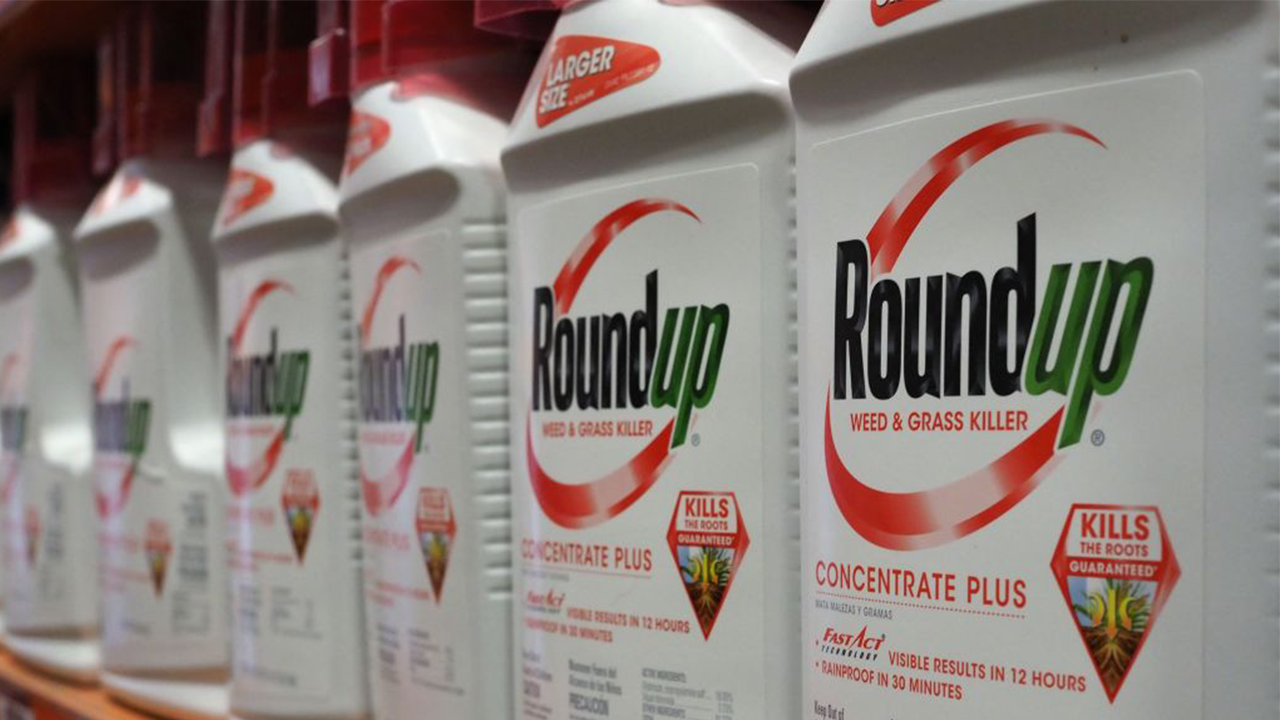
A Pennsylvania man was awarded $78 million after filing a lawsuit saying he developed cancer from using the weed killer Roundup. 

William Melissen, 51, said he was diagnosed in 2020 with a blood cancer called Non-Hodgkin’s Lymphoma and a type of leukemia, which he argued was because of his exposure to chemicals in the weed killer, according to the Philadelphia Inquirer.

It’s the latest in a string of lawsuits against the company that’s already reached nearly $11 billion in settlements so far, and thousands of more lawsuits are pending.

Melissen claims he used the product frequently for nearly 30 years between 1992 and 2020. He sued agricultural giant Monsanto, which makes Roundup, and its German parent company, Bayer, in 2021.

PENNSYLVANIA HIGH SCHOOL FOOTBALL PLAYER COLLAPSES DURING GAME FOLLOWING HARD HIT TO HELMET

Advertisement

William Melissen, 51, was awarded $78 million after filing a lawsuit saying he developed cancer from using the weed killer Roundup. (Getty Images)

A Philadelphia jury ruled on Thursday that the man’s cancer was caused by Glyphosate, which is the key ingredient in Roundup. The jury awarded him $3 million dollars in compensatory damages and $75 million in punitive damages.

Monsanto said in a statement that it disagrees with the jury’s verdict and that evidence does not support the claim that Roundup causes cancer. The company also said that trial errors provided the company with strong grounds for appeal.

The alleged errors include that the case was not dismissed after three judges on the U.S. Court of Appeals for the Third Circuit ruled in August that Pennsylvania state law cannot require a more expansive pesticide warning label than the one approved by the Environmental Protection Agency.

William Melissen said he was diagnosed in 2020 with a blood cancer called Non-Hodgkin’s Lymphoma. (Getty Images)

Advertisement

During the trial, Monsanto’s attorney, Bart Williams, presented to the jury transcripts from testimony by Melissen and his treating physician showing that his cancer is in remission, and that he was treated with a five-day round of chemotherapy.

Melissen’s lawsuit is one of thousands of cases nationally in which people who developed cancer accuse Monsanto of failing to include adequate warnings about its weed killer product.

VILLANOVA UNIVERSITY STUDENT RAPED BY UBER DRIVER IN DORM ROOM, POLICE SAY

A Philadelphia jury ruled that the man’s cancer was caused by Glyphosate, which is the key ingredient in Roundup. (Paul Hennessy/NurPhoto via Getty Images)

Advertisement

Monsanto has reached settlements in nearly 100,000 Roundup lawsuits in which it paid roughly $11 billion. Monsanto estimates that 54,000 active Roundup lawsuits still remain.

“This is one more jury that recognized the outrageous conduct of Monsanto for 50 years,” Melissen’s attorney Tom Kline told the Philadelphia Inquirer after Thursday’s verdict.

Read the full article from Here

Continue Reading
Click to comment

Leave a Reply

Your email address will not be published. Required fields are marked *

This site uses Akismet to reduce spam. Learn how your comment data is processed.

Pennsylvania

1 killed in crash involving horse and buggy in Lancaster County, Pennsylvania State Police say

Published

on

1 killed in crash involving horse and buggy in Lancaster County, Pennsylvania State Police say


One person was killed in a two-vehicle crash involving a horse and buggy in Lancaster County on Wednesday afternoon, according to Pennsylvania State Police.

The crash happened around 1:30 p.m. Wednesday in the 4000 block of Strasburg Road in Salisbury Township, state police said.

One person was pronounced dead at the scene, according to state police.

Advertisement

Strasburg Road, or Rt. 741, near Hoover Road, is closed in both directions, PennDOT says.

PSP said the Lancaster Patrol Unit, Troop J Forensic Services Unit and Troop J Collision Analysis and Reconstruction Specialists Unit are on scene investigating the crash.


Source link

Continue Reading

Rhode Island

New docuseries exploring Rhode Island’s coastal ecosystem premieres Friday – What’s Up Newp

Published

on

New docuseries exploring Rhode Island’s coastal ecosystem premieres Friday – What’s Up Newp


A new documentary series celebrating Rhode Island’s coastal wildlife and conservation efforts premieres Friday on Ocean State Media.

“Ocean State: Rhode Island’s Wild Coast” debuts with its first episode, “Secrets of the Seagrass,” at 8 p.m. Jan. 9 on WSBE. The episode will be followed by a re-run of “Chasing Fins,” a short documentary about the Atlantic Shark Institute’s shark research in Rhode Island.

The premiere episode explores eelgrass meadows, often called the “nurseries of the sea,” which support diverse marine life while playing a critical role in coastal resilience, water quality and climate mitigation.

Advertisement
YouTube video

Filmed across Rhode Island and New England, the episode features species including American lobster, American eel and bay scallops that depend on healthy eelgrass ecosystems. It also highlights scientists and conservationists from Save the Bay and The Nature Conservancy working on habitat restoration.

“Eelgrass meadows are foundational to the health of our coastal waters, yet many people have never seen them or understood their importance,” director Tomas Koeck said. “This episode brings viewers beneath the surface to reveal how interconnected these systems are—and what’s at stake if we lose them.”

The series is produced by Silent Flight Studios in partnership with Ocean State Media.

“Given our strong, shared connection with the bay and our coastline, we’re excited to share this fascinating new series,” Ocean State Media President and CEO Pam Johnston said.

Future episodes will explore landscapes, wildlife and people shaping the region’s natural heritage.

Ocean State Media Premieres New Docuseries on Rhode Island’s Dynamic Coastal Ecosystem (Ocean State Media)


Source link

Advertisement
Continue Reading

Vermont

Vermont’s Craft Brewers Brace for an Uncertain Future

Published

on

Vermont’s Craft Brewers Brace for an Uncertain Future


Help us pay for in-depth stories like this one by becoming a Seven Days Super Reader.

A group of regulars sat around the bar at Simple Roots Brewing in Burlington on a Saturday in mid December and toasted the New North End brewery’s final days. They shared memories of bringing their newborn babies for their first trip out of the house, of hosting events with the tasting room’s garage door wide open, of selling strawberries to owners Kara Pawlusiak and Dan Ukolowicz for a sour.

Whenever a new customer walked through the door, fill-in bartender Ian Treu asked the same question: “We’re down to one beer. May I pour it for you?”

All but two customers said, “Yes, I’ll have the … beer.” “Good choice!” came the chorus from around the bar.

That keg of Zero Gravity Craft Brewery’s Conehead Haze had some heavy lifting to do: It was all the beer left in the brewery.

Advertisement

Simple Roots’ own Good Neighbor IPA and American Dream cream ale had run out not long after its last big party in October, a month after the brewery announced its closure. By December, customers were taking scissors to rolls of labels, snipping off mementos of the brewery’s 11-year run to frame or give as holiday gifts. The branded glassware was almost gone, too — the result of a successful liquidation sale.

Melissa and Ed Donahue stopped in that day during a visit from Nashville, Tenn., to buy a few glasses for their daughter and son-in-law, who live nearby.

“They used to come in to get away from their kids,” Ed joked.

“We thought we’d give them at least the memory,” Melissa said. “There was a lot to love about this place.”

Dan Ukolowicz and Kara Pawlusiak at Simple Roots Brewing Credit: Courtesy of Winter Caplanson

Simple Roots closed for good a few days later, on December 18. The Burlington brewery is among the latest casualties in an industry-wide slowdown that’s claimed more than 800 craft breweries around the country in the past two years. Simple Roots’ owners had been thinking about their exit strategy for about a year, Pawlusiak said.

Advertisement

With more people working remotely post-pandemic, fewer stopped into the taproom on their way home on a Thursday or Friday night. Tourism is down in Burlington, and the whole state has seen a sharp decrease in Canadian visitors since President Donald Trump took office last year.

Facing new challenges, Vermont brewers must choose whether their pint glasses are half empty or half full.

Simple Roots started carrying Athletic Brewing’s nonalcoholic beer for customers who were changing their drinking habits, but Pawlusiak still noticed a “decline of beer consumption on many fronts,” she said.

This week, as many Vermonters swear off booze for Dry January after holiday gluttony, Vermont craft beer is at an inflection point following decades of prosperity. In response, some brewers are doubling down on the flagship beers that got them where they are. Others are developing and investing in new products, including nonalcoholic beer, to meet customers’ changing tastes. As distribution in a crowded, risk-averse market becomes trickier, many breweries are using their taprooms to create community spaces where the beer — ideally, more than just one — might not be the only reason someone walks through the door.

Facing new challenges both in and outside the industry, Vermont brewers must choose whether their pint glasses are half empty or half full. What they decide — and what they do about it — will shape Vermont’s craft beer landscape for years to come.


Lightning in a Can

The Alchemist
The Alchemist Credit: File: Jeb Wallace-Brodeur

The first canning run of the Alchemist’s Heady Topper came two days after Tropical Storm Irene flooded the brewery’s original Waterbury brewpub in 2011. The unfiltered double IPA sold out in days and achieved rarified cult status. Beer nerds flocked to the internet to share their scores and opinions on BeerAdvocate and Facebook. Fans stalked the Alchemist’s delivery trucks to City Market in Burlington on distribution days. This reporter once paid $19 for a can in a Brooklyn bar, so novel was finding it out of state.

Propelled by Heady Topper and others, the hazy, juicy New England IPA became the biggest thing in beer, with Vermont as its mecca. Over the next decade-plus, Vermont’s craft beer industry enjoyed an explosion of growth, expanding from fewer than 25 breweries statewide in 2011 to 77 today, the highest number of breweries per capita in the country. On the heels of lofty accolades and awards — Hill Farmstead Brewery topped RateBeer’s global brewery rankings eight times before the website went dark last year — Vermont became a destination for beer tourists. Traffic backed up on the “IPA Highway,” as the winding roads between Hill Farmstead in Greensboro and Lawson’s Finest Liquids in Waitsfield came to be called.

Advertisement

But Alchemist cofounder Jen Kimmich knew Vermont’s craft beer boom wouldn’t last forever.

“Everything is cyclical,” Kimmich said.

She and her husband, John, met while working at Burlington’s trailblazing Vermont Pub & Brewery in their early twenties. That was during the first Vermont craft beer surge of the mid-1990s, when the likes of Long Trail, Otter Creek and Magic Hat ruled the local scene. Nationwide, the industry grew “at a euphoric rate of 50 percent” in 1994 and 1995, the New York Times reported in 2000, and craft brewers were “heady as prom queens with their local popularity.”

Many took that confidence beyond their home states, expanding far and fast at great expense. Others jumped on the hype train but never really figured out how to make good beer. Long Trail Brewing’s Blackbeary Wheat and Harpoon’s UFO Raspberry are downright savory compared to some of the sickly sweet fruit beers that came before them.

By the time the Kimmiches opened the Alchemist’s first restaurant-brewery in Waterbury in 2003, a wave of small brewpubs and midsize regional breweries had just gone out of business. Big fish retreated to their small ponds.

Advertisement

“Craft beer was popular, but it wasn’t a boom,” Kimmich said. “It was just, ‘OK, if you make good beer and focus on your local market, this is a good business to get into.’”

Indeed it was. Vermont’s independent breweries produced 200,000 barrels of beer in 2011. By 2024 that number had grown to 350,000 — a whopping 21.8 gallons for each of Vermont’s roughly 501,000 adults of legal drinking age, the Vermont Brewers Association reports. That’s 174 pints per person, per year.

But the hangover from all those hazy IPAs, cherry sours and pastry stouts may finally be setting in.

For the first time in 20 years, the national Brewers Association trade group reported more brewery closures than openings in 2024. Craft beer production in the U.S. was down nearly 4 percent from the previous year. Beer as a whole, including large domestic producers such as Anheuser-Busch and Coors, was down 3.1 percent. Volume is down in the wine and spirits worlds, too.

Numbers for 2025 won’t be out until spring, but they’re projected to show more of the same, due to growing health concerns about alcohol consumption, increased competition and rising prices.

Advertisement

Garin Frost, owner of Hinesburg’s Frost Beer Works, is “amazed we’re not seeing more breweries going out of business,” he said, noting that many are in a “hanging-on” phase of minimizing losses. Vermont has so far been spared the worst of the slowdown — three breweries, including Simple Roots, closed last year, but two new ones opened. Still, local brewers understand the Green Mountains’ vaunted beer scene is not immune to the issues plaguing the industry.

“If I were in business-consultation mode,” Frost said, “I’d be like, ‘The longer you hang on, the more you’re going to lose.’”

Frost, who has a degree in economics, acknowledged that his business’ net operating income has declined 8 percent due to increased prices from vendors, who are passing on the cost of the tariffs implemented last year by Trump — another layer of uncertainty brewers face as they order aluminum cans or Canadian malt.

“We’re super fortunate that we’re capable of absorbing that,” Frost said.

With an efficient crew of four employees, Frost Beer Works produces 7,000 barrels per year of mostly tropical, hazy IPAs such as Lush, Plush and Double Shush. The brewery has no debt and no plans to grow. It’s stable and sustainable, Frost said.

Advertisement

For many breweries, just making those hazy pints is no longer a guarantee that people will show up. You need only glance at your local bar’s tap handles or a grocery store beer cooler to understand that we’ve hit peak IPA.

As much as brewers appreciate the nuance of Citra versus Simcoe hops, most drinkers can’t tell the difference. And some of those bandwagon beers just don’t taste good. It’s brutal when what you’re expecting — a nice citrusy buzz — goes down like weirdly chewy bong water with handfuls of grapefruit pith steeped in it and gives you a three-day hangover.

“We had a real crisis of consumer confidence the last four years,” said Bob Montgomery, Hill Farmstead’s director of brand quality. “There were too many breweries making mediocre and bad beer.”

Customers who found out the hard way after shelling out for one too many gnarly four-packs are now looking for predictability, not novelty. High-quality flagship beers have become more popular than ghost pepper stouts and zucchini bread milkshake IPAs — real things, unfortunately.


Fiddle Around, Find Out

Kegs at Fiddlehead Brewing
Kegs at Fiddlehead Brewing Credit: File: Lee Krohn

Fiddlehead Brewing founder Matt Cohen loves a flagship beer. Fiddlehead IPA comprises 85 percent of sales at his Shelburne brewery, which has been bounding up the leaderboard of the largest craft breweries in the country.

In 2024, Fiddlehead ranked 23rd of nearly 10,000. It was responsible for just over 30 percent of the craft beer made in Vermont: 108,143 barrels of the reported 353,032 barrels statewide. Where other breweries aspire to Heady Topper-like cult status, Fiddlehead has thrived by becoming ubiquitous.

Advertisement

“If you want to be successful in craft beer today, it’s a volume game,” Cohen said, leaning back in his chair in a sleek conference room at Fiddlehead’s corporate HQ, hands casually clasped behind his head.

Those who’ve only been through the barn doors to Fiddlehead’s rustic taproom attached to Folino’s Pizza on Shelburne Road might not realize just how huge the brewery is. The taproom’s 15-barrel system produces small-batch offerings that mainly stay on-site, such as Snowflake Bentley black lager and Festival Bier, served in a 20-ounce boot. On the sprawling campus behind it, a 60-barrel system cranks out 11 batches a day. A new canning line upgrade is able to fill 500 cans per minute.

Out in the world, Fiddlehead mainly sticks to three beers: the 6.2 percent flagship IPA and the higher-alcohol Second Fiddle and Mastermind double IPAs. But they come in many packages, including draft, tallboy four-packs, 12-packs of 12-ounce cans and single 19.2-ounce cans. Fiddlehead’s beer is sold in 10 states, from bodegas in Brooklyn to national chain restaurants. The brewery’s biggest account is Fenway Park, home of the Boston Red Sox, which doesn’t seem to bother Cohen, a Yankees fan.

Cohen, 51, has remained Fiddlehead’s sole owner since he launched on New Year’s Eve 2011. His dark beard’s a bit grayer now, but his rascally grin has persisted, especially when he rattles off that he owns the brewery’s property and has no investors and no debt. Fiddlehead has 100 employees and did $40 million in sales last year.

“If you want to be successful in craft beer today, it’s a volume game.”

Matt Cohen

Advertisement

Vermont has a strong tradition of midsize regional breweries, dating back to the glory days of Catamount, Long Trail, Otter Creek and Magic Hat, where Cohen brewed for more than a decade before leaving to start his own brewery. Fiddlehead represents a successor to those breweries but also an evolution. Initially, Cohen set out to be a regional, if not national, draft-only brand — “the first of its kind,” he said.

When the pandemic hit, restaurants and bars closed. Not wanting months-old beer to flow once things reopened, he bought back every drop of Fiddlehead from his wholesalers in March 2020.

“It cost us over a million dollars, and all that beer was dumped,” Cohen said.

He immediately put aside his draft-only goal. Fiddlehead ramped up its canning and hit grocery store shelves, boosting its revenue 25 percent that year.

Big beer will always be cheaper, especially if you’re willing to take a lower margin, as Cohen is, to keep the price down. He’s not giving up on craft, he said, joking that the industry has decided the line is “whatever Sam Adams is doing.” But he’s not precious about it, a lesson he took from Magic Hat, which was similarly unconcerned with catering exclusively to beer snobs.

Advertisement

“We hunt where, traditionally, craft brewers don’t,” he said, listing chain restaurants such as Buffalo Wild Wings, Chili’s, Olive Garden and LongHorn Steakhouse as examples. “If that’s where people are eating, that’s where you need to be serving your beer.”

What he is precious about — and rightly so — is quality. Cohen believes Fiddlehead is the largest brewery in the country that demands its beer remain in cold storage, from transport to storage to retail coolers. He said customers are quick to narc on places that don’t follow the “store cold” instruction emblazoned on every can, sending frantic emails when they find warm beer at a convenience store in New Jersey.

In Vermont and beyond, Cohen thinks the industry “is in desperate need of a correction.” He predicted the bubble’s pop back in 2014, telling Seven Days that the “endless thirst for craft beer” would eventually change.

“I don’t think there’s going to be room for all the little tiny players,” he said at the time.

Closures mean there are great deals out there on used brewing equipment right now, he said. He got one on Smuttynose Brewing’s tanks last January when they were auctioned off after the New Hampshire brewery consolidated with Mass. Bay Brewing — the parent company of Harpoon, Long Trail, Otter Creek and the Shed. The new tanks will help Fiddlehead keep up with the additional 10 percent the company grew last year. When the national Brewers Association releases its 2025 rankings this spring, Fiddlehead should land comfortably in the top 20.

Advertisement

“The craft beer world is on fire, and most people are running for the hills,” Cohen said, grinning. “I’m running right in.”

Help us pay for in-depth stories like this one by becoming a Seven Days Super Reader.

Tapping In

Foam Brewers employees at Brew Club
Foam Brewers employees at Brew Club Credit: Jordan Barry © Seven Days

Foam Brewers has put out a lot of different beers since it started in 2016: The consumer rating website BeerAdvocate lists 775. The Burlington brewery crushes an 8 percent double IPA, but it’s just as likely to brew a saison made with oats and 100 pounds of local elderberries, a strawberry sour that raised money for the Northeast Organic Farming Association of Vermont, or a fresh-hopped session IPA made with Vermont’s own Champlain Valley Hops, straight out of the field, all of which have been poured at its waterfront taproom in recent years.

Foam’s 9,000 barrels per year place it just under the threshold for a midsize craft brewery, of which there are about 200 in the U.S. That’s just fine by its owners. Foam has the capacity to do more, said cofounder Dani Casey, 40. Its Hinesburg production brewery could keep up with 15,000 barrels per year.

“But we don’t want to get out over our skis,” said Todd Haire, another of Foam’s five cofounders.

Both Casey and Haire were colleagues of Cohen’s at Magic Hat, as were several other members of the current Foam team. While Fiddlehead strives to meet drinkers where they are, Foam had endeavored to entice them in with a diversified approach to both its beer and the business as a whole.

Now, as the craft beer industry’s pendulum swings, said Haire, 57, “We’re just like, ‘Holy smokes, let’s focus.’”

Advertisement

Despite its brewers’ experimental tendencies, Foam has streamlined what it distributes. The bulk of what’s available in stores are year-round hits Tranquil Pils, Dead Flowers IPA and Built to Spill double IPA. Its taproom is where Foam’s eclecticism shines through.

The brewery’s playful, industrial-looking concrete wonderland of a space overlooking the Burlington waterfront — and outside of the city’s troubled downtown core — has become a live music venue as much as it is a brewery, a trend followed by other Vermont breweries, such as the Alchemist in Stowe and 14th Star Brewing in St. Albans. Among its sculptural metal swirls and concrete bar, Foam can draw an “intergenerational assortment of heavily tattooed punks” for a Common Ground reunion show, as Seven Days reported in a September story about Foam’s growing role in the local music and arts scene. The attached brunch restaurant, Deep City, catches the overflow and hosts private events of its own — an important income stream that Casey expects to grow this year.

The taproom accounts for half of the company’s overall business, she said, which tracks with a Brewers Association report that taproom sales are outpacing distributed sales in many markets. To maintain that figure, Foam’s cofounders are investing in their team to keep them engaged and excited about beer, even in a fickle time for the industry.

Every other Friday, the taproom is home to Brew Club. At 10 a.m., staffers from all departments trickle in for a lesson on a beer style led by one of their coworkers.

Or they skateboard in. In November, sales director Russ Mead presented on the West Coast IPA, the older, more refined cousin of the New England IPA. As he loaded his slides onto a digital menu board above the bar, two colleagues in sunglasses and hoodies coasted around the taproom, handing out six-packs. One of the beers was from Oregon’s Rogue Ales & Spirits, which had declared bankruptcy and closed its six taprooms exactly a week earlier. Its ironic name? Dead Guy Ale.

Advertisement

The spirit inside Foam, by comparison, was alive and well. Mead, dressed more seriously than his delivery guys in “brewery business casual” — aka a gray coat over his flannel — cranked up surf-rock tunes and began his lesson with one on music history. Eventually, he moved on to beer. By the time he got through a “definitive-ish history of IPA,” with West versus East Coast comparisons, the group had grown to a dozen. The full food-pairing buffet and old-school toy prizes Mead supplied probably helped.

So far, 20 of the brewery’s roughly 50 employees have delivered beer style presentations. Eventually, the team will vote on the best one and Foam will brew the winning style.

It will join the ever-evolving menu on Lake Street, where Foam offers more than just beer: a low-alcohol lemon-lime spritzer; lion’s mane mushroom “functional beverages,” a growing wellness trend that claims to offer health benefits beyond hydration; blueberry wine from the brewery’s Natural Hack natty wine project; batched cocktails; and CBD tea from Taunik, a cannabis beverage brand run by some members of the Foam team.

The margins are slim on many of these new products, Vermont Brewers Association executive director Emma Arian said, but “they get butts in seats at taprooms,” and help keep a brewery top-of-mind with customers who might be changing their drinking habits this month and beyond.


Running Dry

Nonalcoholic beers in the Zero Gravity taproom cooler
Nonalcoholic beers in the Zero Gravity taproom cooler Credit: Jordan Barry © Seven Days

Taprooms are typically quieter the first month of the year, when teetotaling is the trend. But Zero Gravity Craft Brewery got a jump on Dry January. In early December, the brewery’s first batch of Green State Zero and Conehead Zero hit the market.

Nonalcoholic beer isn’t a new thing for the Burlington brewery: Zero Gravity was the first in the state to tap that market when it launched its separate-but-affiliated Rescue Club line, now defunct, in January 2021.

Advertisement

There’s still some Rescue Club out there, Zero Gravity CEO and cofounder Matt Wilson said. But the new line — which capitalizes on the popularity of Green State Lager and Conehead IPA flagships and is brewed off-site — will soon be in 13 states and Washington, D.C.

The move is emblematic of two big trends in craft beer: nonalcoholic beers and contract brewing, wherein a brewery with extra capacity produces beer for another brand. Often, the arrangement is a boost for new or small breweries to expand their production without investing in new equipment.

Zero Gravity, which entered the top 50 U.S. craft breweries by volume for the first time in 2024, has plenty of capacity. But NAs are a different beast. The technology used to make them is often proprietary, and, unlike most craft beer, nonalcoholic beer needs to be pasteurized, which adds a layer of complication — and makes it expensive to produce. The address on Zero Gravity’s new nonalcoholic cans is Stratford, Conn., the home of contract brewing giant Two Roads Brewing. (You might recognize it as the out-of-state locale where Lawson’s Finest Liquids’ Sip of Sunshine has been brewed since 2014.)

“Ultimately, we couldn’t really achieve a great margin making it in-house,” Wilson, 48, explained. They also couldn’t keep up with demand. “We had been selling everything that we could make here,” Wilson said, but it was only enough for three states.

Going dry, it seems, is more than a January thing. A July 2025 Gallup poll found that only 54 percent of U.S. adults said they consume alcohol, the lowest number since the analytics company started tracking alcohol consumption in 1939.

Advertisement

It’s not just Gen Zers, though they’re the usual scapegoat. Young adult drinking numbers have declined over the past decade, but decreases in every age category, Gallup’s report said, “coincide with recent research indicating that any level of alcohol consumption may negatively affect health.”

But the sober-curious don’t want to get burned by a crappy NA any more than they did while shelling out for an unknown triple IPA. Instead, breweries are — you guessed it — leaning into their flagships.

Rescue Club’s nautical branding clearly separated it from Zero Gravity. The brewery’s new nonalcoholic cans are instantly identifiable as brand staples: Cone Head Zero is emblazoned with a shining hop, and Green State cans have Vermonty pines in a forest of silver, white and green.

“They tell a very clear message about what you’re getting,” Wilson said, and are part of Zero Gravity’s efforts to expand those popular lines with products such as the juicy, multi-hopped Conehead Haze and Green State Light, a sessionable light lager.

The NAs taste like their boozy brethren, too. Green State Zero is as easy as a summer day on Lake Champlain, just like the 4.9 percent pilsner that inspired it. This reporter double-checked the label after taking a sip of Conehead Zero, just to make sure it wasn’t the 5.7 percent Citra-hopped original.

Advertisement

Nonalcoholic beer is in a euphoric growth phase of its own: The category was up 23 percent from January to August of last year, according to the Beer Institute. Burlington’s Switchback Brewing is going all in, too: The company just announced that it’s investing in a Sustainable Technologies BrewVo NA de-alcoholization system of its own, rather than continuing to have Switchback N.A. made in Toronto.

Switchback cofounder and president Bill Cherry estimated the BrewVo tech would carry a multimillion-dollar price tag when he spoke with Seven Days last year. The company is planning to serve as a contract brewing location for the Northeast, so we could see a lot more NAs from Vermont breweries soon.

Nonalcoholic beverages as a whole were “one of the only categories still seeing steady growth,” Marc Gelsomino said last April, though he was quick to note that it’s “pretty straightforward to show growth from zero.”

It remains to be seen whether the NA hype is just a case of manufactured scarcity, like the IPA lines of yesteryear. But Gelsomino, the beer and wine manager at Winooski’s Beverage Warehouse, was impressed with the early response to Switchback N.A., which launched in February. Customers were calling to ask for it, just like they did when the Burlington brewery’s flagship unfiltered ale first hit 22-ounce bottles in 2012.


Howe It’s Done

Beers at Lucy & Howe Brewing
Beers at Lucy & Howe Brewing Credit: Courtesy of Winter Caplanson

On a Friday night in early December, Jericho Ale & Bean looked more like a church supper than a brewery. Mismatched tables were pushed together in two long rows, packed with people by 5 p.m. for Hook & Peel’s Detroit-style pizza pop-up. Half of the 50 or so people sipped pints of Lucy & Howe Brewing’s Bread and Chocolate stout and Underwater Space Helmet IPA. The other half weren’t old enough to drink.

That’s an increasingly common demographic split at many small Vermont breweries, which have embraced collaborations and events that draw drinkers and nondrinkers alike to help pad their bottom lines, from Kraemer & Kin’s pumpkin carving in North Hero to yoga in the mezzanine at Two Heroes Brewery in South Hero to Burlington Beer’s silent disco paint-alongs. Tunbridge’s Upper Pass Beer will follow that community-minded template when it moves its operations and opens a new taproom in the shuttered Simple Roots space in Burlington next month (see Side Dishes, page 39).

Advertisement

“Breweries here are total community spaces,” Vermont Brewers Association’s Arian said. “It’s not like raging nightclubs. It’s like, ‘Here’s our section of toys for the kids.’”

Lucy & Howe is among the best examples. If someone pukes in the taproom, it’s much more likely to be a carsick toddler than an adult who’s had too many 10 percent imperial stouts.

And that’s just fine for Jesse Cronin. The setup for his Lucy & Howe nanobrewery is on the second level of a 100-plus-year-old former general store, and the 3.5-barrel system is the max the floor can hold without collapsing.

“It puts a limit on my over-exuberance,” Cronin said with a signature easy laugh.

The capacity is already double what it was when the bespectacled brewer started in May 2020 at his Jericho home. His story is a common one from the current craft boom, kind of: He joined a homebrewing club while teaching kindergarten in Austria, telling people he was doing it to learn German.

Advertisement

“My wife was like, ‘You are so full of shit. If you want to make beer, just go make beer,’” he recalled.

A few years later, after moving back to Vermont and staying home with their kids, that’s what he did. Cronin, like so many others, learned the professional brewing ropes at Magic Hat.

Now his brewery shares space with cold-brew biz Brew House Coffee at Jericho Ale & Bean. In a back room, Cronin, 49, brews 130 barrels per year pretty much by himself. The retail coolers and small bar in the taproom out front are the only place you can get his small-batch, mostly European-inspired beer.

Jesse Cronin
Jesse Cronin Credit: Courtesy of Winter Caplanson

If Cronin were to distribute his own beer, he’d have to create a distinct wholesale company, keep a second set of books and pay licensing fees that amount to $1,200 per year. That’s not worth it for the five cases he’d have available to send out every time he brews. When the beer is only available at the taproom, it’s extra important that customers show up.

For about a year, Lucy & Howe had boosted its production through a contract brewing arrangement for its IPAs, which were distributed by VT Beer Shepherd. But the upfront cost of contract brewing wrecked Cronin’s cash flow. Brewing his own, he can stagger expenses — cans one week, grain another, then hops.

“I’m not in a position where I’ve got $20,000 to play with,” he said.

Advertisement

He’d already decided not to renew when VT Beer Shepherd closed unexpectedly last summer. After that seismic shock to Vermont’s small brewers, which Beer Shepherd had specialized in, “my phone didn’t ring, and I didn’t call anybody,” Cronin said of his decision not to pursue a new distributor.

But having some beer out in the world would be nice, he said, especially at retailers that have supported him in the past and don’t mind if it’s a Genuine Moment saison one week and Resting Brewer Face American amber another.

“We’re all assuming the word ‘correction’ is accurate, which … leaves the door open for hope.”

Jesse Cronin

The Vermont Brewers Association is currently working with the legislature to make that easier for small brewers. The proposed legislation — based on systems in Maine and New Hampshire — would allow malt beverage manufacturers to self-distribute up to 5,000 barrels annually without jumping through the current hurdles. A majority of the breweries in Vermont make less than that cap, based on 2024 production data.

Arian has asked Cronin to testify at the Statehouse and told him that he’d need to wear a button-down shirt and tie. “I’m not sure he has one,” she joked.

Advertisement

The change might help a few folks ride out the slowdown, crash, bubble burst — whatever you want to call it.

“We’re all assuming the word ‘correction’ is accurate, which kind of leaves the door open for hope at the end of it,” Cronin said. “Fingers crossed on that.”

Cronin said he’s achieved his goals for Lucy & Howe so far: to control his own quality and direction, not take on debt, and connect with his Jericho community. He has a small and dedicated taproom staff and is on year two of paying himself $350 per week. But he wouldn’t do it again if he had to start now. Fourteen-hour packaging days are hard. So is all the paperwork, especially when that $350 works out to 5 bucks an hour.

Still, when there’s a group of teachers decompressing at a table on a Friday afternoon, or parents who come in every week with their kids and order the same flight, “there’s a lot of value there that I didn’t anticipate,” Cronin said. “There are intense struggles, and there are intense bright spots, and I find myself trying to decide which carries more weight on any given day.”

On a Tuesday in early November, Cronin brewed a batch of Weeping Over the Unicorn. The low-alcohol brown pub ale is one he makes to honor his late uncle-in-law, who loved easy-drinking, crisp, malt-driven British beers. It’s a sort of anti-IPA, the kind of thing you’d drink at, well, your local community-focused taproom.

Advertisement

A month later, on pizza night, that’s exactly what people did.

The original print version of this article was headlined “New Beer Resolutions | With trouble brewing beyond Dry January, Vermont’s craft brewers brace for an uncertain future”


Source link

Continue Reading

Trending