
Fitness
A 41-year-old transformed his body with 2 diet changes and 1 simple workout technique
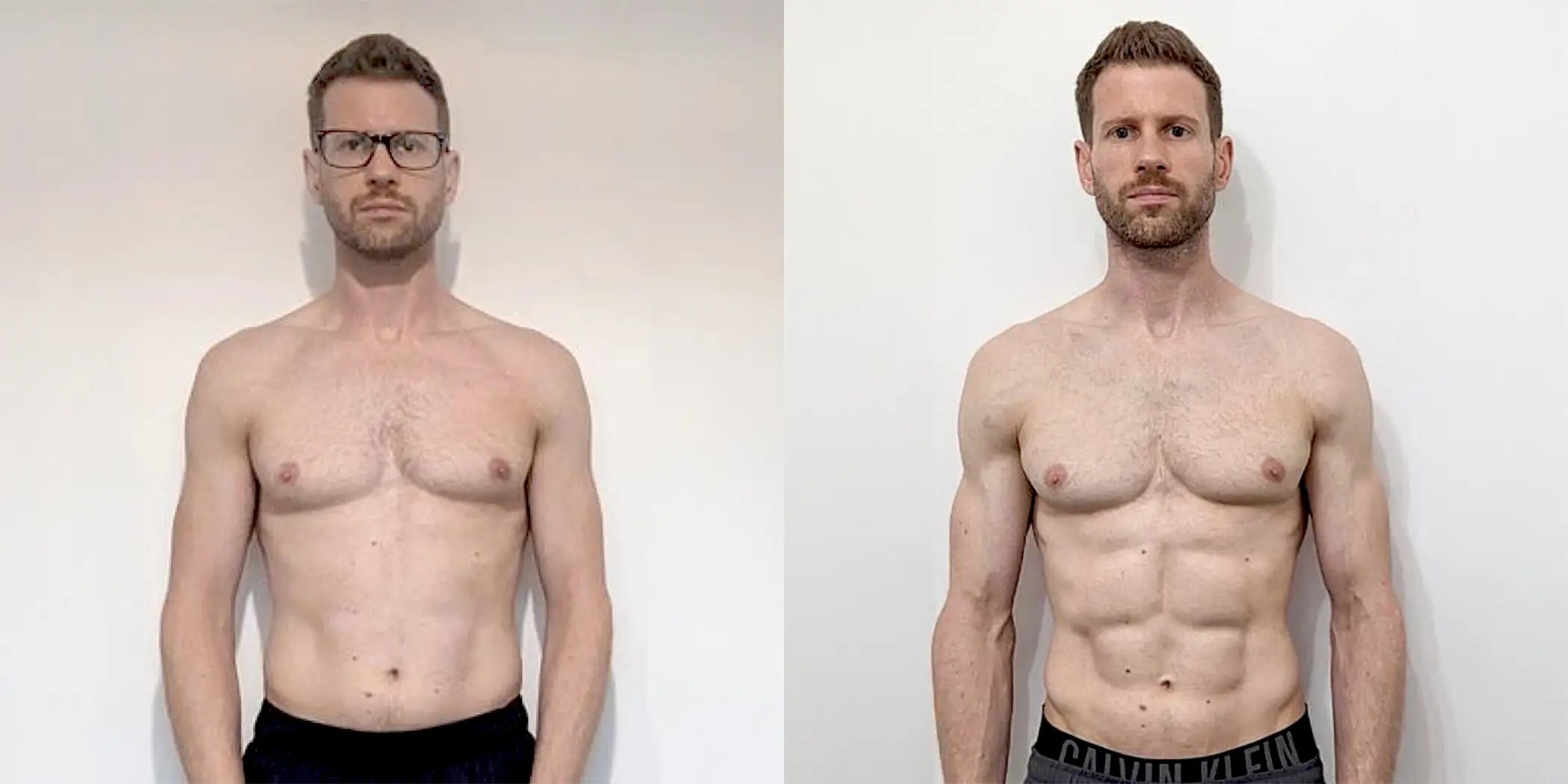
An office worker got ripped and transformed his fitness in seven months with a few simple changes to his diet and exercise routine.
London-based Alec Knebeg, 41, works for a bank and said he had spent years hitting the gym with little to show for it.
“I’ve always been somebody who went to the gym, but I didn’t really know how to achieve what I wanted to do,” he told Business Insider. “I had been plodding along doing the same thing for a few years not seeing a lot of results.”
Earlier this year, Knebeg began working with personal trainer Adam Enaz, who specializes in men’s fitness transformations. Enaz helped him streamline his workouts and clean up his diet to break through the frustrating fitness plateau.
Knebeg said he was able to build muscle, burn fat, and look visibly fitter thanks to three major habits: he started lifting heavier weights with a basic exercise technique, and added a protein goal and calorie deficit to his diet.
More challenging exercise led to better results
Knebeg said he started seeing major progress in the gym after picking up a technique called progressive overload.
In his 20s and 30s, “if something was too heavy, I wouldn’t push myself,” Kneberg said.
Enaz pushed him to gradually increasing the challenge of exercises over time in order to force the muscles to adapt.
To do so safely, he encouraged Kneberg to keep track of what he was lifting and aim for lifting heavier weights with more reps. The goal was getting within a few reps of failure, the point of being physically unable to continue with good form. Some recent research suggests working near muscle failure can lead to more muscle growth.
But without the help of a personal trainer, most people underestimate how hard they can (and should) train for best results, according to Enaz.
“In a normal, day-to-day person, what they consider failure is 20% short of what real failure is,” he said. “Most people only really get to failure when they’re working with a PT.”
Knebeg said his current workout schedule involves three to four session per week for about an hour each. The sessions include a quick cardio warmup followed by six to eight exercises, using supersets (or back-to-back movements without rest) to save time. Knebeg also switched from a workout split to doing a full body workout every day. He said the change gave him more energy to push himself.
“I’ve been able to lift things i’ve never been able to do before. I’m kind of impressing myself because it’s things I didn’t think i could do,” he said.
Diet tweaks helped, too
Knebeg didn’t make all his gains in the gym. He also made a few basic adjustments to his eating habits.
Previously, he didn’t pay much attention to calories, and would often eat multiple servings of food at a time without thinking much of it.
But becoming more mindful of portion sizes, and sticking to a daily calorie and protein goal, helped him burn fat and build muscle.
How to know if your workout is effective
Some simple signs can you help tell if you’re challenging yourself enough to build muscle and strength, according to Enaz.
Your workouts are more likely to be effective if:
- The weight starts slowing down as the reps going on, indicating your muscles are under enough tension to prompt growth
- You’re struggling to complete the final rep of a set, but still have good form — if you stop when it starts to feel hard, you could be leaving gains on the table
- A workout log shows that you’ve been steadily increasing the amount of weight, number of reps, or numbers of sets you can complete over time, a clear signal of progress
The last point is key, since one of the most common mistakes is failing to keep track of your workouts, since that makes it difficult to tell if you’re improving and to keep pushing yourself.
“A majority of people go wrong because they don’t record anything,” Enaz said.
Fitness
Adults hop on viral ‘rebounding’ trend to make exercise fun again — ‘I feel like a kid’
Forget boring home workouts, on-demand HITT classes and cold winter runs.
The latest wellness trend bouncing around TikTok involves a workout you might not even realize you’re doing, and that’s the point. It’s called rebounding. This low-impact exercise involves jumping on a mini fitness trampoline — called a rebounder — to get your heart pumping and support lymphatic drainage.
On Amazon, this best-selling model is currently on sale for just $129. It measures in at just 40 inches, making it ideal for small spaces while still offering room for an adult to jump, squat and jog in place. Users swear it gives them a seriously effective full-body workout, and many remark that it’s “so much fun” to use.
Clinical trials also back the benefits: a 12-week rebounding program for overweight women showed significant improvements in body composition as well as a decrease in diastolic blood pressure.
Ready to jump on the rebounding trend, too? You’d better hop on this Amazon deal fast.
This sleek rebounder by BCAN is sturdy and easy to set up, thanks to pre-assembled bungees and simpel video tutorial.
Reviewers say it’s completely changed their workouts, with one remarking they “feel like a little kid again.” Others have also noted it’s much easier on their joints than higher-impact exercises.
“It absorbs impact well and allows for a nice, smooth rebound that is gentle on the joints, making it perfect for a low-impact cardio workout,” one person explained. “Whether I’m doing high-intensity intervals or simply bouncing for fun, the movement feels fluid and responsive.
The BCAN model features an upgraded handlebar for added stability. It’s 8mm premium bungee — with a durable woven outer layer and a 350-strand natural latex core — delivers smooth, quiet bounces, so you can enjoy your workout without disturbing others.
This article was written by Miska Salemann, New York Post Commerce Writer/Reporter. As a health-forward member of Gen Z, Miska seeks out experts to weigh in on the benefits, safety and designs of both trending and tried-and-true fitness equipment, workout clothing, dietary supplements and more. Taking matters into her own hands, Miska intrepidly tests wellness products, ranging from Bryan Johnson’s Blueprint Longevity Mix to the viral Oura Ring to Jennifer Aniston’s favorite workout platform – often with her adorable toddler by her side. Before joining The Post, Miska covered lifestyle and consumer topics for the U.S. Sun and The Cannon Beach Gazette.
Fitness
Fitness trainer with 18 years of experience shares why exercise is crucial for kids: ‘Not just about health and fitness’
Exercise is often spoken about in the context of physical fitness – stronger muscles, better stamina and improved overall health. But its value, especially for children, extends far beyond the body. Regular physical activity can quietly shape character, teaching lessons about effort, patience, discipline and resilience that mirror how the real world works. From learning to cope with discomfort to understanding that progress takes time, exercise can become a powerful training ground for life itself.
Also Read | Chennai fitness trainer with 18 years of experience shares 5 simple things to focus on for long-term fitness
Chennai-based fitness trainer with 18 years of experience, Raj Ganpath – founder of the Slow Burn Method, co-founder and head coach at Quad Fitness, and author of Simple, Not Easy – is shedding light on why exercise is important for kids, with the benefits going beyond health and fitness. In an Instagram video shared on February 27, he explains how the impact of exercise extends far beyond physical wellness, shaping resilience, discipline and long-term character development.
Embracing discomfort
According to Raj, exercise is one of the healthiest ways to help children learn how to sit with discomfort in a safe, structured and sustainable way. Life inevitably brings challenges and unease – something adults understand well – but many children today are shielded from situations that test their resilience.
He explains, “Exercise is a great way to experience this discomfort in a safe and sustainable manner. Lifting weights, holding a plank, doing cardio, repping till it burns, all of these things are opportunities to embrace discomfort, opportunities to put themselves in a place where they’re not comfortable and learn from it, opportunities to practice physical and mental resilience.”
Learning hardship
The fitness trainer emphasises that hardship is an inevitable part of life, and meaningful success often requires pushing through moments of difficulty. While most adults recognise this truth through lived experience, children may not always have the same exposure to challenge. Raj believes exercise can bridge that gap.
He elaborates, “It will teach them that they need to do hard things if they want to accomplish something. Getting through a very hard workout, setting a goal and achieving it, completing a task. All of these things are not just random chores. These are incredible opportunities – opportunities to experience hardship and build fortitude.”
Delayed gratification
In today’s fast-paced world, the desire for instant gratification is stronger than ever – and children are growing up at the centre of it. With technology, streaming platforms and 10-minute delivery services, almost everything is available at the tap of a screen. As a result, the ability to wait, persist and work steadily towards a long-term goal can easily take a back seat. Exercise, notes Raj, offers a powerful counterbalance.
He explains, “Everyone wants everything right away today. This is true for us adults too, but it is even more true for our kids because this is the only world they know. A world where everything happens right then and right there, whenever they want it, wherever they want it. Exercise will teach them to wait, to be patient, to trust the process, to fail and still keep going, to work towards something larger that they will get much later. This is a very important character building quality and will serve them well for many, many years to come.”
The fitness trainer concludes, “Exercise is not just about health and fitness. It is a simulation of life itself. A ready-made character building tool available to you to help prepare your kids for life, the raw and real life that they’re going to have to deal with no matter what. So make sure they build the habit and make sure they embrace it.”
Note to readers: This article is for informational purposes only and not a substitute for professional medical advice. It is based on user-generated content from social media. HT.com has not independently verified the claims and does not endorse them.
Fitness
What Are “Movement Snacks”? How To Try This Trending Fitness Hack
The World Health Organization says the average adult is supposed to get 60 minutes of moderate to vigorous activity five days a week, which sounds somewhat doable until it’s 9 p.m., your kids are finally in bed, and you just want to fall onto the couch and dissociate. But more and more people online are talking about “movement snacks” — little bite-sized amounts of exercise you can do throughout your day to meet your 60-minute goal without having to make special time for one big workout. Because yes, we all want to be our healthiest, but sometimes a HIIT class at the gym is just not in the schedule.
We asked personal trainers and fitness coaches for their favorite movement snacks you can do in the office, around the house, and on busy weekends when everyone’s home.
How much exercise is a person really supposed to get?
While the WHO recommends 60 minutes a day, the CDC is a little more lax, recommending at least 150 minutes of moderate-intensity physical activity a week, or about 30 minutes a day, five days a week. While it may feel like you’re the only one struggling to fit a workout into your daily routine, you’re far from alone. In fact, it’s always been hard for most Americans. So, while movement snacks may be a cute new term we’re all hearing for the first time, fitness pros have been promoting bite-sized exercise forever.
“I work with busy professionals, so I’ve been integrating micro workouts of two to 10 minutes into my clients’ lifestyles for almost 20 years,” says Andrea Marcellus, certified personal trainer and CEO of AND/life.
The most important thing for your health isn’t getting all your daily movement done in one big, perfectly curated workout — it’s about being consistent, Marcellus says. Movement snacks can help you stay consistent because you don’t have to budget a big chunk of time; instead, you can fit something simple into your day when you have three minutes to spare. Hell, you don’t even have to change clothes or go anywhere.
“Most people think movement only counts if it’s a workout. That mindset is what keeps people sedentary. In reality, your body doesn’t care if steps come from a hike, a gym session, or pacing when you’re on a call,” says Lindy Royer, physical therapist and balanced body educator. “This is where you win the game — by stacking movement into things you’re already doing.”
Movement Snacks To Try Throughout Your Day
- Set an alarm on your phone to chime every hour — that’s what women’s fitness coach Allison Kalsched tells her clients. When it goes off, stand up and do 10 bodyweight squats. Then go back to work. When you get tired of squats, mix in walking lunges, push-ups (it’s fine if they’re modified!), or dead bugs. Throw on 30 seconds of jumping jacks or high knees for bone-building benefits, which is important for women in menopause, she adds.
- Take a micro walk. “Five minutes or 500 steps is my absolute favorite,” says Dr. Milica McDowell, doctor of physical therapy, author of the forthcoming book Walk, and exercise physiologist at US Physical Therapy. “It changes mood, lowers blood pressure, boosts mental clarity, and can help you get your cumulative steps in.”
- Dance to your new favorite song with your kids or all by yourself. “Dance party was big with my kids after dinner,” Marcellus says. “It takes four to 10 mins and helps kids burn off dinner energy, while also giving parents a metabolic boost.”
- Stop and do 60 reps of any full-body exercise, like squats, lunges, or jumping jacks — this usually takes about two minutes, no matter which one you choose, Marcellus says. Or, hold a plank for one to two minutes.
- Pair walking with habits that already exist to get your steps in, like marching in place while brushing your teeth or doing a lap inside the house while your food is in the microwave. “This means you’re not adding time — you are upgrading your time,” says Royer.
- Count your housework. Sweeping, mopping, vacuuming, general domestic labor — these things totally contribute to your total exercise time each day, says Royer.
- If you go up or down the stairs at home, just… do it two or three times. That little extra here and there adds up, according to Royer.
The best advice is to focus not on “how can I move right now?” but “how can I do something that isn’t sitting right now?” Royer says. “The real truth that most people ignore is that sedentary time is the real enemy, not a lack of workouts. Focus on breaking up your sitting time. Build in frequent movement snacks. You’re not looking for perfection, just something more than nothing. You don’t need more time; you actually just need more conscious efforts to move.”
-
World2 days agoExclusive: DeepSeek withholds latest AI model from US chipmakers including Nvidia, sources say
-
Massachusetts3 days agoMother and daughter injured in Taunton house explosion
-
Montana1 week ago2026 MHSA Montana Wrestling State Championship Brackets And Results – FloWrestling
-
Louisiana5 days agoWildfire near Gum Swamp Road in Livingston Parish now under control; more than 200 acres burned
-
Denver, CO3 days ago10 acres charred, 5 injured in Thornton grass fire, evacuation orders lifted
-
Technology7 days agoYouTube TV billing scam emails are hitting inboxes
-
Technology7 days agoStellantis is in a crisis of its own making
-
Politics7 days agoOpenAI didn’t contact police despite employees flagging mass shooter’s concerning chatbot interactions: REPORT
