San Diego, CA
Blocked channel leads to fish die-off in San Elijo Lagoon


The mouth of the San Elijo Lagoon, where a $120 million restoration was completed three years ago, is filling with sand faster than ever, a condition that endangers the wildlife there.
Last week’s warm temperatures turned areas of the closed lagoon hypoxic for the first time this year, said Jennifer Bright, chief operations officer and philanthropy director for the Nature Collective.
That means fish, mostly small anchovies, began dying because of the low oxygen levels in the stagnant water, Bright said Monday.
Fortunately, the weather turned cooler this week. The die-off slowed or stopped, and shore birds quickly cleaned up most of the evidence. Still, the winter rains that naturally restore the lagoon are months away.
The lagoon’s outlet usually is bulldozed open once each summer, Bright said. This year it’s been done twice, and it’s needed again. The first time waves took a few weeks to refill the opening with sand. The second time it took just days.
The restoration, a project 20 years in the making, widened and deepened the lagoon channel to expand and improve the wetlands habitat. A healthy and biodiverse wetlands supports hundreds of important species of plants, fish and birds that help to keep a balanced ecosystem.
“We saw a lot of success with that,” Bright said.
Eelgrass thrives in the shallow water, where the plant provides a nursery for fish. Endangered species of native birds, such as the California least tern, feast on the fish and build their nests on the shore.
“By widening the channel (in the restoration), we get three times as much tidal flow into the lagoon,” Bright said. “But what it’s also doing is bringing more sand in.”
The sand is carried farther into the lagoon than in the past, reaching the channel beneath the railroad bridge between Coast Highway 101 and Interstate 5.
Hayne Palmour IV / For The San Diego Union-Tribune
The train trestle that crosses a portion of the San Elijo Lagoon in Encinitas on Monday.
The Nature Collective, formerly known as the San Elijo Lagoon Conservancy, has overseen the care and preservation of the lagoon for nearly 40 years.
Almost every year the nonprofit uses bulldozers, skip loaders and trucks to open the lagoon after the summer waves build up a berm on the beach, closing the connection to the ocean.
“We knew we would still have to continue opening the inlet,” Bright said. However, the maintenance has become more than expected.
Now, in addition to another beach opening, the lagoon’s caretakers need to dredge the sand that has accumulated at the railroad bridge, an area that is harder to reach. That will require more money and heavy equipment, and probably a boat-based dredge.
A rough estimate of the work needed is $1 million, Bright said. The Nature Collective has issued a request for proposals that will help determine the cost, but so far it does not have all the money. Mitigation funds could be available from Caltrans or the San Diego Association of Governments. The lagoon restoration was paid for by Transnet, the half-cent sales tax approved by voters and administered by SANDAG.
Every year, sand from the opening is used to widen nearby beaches. During the restoration, thousands of additional cubic yards of sand dredged from the lagoon were used to expand more than half a mile of the shoreline at Cardiff State Beach.
Called the Cardiff Living Shoreline project, the sand was placed atop a buried rock revetment and planted with native vegetation to help protect Coast Highway 101 from the steady erosion of high tides and winter storms.
Hayne Palmour IV / For The San Diego Union-Tribune
An egret viewed from the Solana Beach side of the San Elijo Lagoon on Monday.
All of San Diego County’s coastal lagoons would naturally close up each summer without human intervention. Some, like Agua Hedionda and Batiquitos in Carlsbad, have been modified with rock jetties and periodic dredging to stay open year round.
Sand from those projects also is placed on nearby beaches to slow the effects of coastal erosion. A number of additional local and regional replenishment projects have been completed and more are planned to dredge offshore sand and place it on the shrinking shoreline.
All that sand placement also could be affecting the lagoons, filling them up faster, but the process is complicated and more studies are needed.
California’s wetlands were once considered wastelands, only fit to be drained, filled and developed. More than 90 percent of the state’s coastal wetlands have disappeared over the last century.
Only recently have people realized the value of their special coastal habitats and passed laws to protect them.



San Diego, CA
Elite California city set for mass illegal street vendor expansion as judge issues stunning verdict

San Diego seems to have no solution to its illegal street vendor problem and it’s only getting worse in many areas including the popular Balboa Park and Gaslamp Quarter.
Local business leaders are frustrated following the January 2026 California appeals court ruling, which forced the city officials to entirely halt the crackdown on street vendors.
“It’s a disaster,” Denny Knox, executive director of the Ocean Beach Main Street Association, told the San Diego Union Tribune last week.
An increasing number of street vendors are exploiting the court’s ruling and many don’t even bother to get a permit.
Executive Director of Gaslamp Quarter Association, Michael Trimble, said that street vendors block the sidewalks, making it difficult for the businesses in the area to function.
“The lack of action has also led to an escalation of activity, including new vendors setting up tents and selling goods without permits, health approvals or accountability,” said Trimble, the Union-Tribune reports.
Organized groups of hot dog vendors have returned to the Gaslamp Quarter—bringing associated hazards like open fires, blocked walkways, and the dumping of grease into storm drains.
“It’s so much of a slap in the face to merchants that have done things the legal way, the right way,” said Ruth-Ann Thorn, owner of Native Star boutique and Exclusive Collections Gallery in the Gaslamp Quarter, reports inewsource.
Officers can no longer impound vending carts and law enforcement in Ballpark District is restricted, SDPD’s Ashley Nicholes said in a statement, according to the Union-Tribune.
“Recent court rulings involving the city’s street vending ordinance have limited what police officers can do to enforce street vending laws,” Nicholes said.
San Diego’s tug-of-war with street vendors started in 2018 when the state law decriminalized aspects of street vending. The task to draft a vendor law fell into the laps of then-Mayor Kevin Faulconer in 2019, then passed on to Mayor Todd Gloria in 2021 and then Councilmember Jennifer Campbell.
The law, approved by the City Council in May 2022, banned vendors in Balboa Park, Little Italy, Ocean Beach and some beach areas during summer months. But, the merchants kept complaining about the lack of law enforcement and that led to the revision of the law in 2024.
The revised law made it easier for officials to impound vendors’ carts, limited free-speech protections, which didn’t include yoga classes on the beach and selling food.
After an immediate backlash, a federal appeals court ruling in June 2025 said the city’s ban on beach yoga classes is unconstitutional as they are protected under the First Amendment.
A California appeals court in the case of Imhotep Mustaqeem earlier this year ruled that San Diego’s revised 2024 street vendor law violated state law by establishing “overly restrictive” geographic no-vendor zones and restricted operating hours.
Imhotep Mustaqeem, a licensed vendor who had sold snacks outside Petco Park since 2009, sued the city after police impounded his cart under San Diego’s revised 2024 ordinance. While a lower court initially ruled against him, the Fourth District Court of Appeal ultimately vindicated Mustaqeem and quashed the 2024 street vendor law.

A California yoga instructor known as “Namasteve” is leveling up his warrior pose as he battles San Diego’s efforts to end his popular beachfront classes.
Steven Hubbard recently filed his third lawsuit over a 2024 city ordinance that prohibits teaching yoga to four or more people at local beaches and parks.
Hubbard, who’s been teaching yoga by the Pacific Ocean shoreline for 17 years, contends the local law violates his right to free speech because he doesn’t charge his students and instead accepts voluntary donations.
“It does set a dangerous precedent for government to be passing bans on specific types of speech that, for whatever reason, it doesn’t like,” Hubbard’s lawyer, Bryan Pease, told The Independent. “We don’t know why they decided yoga is something they want to target. They’ve never explained it, but it is concerning from a First Amendment perspective.”
Neither the San Diego mayor’s office nor the city attorney’s office replied to inquiries from The Independent.

The yoga ban is buried in a subsection of the San Diego Municipal Code that defines the “services” that are regulated at beaches and parks.
“Examples include massage, yoga, dog training, fitness classes, equipment rental, and staging for picnics, bonfires or other activities,” it says, marking the only time yoga is mentioned.
At the time the ordinance was introduced, Pease said, it was “put on the city council agenda as a sidewalk vending ordinance.”
“There was no public notice that they would be targeting the free and donation-based teaching of yoga in parks and beaches,” the lawyer said. “ I don’t even know that the city council members themselves knew what they were voting on.”
Videos posted on Hubbard’s “Namasteve Yoga” page on YouTube show scores of students following his instructions as they face the water in the Southern California sunshine.
San Diego park rangers issued Hubbard a total of 10 citations under the 2024 law, Pease said.
Some were for leading classes from his backyard while livestreaming on YouTube as students apparently watched on their devices by the beach, Pease said.
After Hubbard first challenged the 2024 ordinance in federal court, the judge overseeing the case denied a motion to block its enforcement, saying the First Amendment didn’t protect the teaching of yoga.
But that decision was reversed last year by the U.S. Court of Appeals for the Ninth Circuit, which ruled that Hubbard and fellow yoga teacher Amy Baack were “likely to succeed” in challenging the legality of San Diego’s public yoga ban.

“Teaching yoga is protected speech. The City’s prohibition on teaching yoga in shoreline parks is content-based and fails strict scrutiny,” according to the unanimous decision written by U.S. Circuit Judge Holly Thomas.
Hubbard has also filed two lawsuits in state court, with the most recent on June 22. It was first reported by the Times of San Diego.
It seeks unspecified damages for three tickets he received in May 2025, all of which charged him with giving a lecture without a permit.
The accusation came despite a ruling in the federal case that said requiring a permit to give a lecture “substantially overburdens” the right to free speech, according to Hubbard’s lawsuit.
All the citations issued against Hubbard were dismissed in April when the city attorney’s office didn’t appear in court to prosecute, Pease said.
Meanwhile, city lawyers have issued a series of subpoenas that seek “detailed GPS tracking information, all social media posts from all time and complete financial records for all financial transactions” involving Hubbard and Baack, Pease said.
Pease characterized the move as “pure harassment,” saying it seemed “calculated to have a chilling effect on people’s participation if they think their personal information is going to be obtained through these channels.”
“All that the city attorney has said to me about it is that it’s to prove that this is commercial activity, and they’re going to hire a financial expert to go through all these records,” he said.
A hearing on a motion to quash the subpoenas is scheduled for July 17 in state court, and pretrial discovery in the federal case is pending, with a deadline of August 28.
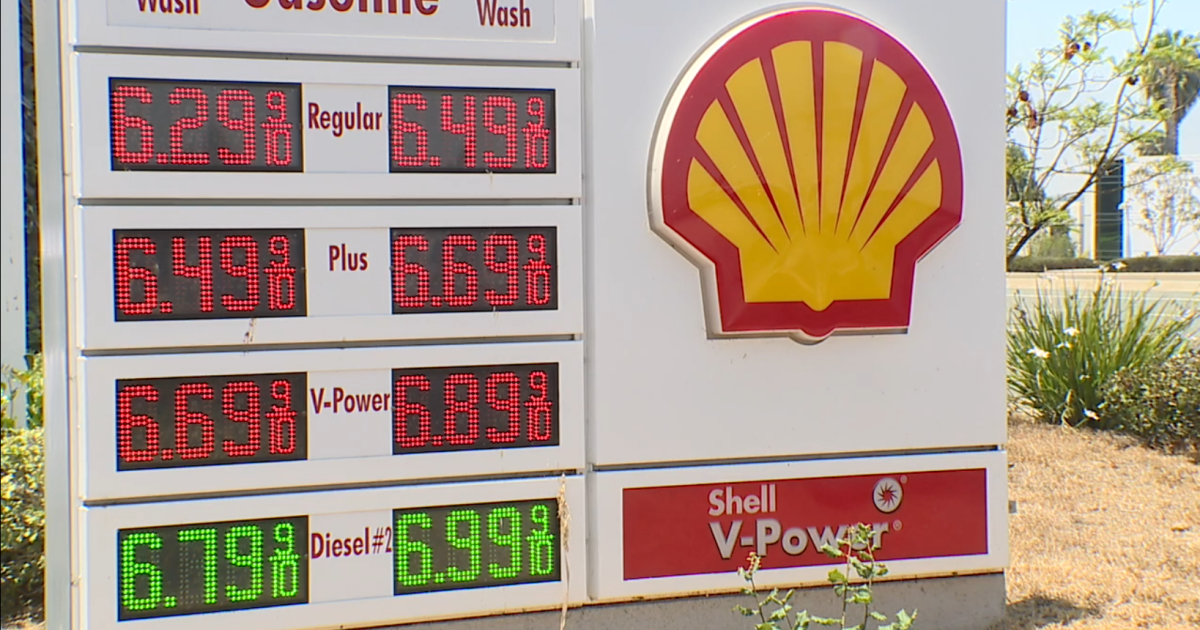
SAN DIEGO (CNS) — The average price of a gallon of self-serve regular gasoline in San Diego County dropped for the 44th time in 45 days today, falling eight-tenths of a cent to $5.42, its lowest amount since March 12. The average price has fallen 74.9 cents over the past 45 days, including eight-tenths of a cent Saturday, according to figures from the AAA and Oil Price Information Service. It is 9.8 cents less than one week ago and 53.2 cents less than one month ago, but 80 cents more than one year ago. The national average price dropped for the 43rd time in 45 days, falling six-tenths of a cent to $3.804, its lowest amount since March 17.
It has decreased 76 cents over the past 45 days, including 1.3 cents Saturday. The national average price is 6.3 cents less than one week ago and 41.6 cents less than one month ago, but 65.6 cents more than one year ago. “Crude oil prices have fallen to their lowest levels in months, dropping to the $60 a barrel range,” the AAA said Thursday. “Overall, gas prices remain the highest they’ve been in 4 years, but the downward trend since late May is welcome news during the busy summer driving season.”
Copyright 2026, City News Service, Inc.
-

 Los Angeles, Ca34 minutes ago
Missing 13-year-old with autism last seen at Los Angeles beach
-

 Videos41 minutes ago
Charlie Kirk’s alleged killer appears in court
-
Detroit, MI52 minutes ago
GET TO KNOW: Wide receiver Kendrick Law
-

 San Francisco, CA1 hour ago
Multiple people lose eyes, hands in illegal fireworks-related injuries in San Francisco
-
 Dallas, TX1 hour ago
Texas took this Dallas couple’s newborn baby for 3 weeks. A judge says their rights were violated
-

 Miami, FL1 hour ago
South Florida foundation empowering thousands of young girls through education, mentorship, community support
-

 Boston, MA1 hour ago
Where to watch Boston Red Sox vs Chicago White Sox: TV channel, start time, streaming for July 7
-

 Denver, CO1 hour ago
House fire in Denver fully engulfs power pole, detached garage mostly destroyed


