Montana
Montana Supreme Court hears oral arguments about 'executive privilege' in O'Neill v. Gianforte • Daily Montanan


Nearly 20 court cases from outside Montana recognize “executive privilege,” a right for the governor to guard certain pieces of information as confidential, and Montana needs to do the same, argued a lawyer for the state last week to the Montana Supreme Court.
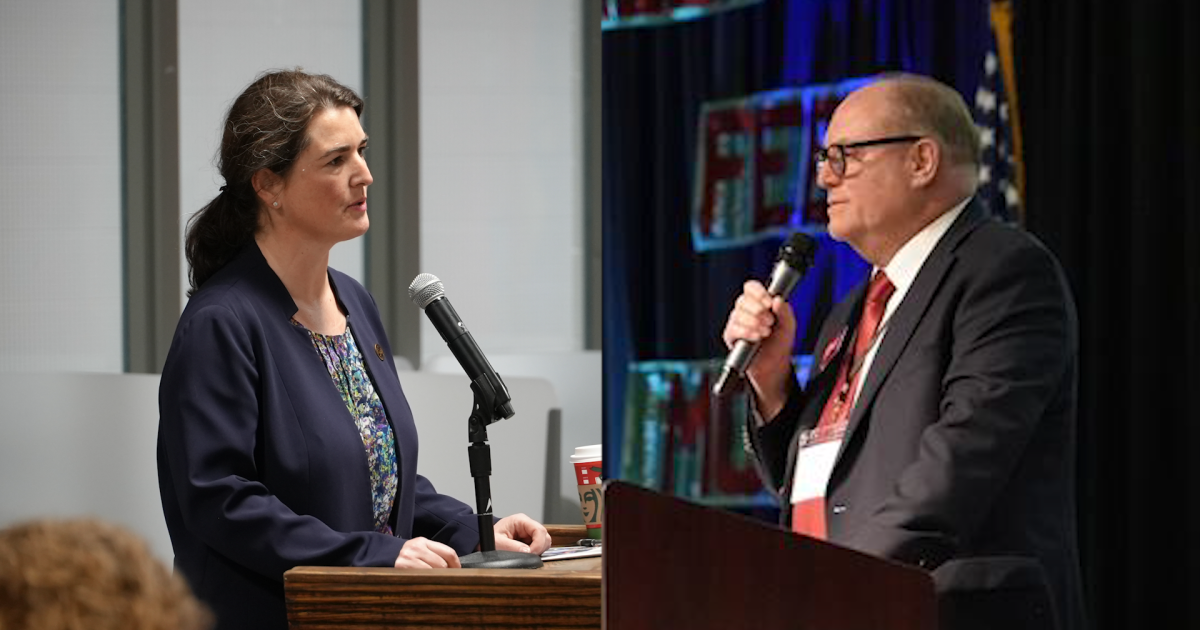
Right now, the governor hears “robust, unfiltered and sometimes harsh criticisms” about proposed legislation, and his staff shouldn’t have to worry about retaliation if those criticisms become public, said Dale Schowengerdt, on behalf of Gov. Greg Gianforte.
“That is ultimately to the public’s detriment because it impedes the governor’s ability to make the best decision possible on whether to sign or veto a bill,” said Schowengerdt, of Landmark Law.
But take one step back and look at the right of the people in the Montana Constitution, argued Constance Van Kley, on behalf of a plaintiff and political consultant seeking those records.
“Transparency and open government are the status quo in Montana,” said Van Kley, of Upper Seven Law. “And it’s against this backdrop that we should see the governor’s request for what it is. It is a novel request to create a broad, never-before-recognized exception to our fundamental constitutional right to know.”
In Missoula on Friday, the Montana Supreme Court heard arguments in Jayson O’Neill v. Gianforte.
In the lawsuit, O’Neill is fighting to see “agency bill monitoring forms,” which track bills and apparently contain staff advice about how the governor should treat proposed legislation. But the governor’s office argues his “executive privilege” means he can withhold them.
In 2022, a Lewis and Clark County District Court judge said Montana doesn’t recognize any form of “executive privilege,” and she ordered the governor to turn over the records to the court for private review and possible release to the public.
The governor, however, appealed the decision, and in oral arguments on Friday, the Montana Supreme Court justices mulled whether a place exists in Montana for some form of “executive privilege.”
If it does, how far does such a privilege go? What else would it cover?
Would legislative legal notes that review proposed bills, and are currently public, end up secret too?
On the other hand, if there isn’t a place in Montana for such a privilege, how can the state protect the executive’s decision-making process, as other jurisdictions outside the state have done?
Schowengerdt argued the governor respects the public’s right to know, having worked with the legislature on a bill that streamlines records requests. But he said small exceptions are needed for candid bill vetting — which is in the best interest of the public.
Van Kley, however, said the delegates to Montana’s 1972 Constitutional Convention believed government needs to be responsible to the people it represents and protect the public trust.
“This can only occur when the activities of government are visible,” Van Kley said.
Justices quiz state lawyer on ‘executive privilege’
At a hearing hosted by the University of Montana law school at the Wilma Theatre, the justices pressed both lawyers about whether an executive privilege was appropriate, and if it was, how it would fit into Montana’s legal landscape.
Schowengerdt said the delegates wanted to build a stronger executive, the decision to sign or veto legislation is one of the most important functions of that office, and every executive since George Washington has claimed some form of executive privilege.
In U.S. v. Nixon, he said, the U.S. Supreme Court found such a privilege is “fundamental to the average government.” In that case, the justices found the president can’t withhold records in a criminal prosecution, but executive privilege is valid in some circumstances.
Montana Supreme Court Justice Ingrid Gustafson, however, wanted to know how far such a privilege would go if Montana accepts that idea. Would it apply only to records related to “pre-decisional deliberations,” such as those forms? And what would the process be for deciding whether the privilege applies?
Schowengerdt said the privilege could extend to other “pre-decisional deliberations,” but he said in this case, the governor was making only a limited request.
“However you slice it, it’s narrow,” he said.
Justice Beth Baker, though, said some of the cases he cited protected the governor’s schedule: “Would that be the case in Montana?”
Schowengerdt said he didn’t know. (In a separate records request, O’Neill asked for and received copies of the governor’s calendar, but with the vast majority of the entries redacted.)
District Court Judge Leslie Halligan, sitting in for Chief Justice Mike McGrath who was out for a health concern, wanted to know what happens after a decision is made. Are the forms open to the public then?
Schowengerdt said no, or the same chilling effect from frank feedback would occur. But he also said a process has been laid out, and some records could be subject to an “in camera” review, or a private review and possible release by the court, but the governor has the burden to assert the scope of the privilege.
Halligan, though, also said in the Nixon case, the fight was between two branches of government, and in this case, it involves the “strong provision of the public’s right to know” in the Montana Constitution.
As such, the justices wanted to know how Schowengerdt suggested executive privilege would work regarding the actual subject matter.
For one thing, he said, the ultimate decision the governor makes is known to everyone, and the protection itself is just for the internal “devil’s advocacy.”
“It’s for the staff so that (the governor) receives that unfiltered information,” Schowengerdt said.
‘Is it an absolute position?’
Although Schowengerdt said executive privilege is common and the governor in Montana needs just a small amount of protection, Van Kley argued the court shouldn’t open that door at all.
But Justice Dirk Sandefur pressed Van Kley on the idea that executive privilege shouldn’t be recognized.
Van Kley said she agreed some records may be outside the scope of the constitutionally protected right to know, and Sandefur wanted to know how she would define them.
For starters, she said, those with significant privacy interests. Additionally, she said, the examples used by delegates, such as documents related to property purchases prior to a deal, because disclosing them would interfere with the ability of the government to get a good price.
But she said those exceptions aren’t similar to the case at hand.
“Executive privilege is fundamentally different from that,” Van Kley said.
The privilege has “no limiting principle,” she said; in this case, the governor simply said, “no” and didn’t provide even a blank version of the form her client requested.
She also stressed that the governor’s argument that other jurisdictions have used the privilege omits an important factor: “Not one of those shares our constitutional right to know.”
Sandefur, however, said the court first needs to decide whether it will recognize executive privilege, and then if so, figure out how it would apply to the specific documents in question.
Justice Jim Rice raised a question about practice on the ground. He said even though the cases outside Montana all apply different laws, they all stand for the “factual reality” the governor needs to be able to receive confidential information to make decisions only he can make.
“So how does Montana law accommodate what appears to be an undisputed factual reality about how the executive has to operate?” Rice asked.
In other cases, Van Kley said, the fights involve separation of powers, where one branch is fighting with another, but that’s not true in this case. Here, she said, the calculus is different because the public has a constitutionally protected right to know, and it’s typically “self executed,” except the governor denied information in this case.
In that context, she said, executive privilege doesn’t hold up in Montana.
Justice Beth Baker, however, wanted to know why there would be room to protect judicial deliberations but treat executive deliberations differently. Van Kley said for one thing, the protection for the judiciary is narrow, but the governor wants a much broader protection.
She also said transcripts from the constitutional convention show a privilege for judicial deliberations is ingrained in the state’s legal landscape, but that’s not the case for executive privilege.
Van Kley said Montanans have a right to observe public bodies deliberate, and the argument that someone might “say things differently” in public isn’t strong enough to keep records private: “Our constitution expects the people of Montana can understand that decision-making is sometimes difficult, that it is messy. There is no need for secrecy.”
Sandefur, however, questioned whether the governor himself is a “public body” as opposed to a constitutional officer, and Justice Jim Shea said the state already has recognized many exceptions to the right to know besides privacy, including attorney-client privilege, work product privilege, and others. (Shea also said since Nixon wasn’t decided until 1974, it’s fair to say executive privilege wasn’t on the radar of the delegates in 1972.)
Van Kley, though, said just as the delegates were looking at building a stronger executive branch, they were also concerned about the consolidation of power: “And the answer to that is accountability and transparency.”
Sandefur said he understood her position was that executive privilege wasn’t supported in Montana, but if the court found there was at least some need for it, he asked how would she sketch out the parameters.
Van Kley said the governor would bear the burden every time of demonstrating the need in connection with a specific task: “I think that at this point, the governor has failed to meet his burden.”
Disclosure: Upper Seven is representing the Daily Montanan in a separate public records matter.



Where Khloe Kardashian Stands With Ex French Montana More Than 10 Years After Breakup
French Montana is done keeping up with reality TV.
In fact, he only agreed to appear on Keeping Up With The Kardashians and Kourtney & Khloé Take the Hamptons over a decade ago as a favor to then-girlfriend Khloe Kardashian.
“She said to get on the show,” he exclusively told E! News at the BET Awards on June 28. “And I got on the show. Shout out to Khloe.”
The “Ever Since U Left Me” rapper, who split with Kardashian in December 2014 after eight months of dating, said the experience was “fun” because her family kept it real.
“They filmed their real life,” he continued. “And we were part of something together that one time. So it felt great. It didn’t feel like work because they film what they do everyday.”
As for his future in reality TV, the 41-year-old said those days are over, shutting down any prospective offers with a simple, “Negative.”
Although the “Unforgettable” artist—whose real name is Karim Kharbouch—may not be returning to television anytime soon, he has no problem hanging out with his ex-girlfriend these days.

French Montana, Rick Ross & Max B Turn the BET Awards Into “
06/28/2026
More
-

 Politics3 minutes ago
Fetterman unleashes on ‘dirtbag’ wing of Dems after far-left victories: ‘Orgy of socialism’
-

 Health6 minutes ago
Doctors thought man had brain cancer — they found live tapeworms instead
-

 Sports11 minutes ago
Paraguay stuns four-time World Cup champions Germany in penalty shootout after controversial call
-
 Business21 minutes ago
Comcast is spinning off NBCUniversal media and entertainment assets
-
 Entertainment26 minutes ago
Alannah Keyser is latest fired ‘Love Island USA’ contestant to apologize for using a racist slur
-

 Lifestyle33 minutes ago
Chanel’s Bruno Pavlovsky on Reengineering an Iconic Brand
-
 Politics36 minutes ago
Supreme Court limits police use of cellphone data to find crime suspects
-
 Sports48 minutes ago
Teoscar Hernández returns, and Dodgers unleash 17-hit barrage in win over Athletics

