
Connect with us

Northeast

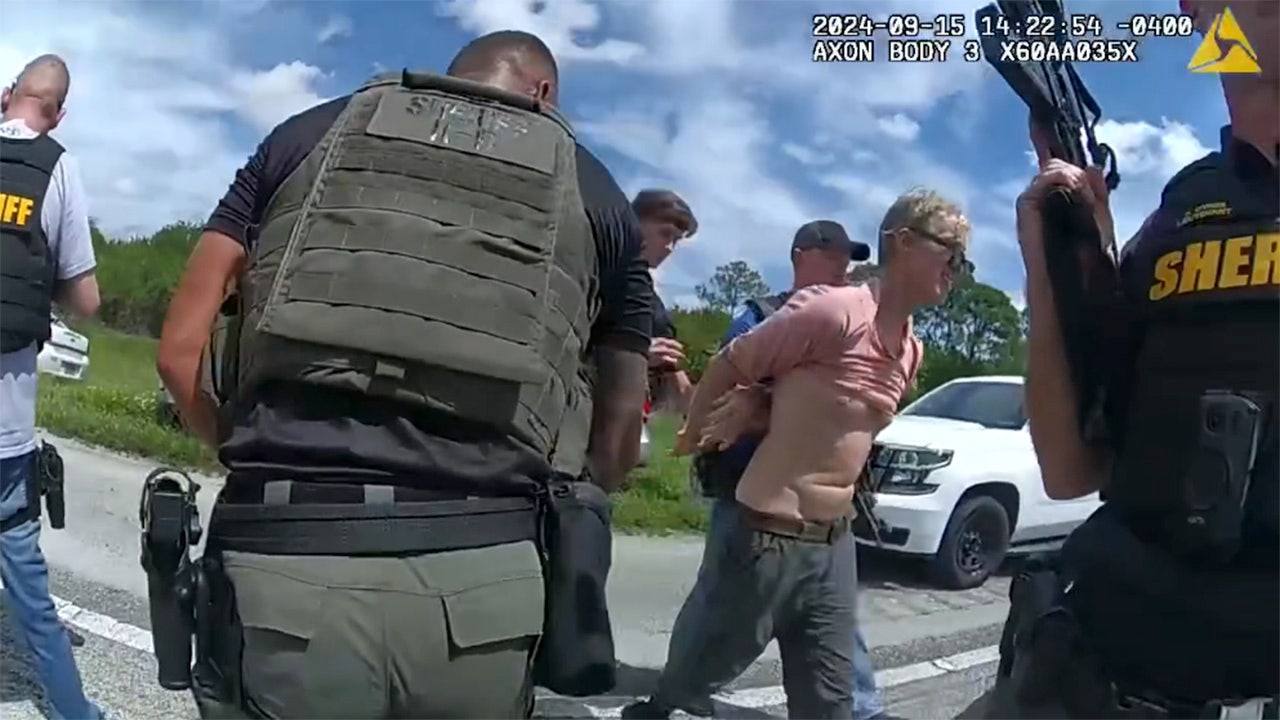
Donald Trump's failed assassination attempt: Authorities give security update for 1st rally in aftermath

Published

on

Donald Trump's failed assassination attempt: Authorities give security update for 1st rally in aftermath

Authorities in a suburban New York county that will host President Trump’s first campaign rally since he survived a second assassination attempt are delivering a security briefing as they prepare for the 2024 Republican candidate’s arrival.

Nassau County Executive Bruce Blakeman and Police Commissioner Patrick Ryder sought to reassure voters of their security measures at a news briefing ahead of the event.

Trump will rally supporters at the Nassau Veterans Memorial Coliseum Wednesday evening – just days after the U.S. Secret Service opened fire on an armed man who pointed a rifle at him from the perimeter of his golf course in West Palm Beach, Florida.

TRUMP ASSASSINATION ATTEMPT SUSPECT LAUGHS, SMILES DURING FIRST COURT APPEARANCE IN FLORIDA

Ryan Routh is accused of aiming an SKS-style rifle at former President Trump while he was golfing at his course in West Palm Beach, Florida, on Sunday. It is being investigated as a second assassination attempt on Trump. (Obtained by Fox News Digital)

Advertisement

The suspect in that case, Ryan Wesley Routh, made his first appearance in federal court earlier Monday. He is facing federal charges of felony possession of a firearm and possessing a gun with its serial number defaced.

More charges could be likely as the investigation continues.

On July 13, another gunman opened fire at the Trump rally in Butler County, Pennsylvania. 

WITNESS SAW TRUMP ASSASSINATION SUSPECT FLEE BUSHES, TOOK PHOTO OF GETAWAY CAR

Republican candidate Donald Trump is seen with blood on his face as Secret Service agents rush him off the stage at a campaign event in Butler, Pennsylvania, July 13, 2024. (Rebecca Droke/AFP via Getty Images)

Advertisement

Thomas Matthew Crooks, 20, killed a 50-year-old father of two named Corey Comperatore, critically wounded David Dutch, 57, and James Copenhaver, 74, according to authorities.

He struck the former president in his right ear.

Nassau County Executive Bruce Blakeman speaks to the media on April 22, 2024. (Peter Gerber)

Counter-snipers returned fire and killed him, but the security lapse that allowed him to climb onto a rooftop with a clear line of sight to the former president prompted multiple investigations and a shakeup at the top ranks of the Secret Service.

Advertisement

Read the full article from Here

Continue Reading
Click to comment

Leave a Reply

Your email address will not be published. Required fields are marked *

This site uses Akismet to reduce spam. Learn how your comment data is processed.

Pennsylvania

Lawmakers break without addressing unconstitutional murder sentences, leave 1K Pa. lifers in limbo

Published

on

Lawmakers break without addressing unconstitutional murder sentences, leave 1K Pa. lifers in limbo


Pennsylvania lawmakers recessed Sunday without fixing the commonwealth’s unconstitutional sentencing scheme for second-degree murder, making it increasingly likely they will miss a deadline set by the state Supreme Court and leave the issue in limbo.

A killing is considered second-degree murder if it occurs during the course of a violent felony, including robbery, rape, or arson. Someone can be found guilty of the crime if they participated in the underlying felony, even if their actions didn’t lead directly to another person’s death.

Because of this, a person in Pennsylvania who served as a getaway driver during a botched robbery, or caused an injury that later led to death, currently receives the same sentence as someone who knowingly plotted and carried out a killing.

However, in March the Pennsylvania Supreme Court ruled in Commonwealth v. Lee that mandatory life without parole for second-degree murder is unnecessarily cruel under the state constitution.

Advertisement

The court gave lawmakers until July 24 to rewrite the sentencing laws.

“While we have a clear obligation to ensure that constitutional bounds are not crossed, we may not act as legislators, who are best positioned to effectuate penal reform,” wrote Chief Justice Debra Todd for the majority.

They also declined to make the ruling retroactive, leaving it up to the legislature to decide whether people already serving life sentences for second-degree murder convictions should be up for parole.

But months of talks among advocates for criminal justice reform, district attorneys, and members of the split legislature have not produced a compromise.

The state Senate twice tried to move a version of a proposal that would create 35-year mandatory minimum sentences for adults convicted of second-degree murder, with few exceptions, as well as a pathway to release for those already serving. However, state Rep. Tim Briggs (D., Montgomery), a key House lawmaker on criminal justice issues, told Spotlight PA the proposal is too punitive.

Advertisement

If the legislature misses the deadline, the state Supreme Court decision will take effect, leaving individual Common Pleas judges across the state to dole out fair sentences without legislative guidance.

And the fate of more than 1,100 people already in prison on second-degree murder convictions will likely be decided by the state’s highest court, as civil rights lawyers stand ready to petition the body for further clarity.

Sign up for Morning Wire:
Our flagship newsletter breaks down the biggest headlines of the day.

Advertisement

Should the justices apply their ruling to people who are already convicted, courts across the state will almost certainly be flooded with hundreds of petitions from those serving life in second-degree cases, some decades old.

Some advocates are ready to file those petitions, telling Spotlight PA the courts might produce better outcomes for clients than the state Senate’s proposed path forward.

“We’re not afraid of going to mass resentencings,” said Sean Damon, director of strategic partnerships for Straight Ahead. His organization is the policy arm of the Abolitionist Law Center, the firm that brought the suit in Lee.

Advertisement

Others cautioned against that outcome.

“Inaction is not an option, in fact it is dangerous,” Attorney General Dave Sunday said in a statement sent after the legislature convened.

“Failing to act would leave our communities and victims without needed protections, and it is important that we move forward collaboratively to ensure a responsible solution.”

Lawmakers telegraphed Sunday night that they are willing to keep working on a compromise ahead of the deadline, but did not confirm whether they’d solve the issue in time.

Gov. Josh Shapiro, in a news conference, said he agrees with the Pennsylvania Supreme Court’s ruling, and wants to see the legislature reach consensus.

Advertisement

“We’re going to continue to work on this issue, and I’m confident, given some of the maneuvering that the majority leader in the House did today,” the Democrat said. “There’s a vehicle ready to go when we have a compromise in place.”

Asked whether lawmakers will pass a bill by the July 24 deadline, state House Majority Leader Matt Bradford (D., Montgomery) twice told reporters: “We’re hoping to get something accomplished.”

Conversations, but no compromise

For decades, Pennsylvania’s justice system has applied second-degree murder to a wide variety of defendants and criminal behavior: a man who killed a 77-year-old woman during the course of a violent rape; an accomplice in the torture and eventual death of an intellectually disabled woman; a man who robbed a tourist who minutes later committed suicide; a 14-year-old with a history of abuse and mental illness, who started an accidental house fire that killed the two boys she was trying to visit.

And for decades, those convicted have all received the same, unmovable sentence: life without parole.

The state Supreme Court in March found this sentencing scheme unnecessarily cruel, and argued that without an individual assessment of culpability, it violates the Pennsylvania Constitution.

Advertisement

“We determine that a mandatory life without parole sentence for all felony murder convictions, absent an assessment of culpability, is inconsistent with the protections bestowed upon our citizens under the ‘cruel punishments’ clause of our Commonwealth’s organic charter,” wrote Justice Todd for the majority.

In the spring, the legislature seemed poised to act.

Lawmakers from both chambers had already proposed legislation, including a bipartisan effort by state Sens. Sharif Street (D., Philadelphia) and Camera Bartolotta (R., Beaver) and another by Rep. Tim Briggs (D., Montgomery).

But at an April meeting of the state House Judiciary Committee, with advocates in attendance eager to celebrate the vote, Briggs tabled his bill. Stakeholders had reached out, he explained, with feedback and a desire to have their positions better reflected in whatever solution the legislature pursued.

“I think we can have a collaborative process to get to a better bill that balances the need to comply with the Lee decision, but also is fair and compassionate, respects victims’ rights, and above all, maintains community safety,” Briggs said during the April meeting.

Advertisement

Then, speaking about people already serving life sentences, he said: “These people – this is emotional – these people have been serving long, unconstitutional sentences, and I will not put them in a worse position than what I believe the Supreme Court would order for them after the (120 day) run.”

In an interview with Spotlight PA months later, Briggs said he had hoped the pause would lead to meaningful cross-party conversations.

“That never happened,” Briggs said.

In spring conversations between Straight Ahead and the Pennsylvania District Attorneys Association, the groups tried to reach a framework that would satisfy their respective coalitions. Lawmakers were not directly involved in those conversations, sources confirmed to Spotlight PA.

State prosecutors were most worried about the group of more than 1,100 people serving life sentences, said Kelly Callihan, the executive director of the district attorneys association.

Advertisement

“We like uniformity,” she said. “Victims deserve that, and honestly, perpetrators who have been convicted deserve that, so that it’s not like the Wild West, where every county was just going to be on an island doing what they thought with resentencing.”

Public defenders feel similarly, said Sara Jacobson, the executive director of the Public Defender Association of Pennsylvania. Without a legislative fix, she said, the state would be left with “justice by geography.”

“Without guidance, the results will vary widely in terms of sentences they get handed down,’ Jacobson added. “It will depend much more on the politics of a given county and an individual judge’s perspective.”

A legislative framework would be better for everyone, Jacobson said, because prosecutors, defense attorneys, and crime victims will know what to expect.

But feelings diverge from there.

Advertisement

The district attorneys association feels comfortable with a minimum sentence, after which the convicted person would be eligible for parole, Callihan said.

But Straight Ahead and other advocates found a high mandatory minimum for those sentenced to second-degree murder to be unpalatable.

“We have been advocating for a maximum sentence similar to third-degree,” which carries a 40 year maximum, Damon said.

In June, a compromise had not been reached when, over the course of four days, the Republican-controlled state Senate introduced, voted out of committee, and passed new legislation with bipartisan support.

That bill, SB 1400, would establish a 35-year mandatory minimum for adult offenders and preserve life without parole as an option for offenders who meet certain criteria. It allows for sentences as low as 10 years if a defendant meets a narrow set of mitigating circumstances.

Advertisement

For people already serving life, the bill would permit parole consideration after 35 years for most and 20 years for those over the age of 70.

The court gave the General Assembly a 120-day window “because opening the prison doors and letting out violent individuals back on the streets is unacceptable policy,” said state Sen. Lisa Baker (R., Luzerne), the bill’s lead sponsor, during a news conference after passage. Attorney General Sunday, also appearing at the news conference, supported it.

The state Senate passed a largely similar version of this legislation Sunday afternoon, attached to a House bill aimed at allowing incarcerated individuals to earn credits toward potential earlier parole by participating in educational and vocational programs.

But the bill found no purchase among House Democrats.

When he spoke with Spotlight PA in June, Briggs said the language was “too heavy-handed.”

Advertisement

“These are serious matters,” he said, “but I think there needs to be some compassion on the facts, and high mandatory minimums across the board isn’t the direction I want to go in.”

Elizabeth Rementer, a spokesperson for House Democrats, said Sunday that the lawmakers remain committed to continuing negotiations.

But speaking of the bill passed Sunday, she said, “Unfortunately, this isn’t it.”

Mass resentencings possible

Stakeholders are similarly split.

Berks County District Attorney John Adams, in an interview with Spotlight PA, said he largely supported the state Senate legislation and its attempt to establish both a framework for future sentencing and a path for reconsidering past convictions. As a prosecutor and former defense attorney, “I have been on both sides of this issue, so I know it by heart, and I know it through experience,” Adams said.

Advertisement

“This bill covers pretty much everything that I was looking for,” he said. “It offers, in the appropriate instances, the possibility that someone could be sentenced to life in prison, and it also offers otherwise some alternatives.”

But Philadelphia District Attorney Larry Krasner, a progressive Democrat known for diverging from his fellow prosecutors, derided the state Senate bill as unscientific and beholden to an old-school, tough-on-crime approach to justice.

In an interview with Spotlight PA, Krasner was blunt in his assessment of the courts as a better path than the proposed legislation..

“Nothing is better than stupid,” Krasner said.

The path to this type of mass resentencing is uncertain — for now.

Advertisement

Without a legislative fix, the issue will need to return to the state Supreme Court to become retroactive.

The Abolitionist Law Center is ready to pursue this path if the legislature fails to act, said Legal Director Bret Grote, whether through traditional appeal or a King’s Bench petition, which would ask the court to take the matter more quickly.

“The issue will be presented to the court promptly, and the court alone will decide when they hear such a case,” Grote said, “but with more than — and we’re confident it’s more than 1,100 people — serving this unconstitutional sentence, this is a constitutional crisis.”

Straight Ahead, ALC, and other advocates actively involved in conversations around the Lee decision are ready to do the most good for the most people, Damon said. “So, I’m not being glib when I say we’re ready to go a mass resentencing.”

More than 500 of the people serving life sentences for felony murder were convicted in Philadelphia, where the courts do not “tend to throw the book at people,” Damon said, and where there is a reform-minded district attorney in Krasner.

Advertisement

“We’re going to have lower sentences in Philly,” Damon said.

___

This story was originally published by Spotlight PA and distributed through a partnership with The Associated Press.


Source link

Advertisement
Continue Reading

Rhode Island

Providence mayor, City Council dispute over RENT fund program

Published

on

Providence mayor, City Council dispute over RENT fund program


Providence Mayor Brett Smiley called on city councilors to take action so the city can launch the RENT fund program.

According to city officials, Rental and Essential Needs Transition (RENT) would provide one-time grants of up to $3,000 per household to prevent eviction during times of financial crisis.

At a Wednesday press conference, Smiley called on the Providence City Council to approve the ordinance before its summer recess so the program can launch in July.

“I am incredibly disappointed that the city council is blocking the final approval to launch the RENT fund. Providence families are struggling to stay in their homes. They need help now more than they need delays,” Smiley said. “This act by the council can’t be viewed as anything other than a baseless political ploy aimed at obstructing progress during an election year, while our neighbors are the ones that have to pay a price for it.”

Advertisement

Providence Mayor Brett Smiley called on city councilors to take action so the city can launch the RENT fund program. (WJAR)

In a statement, City Council members said they have not yet approved the RENT fund ordinance because it does not include enough protections for tenants.

“The Council supports direct rental assistance—we already approved $1 million to fund it. But after vetoing rent stabilization, Mayor Smiley wants us to pass a program that sends public money directly to landlords without requiring them to limit rent increases or halt evictions. A landlord could take a $3,000 check from the City on Friday and raise the rent or evict the tenant on Monday. We are not going to be pressured into yet another Brett Smiley landlord giveaway. The Council will take the time necessary to put real tenant protections into this ordinance so that taxpayer dollars actually provide stability for neighbors in crisis,” Councilor Miguel Sanchez said.

Council members also said that they will continue working through the recess to strengthen the proposal.

Mayor Smiley disputed that claim, saying the organization selected to run the program, Community Action Partnership of Providence (CAP), would help protect tenants.

Advertisement

According to Smiley, the agreement with CAP includes tenant protections, such as ensuring tenants remain housed after receiving assistance and requiring landlords to fulfill their lease obligations.

Smiley also said the city would take action if a landlord violated those obligations.

“If they had an issue with the ordinance, they’ve had multiple opportunities to fix this. This has been in their hands for months. We got a letter flagging these concerns last night,” Smiley said. “We believe these concerns have already been addressed in the agreement with CAP, and if they had these concerns, they should’ve asked in the last four months.”


Source link

Advertisement
Continue Reading

Vermont

Hazy, hot, and humid: Wildfire plumes give southern Vermont skies an odd glow

Published

on

Hazy, hot, and humid: Wildfire plumes give southern Vermont skies an odd glow


SOUTHERN VERMONT — A thick veil of wildfire smoke high in the atmosphere is transforming the sky over our local Bennington and Windham Counties this week – casting an eerie glow, muting the sun, and leaving air quality in the moderate range – even as temperatures and humidity remain oppressive.

According to federal forecasters, the hazy and particulate-laden sky and unusual colors are the result of smoke from more than 830 active wildfires burning across Canada and northern Minnesota, funneled into New England by the jet stream and trapped over the region by stubborn weather patterns.

What people are seeing, and why the sky looks so strange

Over the course of Wednesday, residents across Southern Vermont reported the sky shifting from orangey‑yellow to umber to violet hues tinged with pink, with a yellow cast over the landscape and a deep red or dark orange sun, especially nearest to sunrise and sunset.

Advertisement

On a normal and clear day in Southern Vermont, tiny molecules in the atmosphere scatter mostly blue light, which is why the sky appears blue.

However, this week, the air is filled with larger particulate matter from wildfire smoke, which scatters longer wavelengths of light – oranges and reds – in a process known as Mie scattering (pronounced “mee,” and named after physicist Gustav Mie who first published the mathematical description of this weird-looking light-scattering phenomenon).

Due to Mie scattering, the sky can appear milky white, with sepia tones, or faintly pink‑violet, instead of blue. The sun may appear like a dark orange or red disk, especially when low to the horizon, and sunlight at ground level feels weaker and more filtered, as if being viewed through rose-tinted glasses. And these are the effects that we are currently experiencing.

Where the smoke is coming from, and how it travels

Federal agencies have reported that more than 800 wildfires are burning in Canada, with additional fires in northern Minnesota near the Canadian border. Many of these are large, and burning through dense boreal forests with little or no containment.

These blazes have triggered evacuations at their locales and in the surrounding areas, and are attributed to areas experiencing intensive drought.

Advertisement

The smoke created from these wildfires reaches Vermont through a series of atmospheric steps.

The jet stream’s “conveyor belt” of high‑altitude winds scoop up smoke from the Central Canada region and carry it southeast across the Great Lakes and into New England.

A high‑pressure “lid” forms, where a strong high‑pressure system causes air to sink (a process known as subsidence) which then presses some of the elevated smoke closer to the surface.

A stalled weather pattern can occur, where slow‑moving systems over Canada and the Northeast keep the flow of smoke aimed at the region instead of sweeping it quickly away.

These patterns mean that – even though the fires are hundreds of miles away – fine particulate matter (PM2.5) from those blazes is now suspended over Vermont and neighboring states.

Advertisement

Local air quality: Moderate, with cautions for sensitive groups

On Wednesday, air quality in Bennington and Windham Counties sat in the “moderate” category, with the Air Quality Index (AQI) fluctuating roughly between the low‑50s and high‑90s. This was driven primarily by PM2.5 from the presence of wildfire smoke.

In practical terms, most healthy adults can go about their normal routines outdoors. However, more sensitive groups – older adults, children, people with asthma, COPD, or heart disease – are advised to limit prolonged or heavy exertion outside, especially during the haziest periods.

Those with prolonged exposure may notice throat irritation, mild coughing, or even eye discomfort – particularly during intense exercise.

Residents can track real‑time conditions using the federal AirNow “Fire and Smoke Map” and Vermont‑specific dashboards, which show localized AQI readings as plumes shift during the day on Thursday.

How the smoke is affecting storms, heat, and humidity

The same smoke that is changing the sky’s color is also subtly reshaping the weather over Southern Vermont.

Advertisement

Forecasters note several key effects. These include solar dimming, where smoke particles in the upper atmosphere scatter and absorb sunlight, acting as a partial sunblock. This can shave a few degrees off daytime highs, compared with what might otherwise occur under clear skies.

It can also include “capping inversion.” By warming the air aloft, the smoke can create a “cap” – a warm layer that suppresses rising air. This can weaken thunderstorms, even when surface heat and humidity are high.

Another key effect is cloud microphysics, where extra smoke particles provide millions of tiny surfaces for water vapor to cling to, producing many “very tiny” droplets rather than fewer larger raindrops. These smaller droplets don’t fall as easily, which can reduce heavy rainfall and the actual structure of a storm.

For example, on Tuesday night, Southern Vermont sat under extremely high humidity fueled by warm southerly winds pulling tropical moisture up the East Coast ahead of a cold front. Under normal conditions, that setup could have produced stronger thunderstorms. Instead, wildfire smoke likely muted the intensity of those expected storms, leaving the region with more of a muggy “soupy” feeling than the explosive severe weather that many expected.

Short‑term outlook for southern Vermont

Through Wednesday and into Thursday, forecasters expect the following for our Southern Vermont region:

Advertisement
  • Sky conditions – Persistent haze and milky skies, with periods of thicker smoke as the plumes shift southward and then rise again. The sun may remain reddish or orange at times.
  • Temperatures and humidity – Highs in the mid‑80s, with oppressive humidity at times, especially ahead of the next cold front.
  • Air quality – AQI values are forecast to remain in the moderate range, occasionally bordering on “unhealthy for sensitive groups” during heavier smoke intrusions (these are expected through Thursday).
  • Showers and storms – As another cold front approaches us on Thursday, scattered showers are expected with isolated downpours and localized “non‑severe” thunderstorms. (Smoke may again limit storm strength somewhat.)

By Friday, higher pressure and drier air are expected to build in from the west, bringing more seasonable temperatures in the upper 70s to mid‑80s, lower humidity, and improved air quality – though some high‑level haze may linger.

For now, we will continue to look at our landscape through our “rose-colored” glasses.


Source link

Continue Reading
Advertisement

Trending
