World
What bombs did Israel use against the al-Mawasi ‘safe zone’ in Gaza?


The three bombs dropped by Israeli warplanes on displaced people’s tents in southern Gaza left three enormous craters and myriad questions about the use of such big munitions on such a densely populated space.
In the early hours of Tuesday, Israel’s bombing of al-Mawasi killed at least 19 people and wounded many more.
At least 22 people are reported missing, assumed to have been vaporised by the intensity of the blast.
Israel claimed the strikes targeted Hamas militants, while Palestinians and aid groups condemned the attack as a war crime.
What happened?
Initial accounts of the Israeli strike were confused but it soon became clear Israel had struck the encampment with three large projectiles.
Twenty-two-year-old Tala Herzallah described to Al Jazeera she how and her family were asleep about 200 metres (220 yards) away and: “Suddenly, everything was turned upside down.
“The huge damage the bombs caused made us realise that these were meant for the largest buildings and not for tents made of the weakest materials in the world.”
Abu Muhammad al-Bayouk, a displaced person who lives near the encampment, told Al Jazeera: “We heard the explosions. It was … more than a missile. We found many injuries and martyrs and scattered body parts everywhere, including women and children.”
What did Israel use against the tents of al-Mawasi?
Al Jazeera’s verification agency Sanad concluded that US-made MK-84 bombs may have been used by Israel against the encampment of displaced families.
It based this on analysing the size of craters and footage of bomb fragments from the camp.
The MK-84 is 2,000lb ordnance, and one of the heaviest pieces provided to Israel by the US.
The US briefly suspended MK-84 supplies in May, worried that it may use them to assault southern Gaza’s Rafah. Israel proceeded to invade Rafah in May.
Armies tend to use the MK-84 sparingly, but Israel is reported to have used it heavily on Gaza.
The MK-84 causes a pressure wave so intense that, as well as destroying buildings, it exterminates life within a 365-metre (400-yard) radius.
According to the UN, the blast can rupture lungs, tear limbs apart, and burst sinus cavities up to hundreds of metres away from the blast site.
The crater MK-84s leave behind are roughly 15.5 metres wide and 11 metres deep (50 feet wide and 36 feet deep), in keeping with those found at al-Mawasi.
How many people were in the spot Israel hit?
There are no precise counts of people who are in the displacement tents, but Al Jazeera’s Sanad estimates that there were about 60 tents in the space Israel hit.
Previous accounts tell of huge overcrowding, with 20 or more people crammed into one tent to try to shelter from Israel’s ongoing war on the besieged enclave.
By that count it is estimated that at least 120 people were sleeping in the spot where the three large bombs landed.
Why were so many people in al-Mawasi?
Al-Mawasi had been designated as a humanitarian “safe zone” by Israel in October of last year.
Since then, thousands of displaced people have either fled or been instructed by the Israeli army to go there.
There, despite what many describe as appalling conditions, many hoped to find the chance of safety for their families not possible anywhere else in Gaza.
For many, the Israeli army’s assurances, the absence of any highrise buildings nearby, and the fine sand underneath making the chances of Israeli airstrikes upon suspected tunnels unlikely, it was hoped that the camp may at least be secure.
Those hopes were swiftly dashed. Before Tuesday’s attack, al-Mawasi had been struck four times but people stayed on because there was nowhere else to go.
The biggest attack occurred on July 13, 90 people were killed and at least 300 wounded.
At the time, Israel said the attack intended to target two senior Hamas senior commanders, a claim dismissed by Hamas.



Jinant Film & TV’s unstoppable family drama “Dear You” comfortably dominated the China box office during the June 5–7 weekend, securing RMB115.3 million ($17 million), according to data from Artisan Gateway.
Directed by Lan Hongchun and starring Li Sitong and Wang Yantong, the low-budget cultural juggernaut has reached a cumulative total of $238.5 million. The story details Grandma Ye Shurou from Chaoshan, whose quiet twilight years are broken when her debt-ridden grandson journeys to Thailand to track down his rumored billionaire grandfather. The investigation unravels a hidden love affair spanning 50 years, showing that the person Grandma had been writing to via the traditional “Qiaopi” mailing method was a complete stranger.
Zhonghe Qiancheng’s crime thriller “Vanishing Point” held firm in the runner-up position, pulling in $2.5 million to stretch its cumulative bank to $75.6 million. Directed by Cheng Wei-hao and starring Zheng Kai and Liu Haocun, the film is adapted from Bei Baokang’s novel “Sea Anemone.” The narrative traces the dark, interlocking secrets exposed within an old apartment block after a young boy vanishes on the winter solstice.
Disney’s “Star Wars” spinoff “The Mandalorian and Grogu” was in third place, adding $1.4 million for a cumulative total of $12.1 million. Debuting in fourth place, Amazon MGM Studios’ fantasy action vehicle “Masters of the Universe” picked up $1.2 million in its opening framework.
Rounding out the top five, StudioCanal’s tense World War II historical drama “Pressure” opened with $1.1 million over its two-day weekend frame, bringing its total to $1.2 million including early previews.
Mainland China’s overall weekend grosses reached $27.8 million, while the 2026 year-to-date revenue stands at $2.36 billion, down 42.3% from the same period in 2025.

NEWYou can now listen to Fox News articles!
Israel launched retaliatory airstrikes on sites it described as Hezbollah command centers in Beirut’s southern suburbs Sunday, hours after Israeli officials said Hezbollah fired rockets into northern Israel. Hezbollah did not immediately claim responsibility.
The escalation came days after the U.S., Israel and Lebanon announced a renewed conditional ceasefire framework requiring Hezbollah to halt fire and withdraw from parts of southern Lebanon. It also followed the release of IDF footage that Israel said showed troops dismantling a Hezbollah explosives facility, where an outside expert said components appeared consistent with anti-personnel shrapnel devices designed to wound or kill people on foot.
The strikes mark a major cross-border escalation days after the U.S., Israel and Lebanon announced a renewed conditional ceasefire framework requiring Hezbollah to halt fire and withdraw from parts of southern Lebanon.
Israeli Prime Minister Benjamin Netanyahu’s office announced the military action was direct retaliation for the group’s violation earlier in the day.
HEZBOLLAH FIRES BARRAGE OF ROCKETS INTO ISRAEL AFTER IDF TARGETS HEZBOLLAH COMMAND CENTERS IN BEIRUT
An explosion erupts from a building following an Israeli strike in central Beirut, Lebanon, on March 18, 2026. (Hussein Malla/AP Photo)
Concurrently, footage released by the Israel Defense Forces (IDF) showed troops locating and dismantling a hidden, booby-trapped explosives warehouse.
The multipurpose assembly hub appeared to contain materials that could be used in makeshift shrapnel and propane tanks to create a distributed, lethal network.
Nick Reese, an adjunct professor at NYU’s Center for Global Affairs and a former U.S. national security adviser, told Fox News Digital that the captured weapons cache suggests a deliberate emphasis on personnel casualties, which could be military or civilian targets.
“Given the current situation, they probably targeted more military personnel. Shrapnel bombs are intended to hurt and kill people on foot,” Reese said.
“The video cuts between the IDF entering the building and showing the contents. It’s at this moment that they probably cleared any booby traps,” Reese added. “It would be standard practice to look for and disable any booby traps in a facility like this before going inside and before filming anything.”
“It’s possible the booby traps could be using shrapnel methods, but I can’t see evidence of that in the video. It shows what appears to be a shrapnel bomb, but it is not hidden so likely not a booby trap unless the IDF disarmed it off camera,” he said.
HEZBOLLAH ‘HUMAN SHIELD’ STRATEGY BEHIND LEBANON AMBUSH, BOMB DETONATION – MACRON DRAWN IN
Hezbollah worked to build facilities below private residential buildings and houses. (Benoît Durand / Hans Lucas / AFP via Getty Images)
Among the items found in the raid was a container filled with nails and other sharp objects, which Reese noted are specific indicators of anti-personnel targeting.
“This video shows what appears to be a container with nails or other sharp implements in it,” Reese noted. “This is likely for creating shrapnel bombs intended to kill, wound, and maim targets.”
“Such devices are both effective and cause significant fear among the population, which was likely the intent,” Reese continued. “The method is not particularly sophisticated but shows that they were targeting humans, not simply hardware or infrastructure.”
“Making shrapnel bombs also tends to be cheap, easily concealed, and effective, especially against personnel. These types of bombs would likely have been in significant use.”
“The video shows a variety of materials that could have been used to create bombs, from makeshift shrapnel to what appears to be a propane tank,” Reese explained.
“These components would be used for very different purposes, so the location seems to have been a central general-purpose explosives-making facility.”
“Propane tanks would be used for larger targets like tanks or buildings, while shrapnel would be used against infantry or in public places,” Reese said.
US, ISRAEL ANNOUNCE TARGETED KILLINGS OF TERROR LEADERS IN SYRIA AND LEBANON
Smoke billows over Beirut’s southern suburbs following reported strikes amid escalating conflict involving Hezbollah and Israel, as seen from Baabda, Lebanon, on March 6, 2026. (Mohamed Azakir/Reuters)
The dismantling of the factory follows a high-profile decapitation strike against the leadership running these hidden networks.
The IDF announced Friday that an airstrike in Lebanon killed Hezbollah’s chief explosives engineer, Abed Harb, the commander of Hezbollah’s engineering unit, after he “attempted to harm” Israeli soldiers.
The military said Harb was a veteran commander responsible for “numerous attacks against IDF soldiers” over the decades.
When considering the expertise required to manage such operations, Reese observed: “Over a 20-year career, this is difficult to say. Given Iran’s well-known funding and support to Hezbollah and its experience fighting the Israelis in multiple conflicts, he likely had a mix of internal and external training combined with combat experience.”
“Harb was targeted as part of an effort to disrupt Hezbollah’s war-making infrastructure and limit its ability to continue to plan and execute large bombing operations against the IDF and civilian targets.”
“The loss of Abed Harb by Hezbollah is not just a loss of leadership but of institutional knowledge,” Reese added.
“His two decades of battlefield experience were significant to Hezbollah not only because of his bomb-making abilities but because of how he understood the IDF, Hezbollah, and the junior ranks.
CLICK HERE TO DOWNLOAD THE FOX NEWS APP
“As a member of Hezbollah since 2006, Harb likely had significant skills in making and disguising bombs over a 20-year career, which will be a blow to Hezbollah’s operational capabilities and infrastructure,” Reese said.

Peruvian presidential candidate Roberto Sanchez visited jailed former president Pedro Castillo as officials counted ballots from the closely contested runoff election against conservative rival Keiko Fujimori.
Published On 8 Jun 2026
-

 Indianapolis, IN57 seconds ago
3 Biggest Winners of Colts’ OTAs
-

 Pittsburg, PA8 minutes ago
New Castle teenager charged for tailgating after two-vehicle crash in Pittsburgh – Beaver County Radio
-

 Augusta, GA11 minutes ago
CBS Sports production assistant from Augusta area died in car accident
-
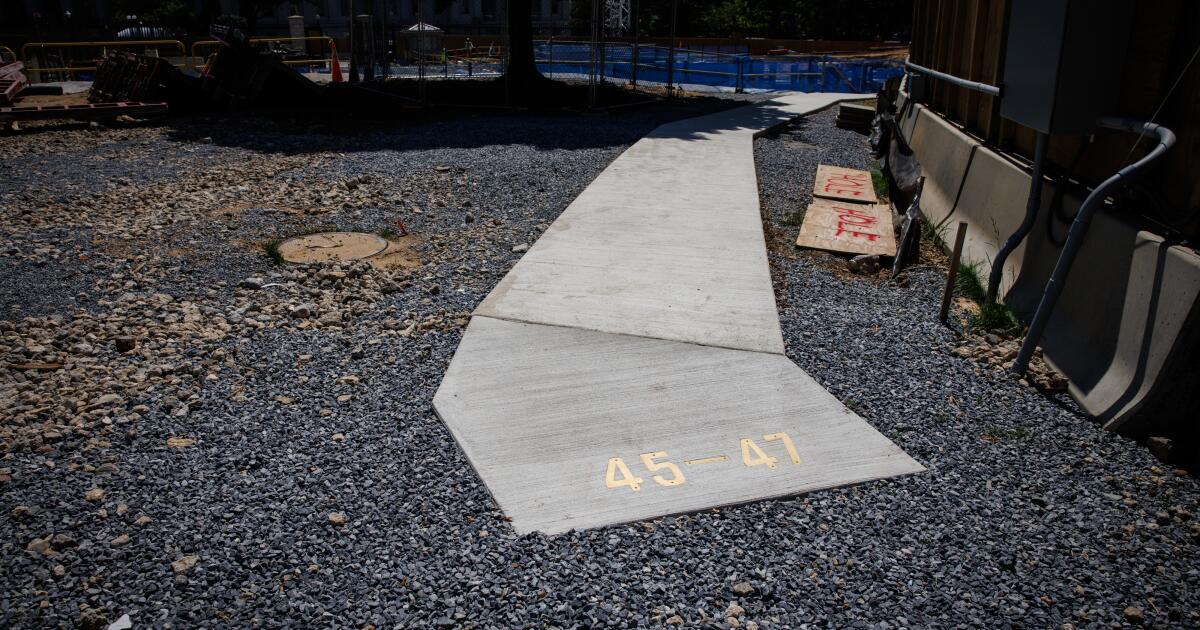 Washington, D.C23 minutes ago
Trump forges ahead with D.C. cityscape transformation against growing resistance
-

 Cleveland, OH26 minutes ago
Union Pacific Big Boy locomotive No. 4014 to stop in Northeast Ohio apart of cross-country tour
-

 Austin, TX31 minutes ago
Texas sweeps Oregon, advances to Men’s College World Series for record 39th time
-

 Alabama38 minutes ago
Flooding Concerns Continue Across North Alabama as More Rain Moves In
-

 Alaska41 minutes ago
Interior raises $3.7M in Arctic National Wildlife Refuge lease sale

