Connect with us

Montana

'Old racist stereotypes': Crow Tribe official responds to Tim Sheehy's 'drunk Indian' comments

Published

on

'Old racist stereotypes': Crow Tribe official responds to Tim Sheehy's 'drunk Indian' comments
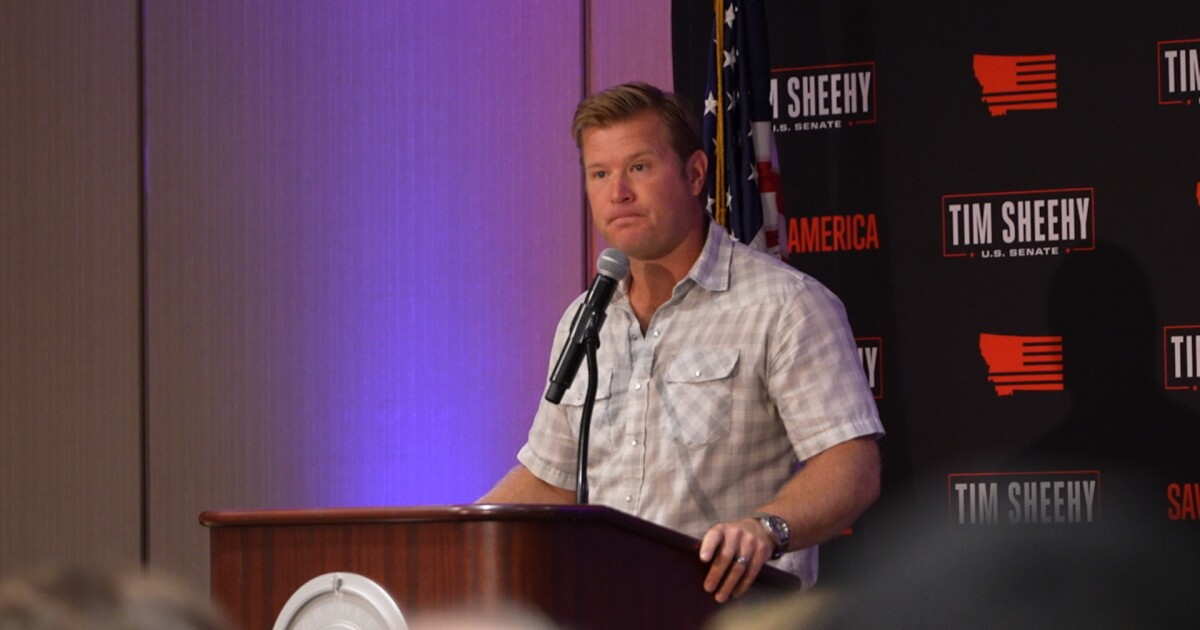

BILLINGS — Representatives of the Crow tribes and other native groups are expressing their displeasure following the release of audio recordings of Montana U.S. Senate Republican candidate Tim Sheehy making racially insensitive comments about Crow tribe members involving alcohol.

“I know that Crows are our community, we’re no stranger to some good-natured ribbing, but I think this is a, I think that it’s a perpetuating old racist stereotypes, that of the outdated idea of the (makes air quotes with his hands) drunken Indian,” the Crow tribe’s secretary for the executive branch, Levi Black Eagle, in Wednesday interview with MTN News.

“I know that all the cattle and ranching families that I know, Crow and ranching families, they’re an upstanding character, they’re strong workers. I know that they don’t start their day with a can of beer,” Black Eagle said.

In the audio clips, taken in 2023 at different fundraising events, Sheehy can be heard saying, “I’m pretty involved down there, rode through their Crow Rez, their annual Crow Fair parade this year. I rope and brand with them every year down there, so it’s a great way to bond with all the Indians being out there while they’re drunk at 8 a.m., and you’re roping together. Every heel shot you miss, you get a Coors Light can upside your head.”

Advertisement

MTN News

Just days later, Sheehy was heard again at another event, accusing tribal members of throwing beer cans at him during the annual Crow Fair Parade.

“Six weeks after I launched the first thing I did was I strapped a Sheehy sign to a horse and rode through the Crow Rez parade and if you want to know a tough crowd, go to the Crow Rez. They let you know whether they like you or not, there’s Coors Light cans flying by your head,” Sheehy said.

'Old racist stereotypes': Crow Tribe official responds to Tim Sheehy's 'drunk Indian' comments

MTN News

The Crow tribe has a ban on alcohol sales on the reservation.

Advertisement

“It’s really disheartening, especially from an individual, a candidate running for such a high office, you would expect more from those individuals,” Black Eagle said. “I think it’s a majority of the community that fights hard to negate those stereotypes and to have them perpetuate in such a way is just, it’s really disgusting. And we don’t stand for it.”

Black Eagle said the parade is a time to honor and appreciate their culture and tribal members’ accomplishments.

'Old racist stereotypes': Crow Tribe official responds to Tim Sheehy's 'drunk Indian' comments

MTN News

“I don’t think that there’s ever been an instance where one of the spectators threw anything, especially at one of our guests. We treat our guests better than that,” Black Eagle said. “It’s a time for us to show our best versions of ourselves and definitely to have it smeared in such a way is just, it’s really shady.”

Sheehy is seeking to unseat incumbent Democratic Sen. Jon Tester in a race that could determine control of the U.S. Senate. The race has garnered national attention, with millions of dollars flowing into the race that will be decided Nov. 5.

Advertisement

On Wednesday morning, Sheehy held a campaign event in Billings, where the senate hopeful spoke alongside U.S. Sen. Tom Cotton, R-Arkansas. His campaign team was aware that MTN News asked for an interview with Sheehy, but at the immediate conclusion of the event, Sheehy was taken out of the room and interview requests were denied.

Other prominent members of the Native American community in Montana were also upset to hear Sheehy’s words.

Montana state Sen. Shane Morigeau, a Missoula Democrat, said the comments, which he learned about on Tuesday, misrepresent tribal members, and he fears what it could do to the younger generations hearing those words.

“When you’re making jokes about, you know, native people being, you know, alcoholics and violent, well, what does that tell the young native kid that lives in my community or on the Crow reservation?” Morigeau said. “When I was listening to it, what I started thinking about was like, ‘Wow, this is exactly one of the reasons I brought legislation forward last session to essentially have an Indian education for all type of bill for legislators.”

'Old racist stereotypes': Crow Tribe official responds to Tim Sheehy's 'drunk Indian' comments

MTN News

Advertisement

Morigeau’s bill failed in 2023, but he still hopes this can be a learning moment for everyone.

“I think these sorts of things are, there’s an underbelly of this kind of stuff in the state of Montana. And it’s unfortunate,” Morigeau said. “I really wish it could be a learning opportunity for the candidate, as well. You know, we expect our elected officials to be people of integrity. And when you do something that’s wrong or hurtful, you own up to it and you apologize.”

Morigeau is a member of the Montana American Indian Caucus, which released a letter to Sheehy Wednesday afternoon saying how “let down” they were by his remarks.

“As a candidate for office in Montana, you have a responsibility to know and respect the Indian communities you are running to represent. You are also responsible for using your platform to advocate for that respect to your political supporters,” a portion of the letter states. “Instead, you have chosen to disrespect the original Montanans as a strategy to pander to the non-Indian vote and political funders. Your remarks have only further alienated the tribal people from your party.”



Source link

Advertisement

Montana

Montana Lottery Powerball, Lucky For Life results for Dec. 24, 2025

Published

on


The Montana Lottery offers multiple draw games for those aiming to win big. Here’s a look at Dec. 24, 2025, results for each game:

Winning Powerball numbers from Dec. 24 drawing

04-25-31-52-59, Powerball: 19, Power Play: 2

Check Powerball payouts and previous drawings here.

Winning Lucky For Life numbers from Dec. 24 drawing

03-05-07-17-34, Lucky Ball: 09

Advertisement

Check Lucky For Life payouts and previous drawings here.

Winning Lotto America numbers from Dec. 24 drawing

01-18-27-41-49, Star Ball: 09, ASB: 02

Check Lotto America payouts and previous drawings here.

Winning Big Sky Bonus numbers from Dec. 24 drawing

05-25-26-31, Bonus: 12

Check Big Sky Bonus payouts and previous drawings here.

Advertisement

Winning Powerball Double Play numbers from Dec. 24 drawing

03-15-19-29-35, Powerball: 21

Check Powerball Double Play payouts and previous drawings here.

Winning Montana Cash numbers from Dec. 24 drawing

07-09-14-15-16

Check Montana Cash payouts and previous drawings here.

Feeling lucky? Explore the latest lottery news & results

Advertisement

When are the Montana Lottery drawings held?

  • Powerball: 8:59 p.m. MT on Monday, Wednesday, and Saturday.
  • Mega Millions: 9 p.m. MT on Tuesday and Friday.
  • Lucky For Life: 8:38 p.m. MT daily.
  • Lotto America: 9 p.m. MT on Monday, Wednesday and Saturday.
  • Big Sky Bonus: 7:30 p.m. MT daily.
  • Powerball Double Play: 8:59 p.m. MT on Monday, Wednesday, and Saturday.
  • Montana Cash: 8 p.m. MT on Wednesday and Saturday.

Missed a draw? Peek at the past week’s winning numbers.

Winning lottery numbers are sponsored by Jackpocket, the official digital lottery courier of the USA TODAY Network.

Where can you buy lottery tickets?

Tickets can be purchased in person at gas stations, convenience stores and grocery stores. Some airport terminals may also sell lottery tickets.

You can also order tickets online through Jackpocket, the official digital lottery courier of the USA TODAY Network, in these U.S. states and territories: Arizona, Arkansas, Colorado, Idaho, Maine, Massachusetts, Minnesota, Montana, Nebraska, New Hampshire, New Jersey, New York, Ohio, Oregon, Puerto Rico, Washington D.C., and West Virginia. The Jackpocket app allows you to pick your lottery game and numbers, place your order, see your ticket and collect your winnings all using your phone or home computer.

Jackpocket is the official digital lottery courier of the USA TODAY Network. Gannett may earn revenue for audience referrals to Jackpocket services. GAMBLING PROBLEM? CALL 1-800-GAMBLER, Call 877-8-HOPENY/text HOPENY (467369) (NY). 18+ (19+ in NE, 21+ in AZ). Physically present where Jackpocket operates. Jackpocket is not affiliated with any State Lottery. Eligibility Restrictions apply. Void where prohibited. Terms: jackpocket.com/tos.

Advertisement

This results page was generated automatically using information from TinBu and a template written and reviewed by a Great Falls Tribune editor. You can send feedback using this form.


Source link

Continue Reading

Montana

ABC’s Montana/Montana State Semifinal Game Draws Record TV Viewership

Published

on

ABC’s Montana/Montana State Semifinal Game Draws Record TV Viewership


The Montana at Montana State FCS semifinal game on ABC was the most-watched FCS playoff game on record, averaging 2.8 million viewers.

ESPN2’s Illinois State at Villanova game averaged about 400,000 viewers. The average of 1.6M viewers is the most-watched semifinals since 2009.

For comparison, last year’s FCS semifinals had two games on ABC, which draws more eyeballs than ESPN2. SDSU at NDSU on ABC averaged 1.58M viewers. South Dakota at Montana State on ABC averaged 1.37M. Last season’s title game of NDSU vs. Montana State on ESPN drew 2.41M.

This comes a week after the quarterfinal round drew its highest average audience since 2011.

Advertisement

Viewership for the six FCS playoff games so far on national TV is up 13% from the comparable six games on networks prior to the title game last year.

The ‘Super Brawl’ Delivers In Intensity

mo-promo-large-generic-ad


Source link

Continue Reading

Montana

The Trump-Class Battleship Might Just Be Another Montana-Class Battleship

Published

on

The Trump-Class Battleship Might Just Be Another Montana-Class Battleship


Key Points and Summary – Trump’s newly announced Trump-class “Golden Fleet” recalls the U.S. Navy’s never-built Montana-class battleships: huge, heavily armed ships overtaken by changing strategy.

-In 1940, Montanas were conceived as super-battleships, but World War II quickly proved carriers, submarines, and escorts were more decisive, and the program was canceled before keels were laid.

Trump-Class Battleship. Image Credit: Creative Commons/White House.

-Today, Trump’s vision faces different but parallel constraints: hyper-partisan politics, tight shipbuilding capacity, and a fast-moving shift toward missiles, drones, and distributed fleets.

Advertisement

-The article argues the real lesson of Montana is that strategy and technology can outrun prestige platforms before they ever reach the water. History may be repeating itself.

Trump-Class Battleship Golden Fleet: Another Montana-Class?

In 1940, as war spread across Europe and tensions with Japan continued to rise in the Pacific, the U.S. Navy was still planning for a conflict in which heavily armed surface fleets would play a decisive role. Battleships remained central to American naval thinking, and Congress had just approved a significant expansion of the fleet under the Two-Ocean Navy Act. 

Within that framework, Navy planners authorized a new class of battleships that would be larger, more heavily protected, and more powerfully armed than any the United States had previously built.

Designated the Montana-class, the ships were intended to represent the next step in battleship technology and capability at a moment when naval strategy itself was about to change significantly. 

The program, however, never worked out as planned. In fact, none of the five planned Montana-class ships ever saw steel laid on a dock. The program was canceled before construction began, and the class never entered service. But why?

Advertisement

The answer isn’t precisely simple: it was a combination of shifting priorities, politics, and a total transformation in naval warfare that effectively made battleships strategically obsolete before they could even be built. 

Trump-Class Battleship

Trump-Class Battleship. Image Credit: Creative Commons/White House Photo.

As U.S. President Donald Trump announces plans for an entirely new class of battleships to form what he calls the “Golden Fleet,” the story of the Montana-class is well worth revisiting today.

The Montana-Class Vision and World War II

In the late 1930s and into the early 1940s, the U.S. Navy’s battleship force was undergoing its most ambitious expansion since World War I. Battleships like the North Carolina, South Dakota, and Iowa classes were designed or authorized after treaties capped armament and displacement. With treaty restrictions effectively ended and global conflict looming, the Navy chose to pursue a new class of super battleships – designated BB-67 through BB-71 – that would surpass even the formidable Iowa-class in terms of size and firepower. 

The Montana-class was set to displace more than 60,000 tons, measure more than 920 feet in length, and carry twelve Mark 7 guns in four triple turrets – significantly more heavy guns than the nine on an Iowa-class ship. Armor protection was also made thicker and more extensive. 

Advertisement

Congress authorized construction of the Montana-class as part of the Two-Ocean Navy Act of July 1940, which aimed to expand U.S. naval capabilities as war engulfed Europe and Asia. The intention was for these battleships to serve as the centerpiece of a powerful surface fleet capable of countering German and Japanese warships. 

However, even as the designs were being confirmed and contracts authorized, larger strategic shifts were underway. The Japanese attack on Pearl Harbor in December 1941 and the Pacific campaign that followed accelerated the prominence and demand for aircraft carriers. The Navy began to allocate resources differently, and shipyard capacity, steel, and manpower became limited during wartime. Ultimately, the need for Essex-class aircraft carriers, destroyer escorts, landing craft, and anti-submarine vessels became more urgent. 

Battleship construction, even for the existing Iowa-class hulls, began to compete with these new priorities. And while the Montana design was impressive on paper, it was also slower than the Iowa class and incapable of keeping pace with fast carrier forces that were increasingly defining U.S. naval operations in the Pacific. That made the Montana less suitable for the evolving (and now primary) mission of fleet air defense and power projection. 

Montana-Class Battleship

Montana-Class Battleship vs. Iowa-Class. Image Credit: Creative Commons.

Recognizing those realities, the Navy suspended work on the Montana project in mid-1942 before any keels were laid. At that point in the war, aircraft carriers had already proven decisive in major battles like Coral Sea and Midway, and naval planners were under intense pressure to prioritize ships that could be delivered quickly and used immediately in combat. Large battleships that would not enter service until 1945 or later no longer made any strategic sense.

Advertisement

By July 1943, the decision was made official, and the Montana class was formally cancelled.

The steel, manpower, and shipyard space allocated initially for the super battleships were instead redirected toward aircraft carriers, destroyers, submarines, and amphibious ships – platforms that were directly shaping the outcome of the war in both the Pacific and Atlantic theaters. 

The cancellation, however, didn’t necessarily reflect a failure of the Montana design – though a case could be made that its speed was an issue – but rather a recognition that the role battleships had once played was disappearing faster than the ships could be built. 

USS Missouri Battleship

Image of Iowa-class battleship compared to Montana-class battleship that was never built. Image Credit: Creative Commons.

Montana-class

Image is of an Iowa-class battleship. Image Credit: Creative Commons.

Advertisement

In 2025, as President Trump promises an entirely new class of battleships that the U.S. Navy itself acknowledges it needs, there are different issues to contend with. 

Trump faces an uphill battle in terms of political partisanship, which threatens to veto (or at least rename) the ships if a Democrat wins in 2028. 

In parallel, the changing nature of global combat and the increasing reliance by adversaries on automated systems, drones, and long-range missiles means that strategies and priorities seem to be changing by the year. 

About the Author:

Jack Buckby is a British author, counter-extremism researcher, and journalist based in New York. Reporting on the U.K., Europe, and the U.S., he works to analyze and understand left-wing and right-wing radicalization, and reports on Western governments’ approaches to the pressing issues of today. His books and research papers explore these themes and propose pragmatic solutions to our increasingly polarized society. His latest book is The Truth Teller: RFK Jr. and the Case for a Post-Partisan Presidency.


Source link

Advertisement
Continue Reading
Advertisement

Trending
