
Entertainment
A look into the decade that defined Brian De Palma could use more critical consideration
Fall Preview Books
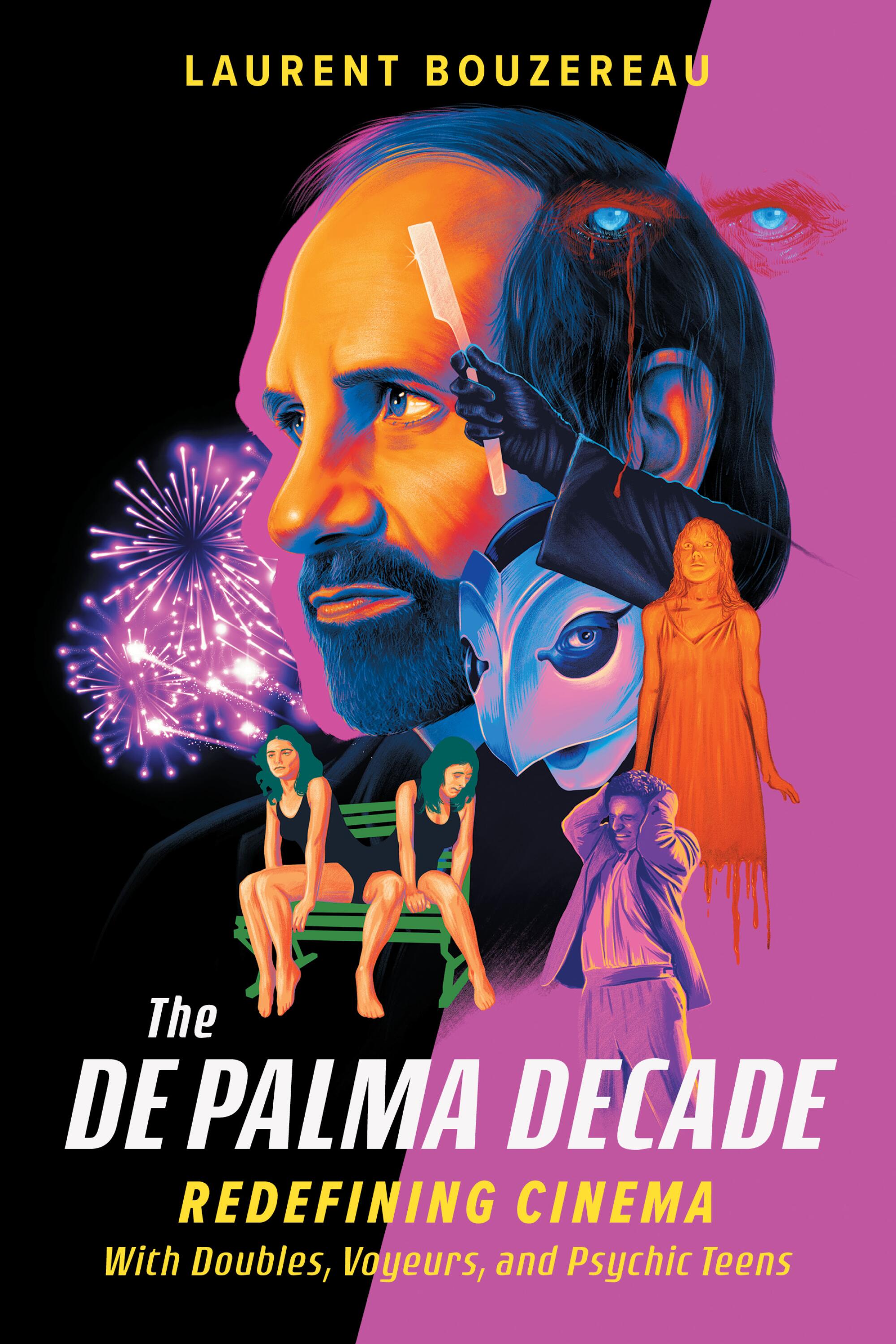
The De Palma Decade
By Laurent Bouzereau
Running Press: 320 pages, $30
If you buy books linked on our site, The Times may earn a commission from Bookshop.org, whose fees support independent bookstores.
Martin Scorsese made his name in the 1970s with dramas about characters living on the fringes of society. Francis Ford Coppola, seeking his own personal projects, almost reluctantly struck paydirt with the first two “Godfather” movies. George Lucas, of course, wrote and directed “Star Wars.” But none had a stranger, more expressive decade than Brian De Palma. With a string of sensational, graphic thrillers and horror movies, including “Sisters” (1972), “Carrie” (1976), “The Fury” (1978) and “Dressed to Kill” (1980), De Palma created his own film language — gory and operatic, kinky and depraved, laden with optical effects (find someone who looks at you the way De Palma looks at a split screen) and often comically indebted to Alfred Hitchcock. Many moviegoers loathe De Palma. Many more love him. But very few find him boring.
And yet, “The De Palma Decade,” the new book out now by author and filmmaker Laurent Bouzereau, somehow makes him seem just that. This is less a critical consideration or biography so much as, to borrow the title of the unnerving Frederick Exley novel, a fan’s notes. Bouzereau, who made the recent (and excellent) Faye Dunaway documentary, “Faye,” really, really likes De Palma. He refers to a scene in “Sisters” as “pure cinematic genius.” Michael Caine’s performance as the transgender psychiatrist/murderer in “Dressed to Kill” is “predictably amazing and daring”; that film’s intricately constructed cat-and-mouse seduction sequence at the Metropolitan Museum of Art — the interiors were actually shot at the Philadelphia Museum of Art — is “simply mesmerizing and bewitching.” John Farris’ source novel for “The Fury” is “fascinating.” Even more, er, fascinating is that such anodyne language can be used to describe a filmmaker who has always been determined to jolt the viewer out of any sense of complacency.
“The De Palma Decade” unfolds as a series of oral histories plus copious plot summary, featuring interviews with De Palma — or, as Bouzereau refers to him near the book’s beginning, “Brian” — and an array of his cast and crew members through the years. Walking through these pages you’ll find the likes of Amy Irving (“Carrie,” “The Fury”), film editor Paul Hirsch (who won an Oscar for cutting “Star Wars”) and Chicago theater veteran Dennis Franz, who, as De Palma devotees know, warmed up for his signature work in “Hill Street Blues” and “NYPD Blue” by playing cops in “The Fury” and, most delightfully, “Dressed to Kill.”
Bouzereau did some reporting, and some of his subjects actually have something to say. De Palma talks about the importance of music in setting the tone for his long, dialogue-free scenes (like that museum sequence). Hirsch riffs on the different approaches taken by “The Fury” stars Kirk Douglas and John Cassavetes: Douglas, who attacked his role with vim, came in hot but fizzled in later takes, while it took Cassavetes, who often booked acting jobs to help pay for the movies he wanted to make himself, about 10 takes to get loose. Nestled between the platitudes of “The De Palma Decade” are some genuine insights into the filmmaking process.
But the author’s unabashed adoration of De Palma can be a hindrance to deeper understanding. Bouzereau touches on the primary controversy surrounding “Dressed to Kill,” that “De Palma conflates transness with mental illness and homicidal behavior.” Caine’s character does indeed come across as a trans person whose conflicted identity leads him to kill. Here we go. Bouzereau is going to ask his hero how he views all of this now. And then … he doesn’t. Instead, De Palma says a little about how his screenplay for “Cruising,” a movie ultimately written and directed by William Friedkin, led to some of his ideas for “Dressed to Kill.” With that, the author lets him skate, onto the next platitude. Early on, Bouzereau writes that he has “no intention here to make a social treaty or statement or defend the controversial aspects of De Palma’s work” (perhaps he means “treatise,” not “treaty”). Fair enough. But the idea of handling such a gleeful provocateur with kid gloves seems to somehow miss the point of De Palma’s work.
Laurent Bouzereau’s unabashed adoration of Brian De Palma can be a hindrance to deeper understanding.
(Travers Jacobs)
The book covers seven films, organized thematically into three sections: The Split (“Sisters” and “Dressed to Kill”), The Power (“Carrie” and “The Fury”) and The Tragedies (“Phantom of the Paradise,” “Obsession” and “Blow Out”). “The Split,” of course, has multiple meanings for De Palma, who used split screens not merely as an aesthetic exercise: Like many an artist of the macabre, going back at least to Edgar Allan Poe, he also made bloody hay out of the theme of doubling, and the terror and instability inherent to the idea of a divided self.
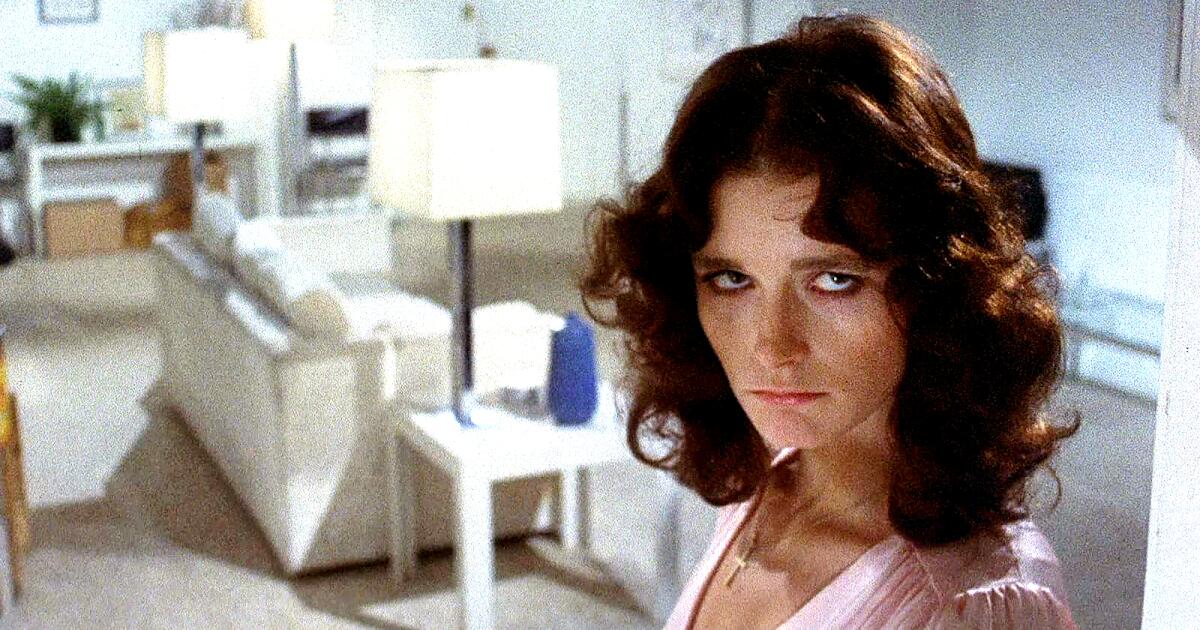
By the time he made “Sisters,” in 1972, De Palma had already done a few scrappy counterculture features, including “Greetings” (1968), “The Wedding Party” (1969) and “Hi, Mom!” (1970). But “Sisters,” a proper freakout starring Margot Kidder, playing conjoined twins, is the first of what we now think of as a De Palma movie: a psychosexual nightmare with madman instincts. Viewed with the hindsight of 52 years, it feels of a piece with other rule-breaking, devil-may-care horror films of the period, including George Romero’s “Night of the Living Dead” (1968), Wes Craven’s “The Last House on the Left” (1972) and David Cronenberg’s “Shivers” (1975).
It is, in other words, the real deal. Paradoxically, it also marks De Palma’s true entry into the sincerest form of flattery, the imitation game. Bouzereau starts his defense early, asking, “Is it fair to label De Palma a copycat? Isn’t he, rather, the legitimate heir to the Hitchcock kingdom?” He may, in fact, be both.
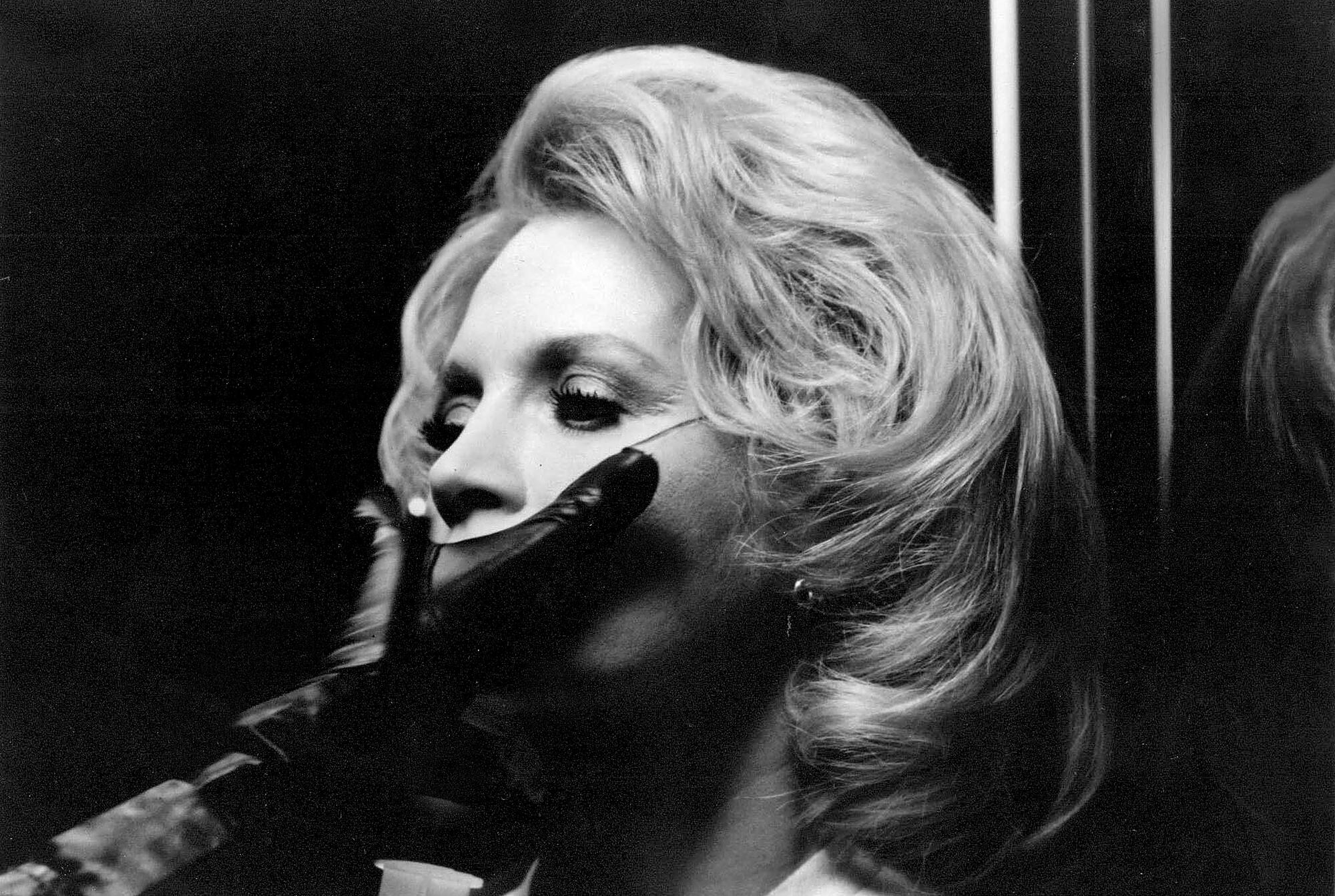
Angie Dickinson is trapped in an elevator by a psychotic killer in director Brian De Palma’s 1980 movie “Dressed to Kill.”
(Filmways Pictures)
De Palma’s slavish emulation of Hitchcock runs through numerous films, and with notable specificity. Someone witnesses a murder in the apartment across the way, a la “Rear Window” (“Sisters,” “Body Double”). A blond star is murdered in a movie’s first act, as in “Psycho” (“Dressed to Kill,” which also throws in a couple of shower scenes and an obtuse expert explaining why a man dresses as a woman). He bows to “Vertigo” on multiple occasions, including “Blow Out” (man suffers the same tragedy twice, unable to prevent murders he has indirectly enabled) and, more directly, “Obsession,” about a grief-stricken man who reconstructs a lost lover. In these movies De Palma is almost like a hip-hop producer, mixing samples of different songs to create a new whole. He is director as collagist.
By focusing on De Palma’s ‘70s output (“Blow Out” and “Dressed to Kill” are technically early-‘80s movies, but exact decades can be imprecise markers of an artist’s thematic output), the book opts to pull up short of the director’s next, in many ways more eclectic, period. The ‘80s brought, among others, the opulence of “Scarface” (the subject of a pair of recent books, by Glenn Kenny and Nat Segaloff), the undiluted sleaze of “Body Double,” the mainstream success of “The Untouchables” and the underrecognized Vietnam War drama “Casualties of War.” If you seek a more comprehensive study, check out Noah Baumbach and Jake Paltrow’s fine 2015 documentary “De Palma.” In “The De Palma Decade,” the filmmaker gets a more precise spotlight. And he couldn’t have asked for a more devoted fan to shine it.
Movie Reviews
Mana Shankara Vara Prasad Garu Review: USA Premiere Report
U.S. Premiere Report:
#MSG Review: Free Flowing Chiru Fun
ADVERTISEMENT
It’s an easy, fun festive watch with a better first half that presents Chiru in a free-flowing, at-ease with subtle humor. On the flip side, much-anticipated Chiru-Venky track is okay, which could have elevated the second half.
#AnilRavipudi gets the credit for presenting Chiru in his best, most likable form, something that was missing from his comeback.
With a simple story, fun moments and songs, this has enough to become a commercial success this #Sankranthi
Rating: 2.5/5
First Half Report:
#MSG Decent Fun 1st Half!
Chiru’s restrained body language and acting working well, paired with consistent subtle humor along with the songs and the father’s emotion which works to an extent, though the kids’ track feels a bit melodramatic – all come together to make the first half a decent fun, easy watch.
– Mana Shankara Vara Prasad Garu show starts with Anil Ravipudi-style comedy, with his signature backdrop, a gang, and silly gags, followed by a Megastar fight and a song. Stay tuned for the report.
U.S. Premiere begins at 10.30 AM EST (9 PM IST). Stay tuned Mana Shankara Vara Prasad Garu review, report.
Cast: Megastar Chiranjeevi, Venkatesh Daggubati, Nayanthara, Catherine Tresa
Writer & Director – Anil Ravipudi
Producers – Sahu Garapati and Sushmita Konidela
Presents – Smt.Archana
Banners – Shine Screens and Gold Box Entertainments
Music Director – Bheems Ceciroleo
Cinematographer – Sameer Reddy
Production Designer – A S Prakash
Editor – Tammiraju
Co-Writers – S Krishna, G AdiNarayana
Line Producer – Naveen Garapati
U.S. Distributor: Sarigama Cinemas
Mana Shankara Vara Prasad Garu Movie Review by M9
ADVERTISEMENT
Entertainment
‘The Night Manager’ Season 2 returns with explosive reveals: ‘Every character’s heart is on fire’
This article contains spoilers for the first three episodes of “The Night Manager” Season 2.
It wasn’t inevitable that “The Night Manager,” an adaptation of John le Carré’s 1993 spy novel, would have a sequel. Le Carré didn’t write one and the six-episode series, which aired in 2016, had a definitive ending.
But after the show’s debut, fans clambered for more. They loved Tom Hiddleston’s brooding, charismatic Jonathan Pine, a hotel manager wrangled into the spy game by British intelligence officer Angela Burr (Olivia Colman). And at the heart of the series was the parasitic dynamic between Pine and his delightfully malicious foe, an arms dealer named Richard Onslow Roper (Hugh Laurie).
The show was so good that even the story’s author wanted it to continue. After the premiere of Season 1 at the Berlin International Film Festival, Le Carré sat across from Hiddleston, a twinkle in his eye, and said, “Perhaps there should be some more.”
“That was the first I’d heard of it or thought about it,” Hiddleston says, speaking over Zoom alongside the show’s director, Georgi Banks-Davies, from New York a few days before the U.S. premiere of “The Night Manager” Season 2 on Prime Video, which arrived Sunday with three episodes, 10 years after the first season. “But it was so extraordinary and inspiring to come from the man himself. That’s when I knew there might be an opportunity.”
Time passed because no one wanted a sequel of less quality. Le Carré died in 2020, leaving his creative works in the care of his sons, who helm the production company the Ink Factory. That same year, screenwriter David Farr, who had penned the first series, had a vision.
“We didn’t want to rush into doing something that was all style and no substance that didn’t honor the truth of it,” Farr says, speaking separately over Zoom from London. “There was this big gap of time. But I had this very clear idea. I saw a black car crossing the Colombian hills in the past towards a boy. I knew who was in the car and I knew who the boy was.”
That image transformed into a scene in the second episode of Season 2 where a young Teddy Dos Santos (Diego Calva) is waiting for his father, who turns out to be none other than Roper. From there, Farr fleshed out the rest of the season, as well as the already-announced third season. He was interested in the relationship between fathers and sons, an obsession of Le Carré’s, and in how Jonathan and Roper would be entangled all these years later.
Teddy Dos Santos (Diego Calva) is revealed to be Roper’s son.
(Des Willie / Prime Video)
“Teddy crystallized very quickly in my head,” Farr says. “All of the plot came later — arms smuggling and covert plans for coups in South America. But the emotional architecture, as I tend to call it, came to me quite quickly. That narrative of fathers and sons, betrayal and love is what marks Le Carré from more conventional espionage.”
“There was enormous depth in his idea,” Hiddleston adds. “It was a happy accident of 10 years having passed. They were 10 immeasurably complex years in the world, which can only have been more complex for Jonathan Pine with all his experience, all his curiosity, all his pain, all his trauma and all his courage.”
Farr sent scripts to Hiddleston in 2023 and planning for Season 2 began in earnest. The team brought Banks-Davies on in early 2024, impressed with her vision for the episodes. Hiddleston was especially attracted to her desire to highlight the vulnerability of the characters, all of whom present an exterior that is vastly different than their interior life.
“Every character’s heart is on fire in some way, and they all have different masks to conceal that,” Hiddleston says. “But Georgi kept wanting to get underneath it, to excavate it. Explore the fire, explore the trauma. She came in and said, ‘This show is about identity.’ ”
“I’m fascinated with how the line of identity and where you sit in the world is very fragile,” Banks-Davies says. “I’m fascinated by the strain on that line. In the heart of the show, that was so clearly there. I’m also always searching for what brings us together in a time, particularly in the last 10 years, that’s ever more divisive. These characters are all at war with each other. They’re all lying to each other. They’re deceiving each other for what they want. But what brings them together … instead of pushes them apart?”
The new season opens four years after the events of Season 1 as Jonathan and Angela meet in Syria. There, she identifies the dead body of Roper — a reveal that suggests his character won’t really be part of Season 2. After his death, Pine settles into a requisite life in London as Alex Goodwin, a member of an unexciting intelligence unit called the Night Owls.
Angela (Olivia Colman) and Jonathan (Tom Hiddleston) meet in Syria, four years after the events of Season 1.
(Des Willie / Prime Video)
“He’s half asleep and he lacks clarity and definition,” Hiddleston says. “His meaning and purpose have been blunted and dulled. He is only alive at his greatest peril, and the closer his feet are to the fire, the more he feels like himself. He’s addicted to risk, but also courageous in chasing down the truth.”
That first episode is a clever fake-out. Soon, Jonathan is on the trail of a conspiracy in Colombia, where the British government appears to be involved in an arms deal with Teddy. It quickly becomes the globe-trotting, thrill-seeking show that captivated fans in Season 1. There are new characters, including Sally (Hayley Squires), Jonathan’s Night Owls’ partner, and Roxana Bolaños (Camila Morrone), a young shipping magnate in league with Teddy, and vibrant locations. Jonathan infiltrates Teddy’s organization, posing as a cavalier, rich businessman named Matthew Ellis. He believes Teddy is the real threat. But in the final moments of Episode 3 there’s another gut-punching fake-out: Roper lives.
“The idea was: We must do the classic thing that stories do, which is to lose the father in order that he must appear again,” Farr says. He confirms there was never an intention to make “The Night Manager” Season 2 without Laurie. “What makes it work is this feeling that you are off on something completely new,” Farr says. “But that’s not what I want this show to be.”
Hiddleston compares it to the tale of St. George and the dragon. “They define each other,” he says. “At the end of the first series, Jonathan Pine delivers the dragon of Richard Roper to his captors. But after that, he is lost. The dragon slayer is lost without the presence of the dragon to define him. And, similarly, Roper is obsessed with Pine.”
Jonathan realizes the truth as he sneaks up to a hilltop restaurant to listen in on a meeting. Banks-Davies opted to shoot the entire series on location, and she kept a taut, quick pace during filming because she wanted the cast to feel the tension all the way through. She and Hiddleston had a shared motto on set: “There’s no time for unreal.” Thanks to her careful scene-setting, Roper’s arrival and Jonathan’s reaction were shot in only 10 minutes.
“I felt everything we talked about for months and everything we’d shot up until that point and everything we’d been through was in that moment,” Banks-Davies says. “There are so many emotions going on, so much being expressed, and it’s just delivered like that. But it was hard to get us there.”
Farr adds, “It is the most important moment in the show in terms of everything that then follows on from that.” He wrote into the script that Roper’s voice would be heard before Laurie was seen on camera. “It’s more frightening when something is not instantly fully understood and seen,” he says. “You hear it and you think, ‘Oh, God, I know that [voice].’ ”
Hiddleston wanted to play a range of emotions in seconds. He describes it as a “moment of total vitality.” Right before the cameras rolled, Banks-Davies told Hiddleston, “The dragon is alive.”
“After all the work, that’s all I needed to hear,” he says. “This moment will be memorable to him and he’ll be able to recall it in his mind for the rest of his life. He is wide awake, and reality is re-forming around him. His sense of the last 10 years, his sense of what he can trust and who he can trust, the way he’s tried to evolve his own identity — the sky is falling. There is a mixture of shock, grief, disenchantment, disillusionment, surprise and perhaps even relief.”
As soon as Jonathan arrives in Colombia and meets Teddy, a calculating live-wire dealing with his own sense of isolation, he becomes more himself. Hiddleston expresses him as a character desperate to feel the edge. Despite his layered duplicity, Jonathan understands and defines himself by courting risk.
Teddy (Diego Calva), Jonathan (Tom Hiddleston) and Roxana (Camila Marrone) get close. “This is a character who pushes his body to the limit and sacrifices enormous parts of himself at great personal cost to his body and soul,” Hiddleston says of Jonathan. (Des Willie/Prime Video)
“This is a character who pushes his body to the limit and sacrifices enormous parts of himself at great personal cost to his body and soul,” Hiddleston says. “He goes through a lot of pain, but also there’s great courage and resilience and enormous vulnerability. That’s what I relish the most, these are heightened scenarios that don’t arise as readily and in my ordinary life.”
“I could feel that shooting moments like this,” Banks-Davies adds. “Like, ‘It’s right there. Are we going to get it?’ Our whole show exists in that space between safety and death.”
Roper’s presence sends a ripple effect across the remaining three episodes. As much as Jonathan and Teddy are in opposition, they are parallel spirits, both with complicated relationships to Roper. Hiddleston describes them as “a mirror to each other,” although they can’t quite figure out what to be to each other. And neither knows who the other person really is.
“It is interesting, isn’t it, that my first image of him was 7 years old and that stays in him all the way through,” Farr says. “This sense of this boy who is seeking something — an affirmation, a place in the world. And he’s done terrible things, as he says to Pine in Episode 3. All of that was present in that first image I had.”
Hiddleston adds, “There is a competition, too, because Roper is the father figure, and they both need him in very different ways. Teddy is a new kind of adversary because he’s a contemporary. He’s got this resourcefulness and this ruthlessness, but also this very open vulnerability, which he uses as a weapon. They recognize each other and see each other.”
The characters’ dynamic is at the root of what drew Banks-Davies to the series. “It’s not about where they were born, it’s not about their economic status or their religion or their cultural identity,” she says. “It’s about two men who are lost and alone and solitary, and see a kinship in that. They are pulled together on this journey.”
Season 2, which will release episodes weekly after the first drop, will lead directly into Season 3, although no one involved will spill on when it can be expected. Hopefully they will arrive in less than a decade.
“It won’t be as long, I promise,” Farr says. “I can’t tell you exactly when, because I don’t know. But definitely nowhere as long.”
“That was the thrill for us, of knowing that when we began to tell this story, we knew we had 12 episodes to tell it inside, rather than just six,” Hiddleston says. “So we can be slightly braver and more rebellious and more complex in the architecture of that narrative. And not everything has to be tied up neatly in a bow. There’s still miles to go before we sleep, to borrow from Robert Frost, and that’s exciting. It’s exciting for how this season ends, and it’s exciting for where we go next.”
Movie Reviews
Primate
-
Detroit, MI1 week ago2 hospitalized after shooting on Lodge Freeway in Detroit
-
Technology5 days agoPower bank feature creep is out of control
-
Dallas, TX3 days agoAnti-ICE protest outside Dallas City Hall follows deadly shooting in Minneapolis
-
Dallas, TX6 days agoDefensive coordinator candidates who could improve Cowboys’ brutal secondary in 2026
-
Delaware2 days agoMERR responds to dead humpback whale washed up near Bethany Beach
-
Iowa5 days agoPat McAfee praises Audi Crooks, plays hype song for Iowa State star
-
Health1 week agoViral New Year reset routine is helping people adopt healthier habits
-
Nebraska4 days agoOregon State LB transfer Dexter Foster commits to Nebraska
