World
EU remains 'fully committed' to lithium deal despite unrest in Serbia


The EU Commission remains committed to strategic partnership on raw materials with Serbia despite recent protests, while Emmanuel Macron and Ursula von der Leyen are rumoured to be set to visit Belgrade.
The European Commission is steadfast in its intention to pursue a strategic partnership on raw materials with Serbia despite concerns over president Aleksandar Vučić’s claims that western powers lie behind widespread protests against a planned lithium mine, a spokesperson for the EU executive said today.
Commission vice-president Maroš Šefčovič and German Chancellor Olaf Schulz signed a memorandum of understanding in Belgrade last month, just days after Belgrade gave the green light for Anglo-Australian mining corporation Rio Tinto to resume a lithium mining development in the west of the country.
The EU executive said today that it remains “fully committed” to the partnership – the latest in over a dozen Brussels has signed to reduce dependence on China for access to the critical raw materials essential for electric car batteries and Europe’s ongoing energy transition.
“I don’t think we can quantify the importance of the memorandum of understanding with Serbia,” the Commission’s spokesperson on trade Johanna Bernsel told reporters today after president Ursula von der Leyen said securing access to cheap raw materials would be a key goal of the Clean Industrial Deal, the flagship policy agenda for her second mandate.
“What I can say is that we remain fully committed both to the partnership as such and to the environmental standards, to the fact that the environmental standards have to be compatible with EU law,” Bernsel said.
But such rhetoric, which EU leaders have been using since the deal was struck on 18 July, has cut little ice with opponents of Rio Tinto’s plans to open Europe’s largest lithium mine in the Jadar valley 100 kilometres west of the Serbian capital.
Widespread protests by environmentalists and opponents who fear Serbians will receive little benefit of the project culminated on 10 August when tens of thousands marched in the capital, and smaller groups later blocked railway lines into the capital.
There were reports of dozens of arrests, with protest organisers complaining of what they saw as coordinated police action and surveillance – while President Vučić railed against unnamed western powers he said were waging a “hybrid war” against his government.
Vučić said Russian intelligence services had warned him that unspecified governments were looking to foment “mass unrest and a coup” to unseat him from power – echoing assertions the Serbian president made back in February during a television appearance.
The European Commission dismissed such claims. “The European Union absolutely rejects any allegations that it would be involved in any kind of illegal or illegitimate activities linked to foreign interference,” foreign affairs spokesperson Peter Stano said.
EU leaders are keenly watching developments in Serbia, historically an ally of Russia which in May hosted Chinese leader Xi Jinping, with Vučić having said he expects a visit later this month from French president Emmanuel Macron whom he met on the sidelines of a summit in the UK in July.
WIDGET: Big summit of European leaders kicks off, focusing on Ukraine and EU-UK ties | Euronews
Macron said of the meeting that he had expressed his “full support” for Serbia’s integration into the EU, while stressing the importance of normalising relations between Belgrade and the majority ethnic Albanian enclave of Kosovo – whose independence Belgrade has yet to recognise and whose government is currently facing EU criticism over plans to open a bridge in the divided city of Mitrovica.
The French foreign ministry did not respond to repeated requests for confirmation that this visit may have been scheduled for next week. Similarly, the European Commission would not confirm whether president von der Leyen is planning her own visit to Belgrade in the coming weeks.



new video loaded: Moscow Tanker Blast Most Likely Russian Missile, Video Shows
By James McManagan, Paul Sonne, Malachy Browne and Jackeline Luna
June 19, 2026
World
Man charged with attempted murder, released after allegedly forcing toddler into crocodile enclosure at zoo

Man FORCES child into crocodile enclosure
A British man has been arrested after allegedly forcing a 3-year-old boy into a crocodile enclosure at a zoo. The child suffered critical injuries, and authorities say the suspect did not know the boy as the investigation continues.
NEWYou can now listen to Fox News articles!
A man was released from custody on Friday after he was charged with attempted murder for allegedly forcing a 3-year-old boy into a crocodile enclosure at a zoo.
Cambridgeshire police said that the man, who remains unidentified, wasn’t fit to be interviewed.
The boy suffered critical injuries in the incident at Johnsons of Old Hurst, a farm and zoo in Huntingdon, England, north of London.
The 30-year-old man will remain on bail until Sept. 30, pending further inquiries.
GEORGIA MOM’S WALMART TRIP DEVOLVES INTO ‘TUG-OF-WARRING’ IN DESPERATE ATTEMPT TO SAVE HER SON
A crocodile rests inside an enclosure at Johnsons of Old Hurst, a farm and zoo in Old Hurst, Cambridgeshire, Britain, on April 14, 2026. (Dorota Dee Trajdos/Reuters)
“The man, who is not known to the victim, was assessed as not being fit for interview,” police said in a statement.
The boy is in stable condition, after reportedly suffering a broken arm and pelvis.
He was saved from the crocodile by Tracey Johnson, the wife of the zoo’s owner.
MOTHER JUMPS INTO WATER TO SAVE 4-YEAR-OLD DAUGHTER WHO FELL BETWEEN CRUISE SHIP AND DOCK
“I know Tracey very well and she’s a lovely lady and it’s nothing more than I’d expect from her,” a local told BBC News. “She’d always put her own life at risk to save someone else. She’s an extraordinary lady and very brave.
The villager added that Johnson put herself in “immense danger” during the rescue.
The owners said their tropical house would remain closed until further notice.
Crocodiles rest inside an enclosure at Johnsons of Old Hurst farm and zoo in Old Hurst, Cambridgeshire, Britain, on April 14, 2026. (Dorota Dee Trajdos/Reuters)
“Our thoughts and prayers are with the boy and his family following the incident that occurred today,” the owners wrote on social media.
Johnsons of Old Hurst is a farm and zoo north of London in Huntingdon, England. (Google Maps)
Huntingdonshire district councillor Charlotte Lowe said she couldn’t “fathom how it’s happened because they’ve got all the right protection and safety equipment, for want of a better word, in there,” The Guardian reported.
CLICK HERE TO DOWNLOAD THE FOX NEWS APP
Fox News Digital has reached out to the Cambridgeshire Constabulary for comment.

Published on
US President Donald Trump has doubled down on his comments on Italian Prime Minister Giorgia Meloni, saying she asked him “over and over” for a photo when the pair met at the G7 summit in France earlier this week.
ADVERTISEMENT

ADVERTISEMENT
Following the summit, Trump told an Italian journalist that he “felt sorry for Meloni” after she “begged me to take a picture with her”.
Meloni hit back in a video posted to social media, branding Trump’s claims as “completely made up” and insisting that neither she nor Italy begs anyone for anything.
The once close pair’s relationship has grown increasingly fractious in recent months, particularly since Rome refused to provide the US support for its operations in Iran and after Meloni defended Pope Leo XIV, who was criticised by the Trump administration over his remarks on the war and the US’s immigration policies.
“Italian Prime Minister Giorgia Meloni asked, over and over, for a picture with me during the G-7 meeting in France,” Trump wrote on his Truth Social account on Saturday. “She is doing poorly in Italy with her level of popularity, possibly because she turned down the United States of America, a Country that truly loves and protects Italy, when it came to denying Iran from obtaining or developing a Nuclear Weapon”.
“Now, after the United States defeated Iran militarily, she wants to be friends again in order to get her “numbers up.” No thanks!!!” Trump added.
-

 Florida3 minutes ago
11 Most Charming Towns In Florida
-

 Georgia11 minutes ago
Democrats block local property tax referendums as Georgia lawmakers clash over affordability – The Current
-

 Hawaii18 minutes ago
Office of Hawaiian Affairs Responds to Senate Bill Involving Pōhakuloa – Big Island Video News
-

 Idaho21 minutes ago
8,600-Acre Wildfire Decimates Massive Idaho Salvage Yard With 8,000 Cars
-

 Illinois26 minutes ago
Illinois GOP chair says Obama Center is political operation on public land | Fox News Video
-

 Indiana33 minutes ago
Madam Walker Legacy Fest block party celebrates Black excellence with food, music, and community
-

 Iowa36 minutes ago
Blocked Iowa HHS director resigns but is appointed deputy director
-
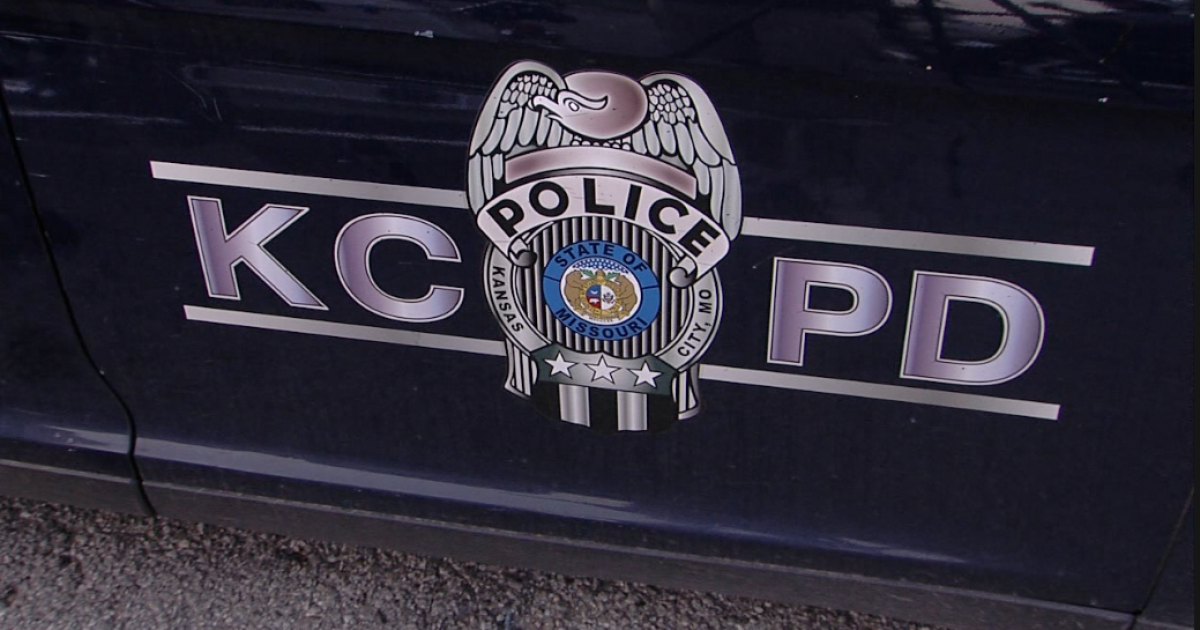 Kansas41 minutes ago
1 man dies after being shot June 9 in Kansas City, Missouri; police working to identify person of interest

