San Diego, CA
Robert Gage Carr


Robert Gage Carr
OBITUARY
Robert Carr was the youngest son of Milas Walter Carr and Grace Hamerly Carr. He lived his entire life in San Diego. He was beloved by many. A backyard memorial service will be held on Sep. 14, 2024. Contact his brother Michael for details ( mmcarr2@gmail.com )


I spent time in a hot dog stand on the edge of San Diego Bay, looking out a window that mattered. Mattered to a kid whose mom taught him to fish on this pier. They’d turn on a little transistor radio, find a signal through the static, stare at the water, and talk life and his dad. Dennis Borlek’s dad was out there, somewhere, commanding a naval submarine through god knows what. When his dad would dock in Point Loma weeks or months later, Borlek biked down the street along Shelter Island to see him and steal back stolen moments.
Later, Borlek helped midwife the craft beer scene, managing seminal spots like Small Bar and Liar’s Club. Wondering what to do with the rest of his life, he went back to that pier and saw a for-lease sign on the bait and tackle shop. He tore through the public library and spent the whole night learning how to write a business plan (he had no clue). A couple days later he found himself at the intimidating end of a massive conference table, pitching his dream to the very official Port of San Diego executives.
They gave it to the San Diego kid. Not sure if they ever imagined Fathom Bistro—the tiniest, mightiest craft beer and hot dog stand, filled with spear guns, ocean monster figures, and seafaring oddities—would still be there 13 years later, let alone be a local’s favorite. It’s the most San Diego place in the world. Borlek taught himself to make kimchi and puts it on his Explodo Dog. His friend Kevin, who played with him in a punk band, dresses as a pirate and works the door on weekends. Has done so for years.
And when Borlek stares out the window, he can see the sub base and the memories of his dad.
Later, a few beach towns over, I sat in an employee break area—a shaded back-alley alcove with grape vines that serves as an escape garden for the crew. The place used to be a taco shop. Owner Crystal White points to a window of a single bedroom behind the dough-mixing part of the kitchen. She lived there when she started, often finding herself on the roof at midnight, staring at a broken compressor, trying to will it into working.
A blue-collar kid who fell in love with bread, she moved to San Diego with a business plan and zero cash. Banks don’t loan money to bread dreamers. Fate, kismet, and door-knocking found her enough investors. In the weeks leading up to opening that dream—perfect croissants, kouign-amanns, sandwiches, pizzas, baguettes fermented with wild La Jolla yeasts—she was outside hammering and painting. Locals would pause to ask what she was putting into the spot. “A bakery!” she’d reply.
“Oh, we don’t need one of those,” they’d say. Eight years later, White has moved out of the bedroom, and Wayfarer Bread is one of the best bakeries in the land. I ask if she’ll ever open another location. “I grew up dirt poor,” she says. “This has surpassed even my wildest dreams. This is enough. Please make sure you mention Emma Koehler, K-O-E-H-L-E-R, my kitchen manager. She deserves the credit now.”
These are the people and the stories behind “Best Restaurants.” This issue is dedicated to them, the culture they’ve gritted into being. On the surface, the annual tradition—naming a list of “winners,” my favorite places and my honest answers to “who has the best taco/pizza/Thai…”—is a good-natured competition among friends. But the deeper point is that it’s a way to highlight hundreds of places that have risked it all to build a little magic across the city. Sure, some owners were born in the stars and used that dust to make more stars. But many or most restaurants started with a scrappy go-getter or two. And now those places are filled with dozens or hundreds of people who love the work, show up day in and day out, for years. People like Koehler and the ones we feature in our story, “Behind the Line”.
So please use this list as a beachhead. Try these places, email me ([email protected]) to say “thanks” or “you truly messed up.” Eat, drink, commune, say hello, get to know the stories of the people making your favorite food. Make your own list, and share it with us.
PARTNER CONTENT

Chef Aidan Owens Thinks Your Fish is Boring
A Holistic Approach to Women’s Wellness and Leadership
(Note: Fathom didn’t win anything, probably because there’s no category for “Best Hot Dog Craft Beer Stand on a Pier with a Pirate,” which is a shortcoming on our part. So I put him here because he should be a part of any conversation about best San Diego things.)
San Diego, CA
Automated license plate readers and public surveillance cameras are coming to Imperial Beach

The city of Imperial Beach will soon install four Automated License Plate Readers and two additional “public safety cameras” in hopes of improving public safety.
On June 3, Imperial Beach city councilmembers voted to enter into an agreement with the San Diego Sheriff’s Office to place four license plate readers manufactured by surveillance giant Flock Safety at four proposed intersections, and they will also install two cameras in the city to monitor for criminal behavior.
The cameras, part of a two-month pilot program, seek to improve public safety in the South Bay coastal town.
The four proposed locations for the license plate cameras are Imperial Beach Boulevard and 13th Street, Palm Avenue and 13th Street, 13th Street and Elm and 9th Street and Elm Ave.
The proposed locations for the public cameras are on the median of Palm Avenue and 8th Street, Palm Avenue and Seacoast Drive and Imperial Beach Boulevard and Seacoast Drive.
For the license plate readers, city staff said they have proven their usefulness in cities and unincorporated areas throughout San Diego County for years.
“[License Plate Reader] technology has contributed to multiple arrests, including identifying suspects’ vehicles involved in retail thefts, gas station thefts, and vehicle burglaries. [License Plate Readers] have also assisted in identifying a suspect vehicle in an international hit-and-run homicide in Lemon Grove and a vehicle involved in a [pellet] gun case in Encinitas,” reads the city’s staff report to the city council.
City staff said the Sheriff’s Office recommends a total of eight license plate readers, but the city opted for four.
“This is a pilot program. We have to consider the trade-off of privacy for security,” said public speaker Vivian Dunbar. “People have been falsely arrested and falsely identified through the use of these cameras.”
Imperial Beach Mayor Pro-Tem Jack Fisher said that while he understands the privacy concerns, the benefits outweigh any negatives. “This is one of those programs where IB is not leading the charge. A few weeks back, everyone was aware of the tragedy that happened at the Islamic Center of San Diego and the license plate readers were key in tracking those individuals down. It’s good for us to do our part.”
Added Fisher, “The era of big brother has passed, if you have a cell phone, you know there is already tracking.”
The council unanimously voted in favor of the pilot program.

Utility man Samad Taylor was selected to the Major League roster from Triple-A El Paso in a corresponding move.
-

 Health6 minutes ago
Popular weight-loss diet shows surprising impact on serious mental health condition
-

 Sports9 minutes ago
NBA bans two fans for life after court invasion during Knicks-Spurs Game 1
-

 Technology14 minutes ago
Charter breach warning: What customers should know
-
 Business21 minutes ago
Trump announces new coal export terminal in Oakland
-
 Entertainment24 minutes ago
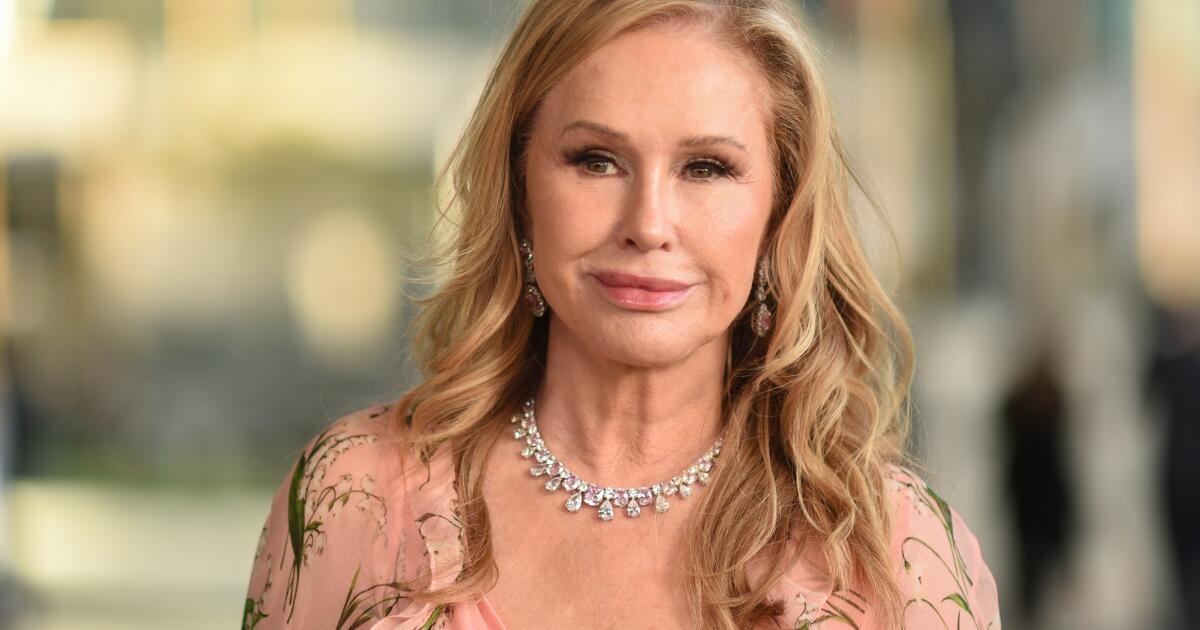
Kathy Hilton won’t be WeHo Pride’s grand marshal after backlash from community
-

 Lifestyle29 minutes ago
OTB Takes Full Control of Viktor & Rolf
-
 Politics36 minutes ago
Senate rejects an initial attempt to ban Trump’s $1.8-billion ‘anti-weaponization’ fund
-
 Science39 minutes ago
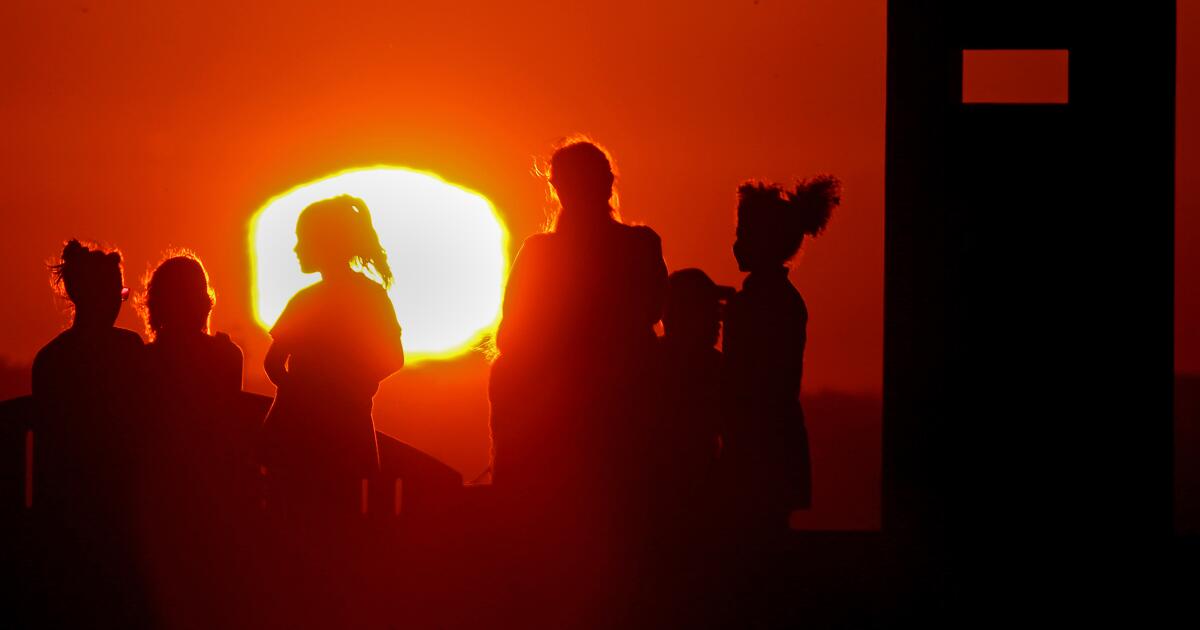
Emergency room visits during heat waves available to the public in ‘near-real time’ in L.A. County

