Restaurants across Dallas-Fort Worth are doubling down on their patriotism for the Fourth of July and America’s 250th birthday, firing up limited-time deals and celebratory menus that range from elevated, reservation-only experiences and skyline dinners to casual fast-food specials, family meal packs, and grab-and-go treats designed for star-spangled celebrations. Special props to those that have found a way to work in “1776” and “250.”
Here are the DFW spots offering patriotic specials and deals. (Note: This list will grow as more are announced closer to the holiday.) For a list of top 4th of July events and fireworks, go here.
Black Sheep Coffee is celebrating America’s birthday over Fourth of July weekend with $4 matcha drinks from July 3-5. The special is good for small Iced Vanilla Matcha, Iced Blueberry Matcha, and Iced Strawberry & Cream Matcha drinks, with a $1 upgrade to a 16-ounce medium. The offer is available in-store and through the app at all four DFW locations.
Cantina Laredo is bringing back its patriotic USA ‘Rita for the Fourth of July weekend. Available July 3-5 at the Addison and Frisco locations, the festive frozen cocktail puts a red, white, and blue spin on the restaurant’s signature Casa ‘Rita with layers of Blue Curaçao and strawberry purée.
USA ‘Rita at Cantina LaredoPhoto courtesy of Cantina Laredo
El Chico is spicing up Independence Day weekend with Family Meal Packs available July 4-5 at its Rockwall location only (503 Interstate 30, Rockwall). Options include Family Fajitas ($73.99) with chicken, steak, or both; Family Tacos ($47.99) with 12 tacos and sides of rice and refried beans; and Family Enchiladas ($49.99) with a choice of beef, cheese, spinach, or chicken enchiladas, all serving six to eight people.
Ford’s Garage, the Plano burger and craft beer restaurant inspired by the heritage of the Ford Motor Company, is celebrating America’s 250th with a patriotic meal deal available July 1-4: an American Standard Burger, fries, and select draft beers or a soft drink for for $17.76, in tribute to the nation’s founding in 1776.
HTeaO tea shops are celebrating the Fourth of July with a pair of patriotic summer specials. Through Labor Day, the tea chain is serving a limited-time Blue Razzler Energy Refresher topped with vanilla cold foam and red, white, and blue sprinkles in a commemorative America’s 250th cup. From July 1-4, participating locations will also offer three gallons of freshly brewed tea for $17.76, a nod to the year the United States declared its independence.
JD’s Chippery is celebrating Independence Day with festive Fireworks Cookie Cakes, available in a variety of sizes and cookie flavors with hand-decorated patriotic designs. The bakery’s Preston Royal location is also hosting a daily Cookie Happy Hour through July 31 from 5-7 pm, featuring a buy-one, get-one-free cookie deal.
JW Steakhouse at the JW Marriott Dallas is marking Independence Day with a four-course dinner for two on July 4. Priced at $195 per couple, the menu includes buffalo bison cigars and shrimp ceviche tostadas, a toasted farro salad with Fredericksburg peaches, a pepper-crusted tomahawk steak with charred cipollini onions and black garlic truffle purée, and chipotle chocolate cake with Garrison Brothers bourbon cherry sauce. Optional wine pairings are available for an additional charge.
Kessaku will offer a Fourth of July experience with limited window seating atop The National in downtown Dallas. Guests can reserve exclusive window tables with a $250 deposit, securing panoramic skyline and fireworks views from one of Dallas’ highest dining destinations.
Luckys Diner on Oak Lawn Avenue is celebrating Independence Day with a Stars, Strips & Sausage special available July 1-4. The $10.49 meal includes a grilled sausage plate with potato salad and pinto beans, with the option to add a slice of apple pie.
Monarch is marking Independence Day with Stars, Stripes & Skyline, a Fourth of July celebration atop The National on July 4. The experience features a prix-fixe dinner priced at $150 per person (with a $55 children’s menu), served from 5:30-10 pm, along with optional window seating for fireworks views. The menu will include dishes such as wagyu filet, wood-grilled branzino, hamachi crudo, hearth-grilled lamb ribs, and a shared s’mores dessert. Monarch is also offering a limited-time gift card promotion over the July 4 weekend: purchase a $250 gift card and receive a $50 bonus card for a future visit, available July 4-5.
Nothing Bundt Cakes is celebrating America’s 250th birthday with a lineup of festive cakes and patriotic-themed desserts. Seasonal offerings include a patriotic decorated cake, Fireworks and Freedom Bundtini toppers, and the return of S’mores Made With Hershey’s through July 19, featuring chocolate cake with milk chocolate chips, marshmallows, and graham streusel. From July 3-5, Bundtastic Rewards members can earn 250 bonus points on any purchase as part of the holiday promotion.
 Nothing Bundt Cakes are getting patriotic for the 4th.Photo courtesy of Nothing Bundt Cakes
Sonic is celebrating America’s 250th with a limited-time America $2.50 Menu available through July 12. Participating locations are offering fan favorites for $2.50 each, including the returning Red, White & Blue Slush Float, Jr. Double Cheeseburger, All-American Hot Dog, and medium onion rings. The chain is also serving drinks in limited-edition commemorative cups.
The Statler in downtown Dallasis celebrating Independence Day and America’s 250th birthday on July 4 with all-day dining, drink specials, and rooftop festivities across its venues, including Overeasy, Scout, and Waterproof. Overeasy is offering breakfast specials like BBQ Brisket Benedict, Red, White & Blue Pancakes, and Firecracker Omelets from 7 am-2 pm. Later in the day, Scout and Waterproof will serve classic American fare such as burgers, ribs, and smoked sausage alongside themed cocktails like Uncle Sam’s Punch, Star Spangled Spritz, and The Patriot. The celebration culminates at Waterproof with a rooftop pool and fireworks watch party from 7 pm-1 am, featuring a $35 cover charge, live entertainment, and patriotic frozen treats and cocktails.



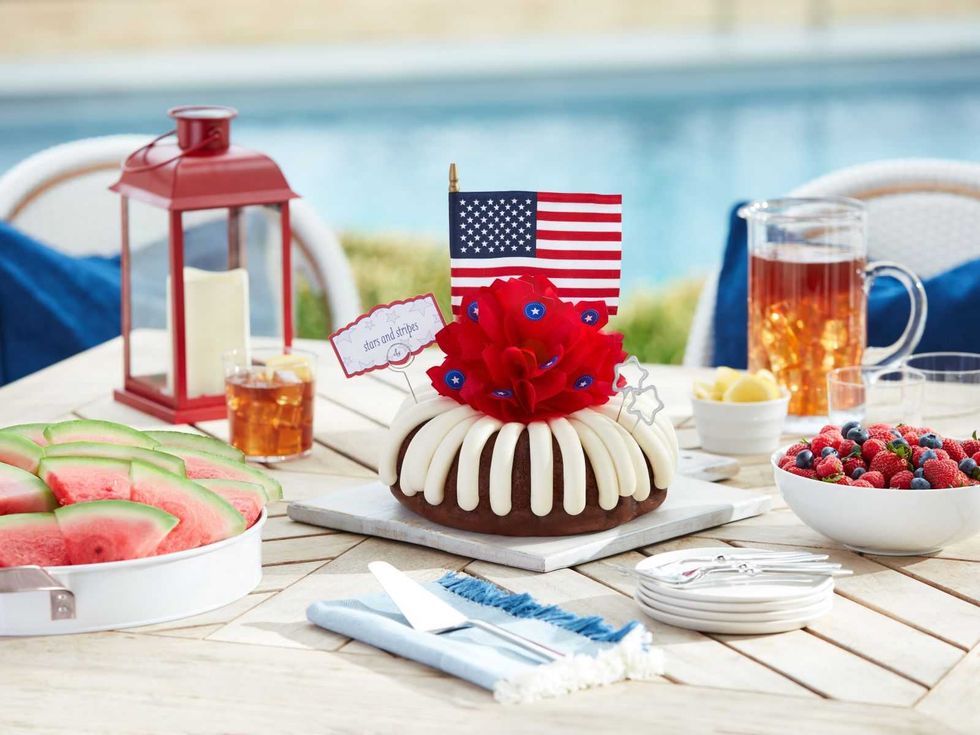 Nothing Bundt Cakes are getting patriotic for the 4th.Photo courtesy of Nothing Bundt Cakes


