Science
Jury finds stone companies at fault in lawsuit by countertop cutter sick with silicosis

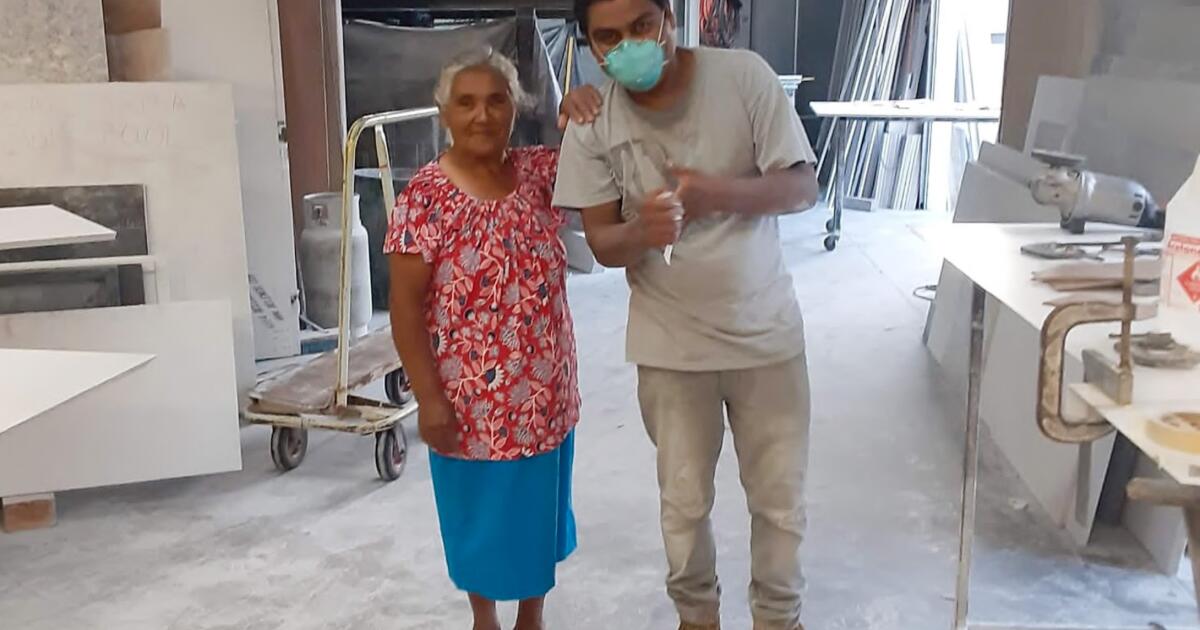
A Los Angeles County jury found businesses that make or distribute engineered stone at fault Wednesday for the suffering of a 34-year-old stonecutter afflicted with an incurable disease.
In a decision watched closely by silicosis experts and the stone industry, jurors deliberating at Stanley Mosk Courthouse in downtown L.A. decided largely in favor of Gustavo Reyes Gonzalez, who was diagnosed with silicosis and had to undergo a double lung transplant after years of cutting engineered stone countertops.
The decision followed deliberations that spanned five days of the multi-week trial. Before the verdict, the two sides in the case had agreed that economic losses for Reyes Gonzalez exceeded $8 million.
The jury decided that other damages — which could include physical pain, mental suffering and emotional distress — amounted to more than $44 million. However, because the jury did not deem the defendants wholly responsible for those damages, they will not be collectively liable for the full amount.
It concluded that Caesarstone USA bore 15% of the responsibility, Cambria 10% and Color Marble 2.5%. The court will ultimately determine how much each defendant must pay.
Reyes Gonzalez is among scores of California countertop cutters who have sued companies like Caesarstone and Cambria after falling ill with silicosis, which is caused by inhaling tiny particles of crystalline silica.
His case was the first to go to trial, according to his attorneys. It tested whether companies that manufacture or distribute slabs of artificial stone, commonly marketed as quartz, could be held responsible for the ravages of silicosis, an ancient disease now emerging among countertop cutters barely in middle age.
Scientists have linked the eruption of silicosis cases among stonecutters to the booming popularity of engineered stone, which is typically much higher in lung-scarring silica than natural stone such as granite or marble. In California, more than a dozen countertop cutters have died of silicosis in recent years. In a recent study of the emerging cases and fatalities, researchers found the median age at death was 46.
Attorneys for Reyes Gonzalez argued that the companies had failed to provide sufficient warning about the dangers of cutting the slabs and that the risks far outweighed the benefits of their products. Gilbert Purcell, one of his lawyers, told the jury that engineered stone has “nasty, nasty risks” that had not been properly disclosed.
“A company should never needlessly cause risk to others,” Purcell said, “and that’s what they did.”
For instance, Purcell argued, Cambria had failed for a decade and a half to warn that silica dust could be an invisible hazard. How can workers avoid breathing dust, he argued, “when you can’t even know you’re breathing it because it’s invisible?”
A cloud of dust envelops a countertop fabricator cutting engineered stone at a Sun Valley shop last year.
(Brian van der Brug / Los Angeles Times)
Lawyers representing companies that make or distribute engineered stone argued that the operators of the Orange County workshops where Reyes Gonzalez worked were to blame. If they had used the proper protections, he would not have gotten silicosis, said Peter Strotz, an attorney representing Caesarstone USA.
“They knew what they had to do. They didn’t do it. … Worst of all, they deceived Mr. Reyes Gonzalez. They led him to believe he would be protected when he was not,” Strotz told the jury. He argued Caesarstone USA had done its part by providing safety information and should not be blamed for the “misuse” of its products.
Cambria attorney Lindsay Weiss said the company had provided warnings, including labels on the slabs themselves, and offered free training to the “fabricators” who cut, grind and polish the material to shape it into countertops.
She held up a sample of its quartz surfacing material to the jury, telling them it was safe. “The problem is when people don’t follow the law when they handle this product,” Weiss said.
And Color Marble, a distributor, argued there was no proof that Reyes Gonzalez had cut or polished slabs sold by its company. The jury found Color Marble liable for negligence — as it did Caesarstone USA and Cambria — but did not deem it liable for other claims for product liability as it had for those firms.
The lawsuit initially targeted a long list of companies, but all but three — Caesarstone USA, Cambria and Color Marble — were dismissed or settled before the jury reached a verdict. Attorney James Nevin, who represents Reyes Gonzalez, said most had “resolved the case pursuant to confidential agreements.”
Strotz, representing Caesarstone USA, declined to comment on the verdict.
Weiss said her client, Cambria, disagreed with the decision. “We think this is not a product issue. It’s a workplace safety issue,” she said. “This is handled safely every single day.”
Raphael Metzger, one of the attorneys representing Reyes Gonzalez, called the decision “a win for public health and occupational safety.”
He grew emotional as he praised the jurors for their work. “Only in America,” he said, “can Hispanic immigrants come here and receive justice — as they have.”
The trial, which stretched more than a month, spotlighted the dangers facing workers like Reyes Gonzalez, who testified that he came to the U.S. from the Mexican state of Veracruz as a teenager to escape poverty. For years, he worked from morning to evening cutting slabs for countertops.
Dust was rampant in the Orange County workshops where he labored, Reyes Gonzalez testified, at times so much that it looked like fog. His mask would grow filthy. Even when he used water while cutting, he said, “a lot of dust would come off” when the liquid had dried.
His wife, Wendy Torres Hernandez, said that when Reyes Gonzalez got his diagnosis, he called her crying. “He was told that there was no cure for it. There was nothing that he could do,” she said.
“I told him we would figure something out to help him, because I couldn’t just let him die,” she testified. Despondent, he told her “that he was going to start planning for his funeral.”
Reyes Gonzalez ultimately became so sick that both his lungs needed to be replaced in a transplant. The surgery may afford him only six more years to live before he needs another set of transplanted lungs — and a doctor testified that if that did happen, he would be unlikely to get a third transplant because of his age.
He will have to take a host of medications and carefully monitor his health until he dies. Because of the medicines he takes, Reyes Gonzalez said he cannot have children, which pains him because his wife adores them. Doctors might find a way for them in the future, he said, but cannot guarantee it.
Lawyers for Caesarstone and other companies focused much of their questioning on members of the Silverio family, who paid Reyes Gonzalez for his work in a string of Orange County workshops. When a co-worker named Guillermo Mora de los Santos took the stand, a defense attorney questioned him about whether the Silverio shops had ever provided trainings on workplace safety or had any “silica control program.”
Mora de los Santos said no. “We didn’t know about that — about that disease,” he said about silicosis.
Weiss, representing Cambria, stressed to the jury that Reyes Gonzalez had described sweeping up dry dust and using compressed air to clean — practices that send dust into the air — and that he wasn’t provided with an adequate mask. Nor was water used properly, she said.
In court, one of the Silverios denied having seen safety information from Caesarstone that included a video on silicosis risks, despite having signed a form saying he had received such materials.
Purcell, in his closing remarks, argued that whatever the Silverios had done or not done could not absolve the defendants. “This chain of safety starts with them.”
In its verdict, the jury had the opportunity to assign a percentage of the total responsibility to “others” besides Reyes Gonzalez and the engineered stone companies. Jurors assigned 70% to “others” and 2.5% to Reyes Gonzalez himself.
The Silica Safety Coalition, an industry group that maintains that engineered stone can and should be cut safely, said the 70% fault attributed to “others” was an acknowledgment of the unsafe practices at his workplace.
“We think the California jury was wrong to blame the slab suppliers for any of Mr. Reyes-Gonzalez’s injuries from his unsafe workplace condition, and we anticipate the verdict will be appealed by one or more parties,” the coalition said in a statement.
Juror Laura Miller, who said she disagreed with most of her fellow jurors in finding the companies liable, said after the verdict that she felt the blame lay with the Silverios. To reach their decisions in the civil case, at least nine of 12 jurors had to agree on the verdicts.
“The employer was using no precautions,” Miller said.
Nevin, one of Reyes Gonzalez’s lawyers, said in a statement that the jury had “rightly rejected” efforts to blame “unsophisticated hirers” who had not been warned of the dangers themselves.
His firm, Brayton Purcell LLP, now represents more than 150 countertop cutters with silicosis who labored at more than 350 shops, it said in a statement. “The problem is the products, not the shops.”
Much of the court case revolved around the kinds of measures needed to protect workers from silica dust from engineered stone, as a string of experts testified about the risks of cutting such slabs. Among them was Dr. Kenneth Rosenman, who testified that Reyes Gonzalez got silicosis despite having used some tools that dispense water because they were “not sufficiently protective.”
“They do not lower the dust level low enough to prevent this severe disease,” said Rosenman, chief of the division of occupational and environmental medicine at Michigan State University.
Another witness for the plaintiff, industrial hygienist Stephen Petty, said that N95 masks would be “bottom of the barrel” protection for engineered stone dust. Even the most protective respirators, which use a tank of clean air, are not a “permanent solution” because workers tend to adjust them, breaking the seal, he said.
Defense attorneys turned to other witnesses, including industrial hygienist Brian Daly, who said that engineered stone can be cut and polished safely. Reyes Gonzalez “would not have developed silicosis had his employer had a program that was protective” and followed workplace safety regulations, Daly testified.
Judge William F. Fahey had excluded testimony that attorneys representing Reyes Gonzalez had sought from Georgia Tech scientist Jenny Houlroyd, saying her study was based on data that were not provided to the court, among other issues. Her analysis had concluded that it wasn’t economically feasible to employ the measures needed to safely cut engineered stone, especially for small workshops.
Artificial stone is “a uniquely toxic product,” and neither “wet methods” nor wearing a mask would make it safe to cut and grind, Houlroyd wrote in a prepared list of her opinions.


new video loaded: NASA Announces Artemis III Crew
transcript
transcript
NASA Announces Artemis III Crew
NASA announced the crew of Artemis III mission, which will fly to low-Earth orbit to test rendezvous and docking maneuvers with one or two lunar landers.
-
“I am excited to welcome you as the next crew in the Artemis journey to successfully return to the moon — this time to stay.” “I’m honored by the role that I’ve been given. I’m also very humbled by the task in front of us. But first and foremost, I’m grateful.” “So with that, the Artemis II crew, comrade, hands you the baton. You got the controls.” “As you know, we had a significant anomaly at our Launch Complex 36A on May 28. We’ve redoubled our efforts and are moving forward.”
By Alisa Shodiyev Kaff
June 9, 2026
Science
Santa Monica Mountains’ last steelhead trout survived the Palisades fire — and even had babies

Scientists feared the Santa Monica Mountains’ last remaining steelhead trout were dead, smothered by debris flows unleashed by the Palisades fire.
But the endangered fish surprised them: A team of biologists recently spotted 30 of the rare trout — and 21 babies — in Topanga Creek.
“There was a lot of happy dancing in the creek,” said Rosi Dagit, principal conservation biologist for the Resource Conservation District of the Santa Monica Mountains, which works with public and private landowners to conserve natural resources.
That’s because the steelhead here are endangered, at both the state and federal levels. Once, they swam in most streams of the Santa Monicas, but their numbers plummeted amid overfishing and coastal development. Increasingly frequent wildfire has further stressed their habitat. Topanga Creek, a biodiversity hot spot, is home to their last known population in the mountains that stretch from the Hollywood Hills to Point Mugu in Ventura County.
The trout that were spotted, including this one, are part of a distinct Southern California population that’s listed as endangered at the state and federal levels.
(RCDSMM Stream Team)
The California Department of Fish and Wildlife spearheaded a complex mission to rescue trout threatened by the Palisades fire that sparked in January 2025.
Time was of the essence. The fire hadn’t yet been fully contained. But rain was on the way, which would sweep massive amounts of sediment from the denuded hillsides into the water. Fish are often killed this way.
Crews stunned the fish with electricity, scooped them up in buckets, trucked them to a hatchery and ultimately moved them to Arroyo Hondo Creek in Santa Barbara County.
Within days, Topanga Creek was choked with mud. Some assumed the fish left behind were goners.
But in March, the conservation district’s team found four. The following month, when water conditions were clearer, they saw more.
“These fish continue to amaze me,” said Kyle Evans, environmental program manager for the state Department of Fish and Wildlife, who had seen the damage to the creek. “I had seen populations get wiped out in similar situations. So when I heard, I was thrilled.”
Evans surmises the fish that survived were in an area of the creek where less charred material and sediment were swept in.
“These fish likely hunkered down, were hiding under some rocks or places to try to get away from the main concentration of flow,” he said. “And luckily they weren’t buried.”
The ones that were spotted were fairly small, around 6 to 14 inches. Rainbow trout and steelhead trout are the same species, but with different lifestyles. If the fish remain in freshwater, they’ll be considered rainbows. However, they can migrate to the ocean and become steelhead, where they typically grow larger before returning to their natal waters to spawn.
Topanga Creek hasn’t fully recovered from the damage it sustained, but scientists say it’s looking better. Surveys last year were “so depressing,” Dagit said, with very few animals, and stretches that were essentially transformed into flat roads from all the sediment buildup. Some of the riparian canopy burned right down to the creek.
Then came 32 inches of rain over the last nine months, scouring out and moving sediment, creating deeper pools. Dagit said they recently found newt egg masses for the first time in years, as well as a few adult newts and many frogs. Plants that provide cover are starting to recover.
She provided photos comparing certain pools last year and this year, some dramatically transformed. In September 2025, the Shrine Pool could have been an overgrown hiking trail. This April, it was filled with shallow water.

The Shrine Pool in September 2025, left, and the same location in April 2026, right, with RCDSMM’s Isaac Yelchin donning a wetsuit.
(RCDSMM Stream Team)
Topanga Creek is home to another endangered fish, the small but hardy northern tidewater goby, often described as cute. Not long before the trout operation, Dagit led a rescue of hundreds of these fish too. Many were repatriated to the lagoon at the mouth of the creek in a moving ceremony last June.
There’s still the matter of what to do with the trout that were moved to Santa Barbara County last year. Evans would like to bring them home to the Santa Monicas at some point, but isn’t sure if it will happen. On one hand, they could bolster the small, genetically isolated surviving population. On the other, they might inadvertently bring in a disease or bacteria. There is some time to decide. Evans estimates the creek still needs to recover for two to three more years.
For now, the fish are functioning fine in their adopted creek. Experts worried the trauma wrought by the move would disrupt their spawning process, but they had babies that spring. This year, they spawned again.

The Pacifica Municipal Pier was shut down and taped off Thursday after city workers noticed cracks running through the landmark structure and concrete chunks falling into the ocean.
It’s just one of many coastal California structures that have recently crumbled under pressure from a rising and relentless ocean.
Officials from the small, beach city south of San Francisco said the pier was closed due to “cracking, separation, and displacement of the concrete walkway and structural elements.”
It will stay closed while structural engineers asses its safety.
Photos taken by city employees show a wide crack that runs from top to bottom and across the structure as well. Other photos show a large horizontal crack under the foundation of a small restaurant on the pier, the Chit Chat Cafe.
The cafe was also shut down.
This is not the first time the 53-year-old pier has shown signs of stress. In 2021, part of it was shut down after handrails along the edge collapsed. And in 2023, after a series of storms pummeled the Central California coast, damaging parts of the pier, the structure was partially closed for more than year.
Those same storms caused extensive damage in Aptos and Capitola, 70 miles south, where piers and waterfront infrastructure were swept away or damaged.
In 2024, a 150- to 180- foot section of the Santa Cruz wharf was ripped off by powerful waves.
At least 10 of the state’s dozens of coastal public piers were closed for part or all of 2024 due to structural damage sustained in winter storms since 2022. At least five others have longer-term upgrades planned to address structural issues.
“These things are costly to maintain,” said Zach Plopper, senior environmental director at Surfrider. “They are a part of our California coastal culture in many ways, but we’re going to need to reckon with, one, the state that they’re in, and two, the continuous and worsening threats they’re going to experience,”
He said most of the piers were constructed in the early 1900s, and they weren’t built to withstand decades of rough seas, storms and rising sea level.
“With this incoming El Niño, which is forecasted to be significant, and this marine heat wave we’re in the midst of, we’re kind of in uncharted waters as far as what this winter could bring in terms of storms and swells to the California coast, and we’re likely going to see a lot more damage,” he said. “Not just piers, but roads and other coastal infrastructure up and down the state.”
There was no storm in Pacifica earlier this week, so no single event could be blamed for the destruction.
However, a 2025 report from an outside engineering firm, GHD, found that several sections of the pier were in “poor” or “serious” condition, and they recommended closure before anticipated storms or events that could “subject the piles to high winds, swells and large waves.”
The firm found several areas of the pier where concrete was missing and rebar was exposed and corroding.
“The pier has continued to experience high winds and large waves in a harsh marine environment,” the engineers wrote in the report, noting that continuous exposure to seawater or marine spray was “detrimental” to the structure.
A 2023 city report estimated it would cost $19 million to repair.
That same year, a state law was enacted to require local governments along the California coast to plan for sea level rise in the coming decades.
Sea level has risen some 8 inches, on average, along the coast in the past 150 years, Plopper said, and researchers anticipate another foot in the next 25 years.
“We’re going to see profound shifts on our coastline, none that we have ever experienced before, and building static structures on the coast just doesn’t work all that well,” he said. “We’re going to have to make some really hard decisions.”
-

 New Jersey24 seconds ago
New Jersey Food Council kicks off nationwide search for new CEO
-

 North Carolina3 minutes ago
4 charged after massive party in Alamance County ends with gunfire, stabbing, fights
-

 New Mexico3 minutes ago
The Battle of Socorro, New Mexico and the Uprising Against AI Data Centers
-

 North Dakota15 minutes ago
North Dakota election results: Latest on US House primary race
-

 Ohio18 minutes ago
$150,000 funding to be voted on for the Lisbon pool
-

 Oklahoma30 minutes ago
Oklahoma primary election guide for Bartians
-

 Oregon33 minutes ago
‘Changed my life’: Portland man warns of Facebook Marketplace dangers after robbery leaves him injured
-
 South-Carolina38 minutes ago
Evette and Wilson advance to runoff for South Carolina governor while Graham clinches nomination

