Politics
Before going MAGA, Vance made big money in San Francisco's tech world

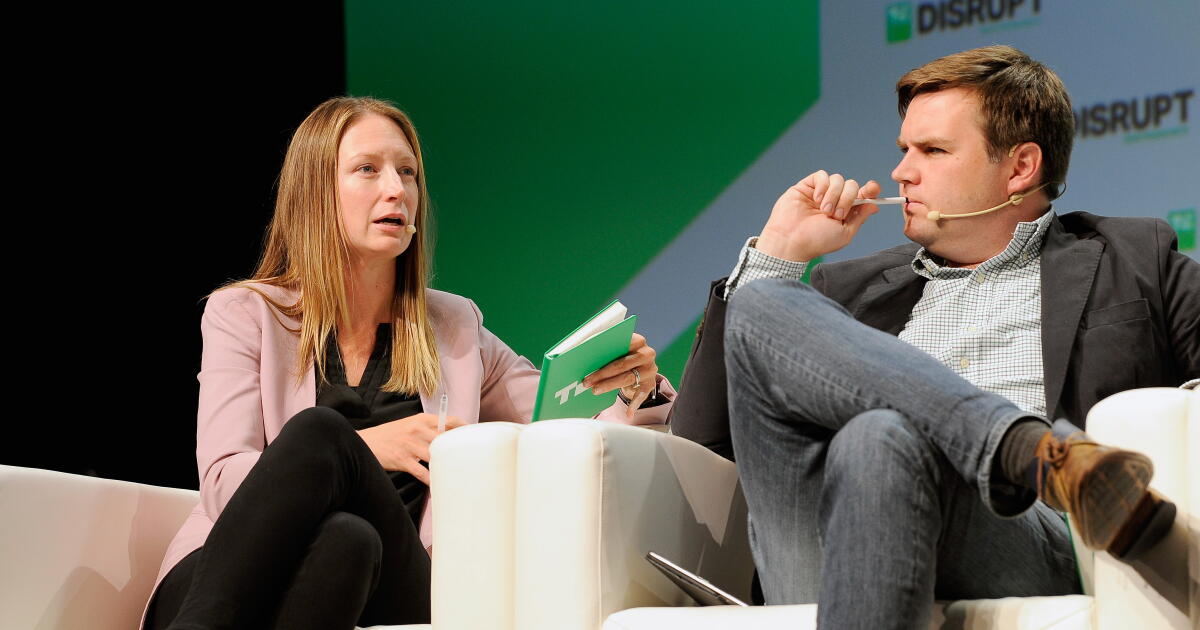
The new Republican vice presidential nominee hangs his proverbial hat on hailing from Middletown, Ohio — a steel mill town in the heart of working-class America.
But for a few years, J.D. Vance joined the world of coastal elites, building a robust venture capitalist career and hobnobbing with some of the wealthiest tech leaders in the Bay Area.
Miles away from his Appalachian upbringing and long before he became former President Trump’s running mate, he was quietly building a Silicon Valley venture capital career and a life in San Francisco.
In an essay for the Atlantic in 2016, he contrasted that reality with conditions in his hometown:
“A few Saturdays ago, my wife and I spent the morning volunteering at a community garden in our San Francisco neighborhood. After a few hours of casual labor, we and the other volunteers dispersed to our respective destinations: tasty brunches, day trips to wine country, art-gallery tours. It was a perfectly normal day, by San Francisco standards.
“That very same Saturday, in the small Ohio town where I grew up, four people overdosed on heroin. A local police lieutenant coolly summarized the banality of it all: ‘It’s not all that unusual for a 24-hour period here.’ He was right: in Middletown, Ohio, that too is a perfectly normal day.”
The man who would later write the bestselling “Hillbilly Elegy: A Memoir of a Family and Culture in Crisis” — and become a darling of the MAGA right — was in his late 20s when he moved to San Francisco likely around 2013, coinciding with a major boom for Big Tech companies such as Facebook, Google and Twitter. Venture capital firms were also “rolling in money,” said Peter Leyden, founder of Reinvent Futures and host of the AI Age Begins discussion series.
Vance “was here in the absolute boom time of an incredible ride,” Leyden said. “Everybody was gaga about tech.”
The Silicon Valley tech community Vance entered was fairly liberal — perhaps less so than royal blue San Francisco nearby, but moderate left at least. Still, several tech leaders told the Times, the industry has also harbored a cohort of conservatives. And some of the more vocal members of this minority emerged during the Trump years, including Elon Musk, David Sacks and Peter Thiel — all of whom are now in Vance’s corner.
Vance worked for “the subgroup that was more the libertarian, right-wing crew,” Leyden said. “Now that group has morphed since that decade into an increasingly kind of Trumpian, more radicalized right.”
Observing the boom and bust of tech informed Vance’s view of market forces, as he recounted at a policy and tech conference in February. At one of his first jobs at Mithril Capital, for example, he observed how seemingly rapidly growing businesses were doomed to bust, simply because the incumbent businesses in the field were already so big.
“Something I didn’t realize at the time … is that the thing that was wrong with their business wasn’t their business. It’s that they existed in a fundamentally non-competitive market,” he said at the conference, adding later, “We want innovation and we want competition, and I think that it’s impossible to have one without the other.”
He came to believe that antitrust policy can be a useful tool for allowing new companies to enter a market. In the same speech, Vance lauded Lina Khan, chair of the Federal Trade Commission, who has led antitrust investigations against major tech companies, such as Amazon, Google, Microsoft and OpenAI.
The problem with having big companies like Google monopolizing information, Vance said, is that they can be biased — and that can be bad for democracy.
“The American people, I think, should have the right to decide,” Vance said. “And if the new mode of acquiring information is fundamentally biased, I think it’s a far bigger threat to democracy than almost anything that’s called a threat to democracy in 2024.”
While it’s impossible to detail the impact Vance’s San Francisco days made on his political worldview, they certainly affected his wallet. One of Vance’s strongest Bay Area supporters was also one of his first bosses: Thiel of PayPal and Facebook fame, as well as a Republican megadonor.
Siri Srinivas, a partner at a venture capitalist firm, noted Vance’s connections.
“He isn’t just another guy who was a VC and then wrote a book and became a senator,” Srinivas said. “He also worked very closely with someone who has worked to collect political power: Peter Thiel.”
Thiel owned Mithril Captial, where Vance began as a principal. In 2017, Vance moved back to Ohio to co-found Revolution, a venture capital firm focused on investing in Midwestern startups, according to Axios.
By 2020, Axios reported, Vance had raised $93 million, with backing from Thiel, to start Narya, another Ohio-based venture with a portfolio that includes Rumble.com, a social media and video platform popular with the far right. It hosts Trump’s Truth Social.
As Vance’s tech career was taking off, so too were his political ambitions. And though he labeled himself a “never Trumper” in 2016, the Ohio Republican was coming around to more Trumpian postures — much like his sponsor in Silicon Valley. Thiel, who had served on the board of Meta, Facebook’s parent company, was become increasingly attuned to boosting Republican candidates, most notably donating to Trump.
Thiel donated $15 million to Vance’s Senate campaign in 2022, which was also bolstered by Trump’s endorsement. Vance sailed to victory, serving as Ohio’s senator for less than two years before being tapped for as a vice presidential candidate.
His Silicon Valley connections have already come in handy in his political career. Several news outlets reported that Vance was key in helping Sacks organize a fundraiser in June that raised $12 million for the Trump campaign.
“As I look out at this convention, I see a party that is strong and unified behind President Donald J. Trump and his pick for Vice President, Sen. J.D. Vance,” Sacks said at the Republican National Convention on Monday night. “And what about the Democrats? … We know what their agenda will be: four more years of chaos and failure, both at home and abroad.”
“In my hometown of San Francisco,” Sacks continued, “Democrat rule has turned the streets of our beautiful city into a cesspool of crime, homeless encampments and open drug use.”
What remains to be seen is how much Vance’s tech background will influence administration policy. Scott Wiener, a Democratic state senator from San Francisco, noted the new GOP platform explicitly supports the development of artificial intelligence and promises to “end Democrats’ unlawful and unAmerican Crypto crackdown.”
“I assume that was a very cynical play to try to get financial support from certain venture capitalists and tech people,” Wiener said.
But Srinivas, the venture capitalist, said Vance’s background in tech is at odds with his current politics.
“Most VCs are pro-science and having a technologist at the highest levels of government would be a huge win for Silicon Valley,” Srinivas said. “But, I’m not sure Vance is typical in that regard — he supported a ban on abortions in his last campaign, so I’m not sure he’s the best champion for science or technology.”
When asked at the February conference about how a future Republican administration would affect tech companies, Vance responded prophetically:
“As you know, personnel is policy, and a lot of what will determine Trump administration antitrust policy is who ultimately takes the reins the senior roles in the Trump administration, because they’re going to be the ones who are executing all this stuff.”



Politics
Trump to kick off Great American State Fair as 250th anniversary celebrations take over National Mall

Washington DC to host Great American State Fair for America250
Ambassador Monica Crowley discusses the Great American State Fair, set to transform the National Mall in Washington D.C. from June 25 to July 10. Celebrating America’s 250th anniversary, the 16-day event will feature pavilions from all 50 states and six territories, a 110-foot Ferris wheel, traditional games, and rodeo competitions, aiming to unite the country.
NEWYou can now listen to Fox News articles!
President Donald Trump will kick off the Great American State Fair Wednesday evening as part of celebrations surrounding the nation’s 250th anniversary.
“President Trump promised the greatest 250th birthday celebration in American history, and Freedom 250 is proud to help deliver it for the American people,” Freedom 250 CEO Keith Kranch told Fox News Digital.
“This celebration is about what makes America exceptional—our freedom, our faith, our optimism, and our people. We are honored to welcome President Trump as he helps kick off these historic festivities tomorrow and begin a nationwide celebration of our Nation’s 250th birthday,” Krach added.
The fair brings together all 50 states and six U.S. territories for a national celebration stretching from the Capitol to the Washington Monument featuring military flyovers, musical performances and civic programming. Trump announced he will deliver remarks after a handful of musical artists pulled out of their musical performances, turning the bash into a “Make America Great Again Rally.”
TRUMP FLOATS REPLACING 250TH ANNIVERSARY CONCERT WITH MASSIVE MAGA RALLY AFTER ARTISTS PULL OUT
Organizers describe the Great American State Fair as a modern-day World’s Fair celebrating America’s 250th anniversary. (Aaron Schwartz/Bloomberg via Getty Images)
The event is scheduled to run from June 25 through July 10, 2026, celebrating patriotism to bring together the nation for a celebration of unity.
TRUMP’S DC BEAUTIFICATION PUSH WINS RARE DEM PRAISE AS PRESIDENT SNAPS LANDMARKS BACK TO LIFE
U.S. President Donald J. Trump watches the UFC lightweight championship fight during the UFC Freedom 250 event on the South Lawn at the White House on June 14, 2026 in Washington, DC (Jeff Bottari/Zuffa LLC)
Trump’s anticipated remarks follow his signature last week on a Memorandum of Understanding with Iran, launching a 60-day negotiating period aimed at preventing Tehran from ever obtaining nuclear weapons capability.
The world’s fair-scale event will have pavilions touching on five national themes: Made in America, American Heartland, American Innovates, The American Canvas, and Faith & Family.
There will also be a 110-foot Ferris wheel and the refurbished Smithsonian carousel for families to enjoy.
Rending of 110-foot ferris wheel coming to National Mall for “Great American State Fair.” (Freedom250)
The U.S. has hosted over two dozen variations of the world’s fair since first hosted in Philadelphia in 1876, according to the State Department.
CLICK HERE TO DOWNLOAD THE FOX NEWS APP
Freedom250, the nonpartisan group helping coordinate the broader America250 effort, said the fair will feature food, games, exhibits and themed attractions designed to showcase the country’s culture, history and innovation.
Politics
Why your food scraps travel more than 100 miles — and how an L.A. council member wants to stop it

Bob Blumenfield would like to see Angelenos’ old banana peels and moldy bread stay local.
On Tuesday morning, the City Council member told a small crowd of waste advocates in front of city hall that he was introducing a motion to reduce the city’s greenhouse gas emissions by strengthening local composting infrastructure and decreasing reliance on distant facilities.
Currently, when city residents separate their food waste and yard clippings, chances are it’s being trucked to faraway processing facilities in Bakersfield or Lancaster.
The motion would help the city meet targets set by California’s Short-Lived Climate Pollutant Reduction Strategy, or Senate Bill 1383, which phases out sending green waste to the landfill, because it is a major source of the powerful climate pollutant methane.
It also would help meet Mayor Bass’ Climate Action Plan, which aims to use at least 50% of locally produced compost and mulch within Los Angeles by 2030. Currently, only 25% to 30% of the city’s material is applied to land locally.
The city produces approximately 350,000 tons of organic material a year, Blumenfield told the crowd, which he said equates to roughly 1.2 to 1.5 million metric tons of carbon dioxide.
“That’s a big number, and when you do the math,” he said, that’s roughly the same amount of carbon dioxide released by the entire country of Belize, the entirety of Humboldt County or the equivalent of burning 1.6 billion pounds of coal per year.
As the announcement was underway, in the background a fire burned for a sixth day in a Boyle Heights warehouse, where 85 million pounds of frozen food was thawing and beginning to rot.
Signed into law in 2016, the state’s composting bill mandated a gradual increase in the amount of organic waste that must be diverted away from landfills. It required 50% of all green and food waste be diverted by 2020; by 2025, that number was supposed to hit 75%.
But it hasn’t. Although Los Angeles has pushed to get a residential curbside bin program in place — recall the “Great Green Bin Apocalypse of 2025” — it has struggled to get people to comply.
According to reports for the recycLA program, a commercial and multifamily waste collection franchise program, only about half of households and business are separating their compostable waste.
Alex Helou, assistant general manager of L.A. Sanitation & Environment, provided a much brighter picture of the city’s food waste situation. L.A. is the first major city to provide green bins to 750,000 residential customers, he said. The city has “exceeded expectations” in food recovery, he said, saving 80 million meals that would have been thrown out and redirecting them to people in need.
Helou said Blumenfield’s motion completes the loop by keeping food waste close to home, creating more local composting and reducing greenhouse gas emissions from transporting waste outside of the city. It doesn’t directly affect the city’s compliance with SB 1383, but that isn’t necessary, he said. “We’re meeting that and exceeding that at multiple fronts.”
Blumenfield’s initiative directs the Bureau of Sanitation to develop a plan for expanding local composting across the city. It would also increase the use of locally produced compost and mulch.
For instance, the motion would encourage using the compost on urban farms and at community gardens and city parks. It also would be used to replace artificial grass and turf.
It will support a “citywide transition away from artificial turf and towards nature-based solutions, such as California native plants and natural grass plant fields, and ensure everyone has access to safer, cooler, and sustainable parks, schools, and communities,” said Terry Saucier, a Tarzana resident and member of the Neighborhood Council Sustainability Alliance and the Tarzana Neighborhood Council.
The state’s composting law has proved challenging on several fronts.
The Antelope Valley has become a dumping site for many of the city’s haulers looking to cut transport and facility costs — causing concern among environmentalists and others who say the material is destroying fragile ecosystems.
Complying has been particularly difficult for Los Angeles and much of coastal Southern California, where there are few large composters and low demand for compost. Unlike areas to the north, there is little agricultural demand for compost and mulch.
Experts say dumping in the desert has always been a problem, but the law made it worse by making it more expensive and difficult to deal with.
In addition, composters are struggling with the amount of plastic and other debris that people and businesses put in the food waste bins.
According to a report by Closed Loop Partners, which partners with companies such as Pepsico and McDonald’s, nearly 4% of food waste is contaminated with other materials — most of it plastic. State law requires that finished compost contains no more than 0.5% by dry weight of physical contaminants.

NEWYou can now listen to Fox News articles!
Democratic Gov. Wes Moore of Maryland, whom pundits consider a potential 2028 presidential contender, is one step closer to winning re-election this year.
Moore on Tuesday captured the Democratic gubernatorial nomination in the solidly blue Mid-Atlantic state, the Associated Press reports.
Moore and his running mate, Lt. Gov. Aruna Miller, easily dispatched a primary challenge from Eric Felber and his running mate, LaTrece Hawkins Lytes. Felber, a physician, unsuccessfully challenged Democratic Rep. Jamie Raskin in the 2024 primary in the state’s 8th Congressional District.
DEMOCRACY ’26: STAY UP TO DATE WITH THE FOX NEWS ELECTION HUB
Maryland Gov. Wes Moore speaks during an announcement at the South Court Auditorium of the Eisenhower Executive Office Building at the White House in Washington, D.C., on Jan. 16, 2026. (Valerie Plesch/Bloomberg via Getty Images)
Candidates for governor and lieutenant governor run on the same ticket in Maryland.
The Democratic ticket will face the winners of a nine-way Republican primary field.
Moore is running for re-election this year amid speculation that he also is eyeing a run for the White House in 2028, in the race to succeed term-limited President Donald Trump. Democrats are expected to field a large and competitive field in the race for their party’s presidential nomination.
The governor has consistently ruled out running for the White House in 2028, saying that his political focus is on his home state and his 2026 re-election.
But regardless, Moore remains a top Democratic Party surrogate in national politics. And Moore, a 47-year-old Army veteran, who is also a Rhodes Scholar and was CEO of the charitable organization the Robin Hood Foundation during the coronavirus pandemic, is viewed as a rising star in the party.
Maryland Gov. Wes Moore and President Donald Trump are pictured together in a split image. (Nathan Howard/Getty Images; Anna Moneymaker/Getty Images)
Moore, the nation’s only Black governor, has had a combustible relationship with Trump, which has included very public feuds and verbal sparring, and clashes over policy.
CLICK HERE TO DOWNLOAD THE FOX NEWS APP
Earlier this year, Trump initially excluded Moore from a National Governors Association dinner at the White House, charging that the governor was “not worthy” of attending.
-

 Denver, CO59 seconds ago
Denver Broncos Foundation launches extension of ‘ALL IN. ALL COVERED.’ emphasizing youth football participation
-
Seattle, WA4 minutes ago
Iran and Egypt to play in Seattle ‘Pride Match’ despite earlier complaints | The Jerusalem Post
-

 San Diego, CA9 minutes ago
Con Rangers San Diego Comic-Con 2026 Exclusives
-

 Milwaukee, WI16 minutes ago
Did Milwaukee Get Enough in Return for Giannis?
-

 Atlanta, GA19 minutes ago
Minnesota’s golden gift to Atlanta just became Wolves’ worst nightmare
-

 Minneapolis, MN24 minutes ago
FOX 9 Good Day: June 24, 2026
-

 Indianapolis, IN31 minutes ago
3 Colts Stars Heralded as NFL’s Most Important
-

 Pittsburg, PA34 minutes ago
14+ things to do this weekend, from the Andy Warhol Bridge 100th Birthday Bash to OpenStreetPGH

