News
Why the next president's judicial appointments will impact climate action
Environmental activists rally in front of the U.S. Supreme Court in 2022 after it ruled against the Obama administration’s plan to cut climate-warming emissions at the nation’s power plants. The Supreme Court has since further limited the power of federal agencies like the Environmental Protection Agency.
Drew Angerer/Getty Images
hide caption
toggle caption
Drew Angerer/Getty Images
Nerdy question for all of you policy wonks out there: What did the Obama administration’s landmark climate regulation on the nation’s power plants — the Clean Power Plan — and the Trump administration’s more lenient replacement of it — the Affordable Clean Energy Rule — have in common?
Both were seen as major industry-changing regulations. Both were lauded by some and reviled by others.
And neither went into effect.
“Basically any environmental rule of any magnitude is challenged in the courts,” said Lisa Heinzerling, a law professor at Georgetown University and a senior adviser to former President Barack Obama’s Environmental Protection Agency (EPA). “The courts have the final word.”
As President Biden and former President Donald Trump vie for a second term amid what’s sure to be one of the hottest years in recorded history, NPR’s Climate Desk has looked at both candidates’ records on climate change and what to expect if either is elected. Trump is promising to “drill, baby, drill,” and weaken regulations on oil and gas development. Biden is promising to create more jobs with an energy transition away from climate-warming fossil fuels.
But given the litigious nature of environmental law and the U.S. Supreme Court’s recent decisions, particularly one limiting the power of federal agencies, legal experts say one of the election’s most consequential aspects for the climate would be the judicial appointments either candidate makes.
The president has the power to nominate federal judges for lifelong terms. Not only to the Supreme Court, but also to federal appellate and district courts, which see tens of thousands of cases each year. Pending Senate approval, those appointments shape the country’s judiciary and the government’s ability to implement laws for decades.
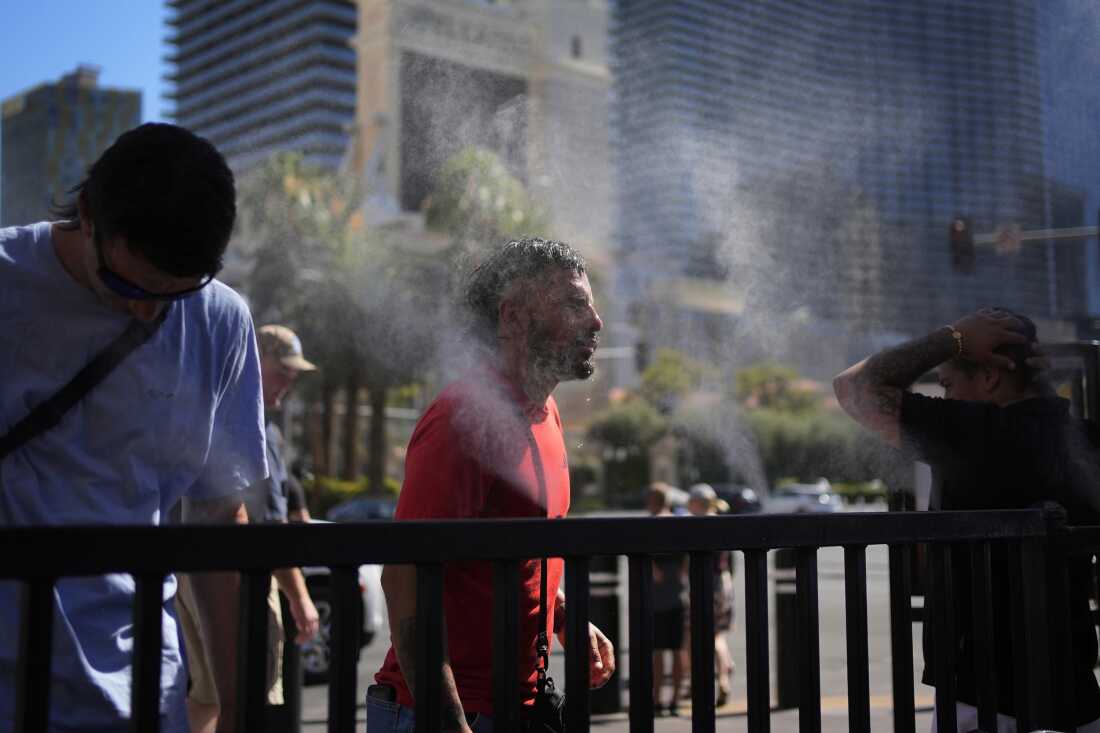
People cool off in misters along the Las Vegas Strip during a deadly, record-breaking heatwave. Heatwaves are growing in intensity, frequency and duration as climate change intensifies.
John Locher/AP
hide caption
toggle caption
John Locher/AP
“Almost all cases involving some type of environmental action ultimately go to a court of appeals,” said Jeff Holmstead, an attorney with the law firm Bracewell LLC, who worked on air issues at the EPA under former President George W. Bush.
Biden has appointed 201 judges, including one justice to the Supreme Court. Trump appointed 234, including three Supreme Court justices, giving conservatives a 6-3 majority on the nation’s highest court.
Since then, the Supreme Court has ruled against agencies’ ability to cut climate-warming emissions, to protect the nation’s wetlands and ephemeral streams and to limit air pollution for states downwind of power plants and factories.
“I think it is clearer than ever that folks who believe fervently that we should protect public health from environmental harms really can’t make progress if they have a hostile judiciary waiting,” said Cara Horowitz, executive director of the Emmett Institute on Climate Change and the Environment at the UCLA School of Law. “The work becomes a lot harder when you have a Supreme Court sitting at the end of every litigation road that’s hostile to the administrative state and environmental regulations.”
Recent SCOTUS decision could greatly affect climate regulation
For the last 40 years, the American judicial system has operated with the understanding that if a law is ambiguous, the courts should defer to the expertise of the federal agency implementing it, as long as that implementation is reasonable.
In other words, if a law like the Clean Air Act isn’t crystal clear, the courts would defer to experts and scientists at federal agencies, like the EPA, to fill in the gaps when writing regulation and implementing laws.
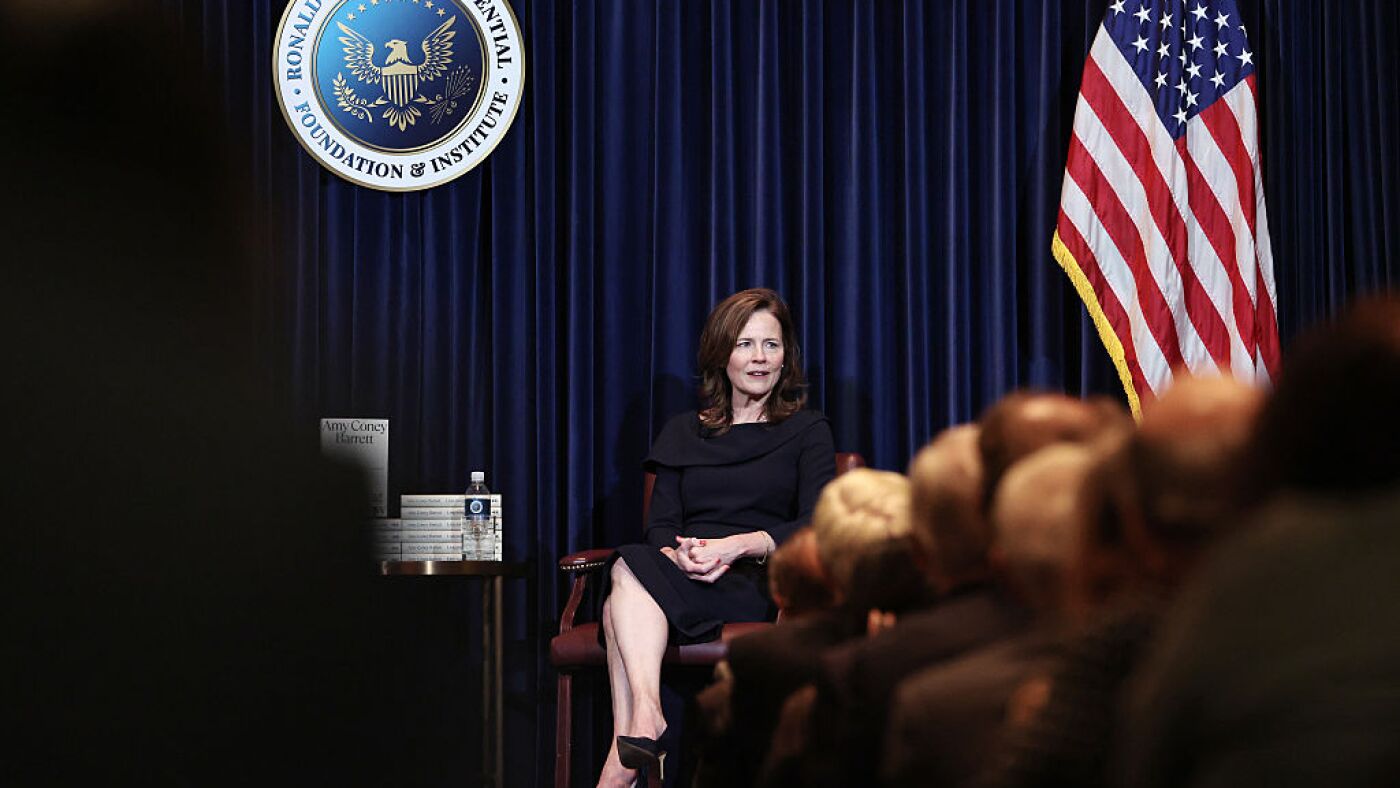
In its recent term, the Supreme Court’s conservative majority threw out what’s known as the Chevron deference in a ruling on two related cases. Writing for the majority, Chief Justice John Roberts argued that “courts must exercise their independent judgment in deciding whether an agency has acted within its statutory authority.”
Legal experts say the decision could affect the government’s ability to regulate food, medicine, telecommunication and worker safety, among others. But the implications for environmental regulations are particularly stark. That’s because the Clean Air Act, the Clean Water Act and the Endangered Species Act were purposely written vaguely to accommodate for future problems.
“Many of these laws were passed in the 1970s when we were gaining an understanding of various environmental issues, and when Congress wrote these laws, they imparted on agencies a very capacious authority to account for the best available science,” said Erik Schlenker-Goodrich, executive director of the Western Environmental Law Center. “And the best available science emerges over time.”
The Endangered Species Act, which protects imperiled plants and animals like the Key Deer, is more than 50 years old. Federal agencies are tasked with using old environmental statutes to deal with modern problems, fueling much of the environmental litigation seen in federal courts.
Ryan Kellman/NPR
hide caption
toggle caption
Ryan Kellman/NPR
Scientists’ understanding of emerging environmental problems like climate change, PFAS and plastic pollution is constantly evolving. Government agencies are tasked with protecting people from those problems using existing laws.
“So when Supreme Court justices are saying we’re going to freeze things as we knew them back in the 1970s, what they’re essentially saying is agencies can’t account for the science, agencies can’t adapt to the science and agencies cannot protect the public’s interest,” Schlenker-Goodrich said.
Proponents of the Supreme Court’s decision argue the Chevron deference gave federal agencies too much power.
“The fact that a statute was silent on an issue doesn’t mean that Congress intended to let the agency sort of read it however it wants,” Holmstead said.
Agency attorneys “are acting like anybody else’s attorneys,” said Damien Schiff, a senior attorney focused on environmental law at the Pacific Legal Foundation, a conservative public interest law group. “They’re just simply advocates articulating a view, but it’s not necessarily privileged in terms of its accuracy or propriety just because it’s being articulated by a government agency.”
Schiff, whose law firm filed an amicus brief calling for the end of Chevron, said the change is part of a broader shift in the court’s approach to law that could help groups on the left and those on the right, making it easier “for private parties to try to vindicate their rights against government entities.”
JJ Apodaca, executive director of the Amphibian and Reptile Conservancy, said the shift means instead of relying on federal scientists, “with Ph.D.s and master degrees,” decisions will now be made by judges who, “have political affiliations and in many cases, haven’t taken a science or biology class since high school.”
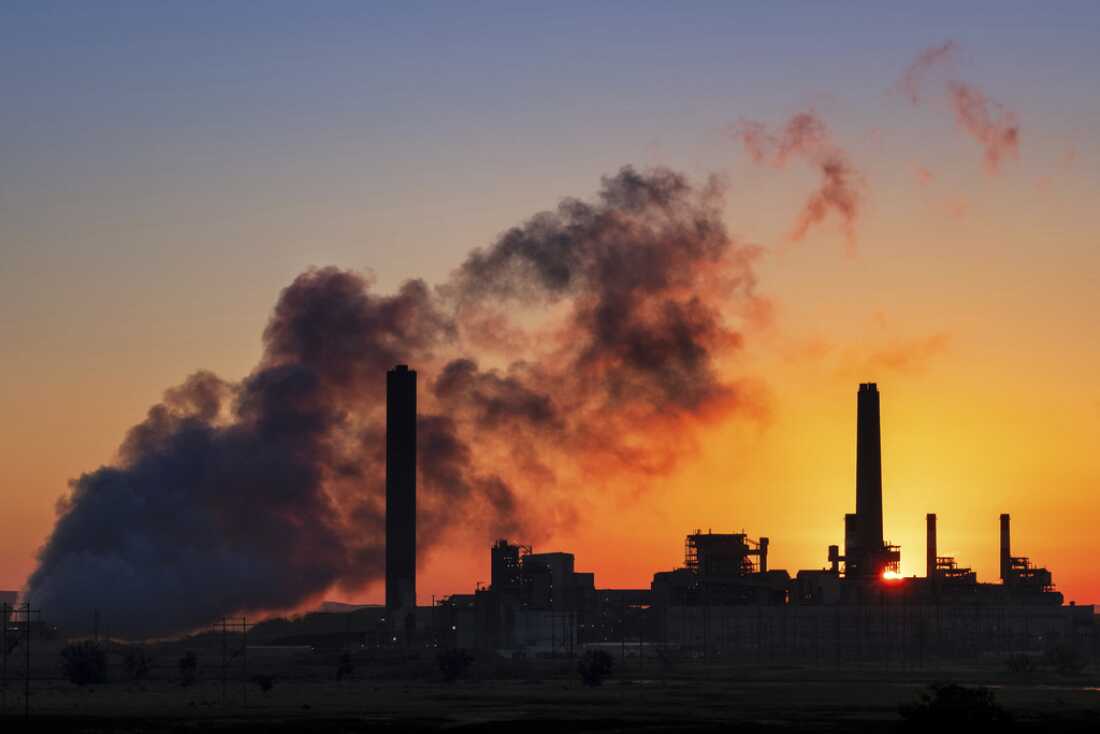
The Obama and Biden administration’s have tried using the Clean Air Act to limit climate-warming emissions from the nation’s power plants, but their efforts have been held up or blocked in courts.
J. David Ake/AP
hide caption
toggle caption
J. David Ake/AP
The politics of the judiciary
An impartial judiciary has been a cornerstone of American democracy since its inception.
Trump’s term led to the most conservative Supreme Court in more than 90 years, but it also allowed Republican leadership to place more than 230 other judges in federal district and appellate courts — which issue “the bulk of the federal legal decisions in this country,” Heinzerling said.
Earlier this year, a federal appeals court ended a long-running lawsuit by young plaintiffs in Oregon who argued the U.S. government’s contribution to climate change violated their constitutional rights. In 2022, a U.S. district court restored endangered species protections to gray wolves in 44 states.
Those lower courts often get the benefit of the doubt, Heinzerling said. “Which means they can have a huge influence on what the regulatory landscape looks like.”
In his first campaign, Trump vowed to appoint judges in the mold of the late conservative Justice Antonin Scalia. Three-quarters of his appointees were men and roughly 84% were white, according to the Pew Research Center. An analysis by The Washington Post in May found that Biden has placed more non-white federal judges than any president in history. Nearly two-thirds are women.
“When he talks about rights and liberties, [Biden] knows that in the end those rights and liberties are decided by federal judges, so the makeup of the federal judiciary is connected to everything else we do,” former White House chief of staff Ron Klain told NPR last year.
Biden has had less say on the makeup of the Supreme Court, filling only one opening during his first term — Justice Ketanji Brown Jackson — and legal experts say it’s unlikely he’d be able to shift it in a second term. The court’s two oldest justices, Clarence Thomas and Samuel Alito, are both conservative and unlikely to retire if Biden is reelected. If Trump wins in November, critics fear he could replace both with younger justices, locking in the court’s conservative majority for decades to come.
Regardless of who wins, legal experts say, the Supreme Court’s recent decisions will make it harder for the federal government to tackle environmental problems like climate change, barring new legislation from Congress.
“[Chevron] makes it harder for agencies to use old laws to address new problems,” said Sam Sankar, senior vice president for programs at the environmental firm Earthjustice. “But that doesn’t mean that we can’t address the threats of climate, and we will. Problems are getting bad enough that Congress, even the right wing, is going to start needing to react to these things in federal lawmaking.”
“The question is,” he added, “how much do we lose and how much does it cost us to try to address the problems we’ve got?”

News
Trump administration can’t block child care, other program money for 5 states: Judge
A federal judge ruled Friday that President Donald Trump’s administration cannot block federal money for child care subsidies and other programs aimed at supporting needy children and their families from flowing to five Democratic-led states for now.
The states of California, Colorado, Illinois, Minnesota and New York argued that a policy announced Tuesday to freeze funds for three grant programs is having an immediate impact on them and creating “operational chaos.” In court filings and a hearing earlier Friday, the states contended that the government did not have a legal reason for holding back the money from those states.
The U.S. Department of Health and Human Services said it was pausing the funding because it had “reason to believe” the states were granting benefits to people in the country illegally, though it did not provide evidence or explain why it was targeting those states and not others.
The programs are the Child Care and Development Fund, which subsidizes child care for children from low-income families; the Temporary Assistance for Needy Families program, which provides cash assistance and job training; and the Social Services Block Grant, a smaller fund that provides money for a variety of programs.
The five states say they receive a total of more than $10 billion a year from the programs.
U.S. District Judge Arun Subramanian, who was nominated to the bench by former President Joe Biden, did not rule on the legality of the funding freeze, but he said the five states had met a legal threshold “to protect the status quo” for at least 14 days while arguments are made in court.
The government had requested reams of data from the five states, including the names and Social Security numbers of everyone who received benefits from some of the programs since 2022.
The states argue that the effort is unconstitutional and is intended to go after Trump’s political adversaries rather than to stamp out fraud in government programs — something the states say they already do.
Jessica Ranucci, a lawyer in the New York Attorney General’s office, said in the Friday hearing, which was conducted by telephone, that at least four of the states had already had money delayed after requesting it. She said that if the states can’t get child care funds, there will be immediate uncertainty for providers and families who rely on the programs.
A lawyer for the federal government, Kamika Shaw, said it was her understanding that the money had not stopped flowing to states.
News
National Park Service will void passes with stickers over Trump’s face
The Interior Department’s new “America the Beautiful” annual pass for U.S. national parks.
Department of Interior
hide caption
toggle caption
Department of Interior
The National Park Service has updated its policy to discourage visitors from defacing a picture of President Trump on this year’s pass.
The use of an image of Trump on the 2026 pass — rather than the usual picture of nature — has sparked a backlash, sticker protests, and a lawsuit from a conservation group.
The $80 annual America the Beautiful pass gives visitors access to more than 2,000 federal recreation sites. Since 2004, the pass has typically showcased sweeping landscapes or iconic wildlife, selected through a public photo contest. Past winners have featured places like Arches National Park in Utah and images of bison roaming the plains.

Instead, of a picture of nature, this year’s design shows side-by-side portraits of Presidents George Washington and Trump. The new design has drawn criticism from parkgoers and ignited a wave of “do-it-yourself” resistance.
Photos circulating online show that many national park cardholders have covered the image of Trump’s face with stickers of wildlife, landscapes, and yellow smiley faces, while some have completely blocked out the whole card. The backlash has also inspired a growing sticker campaign.
Jenny McCarty, a longtime park volunteer and graphic designer, began selling custom stickers meant to fit directly over Trump’s face — with 100% of proceeds going to conservation nonprofits. “We made our first donation of $16,000 in December,” McCarty said. “The power of community is incredible.”
McCarty says the sticker movement is less about politics and more about preserving the neutrality of public lands. “The Interior’s new guidance only shows they continue to disregard how strongly people feel about keeping politics out of national parks,” she said.
The National Park Service card policy was updated this week to say that passes may no longer be valid if they’ve been “defaced or altered.” The change, which was revealed in an internal email to National Park Service staff obtained by SFGATE, comes just as the sticker movement has gained traction across social media.
In a statement to NPR, the Interior Department said there was no new policy. Interagency passes have always been void if altered, as stated on the card itself. The agency said the recent update was meant to clarify that rule and help staff deal with confusion from visitors.
The Park Service has long said passes can be voided if the signature strip is altered, but the updated guidance now explicitly includes stickers or markings on the front of the card.
It will be left to the discretion of park service officials to determine whether a pass has been “defaced” or not. The update means park officials now have the leeway to reject a pass if a sticker leaves behind residue, even if the image underneath is intact.
In December, conservation group the Center for Biological Diversity filed a lawsuit in Washington, D.C., opposing the new pass design.

The group argues that the image violates a federal requirement that the annual America the Beautiful pass display a winning photograph from a national parks photo contest. The 2026 winning image was a picture of Glacier National Park.
“This is part of a larger pattern of Trump branding government materials with his name and image,” Kierán Suckling, the executive director of the Center for Biological Diversity, told NPR. “But this kind of cartoonish authoritarianism won’t fly in the United States.”
The lawsuit asks a federal court to pull the current pass design and replace it with the original contest winner — the Glacier National Park image. It also seeks to block the government from featuring a president’s face on future passes.
The America the Beautiful National Parks Annual Pass for 2025, showing one of the natural images which used to adorn the pass. Its picture, of a Roseate Spoonbill taken at Everglades National Park, was taken by Michael Zheng.
Department of Interior
hide caption
toggle caption
Department of Interior
Not everyone sees a problem with the new design. Vince Vanata, the GOP chairman of Park County, Wyoming, told the Cowboy State Daily that Trump detractors should “suck it up” and accept the park passes, saying they are a fitting tribute to America’s 250th birthday this July 4.
“The 250th anniversary of our country only comes once. This pass is showing the first president of the United States and the current president of the United States,” Vanata said.
But for many longtime visitors, the backlash goes beyond design.

Erin Quinn Gery, who buys an annual pass each year, compared the image to “a mug shot slapped onto natural beauty.”
She also likened the decision to self-glorification: “It’s akin to throwing yourself a parade or putting yourself on currency,” she said. “Let someone else tell you you’re great — or worth celebrating and commemorating.”
When asked if she plans to remove her protest sticker, Gery replied: “I’ll take the sticker off my pass after Trump takes his name off the Kennedy Center.”
News
Federal immigration agents shoot 2 people in Portland, Oregon, police say
PORTLAND, Ore. (AP) — Federal immigration officers shot and wounded two people in a vehicle outside a hospital in Portland, Oregon, on Thursday, a day after an officer shot and killed a driver in Minnesota, authorities said.
The Department of Homeland Security described the vehicle’s passenger as “a Venezuelan illegal alien affiliated with the transnational Tren de Aragua prostitution ring” who had been involved in a recent shooting in Portland. When agents identified themselves to the vehicle occupants Thursday afternoon, the driver tried to run them over, the department said in a written statement.
“Fearing for his life and safety, an agent fired a defensive shot,” the statement said. “The driver drove off with the passenger, fleeing the scene.”
There was no immediate independent corroboration of those events or of any gang affiliation of the vehicle’s occupants. During prior shootings involving agents involved in President Donald Trump’s surge of immigration enforcement in U.S. cities, including Wednesday’s shooting by an Immigration and Customs Enforcement officer in Minneapolis, video evidence cast doubt on the administration’s initial descriptions of what prompted the shootings.
READ MORE: What we know so far about the ICE shooting in Minneapolis
According to the the Portland Police bureau, officers initially responded to a report of a shooting near a hospital at about 2:18 p.m.
A few minutes later, police received information that a man who had been shot was asking for help in a residential area a couple of miles away. Officers then responded there and found the two people with apparent gunshot wounds. Officers determined they were injured in the shooting with federal agents, police said.
Their conditions were not immediately known. Council President Elana Pirtle-Guiney said during a Portland city council meeting that Thursday’s shooting took place in the eastern part of the city and that two Portlanders were wounded.
“As far as we know both of these individuals are still alive and we are hoping for more positive updates throughout the afternoon,” she said.
The shooting escalates tensions in an city that has long had a contentious relationship with President Donald Trump, including Trump’s recent, failed effort to deploy National Guard troops in the city.
Portland police secured both the scene of the shooting and the area where the wounded people were found pending investigation.
“We are still in the early stages of this incident,” said Chief Bob Day. “We understand the heightened emotion and tension many are feeling in the wake of the shooting in Minneapolis, but I am asking the community to remain calm as we work to learn more.”
Portland Mayor Keith Wilson and the city council called on U.S. Immigration and Customs Enforcement to end all operations in Oregon’s largest city until a full investigation is completed.
“We stand united as elected officials in saying that we cannot sit by while constitutional protections erode and bloodshed mounts,” a joint statement said. “Portland is not a ‘training ground’ for militarized agents, and the ‘full force’ threatened by the administration has deadly consequences.”
The city officials said “federal militarization undermines effective, community‑based public safety, and it runs counter to the values that define our region. We’ll use every legal and legislative tool available to protect our residents’ civil and human rights.”
They urged residents to show up with “calm and purpose during this difficult time.”
“We respond with clarity, unity, and a commitment to justice,” the statement said. “We must stand together to protect Portland.”
U.S. Sen. Jeff Merkley, an Oregon Democrat, urged any protesters to remain peaceful.
“Trump wants to generate riots,” he said in a post on the X social media platform. “Don’t take the bait.”
A free press is a cornerstone of a healthy democracy.
Support trusted journalism and civil dialogue.
-
Detroit, MI7 days ago2 hospitalized after shooting on Lodge Freeway in Detroit
-
Technology4 days agoPower bank feature creep is out of control
-
Dallas, TX5 days agoDefensive coordinator candidates who could improve Cowboys’ brutal secondary in 2026
-
Dallas, TX2 days agoAnti-ICE protest outside Dallas City Hall follows deadly shooting in Minneapolis
-
Iowa4 days agoPat McAfee praises Audi Crooks, plays hype song for Iowa State star
-
Health6 days agoViral New Year reset routine is helping people adopt healthier habits
-
Nebraska3 days agoOregon State LB transfer Dexter Foster commits to Nebraska
-
Nebraska4 days agoNebraska-based pizza chain Godfather’s Pizza is set to open a new location in Queen Creek