Maine
Maine announces resource center to aid opioid settlement spending


The attorney general’s office is putting nearly $2.5 million toward a resource center that will offer assistance to Maine counties, cities and towns as they decide how to spend opioid settlement funds, Attorney General Aaron Frey told The Maine Monitor in an exclusive interview.
In June, Frey’s office signed a contract with the University of Southern Maine’s Catherine Cutler Institute to support the development of a resource center dedicated to helping the state’s 39 counties, cities and towns — or “direct share subdivisions” — that are set to receive approximately $66 million in opioid settlement funds over 18 years.
The research and data generated by the center will be made available to the public in an effort to boost transparency and help communities make informed spending decisions. The contract is for five years.
The money the attorney general’s office is using to fund the center and the money going to the direct share subdivisions comes from settlements reached with nearly a dozen pharmaceutical manufacturers, distributors and retailers accused of “supercharging” the opioid epidemic.
Maine expects to receive about $230 million across 18 years, though that number may increase when several pending bankruptcy cases are finalized.
On Thursday, the U.S. Supreme Court blocked Purdue Pharma’s bankruptcy plan that would have added billions of dollars to the settlements nationwide, but would have given the Sackler family immunity from future litigation.
It will likely be years before a resolution is reached and states like Maine see any money from the OxyContin maker.
“While today’s Supreme Court decision means we have more work to do, my office will continue to litigate to obtain resources from the Sacklers to save lives and fight the opioid epidemic,” Frey said in a statement after the ruling. “Make no mistake about our resolve: Confronting the devastation of the opioid epidemic requires that we work to hold accountable those bad actors who are responsible for it, which includes the Sackler family.”
Frey’s office signed memoranda of understanding with more than 50 counties, municipalities and school districts that were party to the massive multidistrict litigation case that led to the settlements.
Under these agreements, Maine’s share of the more than $50 billion that will be distributed nationally will be divided into three funds: 50 percent to the Maine Recovery Council, 3 percent of which must be spent on special education programming in schools; 30 percent to direct share subdivisions that were party to the lawsuits or have a population of at least 10,000; and 20 percent to the attorney general’s office.
“While it’s a significant amount of money, it is limited,” Frey said. “The crisis is such that it is going to be so important that the way in which these resources are directed today, that it provides that foundation so that over the next 18 years these resources do end up addressing the harm that all of these defendants caused.”
Supplement, not supplant
The settlement agreements say the funds must be used for “opioid abatement,” and provide a long list of approved uses, from increasing access to medication for opioid use disorder for incarcerated people to expanding treatment and recovery services for pregnant or postpartum women with substance use disorder, and flooding communities with free, easy-to-access naloxone, the overdose-reversing drug.
The guidance stipulates that the money should be used on evidence-based programs that supplement, not supplant, existing funding.
But designing evidence-based programs for treatment, prevention, harm reduction and recovery requires a level of expertise and access to resources that may be out of reach for some Maine counties and towns.
In the two years since settlement payments began, a number of subdivisions have reached out to the attorney general’s office for assistance, Frey said.
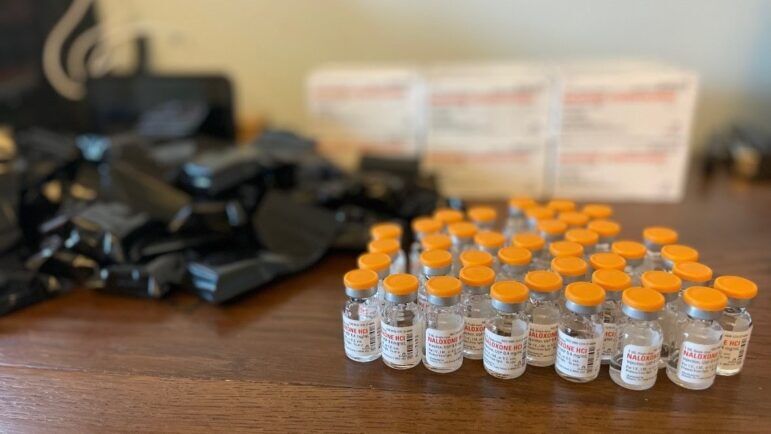
In a survey conducted by the Maine Recovery Council late last year, municipalities noted they could use assistance in conducting a needs assessment, support for creating a grant process to distribute funds and community engagement training.
The attorney general’s office said the resource center will help the subdivisions conduct comprehensive needs assessments, plan evidence-based programs, develop measurable objectives for their spending and more — all at no cost to the subdivisions.
The center will also create publicly available “community profiles” and a data dashboard.
“One of the things that I’ve been very concerned about is just making sure that everybody is on the same page about how these resources can go out and be used in a supplemental way to help address the crisis,” Frey said.
Questionable spending decisions
Earlier this year, The Monitor found that some of the subdivisions’ spending decisions have already begun to raise concerns among experts and advocates. Saco and Falmouth, for instance, have each spent about $20,000 in settlement funds on handheld drug-checking devices for their police departments.
While the departments claim they purchased the devices for “officer and victim safety,” and to quickly and accurately identify substances in an overdose situation, experts doubt the accuracy of the tools.
“Those handheld devices are worse than bad, they are plain dangerous,” Dr. Nabarun Dasgupta, a senior scientist researching street drugs at the University of North Carolina’s school of public health, told The Monitor earlier this year.
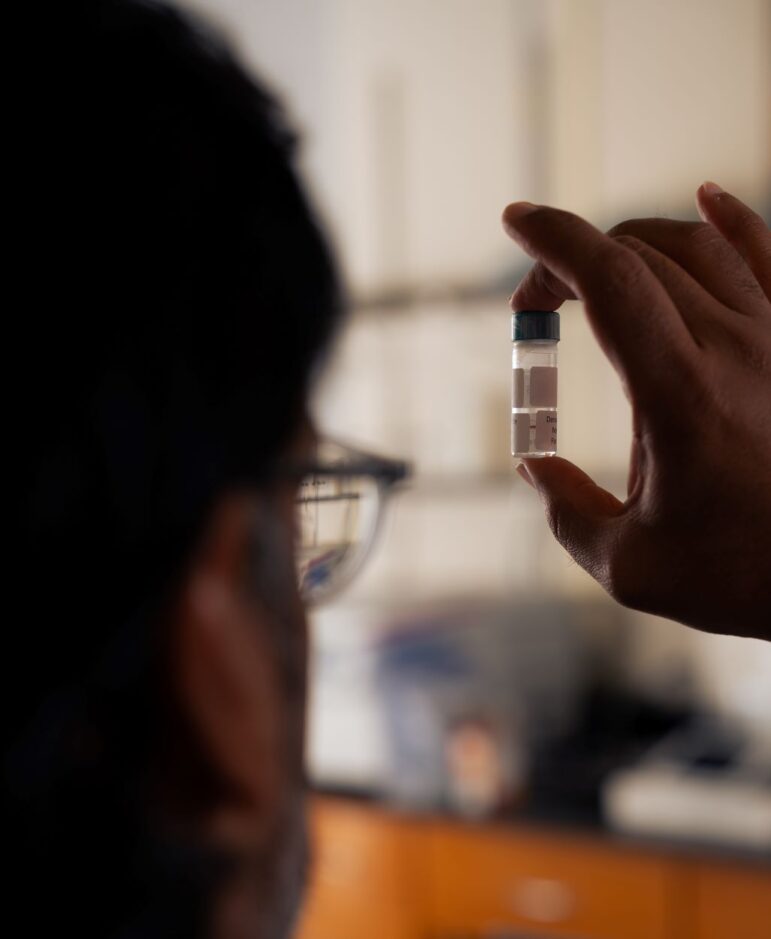
The TacticID-N Plus and TruNarc devices, purchased by Saco and Falmouth, respectively, are “garbage,” Dasgupta said.
The devices use a technology called Raman spectroscopy, which works fine in limited, often lab-controlled circumstances, in which a sample only has one or two substances present, he added. But with street drugs, which often have multiple substances present in a single sample, the drug-checking devices often miss substances and can produce false positives.
“They’re not scientific tools. They’re legal tools for cops to be able to arrest people,” Dasgupta said.
Ever since opioid settlement payments started hitting bank accounts, companies like the ones that make the TacticID-N Plus and TruNarc devices have gone on marketing campaigns to encourage government officials to buy their products, a 2023 investigation by KFF Health News found.
In general, advocates have warned against spending opioid settlement funds on “law enforcement personnel, overtime or equipment.” Yet The Monitor found that nearly a third of the state’s subdivisions have spent money on law enforcement and jail programs.
It is up to the counties, cities and towns to decide how to spend their 30 percent of the funds, so long as they follow the guidance on approved uses. Unlike the Recovery Council, the subdivisions are not required to publicly disclose their spending outside the usual public access laws, according to the MOUs.
And although the list of approved uses is hefty and detailed, it is still open to interpretation.
“There are some interventions or some expenditures that maybe have less efficacy in abating the crisis,” Frey said.
Frey said he hopes the resource center will help steer subdivisions away from that kind of spending.
“Different municipalities, different counties, they’re going to make decisions about how to best do what makes sense for their communities,” he said.
Boosting transparency
The Monitor surveyed all 39 subdivisions earlier this year and found many have yet to determine a process for making these decisions, while others’ approaches varied greatly.
In Franklin County, commissioners abruptly disbanded the opioid settlement committee, which was tasked with soliciting proposals and making recommendations to commissioners. Several members told The Monitor they thought the committee hadn’t been structured properly.
In June, county commissioners agreed to restart the group as the Opioid Settlement Advisory Committee, deciding to cap membership at five rather than nine. People interested in serving on the committee must submit an application that requires they disclose their criminal history and current employer, and list three references.
Bylaws are now publicly posted. The major difference from the previous version (which several former members told The Monitor they never received) is that members are barred from submitting an application while serving on the committee and must recuse themselves from that review round if an organization they are associated with applies.
Frey said he hopes the resource center will help subdivisions “calibrate their spending in a productive way.”
Making the research and data generated by the center publicly available is to not only boost transparency but provide other communities with information for their own spending decisions.
“The more education you have, sort of what works and what does work, it will become harder, I think, for a range of spenders we’ll say, to spend money on programs that are identified as not being evidence-based — that the evidence shows are not programs that are going to address the crisis,” Frey said.
The resource center evolved from a letter the chairs of the legislature’s health and human services committee sent to Frey and the Recovery Council last July with their priorities for the distribution of the opioid settlement funds, including a pitch for a research center within the University of Maine. Frey began meeting with the Cutler Institute in the fall.
The Cutler Institute will receive the first and largest funding installment — about half the total commitment — this summer. The establishment, startup and initial operations of the center are estimated to take about two years, according to the contract. The remainder of the funding will be dispersed in the second and third years.
In addition to the center, the attorney general’s office signed a contract in March with Eliot-based Pinetree Institute to provide a one-time payment of $60,000 to support the initial engagement and implementation of a York County Recovery Coalition.
The attorney general’s office has also allocated $3 million to the Department of Health and Human Services for its OPTIONS (Overdose Prevention Through Intensive Outreach, Naloxone, and Safety) program to double the number of local liaisons — or service navigators — from 16 to 32, and has given $2 million to the Office of Behavioral Health to support substance use programming that was at risk of losing funding.
Emily Bader can be reached at emily@themainemonitor.org.



For many hunters, drawing a Maine moose permit is a once-in-a-lifetime opportunity. After years — and sometimes decades — of applying, the excitement of seeing your name among the winners quickly turns into a new challenge: planning for the hunt.
Whether you’re going on your first moose hunt or preparing for another trip into the Maine woods, there are several important steps permit winners should take as soon as possible.
Hire a registered Maine guide
Many permit winners hire a registered Maine guide to help locate a moose, scout hunting areas and navigate unfamiliar country. You’re paying for their knowledge, experience and time spent scouting before the season ends. Even if you’re a Maine resident, hiring a guide should be a consideration. Most hunters don’t have the time to make multiple scouting trips, and trail cameras aren’t always an option because cell service is limited or nonexistent in many hunting areas.
If you’re considering hiring a guide, don’t wait too long. Available openings often fill up the night of the lottery.
Book lodging for your moose hunt
Sporting camps, cabins, campgrounds and hotels near popular moose hunting areas will also fill up quickly. If your hunt will take place hours from home, securing lodging should definitely be one of your first priorities. Waiting until summer will leave you with fewer options and a longer commute to your hunting area.
Find a meat processor
The state maintains an official list of moose meat processors. The last thing you want to be doing is calling around on a warm September day trying to find a butcher willing to take your moose. Processors can only handle so many animals each season, and much like guides and lodging, many fill their schedules quickly. Calling ahead and having a plan in place can save a lot of stress after a successful hunt.
Line up your hunting partners and helpers
If you’re not hunting with a guide, it’s helpful to know who will be accompanying you. Aside from sharing the experience, friends and family can help scout, call, spot animals, film the hunt and retrieve a harvested moose.
How will you retrieve the moose?
Depending on where the animal is harvested, you may need an ATV, side-by-side, trailer, winch, ropes or other equipment to retrieve it. Keep in mind that ATVs and side-by-sides are prohibited in the North Maine Woods, so you may need to quarter and pack the moose out instead. In that case, game bags, packs, knives and saws will be essential, while items such as a jet sled or game cart may help make the job easier.
Gather your moose hunting gear
In addition to your weapon, consider what you’ll need for the hunt itself. Tarps, coolers, headlamps, GPS units, an inReach, radios, rain gear and extra fuel can all make a hunt more comfortable and efficient.
If you’re planning on getting away from the roads, you may need or want a wall tent. You’ll also need cots or other sleeping gear, a heating source, water, cooking gear and emergency supplies. A spare tire, jumper cables, chainsaw and basic tools can also be invaluable when traveling remote logging roads.
Prepare for meat care and transportation
Make plans to have coolers, ice, transportation and storage well before opening day.
Sight in your rifle or practice with your bow
Don’t be the hunter who misses because their scope was 8 inches off, got bumped during travel or hasn’t been checked since last season. Confirm your rifle is properly sighted in before the hunt, and shoot again after arriving in camp. Stock up on ammo and spend time practicing from realistic field positions.
Don’t overlook shooting sticks, either. Many hunters regret leaving them behind. Shot opportunities are often farther than expected, and a stable rest can make all the difference when anticipation and excitement start to take over.
The same applies if you choose to bring a bow. Reps, shooting from different positions and accurately judging distance can all improve your chance of success.
Scout your zone
If you don’t hire a guide, make sure you’re familiar with your hunting area. Not only will you likely run into other hunters during the week, you may arrive at your preferred spot only to find another truck already parked there. Having backup options is key.
Conditions also vary dramatically from year to year, so what worked for hunters last season may not work this fall.
Depending on the weather, moose may be farther away from roads, requiring hunters to do more walking. Last September’s hunt saw lower success rates in every wildlife management district compared to 2024.
Moose biologist Lee Kantar noted that drought conditions and slightly earlier September dates can lead to changes in moose behavior. Drought and warm weather likely affect moose movement, feeding patterns and activity levels, resulting in moose staying closer to areas with moisture and green vegetation.
“If bulls are not widely searching for cows, if bulls and cows are bedding or ruminating more in dark growth during the day, and if hunters do not adjust and ‘go in after them’, then success will drop,” Kantar said
The same challenges can affect October hunts.
Study maps, use onX, review aerial imagery and learn access roads before the season begins. Many logging roads shown on maps are no longer passable or have been blocked off.
Prepare physically for the hunt
Even hunters who plan to hunt from roads may end up walking several miles in a day.
Just getting into a producing moose area can require long walks down logging roads, skid trails or old cuts. Moose hunting can be physically demanding, with long days outdoors, rough terrain, bugs and heavy lifting. Spending a few months improving your fitness can make the experience more enjoyable.
Create a checklist
Make a list of everything you’ll need including licenses, permits, firearms, ammo, retrieval equipment, coolers, camping gear, food, water and emergency supplies. The more organized you are, the smoother the hunt is likely to be.

VINALHAVEN, Maine (WGME) — Two boaters are charged and a third is dead after he went overboard in Downeast Maine.
Just before 5 Thursday, Maine Marine Patrol says a boater fell overboard in “Hurricane Sound” near Vinalhaven.
He’s identified as 57-year-old Marshal Ames.
Marine Patrol says before they arrived, a good Samaritan from Hurricane Island was able to reach Ames and began CPR, but he was pronounced dead by first responders.
Officers say when the other crewmembers arrived on shore, they got into a fight with them.
The crew members, 39-year-old Geoffrey Barrett and 27-year-old Theodore Lane, are facing charges including assault.
The Maine State Police major crimes unit is now part of the investigation.

Scott A. Harrison, Ed.D., M.B.A., is a senior advisor at The Harrison Group, a consultancy based in Yarmouth.
Maine has long valued local control in education. That tradition reflects an important belief that communities should have a strong voice in shaping their schools. But local control should not prevent us from asking a harder question: Are there core functions that could be delivered more effectively through a single statewide framework?
One of the most important is educator evaluation and professional growth. Maine law already recognizes the importance of this work. Under Title 20-A, Chapter 508 (Educator Effectiveness), districts must implement performance evaluation and professional
growth systems that evaluate educators, assign effectiveness ratings and support
professional growth.
The law further requires superintendents to use those ratings to inform key human capital decisions, including recruitment, hiring, induction, mentoring, professional development, compensation, assignment and dismissal. In short, educator evaluation is not intended to be a compliance exercise. It is intended to be a primary lever for the continual improvement of teaching and learning.
In 2012, LD 1858 sought to advance that vision by giving districts broad flexibility to design their own systems. Districts could choose instructional frameworks, establish measures of effectiveness and determine how evaluators would be trained and calibrated. The goal was to balance local autonomy with professional accountability.
More than a decade later, however, the evidence suggests that flexibility alone has not produced consistent results.
My research involving 130 educators across four Maine school districts found only modest perceptions of performance evaluation and professional growth systems’ effectiveness.
On a four-point scale, average ratings ranged from 2.48 to 2.99. While educators generally agreed that districts provide individualized growth plans and can differentiate levels of instructional effectiveness, they rated several critical implementation areas notably lower, including instructional coaching, evaluator training, feedback quality, evaluator calibration and the use of evaluation data to inform professional learning and personnel decisions.
Although the sample was relatively small, the findings closely mirror what I have observed while working with predominantly rural Maine districts over the past decade.
The qualitative findings were equally revealing. Teachers and administrators described systems that are often cumbersome, inconsistently implemented and difficult to sustain. Educators reported spending significant time developing goals and documenting evidence, while administrators acknowledged that competing priorities frequently reduce evaluation to a compliance exercise rather than a meaningful opportunity for growth.
Participants cited insufficient training, inconsistent expectations, limited coaching support and weak connections between evaluation results and professional learning. Perhaps most significant, though not surprising given the realities of today’s schools, the primary obstacle appears to be not commitment, but capacity — the time, expertise and tools required to implement these complex systems with fidelity.
Designing and sustaining high-quality evaluation systems requires expertise in instructional leadership, observation and feedback, adult learning, professional development, data use and evaluator calibration. While some districts have built this capacity, many — particularly smaller and rural systems — have not. Even where expertise exists, time remains a major barrier.
Effective evaluation depends on regular observation, coaching, feedback and calibration. Yet for principals balancing instructional leadership with the daily demands of running a school, carrying out these responsibilities consistently can be extraordinarily difficult.
As a result, Maine has effectively asked more than 250 districts to independently build and maintain highly complex educator effectiveness systems. The outcome is predictable: uneven quality and implementation, and variable impact on teaching and learning.
This raises an important policy question: Should every district continue to design, train, calibrate and maintain its own evaluation system, or would educators and students be better served by a common statewide framework supported by regional and state expertise?
A statewide approach would not eliminate local control. Districts would continue to make decisions about hiring, staffing, curriculum, budgeting and school improvement priorities. Instead, the state would provide shared infrastructure: a common instructional and evaluation framework, validated tools, evaluator training, calibration supports, professional learning resources and implementation assistance.
The benefits extend beyond evaluation. A common framework would create stronger alignment across Maine’s educator pipeline. Colleges and universities could align coursework, clinical experiences and assessments to the exact same standards used in schools while sharing responsibility for educator success beyond initial placement.
Preparation programs, districts and the state would become partners in a continuous system of educator development, creating mutual accountability for results and a stronger return on Maine’s investment in teacher preparation.
Such alignment matters. As systems thinker Peter Senge observed, people working within the same system tend to produce similar results. If we want more consistent outcomes for students, we must pay closer attention to the systems shaping educator practice.
A statewide approach would not eliminate local control. Districts would continue to make decisions about hiring, staffing, curriculum, budgeting and school improvement priorities.
A common framework would establish a shared language and clearer expectations throughout the career continuum. It would also make continuous improvement easier. Rather than asking hundreds of districts to independently revise complex systems, the state could evaluate implementation, refine practices, share lessons learned and respond to emerging research. Educators have experienced too many short-lived initiatives that consume considerable time and effort before fading away.
A coherent statewide system would provide greater stability and more meaningful long-term improvement. The question is not whether local control matters. It does. The question is whether every district should be expected to independently build and sustain complex systems that require specialized expertise, significant resources and ongoing refinement.
If Maine is serious about improving outcomes for students, it should rethink which functions are best managed locally and which are better supported through statewide infrastructure. Educator effectiveness is one example. There are likely others.
In a previous op-ed here, I argued that Maine should reconsider whether teacher compensation is best negotiated district by district. The same question applies here. When critical human capital systems are essential to student success, a coherent statewide framework may be better positioned to advance equity, efficiency and effectiveness while preserving local decision-making where it matters most.
The goal is not less local control, but a smarter balance between local autonomy and statewide support — one that strengthens schools and improves outcomes for every student, regardless of geography.
-
 Lifestyle10 minutes ago
‘Wait Wait’ for June 20, 2026: With Not My Job guest Caro Claire Burke
-

 Technology18 minutes ago
Sony’s Xperia 1 VIII is still a phone for the fans
-

 World25 minutes ago
Trump-backed ‘El Tigre’ looks to crush cartels, end Colombia’s socialist era in pivotal election
-

 Politics28 minutes ago
Obama Center visitors say project symbolic of ‘Black excellence,’ claim scandal-free legacy while Trump ripped
-

 Health33 minutes ago
Poison centers link growing Benadryl abuse among teens to dangerous social media trends
-

 Sports40 minutes ago
Bryce Harper hits for cycle, Kyle Schwarber blasts three homers in Phillies blowout win over Mets
-

 Technology43 minutes ago
Meta offers paid training for AI data center jobs
-
 Business48 minutes ago
‘I got crushed’: AI giants are funding ad wars in races across the country

