Science
10 sunscreen myths you can't afford to fall for


Attention sunscreen skeptics: The sun’s UV rays are coming for you, and you’re just making their job easier.
Summer is now upon us, which means more time in the sun — and more exposure to the ultraviolet radiation it emits. Longer-wavelength ultraviolet A rays can reach beneath the skin’s surface, causing it to age prematurely. Shorter-wavelength ultraviolet B rays affect the outermost layers of skin, causing sunburns and tans. (A third type of rays, ultraviolet C, is intercepted by Earth’s protective ozone layer.)
Both UVA and UVB damage the DNA in skin cells, causing mutations. These mutations can accumulate over time and cause tumors to grow. The more UV exposure you have, the greater the risk, according to the Skin Cancer Foundation.
Basal cell carcinoma is the most common type of skin cancer in the United States, followed by squamous cell carcinoma. About 5.4 million of these cancers combined are diagnosed each year, and they cause between 2,000 and 8,000 deaths, the American Cancer Society says.
Melanoma of the skin is both more rare and more deadly, affecting an estimated 100,640 Americans this year and resulting in 8,290 deaths, according to the National Cancer Institute.
Sunscreens can protect you from these malignancies in one of two ways. Chemical sunscreens contain ingredients such as avobenzone that absorb UV rays. Mineral sunscreens rely on zinc oxide or titanium dioxide to block or reflect the rays. Either way, the solar radiation is unable to penetrate the skin and corrupt your DNA.
Here are 10 sunscreen myths you can’t afford to fall for:
Myth 1: As long as you don’t get a sunburn, you’re safe.
The reality: You don’t need to get a sunburn to put your skin at risk. UV exposure will compromise the DNA of unprotected skin — even if your skin looks normal to the naked eye — and the effects are cumulative, said Dr. Henry Lim, a photodermatologist at Henry Ford Health in Detroit who studies the effect of sunlight on skin.
“Each time the skin is damaged by the sun, with or without sunburn reaction, there is some damage that the skin would have to repair,” Lim said. “If that subclinical damage goes on often enough for a long enough period of time, the skin’s ability to be able to completely repair all that DNA damage will be compromised.”
Myth 2: Your body needs vitamin D, and sunscreen will keep you from getting it.
The reality: It only takes a small amount of sun exposure to produce all the vitamin D your body needs. One study of white people in the Boston area determined that 5 to 10 minutes of sun on the face, arms and legs two or three times a week during the summer months was enough to produce sufficient amounts of vitamin D.
Even if you apply sunscreen, you’ll still get that minimum amount of sun exposure, Lim said. “When we use sunscreen, we don’t apply enough,” he said. “It’s just human nature.”
Dr. Anne Chapas, a dermatologist in Manhattan and clinical instructor at Mt. Sinai Medical Center, advises patients who are concerned about their vitamin D levels to protect their skin and seek out the nutrient in foods or take supplements.
“You do need vitamin D to be healthy, but there are multiple ways to get it,” she said.
Myth 3: The chemicals in sunscreen can cause cancer.
The reality: The active ingredients in sunscreens sold in the U.S. are regulated by the Food and Drug Administration, which has determined that they are safe and effective. The National Academies add that “sunscreen use is not linked to higher rates of any type of cancer.”
In fact, it’s the reverse that’s true, Chapas said: “If you’re trying not to get cancer, then wear sunscreen.”
Los Angeles Dodgers first baseman Freddie Freeman sprays sunscreen on his face. Dermatologists recommend spraying it into your hand and then applying it to your face instead.
(Robert Gauthier/Los Angeles Times)
Myth 4: You don’t need to wear sunscreen when the UV index is low.
The reality: The UV index primarily measures UVB, which Lim calls “the sunburn spectrum.” Even if UVB is low, you still need to protect yourself from UVA.
“As long as there is light out there, there’s enough UVA” to induce tanning, cause wrinkles, and contribute to skin cancer risk, Lim said.
Chapas concurred. “Even on cloudy days, about 80% of the sun’s rays come through and you can can still get sun damage,” she said.
Myth 5: You don’t need sunscreen if you have dark skin.
The reality: People of every complexion can get sun damage and skin cancer. In fact, “skin cancer in patients with darker skin tones is often diagnosed in later stages, when it’s more difficult to treat,” said Dr. Seemal Desai, president of the American Academy of Dermatology.
Chapas added that since darker skin is apt to produce melanin in response to sun exposure, it may become discolored more readily than lighter skin.
Myth 6: Mineral-based sunscreens are safer than chemical sunscreens.
The reality: Both types are safe to use, but there are fewer unknowns with mineral sunscreens since they are not absorbed into the skin, Lim said.
Chapas said that’s one reason why she prefers mineral sunscreens. She also appreciates their versatility, since they can be applied on top of makeup or moisturizer. “The challenge is that some of these formulations have a whitish cast to them, so you have to find one that works with your complexion,” she said.
Myth 7: You can protect yourself from the sun by building up a “base tan.”
The reality: A tan can provide a small bit of protection, but it’s less than the equivalent of SPF 5, Lim said. That’s not nearly enough to make sunscreen unnecessary.
Besides, a tan itself is a sign of sun damage. “When our skin is exposed to UV light, it stimulates the production of melanin to prevent more UV from entering the skin and damaging the underlying skin cells,” Chapas said. “A tan isn’t healthy. A tan is actually your body trying to protect itself.”
Myth 8: The antioxidant astaxanthin will protect you from UV and act as an “internal sunscreen.”
The reality: There are two ways that antioxidants reduce the biological damage that comes with sun exposure, Lim said. When UVA rays harm DNA, they do so by causing oxidative damage to DNA, and antioxidants can help minimize it. In addition, when visible light interacts with the skin, it can cause cells to produce a type of destructive molecule called reactive oxygen species. Antioxidants can help counteract this process as well.
Including antioxidants in a sun protection regime makes sense, but they can’t do the job by themselves. “There are no pills that act as effectively as a sunscreen,” Chapas said.
If you do want to take an antioxidant to reduce sun damage, astaxanthin isn’t necessarily the best choice, Lim and Chapas agreed. The product Chapas recommends is from Heliocare.
Myth 9: The chemicals in sunscreen get into your bloodstream and build up over time.
The reality: There are no long-term studies of the blood of people who use sunscreen regularly, so there is no data to say whether this is true or false. However, the chemicals are excreted in urine, which is a sign that they don’t linger in the body, Lim said.
People who are wary of chemical sunscreens can opt for mineral sunscreens instead, he said.
Myth 10: You can keep sun damage at bay by wearing a good hat.
The reality: A wide-brimmed hat will definitely help protect you from the sun. This is particularly true for people who are bald or have thinning hair, since “we don’t have great sunscreens for hair-bearing areas,” Chapas said.
However, a hat will only block UV rays coming from above. Without sunscreen, you’ll still be vulnerable to rays that reflect off the water, sand, or urban surfaces like a sidewalk and come at your skin from below. (This is also why you need sunscreen even if you’re in the shade.)
“There are multiple actions we need to take,” Lim said. “Each one of them is helpful, but it’s not as good as when you put everything together.”



Last summer, a NASA-funded asteroid impact warning system detected a mysterious object speeding through the solar system.
Scientists determined the object had entered the solar system from deep space, making it the third known object to have come from another star system.
NASA called it Comet 3I/ATLAS and said it didn’t pose a threat. But its discovery in July led to wild speculation that the object was a piece of extraterrestrial technology — maybe even an alien spacecraft.
The SETI Institute, a nonprofit that explores the origins of life and searches for extraterrestrial intelligence, said this week that a team of scientists had used a radio telescope to try to detect signals that could indicate extraterrestrial life on the comet.
But they found none.
“While observations strongly indicate that 3I/ATLAS is a natural object, interstellar visitors are also compelling technosignature targets because an artificial object — however unlikely — could represent detectable extraterrestrial technology and potentially provide the first evidence of life beyond Earth,” the institute said in a news release.
SETI scientists said they used the Allen Telescope Array at the Hat Creek Radio Observatory in Northern California to scan the object for seven hours, covering a spectrum of 1 to 9 gigahertz.
“This broad range allows scientists to search for narrowband radio signals, which are not produced in nature and would be evidence of technology,” the news release said.
The institute said the team identified nearly 74 million narrowband signals, but ultimately traced them back to technology on the Earth’s surface or orbiting satellites.
“The results from 3I/ATLAS show how realistic it is to detect a signal with the technology we have today,” said Valeria Garcia Lopez, one of scientists on the SETI team. “That is why it is important to keep searching for technosignatures, even from objects we might not expect to have signals.”
The institute said the researchers also can learn more about the natural properties of interstellar objects as they travel through our solar system.
“As more interstellar objects are discovered, each offers a new opportunity to probe the cosmos for technosignatures, advancing our understanding of both natural and possible technological phenomena beyond our Solar System,” the SETI statement said.
Science
Emergency room visits during heat waves available to the public in ‘near-real time’ in L.A. County
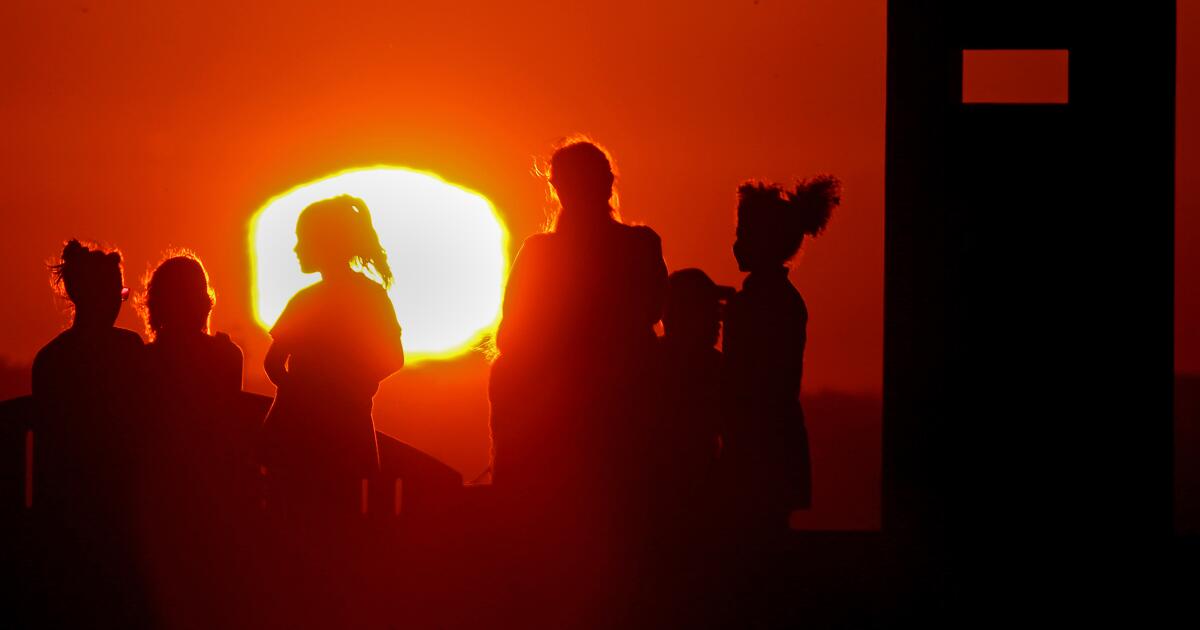
For the first time, Los Angeles County residents can see how many people are ending up in emergency rooms, their bodies pushed past the limit, during heat waves.
The county Department of Public Health says its new Heat-Related Illness and Mortality Dashboard will provide heat illness counts in “near real time,” which means weekly. That might seem like a lag, but until now the data were only provided upon request and in ad hoc reports.
Heat is the leading cause of weather-related death in the United States and heat waves are only getting more frequent and intense as the climate changes.
Public health experts called the tracker a meaningful step toward assessing how well county programs are addressing heat risks.
“It’s showing the county’s commitment to reducing the burden of heat on people’s health,” said David Eisenman, director of UCLA’s Center for Public Health and Disasters. “As the county puts more resources into that, this is a metric that allows the public to judge the effectiveness of the work.”
“There’s a handful of other places that also do this, but they’re all relatively new,” said Bharat Venkat, director of the UCLA Heat Lab, noting as examples Imperial and Riverside counties in California, Harris County in Texas and Maricopa County in Arizona. “It is very much welcome.”
The tracker takes heat illness data from patient complaints and doctor diagnoses provided by a countywide monitoring project that was previously available only to public health officials. The website says that what it provides is an undercount. The records often fail to count people when heat exacerbates more obvious health problems.
“Heat piggybacks off of preexisting health conditions,” Venkat said. “Say you go to the ER and you’re experiencing an intense psychotic episode, or a heart attack or a stroke. It’s very likely that the doctor is going to diagnose that as a psychotic episode, heart attack or stroke, and less likely that they’ll note that heat is contributing to that.”
Heat-related deaths are counted from death certificates, which present similar issues for undercounting. Those numbers will be reported monthly on the dashboard.
L.A. County has a recently approved heat action plan that aims to educate the public and reduce indoor and outdoor temperatures with strategies such as opting for shade and air conditioning.
The new tracker breaks down daily heat-related emergency room visits and deaths by age group, geography, and race and ethnicity.
It shows that people over 65 are more vulnerable to heat illness. For Black residents, heat is disproportionately fatal. And people in the San Fernando, San Gabriel, and Antelope valleys see the most heat-related emergency room visits.
Kelly Turner, a professor of urban planning at UCLA, stressed that heat sickness tracks closely with social inequality and is preventable.
“A heat death or heat illness is dependent on who you are and what assets you have,” Turner said. “If you have air conditioning or not, if you work outside or you don’t, all of those factors factor in.”
She noted that there is more risk in the San Fernando and San Gabriel valleys because of the combination of hotter days and more people who are unprotected. “When you map those two things on top of each other, you get a hot spot of vulnerability,” she said.
California already has a tool called CalHeatScore that uses historical hospital records and temperatures to forecast risk for different ZIP Codes in the state during heat events.
Public health officials hope to use the new dashboard to target messaging and public outreach when extreme heat strikes.
“If we’re having an extended heat event we can show that, ‘Hey, we’re having heat impacts’ as they’re happening,” said Dr. Nicole Quick, chief science officer at the L.A. County Department of Public Health.
Venkat said he would like to see the tool become more robust, in line with Maricopa County’s dashboard, widely viewed as the current gold standard for heat illness and mortality tracking. He said the Arizona county, which includes Phoenix, dives deeper into health records and conditions surrounding hospitalizations and deaths to better reflect the role of heat.
“They do scene investigations and send someone out to take notes about where the body was found,” Venkat said. “What was going on? Did they have air conditioning? Were they outside? Did they have access to water? What medications were they taking? All those things provide important context.”
Eisenman said he would like to see the county train physicians on recording heat-related illness, as it has been “clear for a long time” that doctors don’t make the diagnosis enough.
“It would have to be more than just a handout or a few slides. You’d really have to have each institution make some effort to change physicians’ behaviors,” Eisenman said. He added that it probably hasn’t been done because of the costs involved.

Facing higher premiums and the loss of federal subsidies, 374,000 people with health insurance from the state marketplace known as Covered California canceled their coverage in the first three months of the year, according to government statistics.
The cancellations amount to 19% of those who had renewed their policies on the state marketplace during open enrollment, state officials said. Those cancellations are higher than in the past three years when they ranged from 13% to 15% of those who renewed.
Jessica Altman, executive director of Covered California, attributed the jump in cancellations to the expiration of enhanced federal subsidies that caused the cost of a plan to leap for most middle-class Californians.
“We expect coverage losses to increase through the year,” she said.
Overall, Covered California had 1.8 million enrollees in February, down from 1.94 million the year before — a decline of 7%.
Altman said monthly enrollment numbers are delayed because consumers have a three-month grace period to resume their premium payments before the insurance carriers end their coverage for nonpayment.
This year, many middle-class Californians who depend on the state-run insurance marketplace created under the Affordable Care Act faced annual costs that were hundreds of dollars higher than last year because of the end of enhanced federal subsidies that began during the COVID-19 pandemic.
In 2021, Congress voted to temporarily boost the amount of subsidies Americans could receive for an ACA plan.
The law also expanded the program to families who had more money. Before that 2021 vote, only Americans with incomes below 400% of the federal poverty level — currently $62,600 a year for a single person or $128,600 for a family of four — were eligible for ACA subsidies. The 2021 vote eliminated the income cap and limited the cost of premiums for those higher-earning families to no more than 8.5% of their income.
On top of the loss of the enhanced federal subsidies, the average premium charged by insurers this year for a Covered California plan rose by more than 10% because of fast-rising medical costs.
The decline in ACA plan enrollees, however, has been greater in some other states. California has tried to keep people insured by using state tax money to fill in the gap for lower-income families.
This year, the state budgeted $190 million for premium subsidies for people with incomes of up to 165% of the federal poverty level.
In his budget plan, Gov. Gavin Newsom proposed spending $300 million on those state subsidies in 2027. That would expand the subsidies to enrollees with incomes up to 200% of the federal poverty level, or $31,920 for an individual or $66,000 for a family of four.
“We may actually see a number of Covered California enrollees paying less in 2027” because of the additional state subsidies, Altman said.
In May, Newsom also proposed in his budget that an additional $27 million in state money be used to help enrollees pay for the cost of gender-affirming care. That amount is an increase to the $30 million that he earlier proposed be spent this year and next to defray those costs for Covered California enrollees, according to state officials.
Last year, federal health officials enacted a rule that said the federally subsidized ACA plans could no longer cover gender-affirming care because it was no longer considered an “essential health benefit.”
Newsom’s proposed budget still faces debate in Sacramento and approval by the state Legislature.
The state marketplaces, created by the Affordable Care Act, also known as Obamacare, were meant to help those who don’t have access to an employer’s health insurance plan and have incomes too high to qualify for Medi-Cal, the government-paid insurance for the poor and disabled.
Because of the higher cost this year, more people are choosing the lower-priced Bronze plans. Those plans have higher co-pays and deductibles than the more expensive plans.
“We’re very concerned with the large shift to Bronze,” Altman said. “When you have higher cost-sharing, you’re more likely to defer care.”
-
Texas54 seconds ago
NCAA denies Texas Tech’s appeal regarding Brendan Sorsby’s eligibility
-

 Utah6 minutes ago
Southern Utah car enthusiasts hold procession for man who died driving Model T Ford
-
Vermont13 minutes ago
VT Lottery Mega Millions, Gimme 5 results for June 5, 2026
-

 Virginia16 minutes ago
Virginia Lottery Mega Millions, Pick 3 Night results for June 5, 2026
-

 Washington21 minutes ago
Storm Team4 Forecast: More highs in the 90s, rain chances later
-

 Wisconsin28 minutes ago
Wisconsin Lottery Mega Millions, Pick 3 results for June 5, 2026
-

 West Virginia31 minutes ago
West Virginia Rep. Riley Moore secures $13M, including $6M for Oglebay Grow Center
-
 Wyoming36 minutes ago
As immigrants self-deport from Wyoming, small towns could get ‘hollowed out’

