Oregon
Are Meta, Google, and Amazon the Monsters of Oregon’s Deep Blue Sea? | Essay


In 2020, Edge Cable Holdings, a Facebook subsidiary, was burying a new fiber-optic cable into the seabed near Tierra Del Mar, Oregon. Working beneath a rugged mixture of basalt rock mounds, unconsolidated sands, and sandstone bedrock, the company’s drilling operation went awry. Stalled out, they ditched their metal pipes, drilling fluids, and other construction materials in the ocean: Out of sight, out of mind.
When Oregon’s Department of State Lands learned of the abandonment, they ordered Edge Cable Holdings and Facebook (now Meta) to pay a fine. But the damage was done. Two sinkholes formed along the installation path and most of the materials will remain lodged in the seafloor forever. These items, and thousands of gallons of drilling fluid, pose an ongoing risk to the surrounding seafloor ecosystem. Despite public outrage, the company returned to complete the cable in 2021, with debris from the first attempt still lodged in the seabed.
The cable was not the first to slither into Oregon’s stretch of the Pacific Ocean, and it’s by no means the last. Big technology companies including Amazon, China Mobile, and Google are flocking to Oregon’s coastline to land transpacific fiber-optic cables. Most recently in August 2023, the Department of State Lands approved a 9,500-mile fiber-optic cable connecting Singapore, Guam, and the United States.
What has transformed Oregon into an undersea cable hotspot—and how is the installation process affecting a vibrant ocean ecosystem? The explanation resides in tax breaks, swift permitting processes, cheap energy, vast amounts of open land for data centers, and a historical carelessness for the environment shared by the state and tech companies alike.
Fiber-optic cables transmit data with pulses of light through thin glass fibers. In 2022, they provided over 98 percent of the world’s internet services and international phone calls. There are more than 745,000 miles of submarine fiber-optic cables in operation around the world—that’s enough cable to wrap around the Earth’s equator more than 29 times. It’s the work of cables, not satellites, that connect us on a global scale.
Although undersea cables seem to be torn from the pages of a futuristic science fiction novel, they aren’t a new technology. The first functional telegraph cables crossed the Atlantic seabed in the 1860s.
The Pacific, a wider and deeper ocean basin and therefore more difficult to wire, received its first transoceanic cable in 1902. By the early 1900s, the global seafloor hosted around 200,000 miles of telegraph cables. And by the 1950s, that number reached nearly 500,000 miles of telephone and telegraph cables, with fiber-optic cables first joining the mix in the 1980s.
What has transformed Oregon into an undersea cable hotspot—and how is the installation process affecting a vibrant ocean ecosystem?
Back then, many transpacific cables landed in California, Washington, and British Columbia, where they could link up with transportation hubs and industrial centers on land. That began to change in 1991, when Oregon landed its first transpacific fiber-optic cable. Called the North Pacific Cable, the privately owned line connected Oregon to Alaska and Japan. In the three decades since, the state has welcomed a new fiber-optic cable every four or five years, in tandem with new data centers—large, high-security buildings that store rows of servers. These servers host the internet’s millions of websites.
There are significant onshore incentives for cable owners to land their lines in Oregon. Oregon’s “enterprise zones” tax-exemption program allows individual towns to negotiate property tax breaks for big construction projects, thereby saving companies millions of dollars each year. In exchange for the tax breaks, tech companies provide a small influx of jobs and tax revenue to small communities hurting from the decline of the timber industry. In 2015, Oregon lifted its cap on enterprise zones to attract even more data centers, just as more cables arrived along the shoreline.
Consider Meta, which owns a 4.6 million square foot data center complex in rural Prineville, Oregon. Although it’s far from the ocean in a former timber town, this data center connects to a network of underground fiber-optic cables, including the controversial undersea cable installed near Tierra del Mar. In 2015, the Oregonian reported that the data center complex received $30 million in tax breaks that year alone.
For Meta, as well as Amazon, Google, and Apple, Oregon offers a win, win, win.
So who exactly is losing?
The coastal ecosystem. During installation, it’s standard practice to bury cables multiple feet into the seabed to avoid snags by fishing vessels. The most common burial method is plowing, during which a remotely operated vehicle cuts a ditch into the seafloor and inserts the cable into the trough. Another method, jetting, uses high-pressure fluids to liquefy sediments on the seafloor, easily slicing a clean line into the seabed in which the cable can burrow. Companies also use directional drilling to bore diagonally into the seabed from the shore. All of these methods squish or displace any worms, crabs, sea stars, urchins, anemones, corals, or sponges living within the trenching path.
Once installed, submarine cables settle into the seafloor ecosystem. In search of hard substrate to call home, marine life will colonize the cable’s exterior. After a few decades of service, cable owners have historically abandoned their lines in the ocean, a decision that is both cheaper for companies and often results in less disturbance for colonizing species. Inert but not biodegradable, most dead cables will sit in the ocean indefinitely, hidden from the public who is usually none the wiser.
The 2020 Facebook/Edge Cable Holdings abandonment prompted Oregon to pass a 2021 law instituting firmer planning and decommissioning regulations for new undersea cable projects. Still, the increasing scrutiny doesn’t appear to be slowing the big tech companies. As Amazon builds its recently approved line to Guam and Singapore, the tech giant is also building another data center in Umatilla, Oregon, a small town on the Columbia River.
Data centers are no better for terrestrial environments than submarine cables are for marine. The buildings suck significant amounts of power from the grid. Oregon’s renewable energies, like hydroelectric dams on the Columbia River, can’t cover data centers’ growing energy demands, meaning utility providers must tap into fossil fuels and increase their greenhouse gas emissions. Despite Oregon’s efforts to decrease the state’s carbon footprint, some regions are moving backward in the fight against climate change. Big tech companies, and their big buildings, are spurring that reversal.
Across Oregon, communities and ecosystems are confronting the physical impacts of a world that runs on internet—impacts that our regulatory systems have yet to reckon with.


When asked if he’d like to join the music program Keys, Beats, Bars, Mikey, who’s currently incarcerated at MacLaren Youth Correctional Facility in Woodburn, figured it would be a good chance to spend some time outside of his unit.
Through a series of workshops, the program brought local musicians and educators into the facilities. They made beats and taught the group about rhyme schemes and rap bars. It was a way for Mikey and his peers to make music, but also to discuss common interests and their shared experiences at MacLaren as they brainstormed lyrics.
Eventually, they recorded a song, “No Ceilings,” about the barriers of incarceration, the music video for which is premiering at a July 11 benefit concert at the Tomorrow Theater dubbed the Restorative Justice Showcase.
Several formerly incarcerated artists feature on the night’s bill, including Keys, Beats, Bars co-founder Talilo Marfil and influential rapper and activist Mic Crenshaw, who led the workshops that produced “No Ceilings.” Hip-hop artist Swiggy Mandela will lead a live cypher, or freestyle rap session, with music by duo Alley Oop to end the show.
Mikey, not his real name, called the songwriting process “therapeutic.”
“Being able to listen to the beats or just channel that, in a positive way,” Mikey says, “I’m glad that I got the opportunity to utilize that while I’m here.”
Music has always been a part of Mikey’s life. His mom played Mariah Carey and DeBarge, and his grandma always had something on when they spent time together on weekends. When he’s feeling irritated or doesn’t want to be bothered, he turns to music.
“You find little achievements and little accolades along the way that, while you’re doing your time, make it easier to get through the day,” Mikey says. “Some people like reading books. Some people like playing basketball. Some people like listening to music.”
Marfil, who is also executive director of the peer advocacy program Ascending Flow, says he wishes he’d had programs like this when he was incarcerated. He found support through church, “but not everybody relates to church,” he says.
After his release, Marfil enrolled in Outside the Frame, an organization that provides homeless youth access to filmmaking resources. “It made me feel like my story mattered and that it was worth telling,” he says. “They gave me opportunities to show my films, my music, to the greater public in front of sold-out shows. Going from dreaming about it in a cell to actually doing it is a game changer for an individual.”
Keys, Beats, Bars runs several music programs for disadvantaged youth. But Marfil, alongside musician and community organizer Adam Carpinelli, launched the workshops at MacLaren.
“I’ve seen it give them hope,” Marfil says. “I think that’s the most important thing: hope, motivation, inspiration and, for a moment, a sense of relief through expression.”

To protect their anonymity, the music video couldn’t feature Mikey, who raps on the song, and his bandmates directly. Instead, Marfil contracted an artist to animate the song’s narrative, which follows a boy from childhood to incarceration.
“Usually, you don’t get to do stuff like that up in jail,” Mikey says, adding that he appreciated the project’s follow-through. “It was kind of cool being able to get the opportunity to record.”
MacLaren is Oregon’s largest juvenile correctional facility. It houses up to 187 youth, ranging ages 12 to 25. While similar to a jail or prison, this style of youth correctional facility places a stronger focus on education and rehabilitation. In contrast to juvenile transitional facilities and residential programs, MacLaren is closed-custody, meaning it’s secure and fenced. In 2025, a Marion County grand jury tasked with assessing MacLaren’s conditions titled its report “Cascading Failures,” citing gang activity, extensive contraband, sexual abuse and staff shortages.
Marfil stresses the role programs like Keys, Beats, Bars play in larger efforts toward restorative justice, and towards ameliorating systemic inequities in the U.S. prison system.
Projecting incarcerated youths’ voices outside of detention facilities is a powerful means for effecting change.
“The song is really just a reflection of being in the facilities and dreaming of what could be possible without the barriers that got them there in the first place, and what they want the community to see about themselves when they get out,” Marfil says. “‘No Ceilings’ is a good example of seeing that youth who are incarcerated have hopes and dreams, and they can contribute something to society.”
SEE IT: Restorative Justice Showcase & Voices From the Inside: A Youth Music Video Premiere at Tomorrow Theater, 3530 SE Division St., tomorrowtheater.org. 3 pm Saturday, July 11. $15. All ages.
HEAR: “No Ceilings” by Keys, Beats, Bars streams on YouTube and Apple Music.
Oregon
National report: Oregon great for giving kids health insurance, bad for teaching them how to read
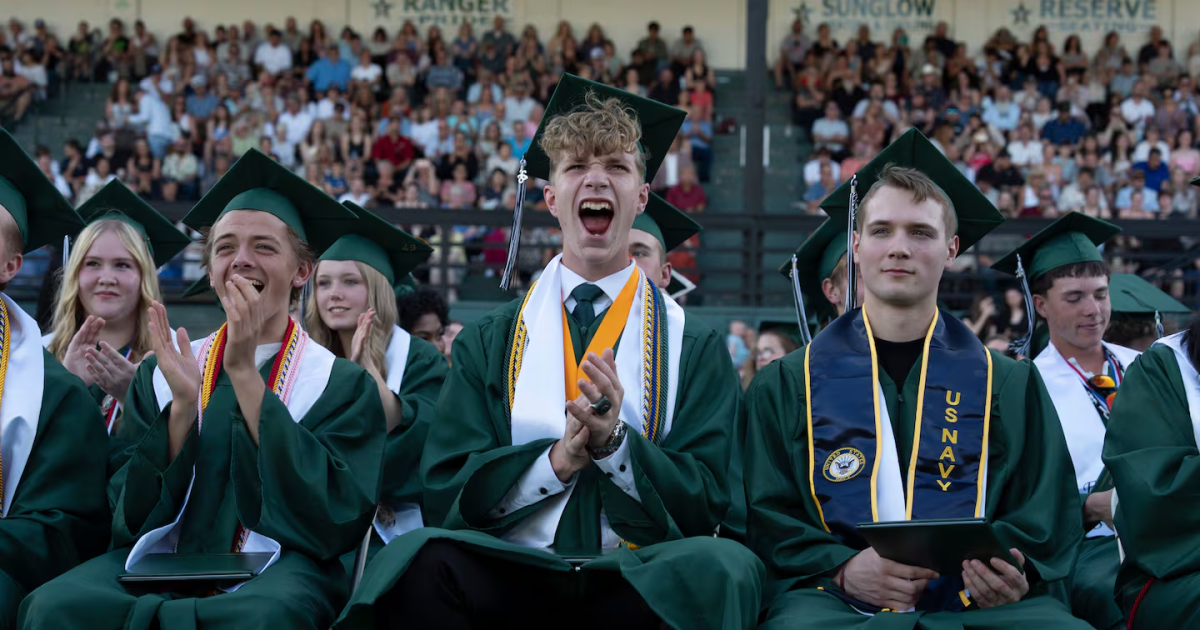
The Annie E. Casey Foundation releases the Kids Count Data Book annually, with its new 2026 edition mainly drawing on data from 2024. State-based organizations work with the Annie E. Casey Foundation on the report, including Our Children Oregon and the Children’s Alliance in Washington.
The report is a snapshot in time of how well the country is supporting its youngest residents in 16 different indicators, including percentage of children living in poverty, kids who lack health insurance and reading proficiency among fourth graders.
David Wieland, policy and advocacy director for Our Children Oregon, said all of the indicators are related and play a role in a child’s well-being.
“We can’t just say that we’ll address reading outcomes through the educational system,” Wieland said. “We actually need to look holistically at child well-being if we want to really improve any one of these single indicators.”
Oregon lags behind the vast majority of states when it comes to educational indicators, ranked at 44 of 50 states. At 31, Washington ranks a bit higher.
But outside of the classroom, the two states fare better. Both Oregon and Washington are in the top 10 of states in health and community indicators.
“These are often the result of policy choices that we make,” Wieland said. “Oregon has prioritized ensuring that children — we should celebrate that.”
But federal changes may hurt states’ progress.
As Children’s Alliance in Washington state mentions in their press release sharing the Kids Count Data, “The numbers do not reflect the current reality for kids and families impacted by federal cuts to vital programs that have already come into effect.”
One policy choice Oregon made allows students to opt out of standardized testing. As a result, Oregon’s testing participation rates are below 95%, the federal requirement.
Wieland said this policy makes Oregon’s outcomes “less reliable.”
“We simply know with less certainty how we compare,” Wieland said.
In addition to rankings, the report calculates index scores for each state, allowing year-over-year comparisons. Both Oregon and Washington’s scores declined compared to their pre-pandemic scores from 2019, and so have the index scores in 45 other states. Only Mississippi and Louisiana saw improvements. South Carolina stayed stable.
Looking Ahead
Through Oregon’s Early Literacy Success Initiative, the state has sent grants to school districts to help improve reading and provide more support for students in elementary school. But it may be a while before those investments show improvement in reports like the Kids Count Data Book, said Our Children Oregon executive director Bridget Dazey.
“We do have to be patient as the state and school districts try new things,” Dazey said. “At the same time, we can confidently say we’re underinvesting in students and so it shouldn’t be so delayed that we wait five to seven years to see how things start to shape up.”
Going forward, Dazey said her organization is working with a coalition of organizations on the next edition of the group’s Children’s Agenda, a list of legislative priorities for lawmakers. Dazey said the state also needs a vision that looks out beyond the legislature’s two-year budget cycle that school districts use to plan spending.
“We need to be thinking long term,” Dazey said. “Our state has gotten really comfortable with thinking about things in the biennium.”
This story comes to you from the Northwest News Network, a collaboration between public media organizations in Oregon and Washington.
The Oregon Lottery offers several draw games for those aiming to win big.
Here’s a look at July 6, 2026, results for each game:
Winning Powerball numbers from July 6 drawing
17-44-63-66-67, Powerball: 04, Power Play: 2
Check Powerball payouts and previous drawings here.
Winning Pick 4 numbers from July 6 drawing
1PM: 8-8-0-7
4PM: 4-2-9-2
7PM: 8-2-5-5
10PM: 7-7-2-2
Check Pick 4 payouts and previous drawings here.
Winning Win for Life numbers from July 6 drawing
18-28-41-70
Check Win for Life payouts and previous drawings here.
Winning Megabucks numbers from July 6 drawing
14-19-20-21-25-38
Check Megabucks payouts and previous drawings here.
Feeling lucky? Explore the latest lottery news & results
When are the Oregon Lottery drawings held?
- Powerball: 7:59 p.m. on Monday, Wednesday and Saturday.
- Mega Millions: 7:59 p.m. on Tuesday and Friday.
- Pick 4: 1 p.m., 4 p.m., 7 p.m. and 10 p.m. daily.
- Win for Life: 7:30 p.m. on Monday, Wednesday, and Saturday.
- Megabucks: 7:29 p.m. on Monday, Wednesday, and Saturday.
This results page was generated automatically using information from TinBu and a template written and reviewed by an Oregon editor. You can send feedback using this form.
-
 Lifestyle4 minutes ago
Can you say no to a friend’s wedding? : It’s Been a Minute
-

 Technology12 minutes ago
The robotaxi law that could ban Tesla
-

 World19 minutes ago
US urges donors to abandon UNRWA funding as UN defends agency’s mission
-

 Politics22 minutes ago
EXCLUSIVE: FBI adds alleged COVID fraudster accused of taking $5M from kids’ meal program to Most Wanted list
-

 Health27 minutes ago
One walking habit could signal a healthier brain after 80, scientists say
-

 Sports34 minutes ago
New Jersey pro wrestling promotion bringing the fight to the beach
-

 Technology37 minutes ago
Are airline miles still worth it?
-
 Business42 minutes ago
Walmart’s EV chargers are coming to California with discounts for members

