Connect with us

News

The ‘one’ way for Wall Street banks

Published

on

The ‘one’ way for Wall Street banks

Unlock the Editor’s Digest for free

A silo is a dangerous place to be on Wall Street these days. New Morgan Stanley boss Ted Pick is the industry’s latest leader to tout a silo-busting mindset to get his roughly 80,000 employees to work better together. 

Pick is hoping investment bankers will refer millionaire clients to a financial adviser, while employees working on a company’s stock plan can put in a letter good word for Morgan Stanley to win an M&A deal.

Pick used the slogan of “The Integrated Firm” repeatedly in his first letter to shareholders this year and Morgan Stanley insiders talk about this as its next leg of growth. 

Advertisement

The idea is hardly a novel one, with Pick telling an industry conference this month that he was “well aware that such phraseology exists at every firm like ours”. 

“At some level, it’s motherhood and apple pie, right? Let’s all work together,” Pick joked. And he needn’t have even looked beyond Morgan Stanley for inspiration — John Mack, one of his predecessors, was focusing on building the “one-firm firm” all the way back in the 1990s. 

In his 2022 memoir, Mack described how Morgan Stanley was so siloed that divisions had their own summer softball teams and holiday parties. “People could be as competitive inside Morgan Stanley as they were against our Wall Street rivals,” Mack wrote.

Larry Fink introduced a “one BlackRock” principle back in 2012 for the asset manager, while perennial competitor Goldman Sachs has had a “OneGS” initiative in place for almost six years under chief executive David Solomon.

There was even a wink to it in the most recent season of Industry, the raunchy HBO/BBC show about a fictional investment bank called Pierpoint, when one character references a “One Pierpoint” mantra.  

Advertisement

Goldman president John Waldron said last month that OneGS “really has a lot to do with figuring out a way to break down the silos of the firm, create incentives in the firm for everybody in the firm to serve our clients holistically”. 

For a new CEO like Pick, who is inheriting a business that made $9bn in profits last year and a strategy that investors like, “The Integrated Firm” makes sense — why not try to fine-tune the bank’s moneymaking machine? 

It also speaks to two challenges for Morgan Stanley. First, it is harder to grow mature businesses like investment banking and trading where market share has become increasingly concentrated and secular tailwinds are harder to come by. 

Goldman has said repeatedly that its OneGS initiative has helped it gain market share, overtaking Morgan Stanley in equities trading and strengthening its spot as Wall Street’s leading M&A adviser. (A retrenchment by some European rivals has also helped.)

Second, firms like Morgan Stanley have expanded so much beyond bread-and-butter investment banking and trading and into money management that they risk leaving money on the table by not ensuring that they are properly synced up. But while it makes sense on paper, actually getting these different divisions to work together can be much more fraught in practice. 

Advertisement

Bonuses for working with another division are typically highly discretionary. This can be a turn-off for some employees, though Goldman has explored paying more formulaic bonuses for business referred to its private bank. 

Cultural differences also run deep on Wall Street, where firms are often stitched together from acquisitions over many years. (Goldman is an outlier in that it has largely grown without M&A). 

The company that Pick runs today is a mix of Morgan Stanley’s investment banking and trading business, brokerage firms Smith Barney and Dean Witter, electronic trading platform ETrade and asset manager Eaton Vance. 

For a banker to refer a client to a colleague, they need to trust that the other part of the company is up to the same standard and won’t make them look bad. 

“If you’re an investment banker, you don’t want a private banker to do anything that could jeopardise the relationship [with the client], like putting them in a bad investment,” said one banker at a large US firm. 

Advertisement

Pick has said the leaders at Morgan Stanley’s different businesses are already on friendly terms, pointing to an unusually calm succession process that saw him become CEO and his two other contenders stick around as co-presidents. “We’ve been unified for a long time,” Pick said this month. “You can’t just wake up one day and say, let’s get along.”

It is not difficult to wonder though how deep such bonhomie runs at Morgan Stanley or any Wall Street bank. Investment banking is not exactly well known for being a kind and gentle world. But no doubt, when the next bank appoints a new CEO, expect the “one” playbook to be dusted off.

joshua.franklin@ft.com

News

A warm World Cup welcome? U.S. immigration policies have chilling effect

Published

on

A warm World Cup welcome? U.S. immigration policies have chilling effect

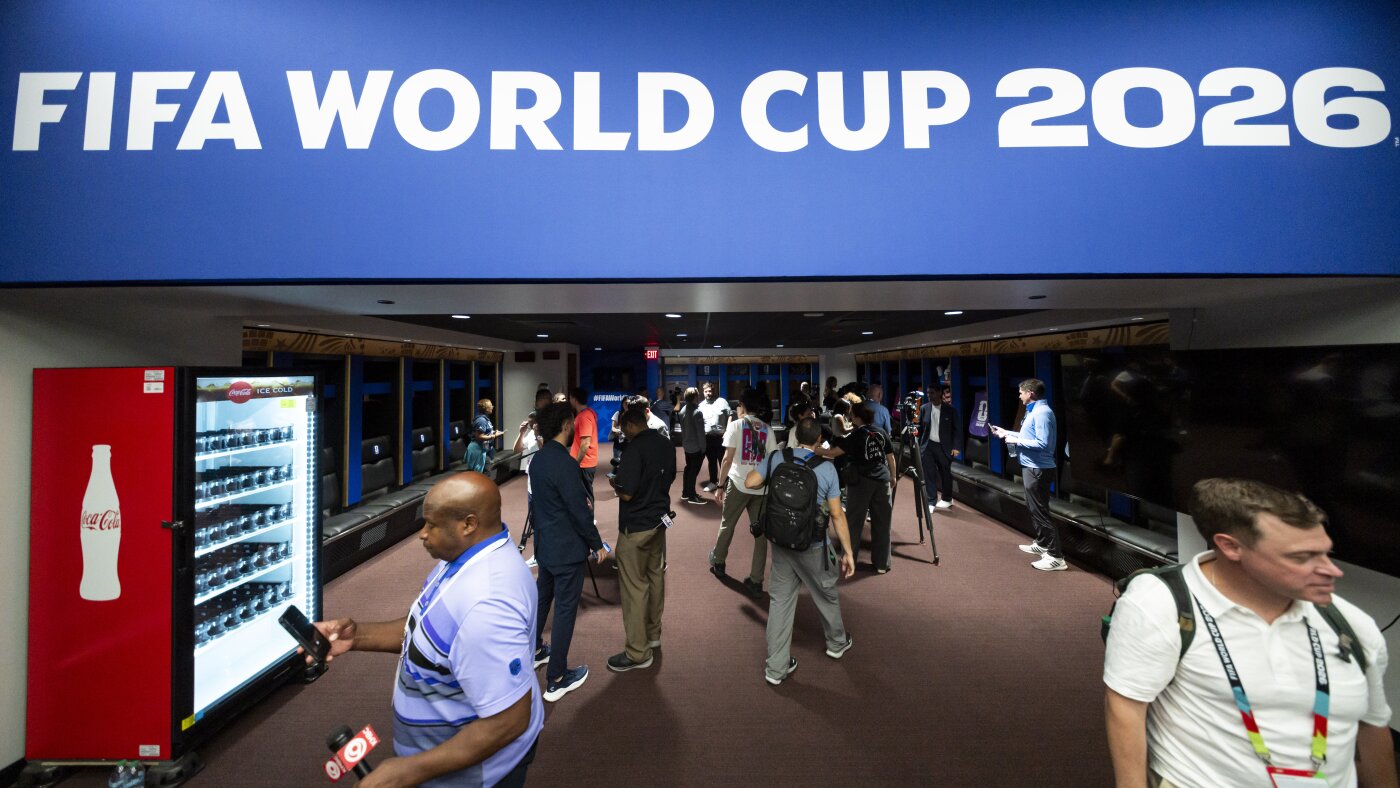
Media members tour the locker rooms at Kansas City Stadium ahead of the FIFA World Cup 2026 on June 8 in Kansas City, Mo.

Jay Biggerstaff/Getty Images


hide caption

toggle caption

Advertisement

Jay Biggerstaff/Getty Images

President Trump’s restrictive immigration policies are already impacting this year’s 2026 FIFA World Cup.

At least one referee from Somalia and one Iraqi team staff member were denied entry at U.S. airports in recent days, and dozens of fans from countries such as Morocco have been denied travel visas, despite being ticket holders.

“I view the 2026 World Cup as a massive paradox,” said Jules Boykoff, a professor and the author of Red Card: The 2026 World Cup, Sportswashing and the FIFA Greed Machine. “On one hand, it has more teams than ever participating. On the other hand, because of the policies of the Trump administration, it looks more like a World Cup of exclusion than inclusion.”

Advertisement

Boykoff, who is also a former professional soccer player, told NPR he worries the restrictive immigration policies also will shape the experience of fans in the U.S., who might be anxious about potential tense interactions with immigration agents outside of stadiums.

Boykoff’s concerns echo those of other policy experts and soccer fans who for months have warned about the influence of President Trump’s immigration policies on the tournament.

The White House did not respond to NPR’s request for comment.

In a statement to NPR, Customs and Border Protection said “all travelers seeking entry into the United States, including athletes, coaches, and staff, are subject to CBP inspection and vetting.”

The agency said “admissibility determinations are made on a case-by-case basis using law enforcement, national security, and immigration information available at the time of inspection.”

Advertisement

Denied entry to the U.S.

There are 39 countries who are under either a full or partial U.S. travel ban. For 19 of those countries, the State Department has suspended issuing all visas. The Trump administration has said the move is to “ensure that individuals approved for a visa do not endanger national security or public safety.”

Four countries in those lists — Iran, Haiti, Côte d’Ivoire, and Senegal — are expected to play in the World Cup.

On Saturday, decorated FIFA World Cup referee Omar Abdulkadir Artan, of Somalia, was denied entry to the U.S. after landing at the Miami International Airport.

In a statement, CBP said Artan was “determined to be inadmissible due to vetting concerns and was denied entry.” CBP did not say what concerns were.

Andrew Giuliani, the executive director of the White House Task Force for the World Cup, said Tuesday the denial was “for very good reasons,” but he didn’t provide any further explanation.

Advertisement

Artan did not respond to NPR’s request for comment.

Meanwhile, a player for Team Iraq was questioned for hours at Chicago O’Hare International Airport. He was allowed into the U.S., but a photographer for the team was denied entry due to “vetting concerns,” CBP said.

David Niven, a University of Cincinnati professor who teaches a course on sports and politics, told NPR these immigration issues are a self-inflicted wound.

“When you insert politics into the competition, it’s no longer the competition it was,” Niven said. “In some ways (it’s) very tangibly when a referee is missing or a player is delayed.”

The team from Iran — a country at war with the U.S. and Israel — was forced to relocate its lodging to Mexico after the U.S. government said players and staff were banned from staying overnight.

Advertisement

Visas for team members were approved last week, but more than a dozen support staff did not get approval, including Mehdi Taj, the president of the Iranian football federation.

In response to a social media post by U.S. Ambassador to Turkey Tom Barrack, the Iranian Embassy in Turkey said the U.S.’s conduct “violates FIFA regulations and breaches the United States’ host obligations.”

The Iranians also accused the U.S. of “politically biased interference in sport.”

“The U.S. government in practice is depriving Iran’s national team of its right to play in the World Cup under normal conditions and without undue pressure and stress,” the post on X said.

Fans face travel restrictions

Fans come from all over the world to attend the World Cup and cheer on their teams. Their chants and songs add to the excitement and vibrancy of the games.

Advertisement

But some fans and policy experts worry this year’s tournament may lose some of that exuberance because of U.S. visa denials.

According to the Moroccan news website Hespress, more than 40 members of multiple Moroccan football team supporter associations have been denied visas to attend the tournament. Many had tickets to the games and hotel bookings.

Gianni Infantino, FIFA’s president, in 2025 pushed against what he called “misconceptions” and said “everyone will be welcome in Canada, Mexico and the United States for the FIFA World Cup next year,” and that the U.S. was committed to a smooth travel process, so fans from all over the world will be welcome.”

But in response to Artan being denied entry to the U.S., a spokesperson for FIFA distanced the organization from the immigration issues. “FIFA is not involved in host country immigration processes, including visa adjudications, and has been informed by authorities that Mr. Artan’s status will not be changed at present,” FIFA said in a statement to NPR. “In line with previous FIFA events, a host government ultimately determines who receives a visa and who is admitted into their country.

Niven called FIFA’s new position “striking.”

Advertisement

“FIFA has raised the surrender flag on this question,” Niven said. “They’ve taken this situation and basically deferred to the United States and said the United States can do as they see fit.”

Continue Reading

News

Maine’s Senate race and much more. Here are the primary contests to watch today

Published

on

Maine’s Senate race and much more. Here are the primary contests to watch today

Voting stickers are displayed on a table at a polling place inside City Hall, Tuesday, Nov. 5, 2024, in Las Vegas.

John Locher/AP Photo


hide caption

toggle caption

Advertisement

John Locher/AP Photo

Today’s primary contests stretch from Maine to North Dakota, South Carolina and Nevada, where voters will decide on races for the U.S. Senate, House, governor and more.

A lot is riding on the Senate race in Maine, where political newcomer Graham Platner, facing a series of controversies, is the presumptive Democratic nominee to take on Republican Sen. Susan Collins, who has had the job for 30 years.

Another Republican incumbent, Nevada’s Gov. Joe Lombardo, is facing a tough challenge in November.

Advertisement

And in a field of MAGA-devoted Republicans in South Carolina, Lt. Gov. Pamela Evette was the one to grab President Trump’s endorsement in the race for governor.

Here, reporters from the NPR network tell us about the key races to watch.

Maine U.S. Senate seat | Maine’s 2nd Congressional District | Maine governor | Nevada governor | South Carolina governor

You can also check out voter resources for the June 9 primaries from the NPR network.

Maine’s primary winners will set up crucial November races

Kevin Miller and Steve Mistler, Maine Public 

Advertisement

Maine’s U.S. Senate seat

If Democrats want control of the U.S. come November, they almost certainly need to take five-term Republican Sen. Collins’ seat in Maine.

The outcome of the pivotal race could hinge on whether voters value Collins’ clout and ability to secure federal dollars over Democratic insurgent Platner’s call to upend a political system he says is rigged against working-class Americans.

The first-time Democratic candidate has so far run a barnstorming campaign that’s already pushed his Democratic rival, Gov. Janet Mills, out of the race.

After recent accusations published by The New York Times that he was physically threatening in a past relationship, and previous revelations that he sexted with several women early in his marriage, some are wondering if he still has enough support to flip the seat in November. In an interview with Maine Public, Platner denied the accusations.

Maine’s 2nd Congressional District

In a district that has voted for Trump three times, four Democrats are vying to replace retiring Democratic Rep. Jared Golden. Whoever wins the primary will face former Republican Gov. Paul LePage in the fall.

Advertisement

The Democratic nominee in this congressional district will offer a sense of what kind of candidates primary voters think can succeed in hard-to-win seats.

Maine’s governor

The race to replace term-limited Democratic Gov. Janet Mills is likely to go to a Democrat, according to an analysis by the Cook Political Report, but it’s still a question of who. There is a five-way Democratic race for the nomination, seven active candidates on the GOP side and both races have the potential to go to a ranked-choice runoff.

The affordable housing crisis, rising property taxes, access to health care and standing up to President Donald Trump have emerged as central themes in the primary contest.

Recent polls show former Maine CDC Director Dr. Nirav Shah in the lead, though former Maine Senate President Troy Jackson appears to be surging in popularity ahead of the ranked-choice primary election.

The presumptive frontrunner in the GOP contest is Bobby Charles, an attorney and former Navy intelligence officer.

Advertisement

In November, State Sen. Rick Bennett will also be on the ballot running as an independent.

Nevada’s GOP governor faces a tough November

Paul Boger, Nevada Public Radio

Trump’s economic policies are so unpopular in Nevada that the incumbent governor, Republican Joe Lombardo, is facing what could be a tough November election. Cook rates the race as a toss-up, and the candidate who may have the best shot against Lombardo, former Clark County Sheriff, is the state’s top cop, Democratic Attorney General Aaron Ford.

With a sizeable war chest, Lombardo should sail through the primary. Still, it may not be enough in November to assuage Nevadans worried about increasing costs in a tourism-based economy that is welcoming fewer domestic and international visitors every month.

Ford’s path to the Democratic nomination isn’t guaranteed. He’s drawn criticism from Republicans for his extensive domestic and international travel as attorney general. And from his main Democratic opponent in the primary, Washoe County Commissioner Alexis Hill, for Ford’s support of data centers, which are an existential concern in the country’s driest state.

Advertisement

The governor’s race in South Carolina tests Trump’s endorsement power

Gavin Jackson, South Carolina Public Radio

The crowded race for governor in South Carolina doesn’t have a clear frontrunner, even though the president has endorsed Republican Lt. Gov. Pamela Evette, a longtime supporter of his, in Tuesday’s primary.

Evette’s biggest challenger is another Trump enthusiast, four-term Attorney General Alan Wilson. Congresswoman Nancy Mace, who claims her vote for more transparency of the Epstein files cost her Trump’s endorsement, is also on the ballot. The race is widely expected to go to a runoff.

Three Democrats are vying for their party’s nomination: Columbia state Rep. Jermaine Johnson, Charleston lawyer Mullins McLeod and Greenville businessman Billy Webster.

After Trump lost his first primary endorsement race last week in Iowa, political watchers are sure to have a close eye on how votes shake out in South Carolina.

Advertisement

Voter resources for the June 9 primaries from the NPR Network

Maine | Nevada | North Dakota | South Carolina

Continue Reading

News

Former Kennedy Center curator talks about the venue’s future

Published

on

Former Kennedy Center curator talks about the venue’s future

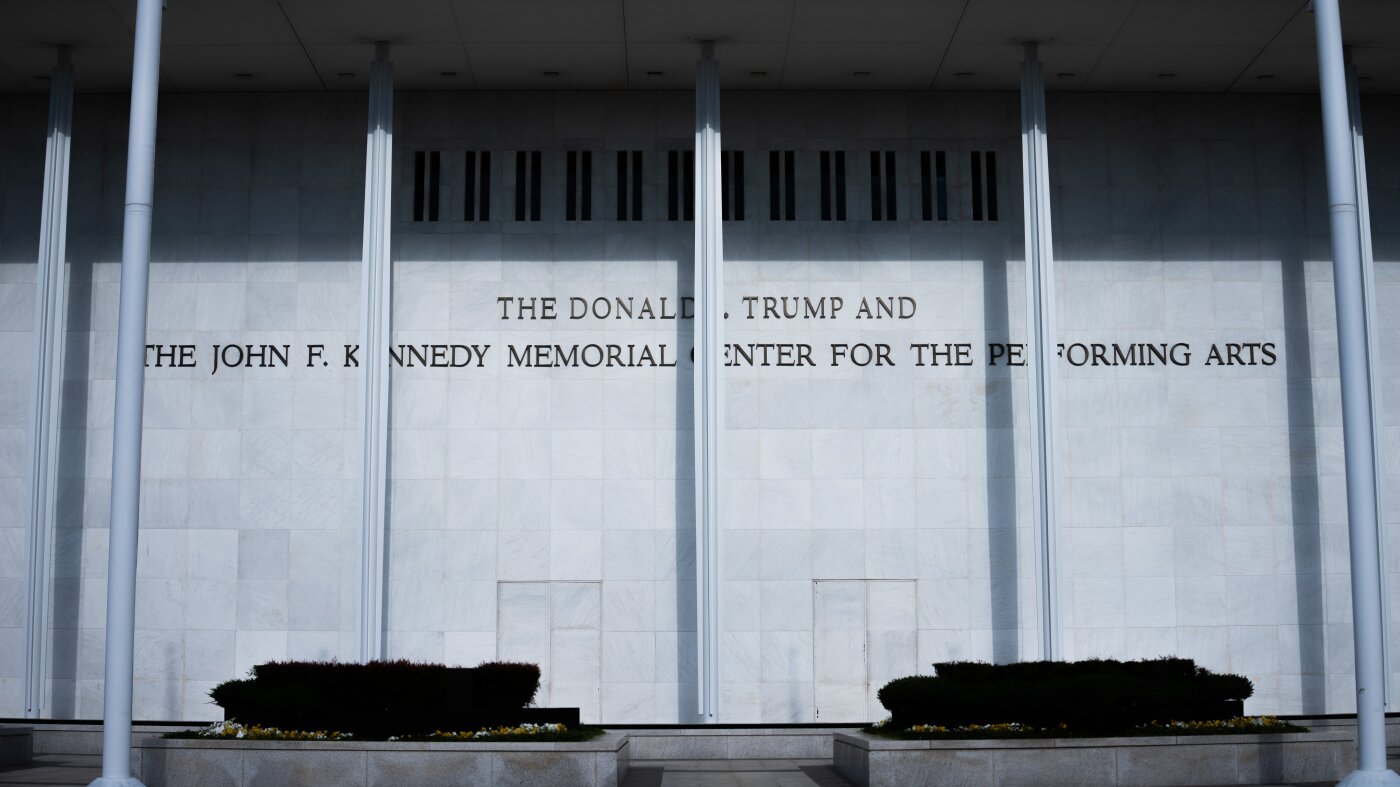
The facade of the John F. Kennedy Center for the Performing Arts is seen June 6 in Washington.

Aaron Schwartz/Getty Images


hide caption

toggle caption

Advertisement

Aaron Schwartz/Getty Images

After multiple setbacks in his effort to remake the Kennedy Center to his liking, including losses in several lawsuits, President Trump says he is handing operations of the center back to Congress. It is not clear what that means, since Congress does not actually run the cultural center.

The move comes after a judge in Washington, D.C., sided with jazz performer Chuck Redd, who canceled a 2025 holiday concert after Trump’s name was added to the building. The judge wrote that the Kennedy Center failed to prove the musician had signed a contract to perform.

Advertisement

Josef Palermo, a former curator of visual arts at the Kennedy Center, wrote about his experience in a piece for The Atlantic titled “What I Saw Inside the Kennedy Center.”

He told Morning Edition on Monday he joined at a time when others were quitting or being fired because he wanted to “run towards it as a sort of metaphorical first responder and try to save what I could.”

Palermo also said Trump’s Truth Social post about handing control back to Congress sounded like an attempt to distance himself from an institution. He adds that he believes the Trump administration has driven the center into bankruptcy. Programs such as the National Symphony Orchestra still do not have approved budgets.

In this interview, he talks about how the Kennedy Center’s leadership changed under Trump and how questions now surround the institution’s finances and future.

Listen to the interview by clicking play on the blue box above.

Advertisement
Continue Reading
Advertisement

Trending