Lifestyle
Queenie's second life on screen gives her more room to grow

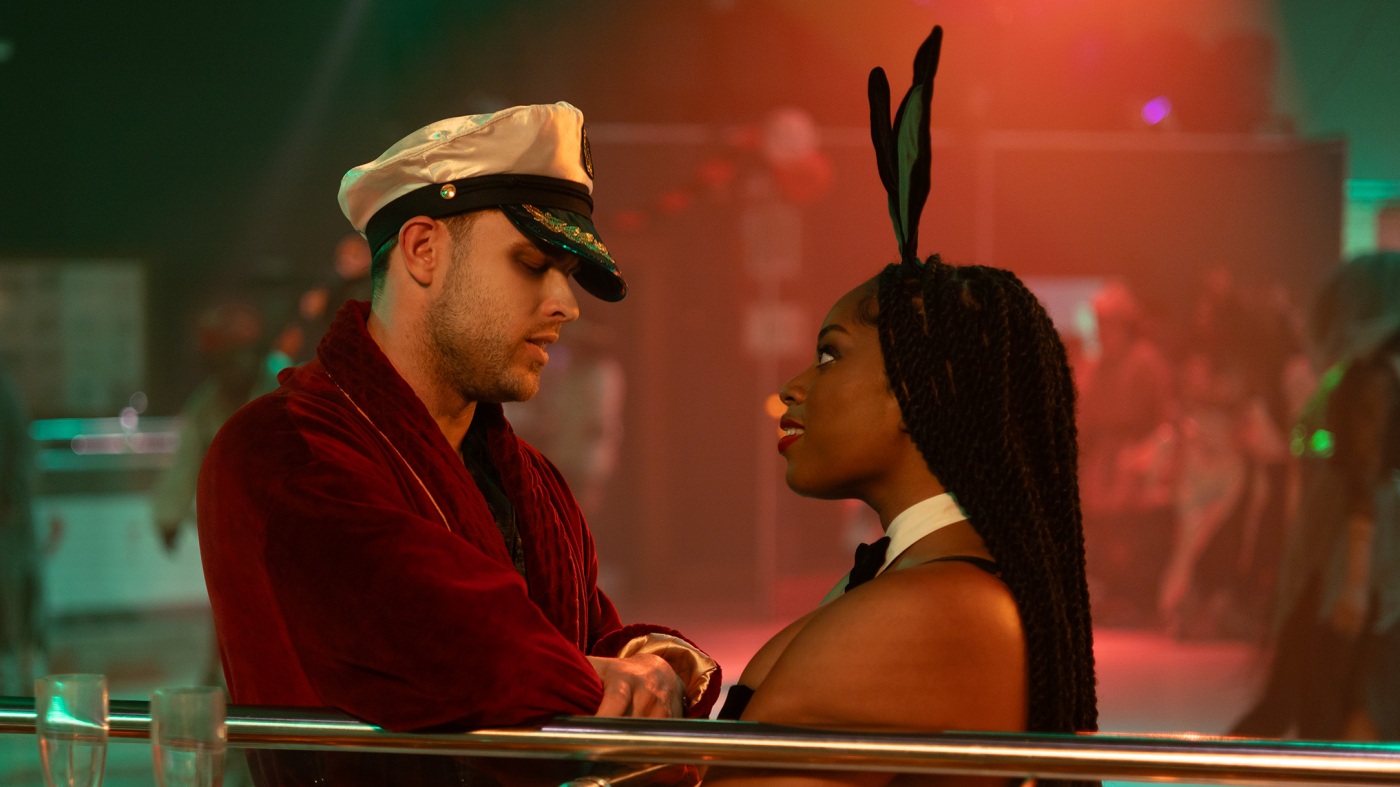
In the episode “From Virgin to Vixen,” Queenie is in peak fun mode, until her demons begin to catch up with her.
Latoya Okuneye/Lionsgate
hide caption
toggle caption
Latoya Okuneye/Lionsgate
The new Hulu series Queenie explores the quarter-life growing pains of lonely South Londoner Queenie Jenkins.
The first of her British Jamaican family to go to university, Queenie is a struggling writer awkwardly straddling multiple worlds. An unwanted breakup with her white, longtime live-in boyfriend Tom sends her painfully reeling — spiraling into, and then climbing out of, destructive behaviors and onto a journey of growth and self-acceptance.
The show, which premiered Friday, is based on a 2019 book by Candice Carty-Williams. And with Carty-Williams at the creative helm, the novel’s strengths are immediately visible on screen: the sharp social observation, the rawness of the voice, and the specificity and conundrums of aspirational, young Black British life in the millennium.
As showrunner, Carty-Williams effectively translates and expands her vision, addressing the pain points that both riveted and rankled the book’s readers and ensuring that the creative aspects of production also make an impression. Through sight, sound and performance, Queenie creates an empathetic and irresistible portrait of a young woman’s life in multicultural-yet-divided London.
The performances bring the novel to life
As great as the production sounds and looks, it’s the performances that make Queenie’s journey really accessible on screen. The material is challenging and multi-tonal but not a performance hits a wrong note. British actor Dionne Brown embodies Queenie Jenkins inside and out in a breakout role that is a world away from her restrained supporting performance as a police detective in the Apple TV+ crime drama Criminal Record. Brown told NPR she felt drawn to the role because of how strongly she related to the novel: “my most visceral and initial reaction was just, I didn’t know that other women felt like this. I didn’t know other Black women felt like this.” So throughout taping she used the book “like a Bible.”
And though it’s her first screen acting role, hip-hop artist Bellah is bubbly and fierce as Queenie’s bestie Kyazike. As her loving and protective Jamaican grandparents, Joseph Marcell (butler Geoffrey from The Fresh Prince of Bel Air) and actress and comedian Llewella Gideon steal every scene they’re in. Pivotally, BAFTA-nominated actor Samuel Adewunmi, so powerful in the crime drama You Don’t Know Me, radiates charisma and kindness as Kyazike’s cousin Frank.
The format allows the audience to go deep
The eight-episode series format allows viewers to go deep into Queenie’s world, getting to know friends and family and helping us understand how love surrounds Queenie without her really feeling it. Where the novel can seem a bit bleak in spite of the humor, episodic TV gives Carty-Williams more room to experiment with different moods and tones. A few days before the premiere, Carty-Williams told NPR that she knew “we would need a lot more light on the screen” in the TV adaptation.
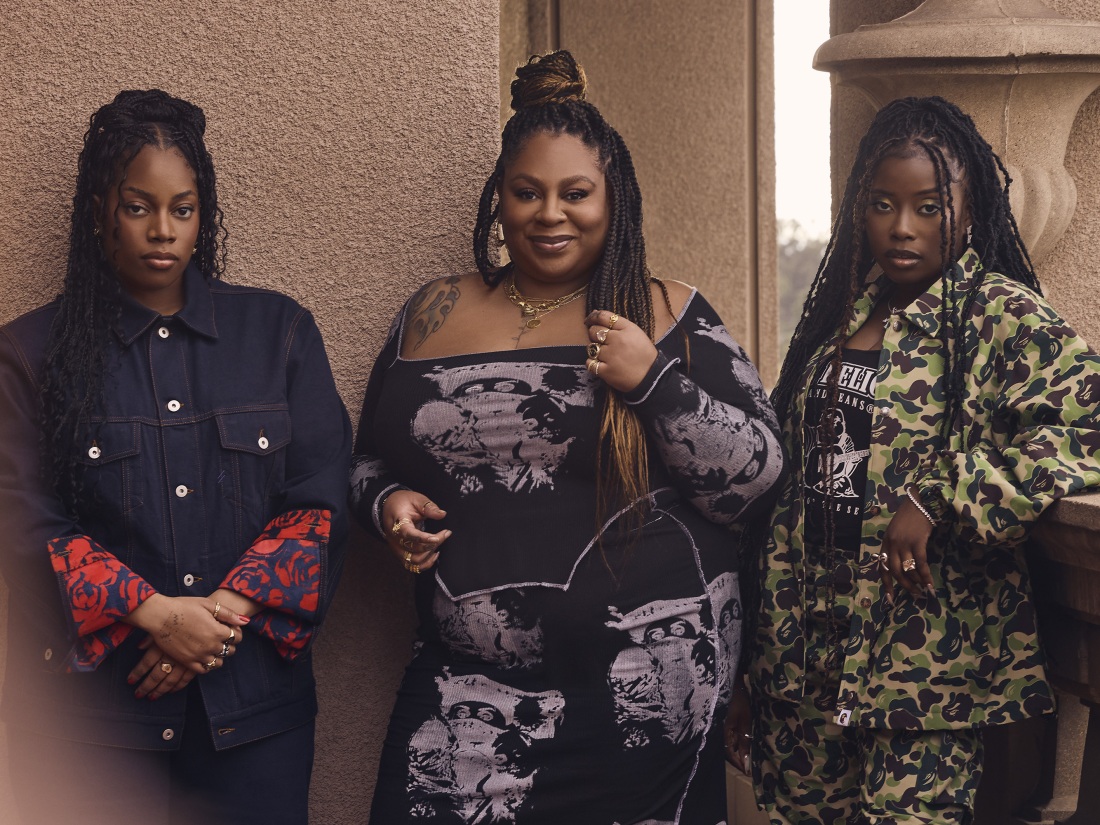
Candice Carty-Williams’ Queenie stars Dionne Brown and Bellah.
Ramona Rosales/Disney
hide caption
toggle caption
Ramona Rosales/Disney
Carty-Williams also said she felt fiercely protective bringing her first published novel to the screen. Basing Queenie’s story on her own experience coupled with second hand-horror stories from friends, “I had all those feelings and I didn’t want them to be stripped away, or watered down. The politics were important to me, the characters are important to me.” Queenie is a young woman’s story, but it’s also the manifestation of the adage that the personal is political. Queenie’s experiences lay bare the contours and consequences of England’s casual racism in every dimension of daily life. That includes, “the ways that [Queenie] was treated by people. This is at work, this is in relationships, this is in her relationship with Tom.” Carty-Williams said she was “willing to fight” to ensure that Queenie’s mental and emotional journey of finding herself in this world she saw as unfair made it to the screen intact.
Despite the production’s extensive management structure (Lions Gate, Disney’s Onyx Collective, and British Channel 4 were involved and over a dozen executives), it’s clear she succeeded. The show teems with the sometimes-painful, subtly-political observational humor and confessional motif that made the book stand out – and all the elements work well together.
Some important changes from novel to screen
Still, though faithful to the novel’s quarter-life crisis story, with the book’s most memorable thoughts and lines of dialogue making the leap almost verbatim from page to screen, the script bears some important changes. For one, Queenie’s circle includes a romantic addition – best friend Kiyazike’s cousin Frank, a friend and new love interest who appeared once briefly in the novel. Frank’s addition improves the series by addressing one of the biggest issues dogging the novel’s more ambivalent readers: Queenie’s fear and avoidance of Black men in favor of often painful encounters with white and brown men.
Queenie’s original release reflected both the pervasiveness and abuse of “rom-com” and “chick-lit” as book industry terms of art, and the delicate tightrope that Black writers walk telling stories about love, sex and race.
When Queenie debuted it appeared on best seller lists in multiple countries. Queenie won both Best Debut and Book of the Year at the British Book Awards. Carty-Williams was the first Black woman author to win the latter award.
In Britain, where Carty-Williams grew up, Queenie quickly found a fiercely loyal following — a largely female audience that loved its voice and perspective. Many of those readers were women of color, Black British women who identified fiercely with the young woman struggling to claim love, career, self worth and mental health.
But the book’s popular and critical reception was somewhat mixed in the U.S., where the author was an unknown quantity. At minimum, some audiences were discomfited by Queenie’s emotional scarring and trauma around race when they believed they were promised something lighter – the heft and trauma of the book billed as a Black Bridget Jones Diary seemed to betray its framing. While Bridget Jones’ deepest insecurities stemmed from 10 extra pounds, granny panties and two very different suitors, Queenie grapples with racism, a miscarriage and sexual trauma. And some vocal African American readers were unhappy with its handling of these heavier themes. At worst, some storylines were seen as painfully self-hating or even the product of internalized anti-Black racism.
Falling into ever more painful situations, Queenie has sex with men who talk about and treat her in demeaning, if not downright racist ways — the men she meets in apps and in the neighborhood reference her race, color, and the contours of her body as though she is a sex toy. They don’t see or aren’t that interested in her intelligence and her pain.
Gallery/Scout Press
hide caption
toggle caption
Gallery/Scout Press
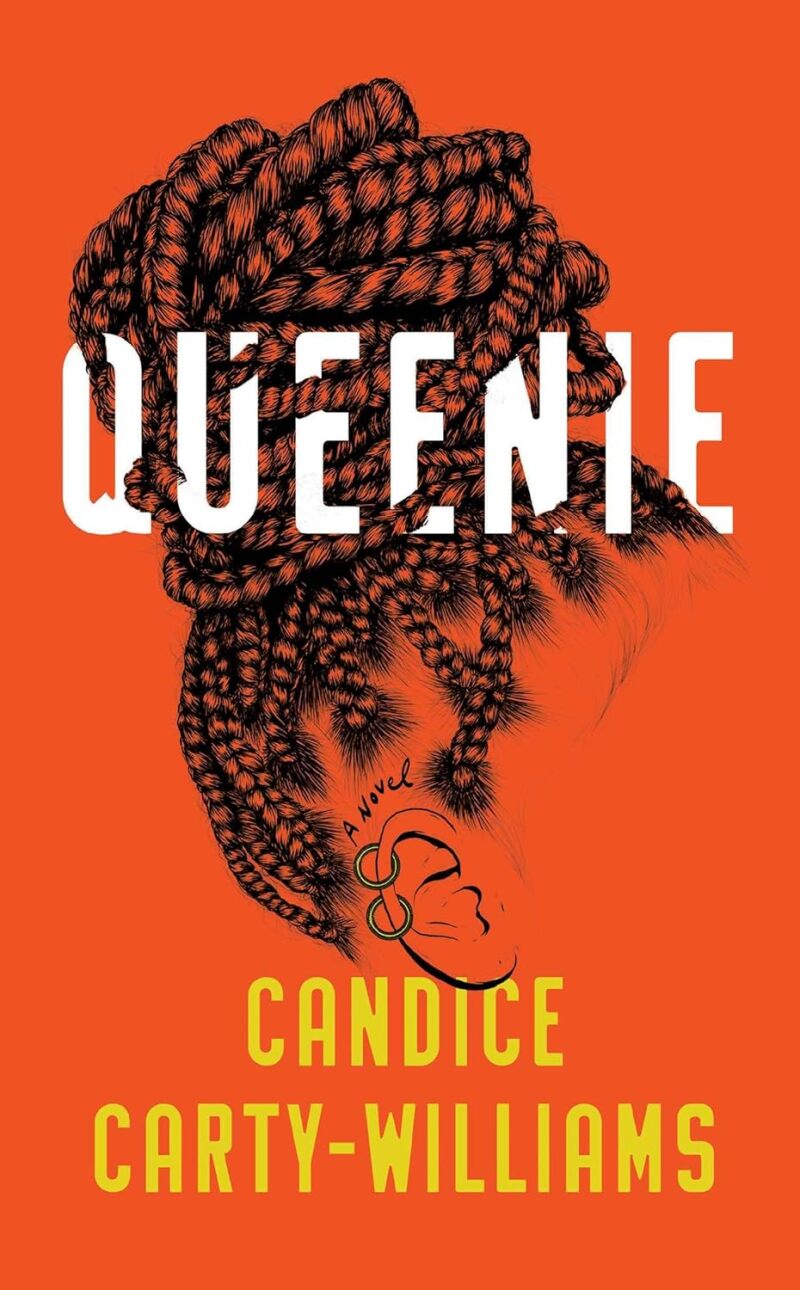
Carty-William’s unflinching portrayal of Queenie’s situation is one of the novel’s most challenging aspects. Though Queenie notices and complains about the degrading approaches, she dates a series of these men and continues to long for the return of a boyfriend who seems to treat her with little regard. She seems to internalize racism and brush off the disrespect, taking it in stride as long as the men dishing it out are not Black. Even for a literary novel (which despite the comedic tone, Queenie really is) that would be hard to take in (Luster comes to mind). But that’s not how the book was positioned. Though Carty-Williams used the “Black Bridget Jones” marketing pitch to broaden the readership, she’s also said of Queenie: “She’s not Bridget Jones. She could never be.” As a result of the label, though, and the gorgeous, brightly-colored cover drawing of a Black woman with braids and hoop earrings, Black women were primed to see themselves at the center of romance-infused comedy. That’s not what they got.
Instead, the novel Queenie offers a sometimes harrowing multidimensional portrait of the dynamics of love, work and identity, mental health, and the Black immigrant experience. The love and acceptance Queenie eventually finds is hard won, and it lies not in a romantic relationship but within herself and her community. That’s a healthy choice. But every genre makes a promise, and a bait and switch in terms of reader expectations can feel like erasure.
Exploring critically important topics in the book and on screen
That said, as Carty-Williams emphasizes, discomfiting or not, Queenie’s experience is worth delving into. If it’s hard to reconcile Queenie’s sharp insight and her self-destructive actions, it’s also true that Queenie navigates a world that routinely doesn’t see, or fetishizes and even villainizes, her. Exploding the stereotype of a “strong Black woman,” with intense vulnerability, parts are hard to watch, but through her experimentation and misadventures, both the novel and the series explore essential topics: the racial and gender dynamics and politics of consent and desirability, and the rippling effects of domestic partner abuse. It is hard to watch her covet white attention and approval even when it hurts her, but it’s something that many Black women have been through.
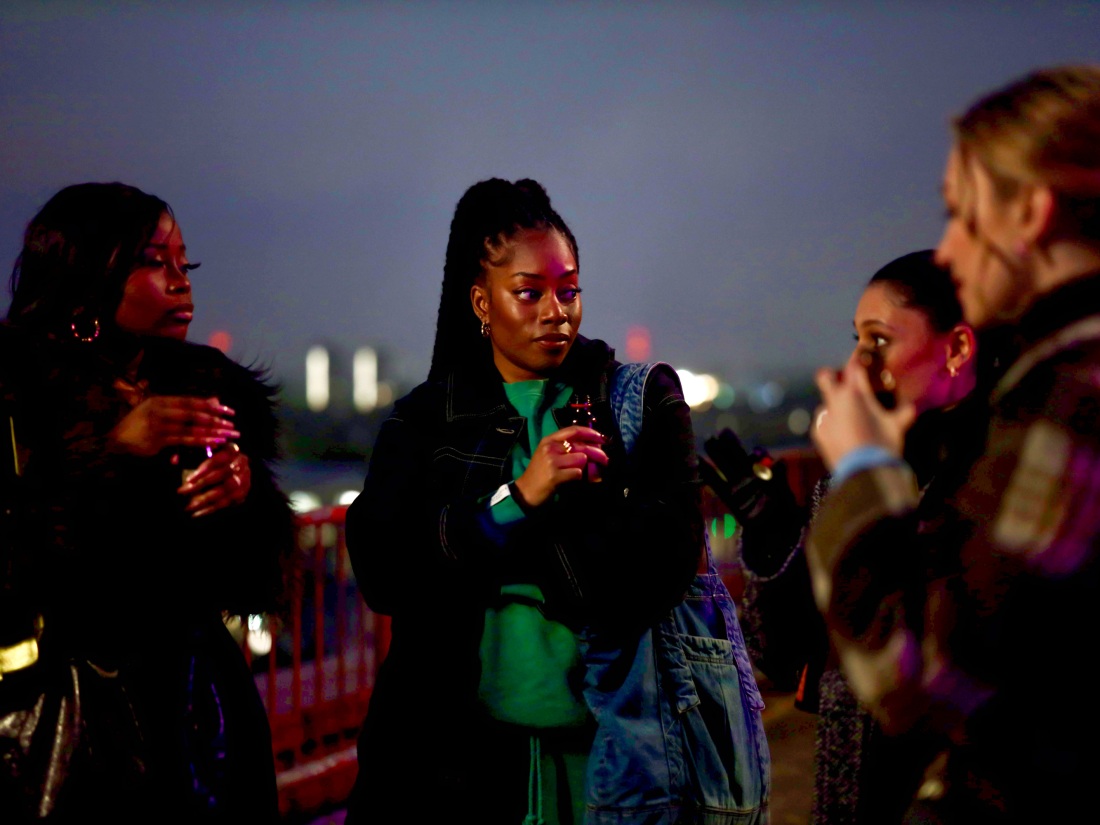
Dionne Brown as Queenie in a scene with her best friend Kyazike, played by Bellah.
Latoya Okuneye//Disney
hide caption
toggle caption
Latoya Okuneye//Disney
A big challenge for the screen adaptation is that despite therapy, Queenie’s deeply rooted fear of Black men doesn’t have a resolution, or much deeper exploration in the original text. In a novel about self reflection, self-acceptance and growth, this is hard to reconcile. The series does better. The racial dimensions of Queenie’s pain and fears were at the center of some online discourse in 2019 and, in the leadup to the premiere, some with knowledge of the story raised similar questions on social media in reaction to the Queenie trailer.
When talking with NPR for this piece, Carty-Williams pointed out that when readers have been in conversation about her debut, they tend to ask how Queenie did what she did. She pushes back wondering why the onus is on the woman rather than asking why men behave how they do toward Queenie. She also disclosed that the series allowed her to better resolve Queenie’s difficulties with men in her community partly, but not exclusively, through her relationship with her best friend’s cousin Frank. Carty-Williams said that this exploration was inspired both by conversations with readers and by her own maturation. Now in her 30s, she says she better understands attachment disorder, and how fears and triggers manifest, than when she started writing the novel at 26. In this way, the story of the making of Queenie-the-series has a happier ending — giving Queenie more room to grow.

Lifestyle
John Cena wanted to step away from the WWE ring before he became ‘too slow for the show’ : Wild Card with Rachel Martin

A note from Wild Card host Rachel Martin: First a confession: I have never watched a WWE match in its entirety. Don’t get me wrong, I appreciate the athleticism and the performance, it’s just not my thing. But there is something about John Cena I’ve never been able to shake.
Yes, he is a wrestling legend, but he has built a career as an entertainer that transcends the ring. The first time I saw him lead a cast was the 2019 family movie “Playing with Fire” and his rapport with kids in that film didn’t seem like acting at all. The man contains multitudes!
He co-stars with Eric Andre in his newest film, “Little Brother.”

Xie Miao and Yang Enyou in The Furious.
Norachai Kajchapanont/Lionsgate
hide caption
toggle caption
Norachai Kajchapanont/Lionsgate
There have been some fantastic movies released this year, and we know you can’t see them all. So we’re recommending four recent movies we missed that you should add to your watchlist: The Furious, Tuner, She’s The He, and Heresy.
If you need a few more fun film recommendations, check out these episodes:
Fun movies you may have missed
Our favorite movies on Tubi
We debate the best movies to watch on an airplane
Connect with Pop Culture Happy Hour:
Letterboxd / Facebook
Our weekly newsletter
Support Pop Culture Happy Hour+

A tarp covers the facade of the John F. Kennedy Memorial Center for the Performing Arts in Washington, D.C., on June 13. A federal judge has asked the arts complex’s leadership to explain the purpose of the tarp and the surrounding scaffolding.
Alex Wroblewski/AFP via Getty Images
hide caption
toggle caption
Alex Wroblewski/AFP via Getty Images
On Wednesday, the federal judge overseeing the Kennedy Center lawsuit ordered the center to give him a status report on the center’s operation and programming within the next few weeks. Judge Christopher R. Cooper also said that the Kennedy Center must explain the purpose and status of the tarp and scaffolding that have been placed over the front of the arts complex, where until recently both President Trump and President John F. Kennedy’s names were both displayed.
In a directive issued last Tuesday, Judge Cooper had given Kennedy Center administrators three days to update him on the arts complex’s immediate plans regarding construction, programming and public access. Trump, who now serves as the center’s chairman, had announced July 5 as the date the venue would close for major renovations.

Last Friday, on Cooper’s due date, lawyers for the Kennedy Center filed a request asking for an extension. In that filing, Matt Floca, who was promoted as the center’s president and CEO in March, said that the Kennedy Center’s current management intends to present its board with “an array of options” for trustees to vote on at their next meeting on an unspecified date in mid-July.
According to Floca, the options are a complete closure for extensive renovations; a partial closure “enabling some continued public access and limited programming” while some renovations are undertaken; and “a highly limited series of phased closures to address only the center’s most serious infrastructure needs while scheduling and maintaining a full slate of programming.”
In his newest order, Cooper denied Floca’s request for an extension. And he mandated that the center file a status report within seven days of the center’s July board meeting or by July 31, whichever date is earliest. He also ruled that the report must “indicate the purpose for and status of the tarp and scaffolding,” which were erected by workers over the center’s front signage in the early morning hours of June 13.
When asked for comment Wednesday, the Kennedy Center pointed back to the documents its legal team submitted to the court.
The tarp and scaffolding on the center’s front portico went up after the Kennedy Center’s administration slow-walked the court-mandated removal of President Trump’s name from the front of the center and from all digital materials, which was supposed to happen no later than June 12. Workers removed the lettering overnight into the following morning, hours after the federal court’s original deadline, and covered the center’s sign with a tarpaulin.
As of Monday, the sign remains hidden from the public.

Trump’s name was scrubbed from all of the Kennedy Center’s digital content on June 4, the same day an email order to do so was issued by the complex’s legal team; NPR obtained this memo the day it was sent out to Kennedy Center staff.
These court orders are part of the ongoing lawsuit filed by Rep. Joyce Beatty, D-Ohio, against President Trump and the board of the Kennedy Center. Earlier this year, Cooper ruled that Beatty, an ex-officio member of the Kennedy Center board, must be allowed to participate in board meetings. NPR has asked Beatty if she plans to vote at the July board meeting, but did not receive an immediate response.
It would be very difficult for the Kennedy Center to revive a thriving programming lineup for the months ahead. Over the past year, many prominent artists canceled their planned appearances, citing the politicization of the venue. Most of the center’s programming staff have departed, either via layoffs or resignations. Unlike top administrators at other major performing arts venues around the country, Matt Floca has no experience in artistic direction, fundraising or arts administration; formerly, he was the center’s head of facilities, and he holds a bachelor’s degree in construction management.
Established artists who typically perform at the Kennedy Center generally have their touring schedules set at least a year in advance, if not multiple years ahead. In years past, the center has publicly announced its upcoming season in mid-spring for performances beginning in September and running through the following summer.

Currently, only a handful of outdoor free movie screenings of nostalgic favorites like The Princess Diaries and Clue appear on the center’s calendar of events, along with some participatory workshops for kids. In the past, the Kennedy Center presented over 2,000 arts and education events each year.
The center also recently became ensnarled in litigation with one of its longtime tenants and artistic partners. On June 12, the Washington National Opera, a company formerly in residence at the Kennedy Center, sued the complex for $17 million. It claims that the Kennedy Center had withheld “years’ worth of donor gifts, bequests and endowment funds” that had been intended specifically for the WNO.
-

 San Francisco, CA5 minutes ago
Civil grand jury report warns of wildfire risk at SF’s Glen Canyon Park
-

 Dallas, TX10 minutes ago
Ivory Coast advances at World Cup, how to buy Ivory Coast tickets
-

 Miami, FL17 minutes ago
Men used fake credentials to enter Brazil vs. Scotland match at Miami Stadium, deputies say
-

 Boston, MA20 minutes ago
3 arrested after trying to break into downtown building, Boston police say – The Boston Globe
-

 Denver, CO32 minutes ago
RTD to bring back BroncosRide bus service after 5-year suspension
-

 Seattle, WA35 minutes ago
FOLLOWUP: Sound Transit Board finalizes $400+ million spending installment for West Seattle light rail
-

 San Diego, CA40 minutes ago
Streetsblog San Diego Launches July 27 — Help Us Build the Future of Transportation Journalism – Streetsblog California
-
 Milwaukee, WI47 minutes ago
Milwaukee residents demand permanent fixes as city logs record pothole repairs

