Southwest
Native American tribes unanimously approve Colorado River water rights proposal that would cost Congress $5B

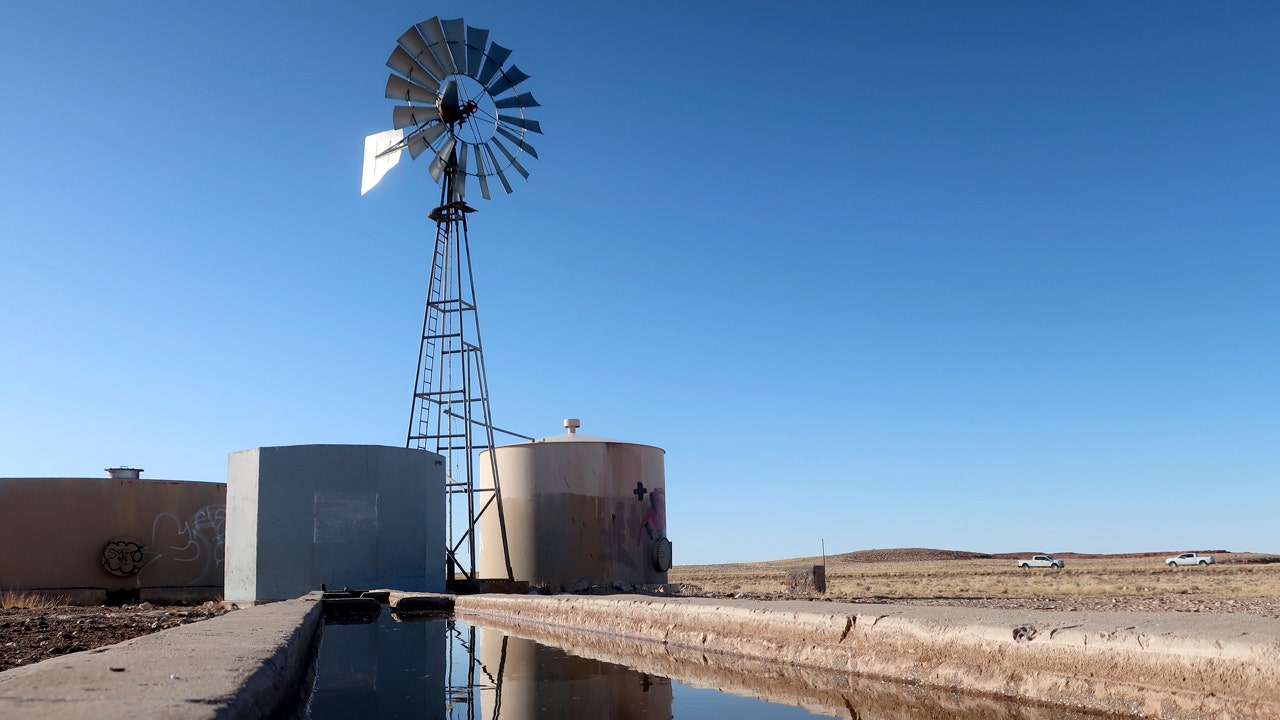
- The Navajo Nation Council has unanimously approved a proposed water rights settlement. The Navajo, Hopi and San Juan Southern Paiute tribes are seeking more than $5 billion as part of their settlement, more than any such agreement enacted by Congress.
- The Navajo Nation has one of the largest single outstanding claims in the Colorado River basin and has worked for generations to secure water deliveries for tribal communities.
- Nearly a third of homes in the Navajo Nation don’t have running water. Many homes on Hopi lands are similarly situated.
The Navajo Nation Council has signed off on a proposed settlement that would ensure water rights for its tribe and two others in the drought-stricken Southwest — a deal that could become the most expensive enacted by Congress.
The Navajo Nation has one of the largest single outstanding claims in the Colorado River basin. Delegates acknowledged the gravity of their vote Thursday and stood to applause after casting a unanimous vote. Many noted that the effort to secure water deliveries for tribal communities has spanned generations.
Council Speaker Crystalyne Curley and other officials stood outside the chamber in Window Rock, Arizona, under a clear blue sky as the wind whipped. She recalled learning about the fight over water rights in school when she was a girl.
BIDEN DOJ SIDES WITH NATIVE AMERICAN TRIBE IN COURT FILING RIPPING CANADIAN PIPELINE AS TRESPASSING
Momentous is how she described the day, before she put her pen to the legislation and nearby vehicles honked their horns in celebration.
“This is an opportunity to think 100 years ahead for our children,” said Curley, a mother and soon-to-be grandmother.
“The time is now and we have to make our footing for the future,” she continued.
A windmill draws water for livestock in Leupp, Arizona, on the Navajo Nation, on March 9, 2024. In a vote on May 23, 2024, the Navajo Nation Council unanimously approved a proposed water rights settlement that carries a price tag larger than any such agreement enacted by Congress. (AP Photo/Felicia Fonseca, File)
The San Juan Southern Paiute Tribal Council also voted to approve the settlement Thursday, while the Hopi tribe approved it earlier this week. Congress will have the final say.
For Hopi, the settlement is a path to ensuring a reliable water supply and infrastructure for the health, well-being and economic prosperity of the tribe for generations to come, Hopi said in a statement late Thursday.
“Most importantly, this settlement provides a way for Hopi to fulfill its covenant with Maasaw (guardian) to live as stewards of Hopitutskwa (Hopi land),” the statement read.
Congress has enacted nearly three dozen tribal water rights settlements across the U.S. over the last four decades and federal negotiation teams are working on another 22 agreements involving dozens of tribes. In this case, the Navajo, Hopi and San Juan Southern Paiute tribes are seeking more than $5 billion as part of their settlement.
About $1.75 billion of that would fund a pipeline from Lake Powell, one of the two largest reservoirs in the Colorado River system, on the Arizona-Utah border. The settlement would require the U.S. Bureau of Reclamation to complete the project by the end of 2040.
From there, water would be delivered to dozens of tribal communities in remote areas.
Nearly a third of homes in the Navajo Nation — spanning 27,000 square miles of Arizona, New Mexico and Utah — don’t have running water. Many homes on Hopi lands are similarly situated.
Navajo President Buu Nygren plans to sign the settlement legislation as soon as it hits his desk, likely Friday. He told The Associated Press it had been a long road to get everyone to the table and the next step will be knocking on the doors of Congress.
A century ago, tribes were left out of a landmark 1922 agreement that divided the Colorado River basin water among seven Western states. Now, the tribes are seeking water from a mix of sources: the Colorado River, the Little Colorado River, aquifers and washes on tribal lands in northeastern Arizona.
The latest settlement talks were driven in part by worsening impacts from climate change and demands on the river like those that have allowed Phoenix, Las Vegas and other desert cities to thrive. The Navajo, Hopi and San Juan Southern Paiute tribes are hoping to close the deal quickly under a Democratic administration in Arizona and with Joe Biden as president.
Without a settlement, the tribes would be at the mercy of courts. Already, the U.S. Supreme Court has ruled that the federal government is not bound by treaties with the Navajo Nation to secure water for the tribe. Navajo has the largest land base of any of the 574 federally recognized tribes and is second in population with more than 400,000 citizens.
A separate case that has played out over decades in Arizona over the Little Colorado River basin will likely result in far less water than the Navajo Nation says it needs because the tribe has to prove it has historically used the water. That’s hard to do when the tribe hasn’t had access to much of it, Navajo Attorney General Ethel Branch has said.
Arizona — situated in the Colorado River’s Lower Basin with California, Nevada and Mexico — is unique in that it also has an allocation in the Upper Basin. The state would get certainty in the amount of water available as it’s forced to cut back as the overall supply diminishes.
Navajo and Hopi, like other Arizona tribes, could be part of that solution if they secure the right to lease water within the state that could be delivered through a canal system that already serves metropolitan Tucson and Phoenix.
Arizona water officials have said the leasing authority is a key component of the settlement.
Read the full article from Here


A former Riverside County man was found guilty of sex trafficking a female victim and forcing her to engage in commercial sex acts along L.A.’s notorious Figueroa Corridor.
Elias Abdul Shabazz, 34, formerly of Perris, was found guilty by a jury following a five-day trial, the U.S. Attorney’s Office said.
Prosecutors said Shabazz had led the victim to believe they were in a romantic relationship before he turned physically and sexually violent. He began demanding that the victim engage in commercial sex acts from May to October of 2021, court documents said.
He carried a handgun with him and, on occasion, was accused of using it to pistol-whip the victim. He also fired the gun at her feet while threatening to kill her, prosecutors said.
At trial, the victim said Shabazz demanded that she meet a daily quota of commercial sex proceeds and that she was terrified of the consequences of not meeting that quota.
She testified that Shabazz compelled her to work in the notorious Figueroa Corridor in South L.A., a dangerous area known for human trafficking and prostitution.
Shabazz had confiscated her identification card, Social Security card and birth certificate. He constantly monitored her cell phone to stop her from communicating with any friends or family.
“He also introduced her to addictive narcotics and controlled every aspect of her life, including when she ate, slept and showered,” prosecutors said.
In May 2025, Shabazz was arrested and has remained in federal custody. His last known address at the time was in Washington, D.C.
On June 26, 2026, Shabazz was found guilty of one count of coercing or enticing interstate transportation for purposes of prostitution.
A sentencing hearing is scheduled for Oct. 6, where he faces 15 years to life in prison.
“Sex trafficking matters rank among the most tragic cases our office prosecutes,” said First Assistant U.S. Attorney Bill Essayli. “This defendant will now face many years in a federal prison cell for his sick, disgusting, and disturbing behavior.”
“Elias Shabazz preyed on a vulnerable victim using physical and sexual violence and cruel psychological coercion to compel commercial sex acts for his own profit,” said Assistant Attorney General A. Tysen Duva of the Justice Department’s Criminal Division. “There is no place for this type of conduct in civilized society. We deeply respect the victim’s courage to face her trafficker in court. The Criminal Division will continue to bring these cases and try them.”
Anyone with information about human trafficking can report tips to the National Human Trafficking Hotline at 888-373-7888

The star-studded feel-good giveback event of the summer has returned. KTLA 5 is teaming up once again with Project Angel Food for the annual “Lead with Love: Going the Distance” telethon to raise critical funds for medically tailored meals delivered to people living with serious illnesses throughout Los Angeles County. The seventh annual telethon airs […]

A woman was hospitalized with serious injuries after she was violently attacked by a robber in downtown Long Beach. On June 18, Jennifer Silva, 34, was attending a World Cup watch party at a Hooters restaurant at 90 Aquarium Way. After the game ended, she left the restaurant just before 11 p.m. As she walked […]
-

 News11 minutes ago
Utah County declares State of Emergency as wildfires ‘ravage’ the state
-

 Los Angeles, Ca1 hour ago
Man found guilty of sex trafficking victim along L.A.’s Figueroa Corridor
-

 Detroit, MI2 hours ago
No. 23 overall pick in the 2026 NHL draft | Detroit Red Wings
-

 San Francisco, CA2 hours ago
San Francisco Pride kicks off with rainbow lasers, ValQueeries celebrate at Valkyries Pride Night
-

 Dallas, TX2 hours ago
How to buy Egypt vs. Australia World Cup soccer tickets
-

 Miami, FL2 hours ago
Helping Venezuela: Miami search-and-rescue team prepares to deploy
-

 Boston, MA2 hours ago
How to buy Paraguay vs. Germany 2026 World Cup tickets in Boston
-

 Denver, CO2 hours ago
Denver Broncos Roster Breakdown: Center—The Depth Question

