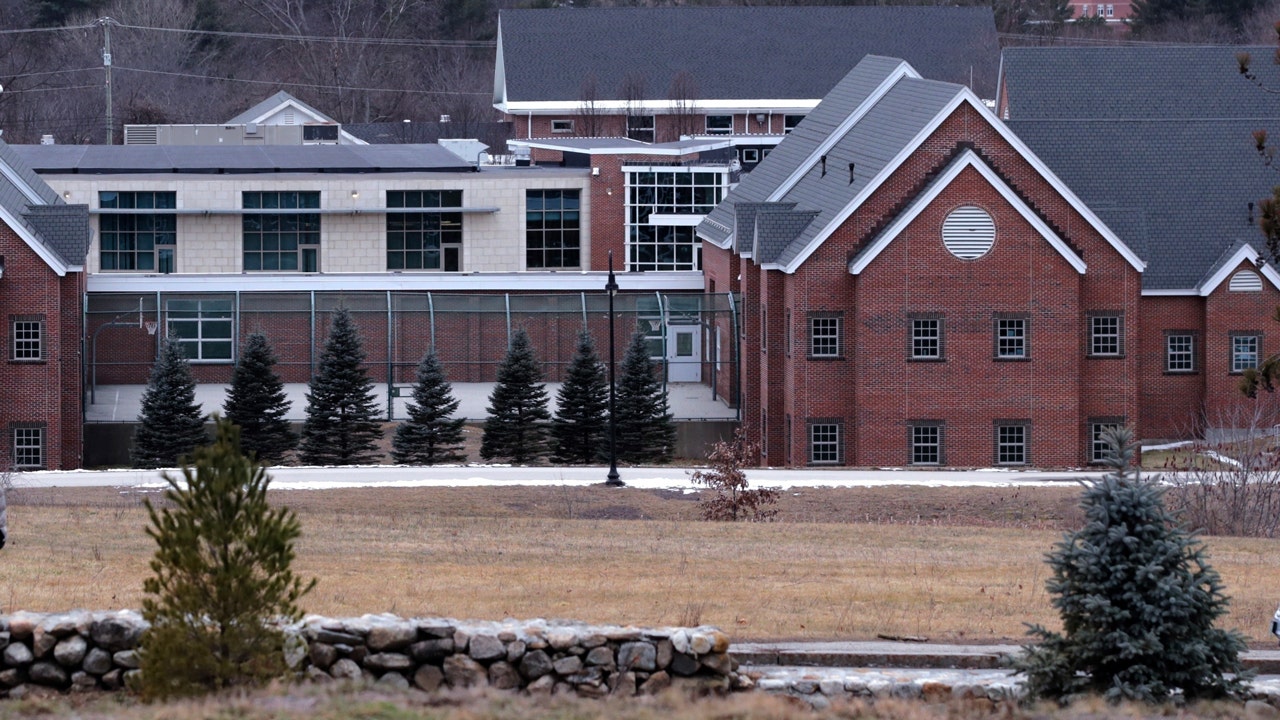
The judge who oversaw a landmark trial about New Hampshire’s youth detention center has refused to discard the $38 million verdict, saying the facility’s leadership “either knew and didn’t care or didn’t care to learn the truth” about endemic physical and sexual abuse.
A jury earlier this month sided with David Meehan, who alleged he was repeatedly raped, beaten and held in solitary confinement at the Youth Development Center in the 1990s. The attorney general’s office is seeking to drastically reduce the award. While that issue remains unsettled, the state also asked Judge Andrew Schulman to nullify the verdict and issue a judgment in its favor.
CLOSING ARGUMENTS HEARD IN NH YOUTH DETENTION CENTER ABUSE SUIT
In a motion filed Monday, attorneys for the state again argued that Meehan waited too long to sue and that he failed to prove that the state’s negligence led to abuse. Schulman swiftly denied the motion, ruling in less than 24 hours that Meehan’s claims were timely under an exception to the statute of limitations, and that Meehan had proven “beyond doubt” that the state breached its duty of care with respect to staff training, supervision and discipline.
The Sununu Youth Services Center in Manchester, N.H., stands among trees, Jan. 28, 2020. A New Hampshire jury awarded $38 million to the man who blew the lid off abuse allegations at the state’s youth detention center Friday, May 3, 2024, in a landmark case finding the state’s negligence allowed him to be beaten, raped and held in solitary confinement as a teen. (AP Photo/Charles Krupa)
Advertisement
According to Schulman, a jury could easily have found that the facility’s leadership “was, at best, willfully blind to entrenched and endemic customs and practices” that included frequent sexual and physical assaults as well as “constant emotional abuse of residents.”
“Maybe there is more to the story, but based on the trial record liability for negligence and breach of fiduciary duty was proven to a geometric certainty,” he wrote.
Meehan, 42, went to police in 2017 and sued the state three years later. Since then, 11 former state workers have been arrested and more than 1,100 other former residents of what is now called the Sununu Youth Services Center have filed lawsuits alleging physical, sexual and emotional abuse spanning six decades. Charges against one former worker, Frank Davis, were dropped earlier this month after the 82-year-old was found incompetent to stand trial.
Meehan’s lawsuit was the first to go to trial. Over four weeks, his attorneys contended that the state encouraged a culture of abuse marked by pervasive brutality, corruption and a code of silence. The state portrayed Meehan as a violent child, troublemaking teenager and delusional adult lying to get money.
Jurors awarded him $18 million in compensatory damages and $20 million in enhanced damages, but when asked the number of incidents for which the state was liable, they wrote “one.” That trigged the state’s request to reduce the award under a state law that allows claimants against the state to get a maximum of $475,000 per incident.
Advertisement
Meehan’s lawyers say multiple emails they’ve received from distraught jurors showed the jury misunderstood that question on the jury form. They filed a motion Monday asking Schulman to set aside just the portion of the verdict where jurors wrote “one” incident, allowing the $38 million to stand. As an alternative, the judge could order a new trial only on the number of incidents, or could offer the state the option of agreeing to an increase in the number of incidents, they wrote.
Last week, Schulman denied a request from Meehan’s lawyers to reconvene and poll the jury, but said he was open to other options to address the disputed verdict. A hearing is scheduled for June 24.
BURLINGTON, Vt. — Shelley MacDonald and her husband, both Canadian citizens, had been living in Paris for over a decade when the pandemic hit. She’d been selling baked goods and hosting a dinner club called Paris Bread in their apartment. She wanted to open a business in the United States, where she could operate in English. It was time to leave, except that, at the moment, only American passport holders could fly into the United States.
With ingenuity and grit, the couple discovered a visa for foreign entrepreneurs and secured one from the American Embassy the day it reopened after lockdown. Once their passports were stamped, they had 30 days to fly out and move everything they owned to this picturesque college town.
Since 2022, MacDonald has run Belleville Bakery & Catering near City Hall in Burlington, Vt., down the street from the University of Vermont. She’s training staff, including students, and offering confections you might see in a Parisian patisserie, most not as fancy. She has different varieties of all-butter croissants, cinnamon snails and feta-garlic snails made with croissant trimmings, tempting lunch items such as bacon cheddar quiche and tuna sandwiches with smoked Gouda on homemade onions buns, and dinners such as lasagna, rigatoni, and chicken pot pie to take home.
Shelley MacDonald, a Canadian citizen, lived in Paris before moving to Burlington.Sheryl Julian
“I think the town is adorable with kind people who help you when you don’t need to be helped,” says MacDonald, sitting in the bright bakery. “There’s something very special about Vermont.”
Advertisement
She and her husband — the hyperrealist painter André Beaulieu — picked Burlington because they had visited often when they lived in his hometown, Montreal. “The real reason is so that I could open a business in English,” she told her 48,000 Instagram followers, “so that I could function in my native language, for all of the reading and writing and dealing with lawyers and accountants and plumbers that you need to do when you own a business.”
MacDonald describes their new situation as “the best of both possible worlds, where I get to live in English in a really cute space, and he gets to live with me in English in a really cute space and he’s really close to home.” She describes her business as her “dream job.”
The 100-year-old building whose storefront she renovated is large and airy, with bakers in the kitchen in full view making croissant and brioche doughs, prepping cookie batters and galette pastry.
Quiches at Belleville Bakery.Sheryl Julian
MacDonald moves quickly, laughs easily, and greets customers warmly. “People come into a bakery looking for a treat and some kind of care,” she says. When you’ve finished eating, you don’t have to take your plates and cups to various bins for recycle and trash. That system horrifies her. “No bussing,” she says. “We take care of you.”
Her clientele skews older, she has noticed, and they’re looking for somewhere to go. “The demand is enormous,” she says. She describes her personality as “Shelley takes care of people.” Remembering her days running an underground restaurant, MacDonald now offers twice-monthly Sunday brunches and dinners, both served at a long table farmhouse-style so everyone talks to their neighbors.
MacDonald, who is willing to throw everything at the wall and see what sticks, also has a successful mail-order arm to send cookies across the country. They’re thick and perfectly round in flavors such as orange gingersnap, pistachio chocolate, and lemon pistachio shortbread.
Advertisement
She also gives classes in the bakery and writes a weekly newsletter, which she snail-mails for free. “People are lonely,” she says. They want to receive real mail.
Feta-garlic snails at Belleville Bakery.Sheryl Julian
Born and raised in Halifax, Nova Scotia, MacDonald, 59, also lived in Vancouver. She met Beaulieu in Montreal. His large, striking artworks hang in the bakery.
In order to get a US E-2 Investor Visa, they had to invest $15,000 in a new US company (some applicants invest considerably more) and have secured premises in the destination city. Sight-unseen, they rented a painting studio in The Soda Plant in Burlington for Beaulieu, which qualified them.
The bakery’s name is the English version of Beaulieu’s surname. Beaulieu means “beautiful place,” she says. Belleville, which means “beautiful city,” is easier for Americans to spell.
Burlington Mayor Emma Mulvaney-Stanak, who happened to be there when I was — she said she stops by often since her office is so close — describes the bakery as “loveliness in this corner. [MacDonald] draws people into this community.”
Cinnamon snails at Belleville Bakery.Sheryl Julian
The bakery has become known for its I am Proud of Me Banana Cake. It’s really banana bread, but when MacDonald made it in France, customers wondered why it was called bread.
When you buy one, MacDonald asks you what you’re proud of. She’s heard many comments, mostly emotional. One woman in her 20s was going to drive on the highway for the first time, someone else was excited to have completed exams. Then a man came in to say he was proud of his wife for finishing chemo.
Advertisement
“She’d been planning this cake during her treatment,” MacDonald told a local TV reporter who did a segment on her. Donations started coming in so other cancer patients at the local hospital could get a banana cake; MacDonald also sends cakes to a palliative care center and a teen drop-in center.
Those efforts came to the attention of a program director at the University of Vermont, who called MacDonald in the middle of Vermont’s dark, cold February winter. The administrator was running a mental health day for freshmen. She bought 100 banana cakes from MacDonald and asked her to come and hand them out.
The line was an hour long. Students waited patiently, not just to get an I am Proud of Me Banana Cake, but also for a moment to tell MacDonald what was on their mind.
Belleville Bakery & Catering, 217 College St., Burlington, Vt., www.bellevillevt.com
Sheryl Julian can be reached at sheryl.julian@globe.com.
BOSTON (WHDH) – The Boston Pops are preparing for their Fourth of July Fireworks Spectacular this weekend with half a million people expected to celebrate the United States’ 250th birthday on the Charles River Esplanade.
The President and CEO of Boston Symphony Orchestra said an even bigger celebration is being prepared at the hatch-shell this year.
“Everything is bigger. You only turn 250 once!” said Chad Smith, President and CEO of Boston Symphony. “We recognize that Massachusetts has been a center of revolution, not just in the Revolutionary War, but through the last 250 years. That spirit, sense of innovation, the sense of pushing our country forward is going to be on display as well.”
Organizers are bringing in lighting, sound equipment, extra stages, and of course – the fireworks.
Advertisement
“Planning to bring in new details and amplify the experience on the Fourth of July with a bigger firework show. They’re going to have drones for the first time, amazing talent,” said Kate Fox, Executive Director at the Massachusetts Office of Travel & Tourism.
This year’s spectacular is being hosted by actress Jane Lynch, and will feature performances by country star Lainey Wilson, Chance the Rapper, Trombone Shorty, and Broadway star Megan Hilty.
“We’re going to have remarkable artists that represent the vast diversity and breadth of American music,” Smith said.
The Boston Pops have been performing on the Esplanade for the Fourth of July Fireworks Spectacular for 52 years, and organizers said this year’s show will highlight the history of Massachusetts.
“The history of the Pops is so closely tied to the Massachusetts story on the Fourth of July,” Fox said.
Advertisement
The fireworks show will begin at 9:15 p.m., and will be set to live music from the Pops.
(Copyright (c) 2026 Sunbeam Television. All Rights Reserved. This material may not be published, broadcast, rewritten, or redistributed.)
Join our Newsletter for the latest news right to your inbox
Pittsburgh officials are partnering with a nonprofit to provide a unique way to thank veterans for their service while getting a grand look at the Steel City.
A 90-foot Ferris wheel dubbed the Salute to Service Wheel will be spinning on the North Shore from Wednesday through Sunday.
It’s provided by Piatt Companies and Piatt Sotheby’s International Realty with half of ticket sale proceeds going to Veterans Leadership Program.
First launched in 1982, VLP helps veterans navigate life’s transitions. Efforts include wellness services, housing, career development and various support programs.
Advertisement
Mayor Corey O’Connor, parks and recreation director Eric Sloan, Piatt Companies CEO Lucas Piatt and representatives from the Veterans Leadership Program are expected to host a grand opening celebration Wednesday around 12:30 p.m. at North Shore Drive and Art Rooney Avenue and take the first rides.
It is part of Pittsburgh’s Independence Day celebration.
Tickets are on sale now and cost $11.20, including a $1.20 service fee. They can be found at pittsburghpa.gov.
Bookings are in hour intervals from 2-9 p.m. Wednesday, Thursday, Friday and Sunday and from 2-8 p.m. Sunday.
Riders smaller than 48 inches tall must be accompanied by an adult.