


The Alabama Crimson Tide earned the #7 National seed on Monday morning. Joining the #1 Tide in the Tuscaloosa Regional will be 2nd seeded Oklahoma State, 3rd seeded South Carolina Upstate, and 4th seeded Alabama State. The Tuscaloosa Regional is lined up with the Tallahassee Regional and the 10th overall seed, the Florida State Seminoles. OSU and SCU will open play at 1 p.m. CT Friday at Sewell-Thomas Stadium. Alabama and Alabama State will follow at 6 p.m; CT on Friday night. The Tide has now made the NCAA Tournament in four straight seasons, and will host for the second time in that time frame, joining the special 2023 team. If the Tide survives the Regional they would host a Super Regional for the first time since 2006.
Alabama
Alabama schedules second execution by nitrogen gas


MONTGOMERY, Ala. (AP) — Alabama has scheduled a second execution with nitrogen gas, months after the state became the first to put a person to death with the previously untested method.
Alabama Gov. Kay Ivey set a Sept. 26 execution date for Alan Eugene Miller, who was convicted of killing three men during a 1999 workplace shooting. The execution will be carried out by nitrogen gas, the governor’s office said. Miller survived a 2022 lethal injection attempt.
The governor’s action comes a week after the Alabama Supreme Court authorized the execution.
In January, Alabama used nitrogen gas to execute Kenneth Smith. Smith shook and convulsed in seizure-like movements for several minutes on a gurney as he was put to death Jan. 25.
A nitrogen hypoxia execution causes death by forcing the inmate to breathe pure nitrogen, depriving him or her of the oxygen needed to maintain bodily functions. Alabama and some other states have looked for new ways to execute inmates because the drugs used in lethal injections, the most common execution method in the United States, are increasingly difficult to find.
Miller has an ongoing federal lawsuit challenging the execution method as a violation of the constitutional ban on cruel and unusual punishment, citing witness descriptions of Smith’s death.
“Rather than address these failures, the State of Alabama has attempted to maintain secrecy and avoid public scrutiny, in part by misrepresenting what happened in this botched execution,” the lawyers wrote in the lawsuit. It is anticipated that his attorneys will ask a federal judge to block the execution from going forward.
Attorney General Steve Marshall maintained that Smith’s execution was “textbook” and said the state will seek to carry out more death sentences using nitrogen gas.
State attorneys added that Miller has been on death row since 2000 and that it is time to carry out his sentence.
Miller, a delivery truck driver, was convicted of killing Terry Jarvis, Lee Holdbrooks and Scott Yancy in the workplace shootings.


A three-judge panel on Tuesday blocked a Republican-drawn congressional map in Alabama from going into effect, writing that the district lines “intentionally discriminated based on race in violation of the Constitution.”
“We cannot see our way clear to requiring Alabamians to cast their votes in the 2026 elections under a districting plan tainted by intentional race-based discrimination,” the panel of federal judges wrote.
The decision is a setback for Republicans, who sought to enact the map after a major redistricting ruling from the U.S. Supreme Court last month. The map would eliminate one of Alabama’s two majority-minority districts, putting the GOP in position to gain a seat in this year’s midterm elections.
Alabama is expected to appeal the ruling. Alabama Gov. Kay Ivey scheduled a second primary date in August for the districts affected by the Republican-drawn map. Other primaries were were held in the state on May 19.
“The Legislature well knew that a plan without an additional Black-opportunity district would dilute Black Alabamians’ opportunity to participate in the political process, and it intentionally enacted that very plan,” the panel wrote. “Further, the Legislature well knew what dilutive mechanisms would prevent Black voters in Alabama’s Black Belt and Gulf Coast communities from having any opportunity to elect representatives of their choice, and the Legislature employed precisely those mechanisms.”
The state has spent years feuding with the courts over its congressional map.
The 2023 map was drawn by Republican legislators who defied a federal court’s order — which was affirmed by the Supreme Court — to create two districts in which Black voters make up voting-age majorities, “or something quite close to it.”
Alabama Republicans instead chose to pass a new map with just one majority-Black seat and a second district that is approximately 40% Black. In response, the court put its own map in place, which was used in the 2024 election.
Alabama is one of several GOP-led states in the South that have rushed to attempt to implement new congressional maps for the mditerms after the Supreme Court gutted a key section of the Voting Right Act, paving the way for the elimination of majority-minority districts represented by Democrats.

Alabama played Alabama State twice this season, winning 2-1 at home on February 18th and 13-4 in Montgomery on March 4th. Bobby Alcock was the winning pitcher in February while Joe Chiardo was awarded the win in the March show down.
Here is a thumb nail look at each of the teams that will be in Tuscaloosa this weekend.
Alabama- 37-19 overall record. SEC record 18-12, 4th in the conference.
Team Offense:,
Team batting average , .253, 70 home runs, 90 doubles, 82 stolen bases, .428 slugging percentage, .372 on base percentage.
Leading hitters: RF/C Brady Neal, .328 average, 8 home runs, 14 doubles, 43 RBI, CF Bryce Fowler .316 average, 17 doubles , 35 RBI, 15 stolen bases. SS Justin LeBron, .266 average, 14 home runs, 11 doubles, 40 RBI, 38 stolen bases in 39 attempts, 3B Jason Torres, .241 average, 7 home runs, 45 RBI, LF/DH Eric Hines .278, 7 home runs, 18 RBI, C Johnny Lemm .244 average, 9 home runs, 9 doubles, 31 RBI.
Team Pitching: 4.26 ERA, .242 batting average against, 50 home runs allowed, 484 innings pitched, 446 hits allowed, 476 strikeouts, 195 walks.
Individual: Tyler Fay, 9-4 4.70 ERA, 90 innings pitched, 104 strikeouts, 20 walks, .230 batting average against, Zane Adams 6-4 4.36 ERA, 76 innings pitched, 85 strikeouts, 24 walks, .264 average against, Myles Upchurch 8-3 3.54 ERA, 64 innings pitched, 68 strikeouts, 38 walks, .195 batting average against. Matthew Heiberger 23 appearances, 3-1, 4 saves, 3.31 ERA, 35 innings pitched, 30 strikeouts, .242 batting average against. Ashton Crowther 16 appearances, 2-2, 2 saves, 2.90 ERA, 31 innings pitched, 8 walks, 21 strikeouts, .235 batting average against. Hagan Banks 16 appearances, 1-0 6 saves, 2.79 ERA, 19 innings pitched, 23 strikeouts, .234 batting average against.
Oklahoma State-37-20 18-12 BIG 12
Offense: .280 average, 137 home runs, 106 doubles, .562 on base percentage, .402 on base percentage
Leading hitters: Alex Conover, .383 average, 14 home runs, 15 stolen bases, Kollin Ritchie, .335 average, 29 home runs, 73 RBI, Aidan Meola, .320 average, 17 home runs, 69 RBI
Pitching: 6.24 ERA, .274 batting average against, 76 home runs allowed, 275 walks, 558 strikeouts.
Individual: Hudson Barrett, 5-1 3.05 ERA 38.1 innings pitched, 12 games, 8 starts, 4 saves, 15 walks, 54 strikeouts, .212 average against. Ethan Lund, 5-2, 5.26 ERA, 77 innings pitched, 127 strikeouts, 48 walks, .219 average against, Mario Pesca 6-4, 5.62ER, 65 innings pitched, 75 strikeouts, .276 average against.
South Carolina Upstate-33-28 Big South Conference 13-11
Offense: .291 average, 70 home runs, 138 doubles, 83 stolen bases, .463 slugging percentage, .400 on base percentage.
Leading hitters: Henry Zenor, .346 average, 18 doubles, 51 RBI,12 stolen bases, Wylie Waters, .320 average, 12 home runs, 50 RBI, Malloy Heaghney, .303 average, 21 doubles, 6 home runs, 50 RBI, 22 stolen bases.
Pitching: 5.89 ERA, 82 home runs allowed, .278 batting average against, 249 walks, 449 strikeouts.
Individual: Brent Stukes, 7-3, 5.42 ERA, 73 innings pitched, 35 walks, 50 strikeouts, .285 average against. Chris Torres 5-4, 5.42 ERA, 74 innings pitched, 30 walks, 69 strikeouts, .287 average against. Jacob Kirby 5-1, 3.91 ERA, 2 saves, 48 innings pitched, 19 walks, 35 strikeouts, .230 average against.
Alabama State-34-21, 20-10 in SWAC
Offense: .281 average, 57 home runs, 91 doubles, 38 stolen bases, .433 slugging percentage, .391 on base percentage.
Leading hitters: Miguel Oropeza, .366 average, 11 home runs, 19 doubles, 65 RBI. Niguel Jennings .331 average, 15 doubles, Jackson Williams, .269 average, 12 home runs, 45 RBI, Trey Calloway, .268 average, 16 home runs, 46 RBI.
Pitching: 6.05 ERA, .301 batting average against, 33 home runs allowed, 89 doubles allowed, 260 walks, 362 strikeouts.
Individual: James Peterson, 7-1 3.32 ERA, 4 saves, 29 games, 5 starts, 24 walks, 54 strikeouts. Jordan LaBoy, 9-5, 4.52 ERA, 85 innings pitched, 24 walks, 65 strikeouts, .291 average against. Trey Power, 7-3 6.40 ERA, 58 innings pitched, 27 walks, 40 strikeouts, .278 average against.
The Crimson Tide has a regional they can surely win. Oklahoma State has some mashers, and hits a ton of home runs and doubles, but their pitching struggles. South Carolina Upstate has a few power bats, but also struggles on the mound. Bama is obviously more familiar with Alabama State since they have played the Hornets twice this year already. ASU doesn’t have much power and the pitching staff can definitely be “got”. The Tide just needs to play clean defense, pitch like they are capable, and have just enough offense at the right times to win the weekend and move on to host a Super Regional for the first time since 2006.
If you are in the area, come to The Joe this weekend, this team deserves your support. In 2023 the atmosphere was electric and the Tide advanced. Let’s give them that home field advantage again!
Bama Baseball Fever, Catch it!

No. 1 Alabama’s 2026 season is rolling into Oklahoma City for the Women’s College World Series after the Crimson Tide won its first two games of the weekend against No. 16 LSU in the super regional round at Rhoads Stadium.
It was more dominance from the Tide pitching staff as Jocelyn Briski pitched a complete-game shutout on Friday in the 7-0 win, and Briski earned the save in Game 2 after freshman Vic Moten allowed only run over four innings in her first super regional start for the 4-1 victory.
Alabama got offensive contributions from different parts of the lineup with Alexis Pupillo having the best weekend with four hits, including two home runs.
Next up for the Crimson Tide (54-7), is a date with No. 8 UCLA (52-8) this Thursday on the opening day of the Women’s College World Series. But before then, here are three of my biggest takeaways from Alabama’s performance in super regionals:
Alabama has the pitching to win a national title
Eight teams across the country punched their tickets to Oklahoma City over the weekend. Some, like Alabama and Tennessee, are expected to be there. Some, like Mississippi State, will be making their first appearance at the WCWS. And some familiar faces, like Oklahoma and Florida, will not be in OKC starting Thursday.
Oklahoma and Florida have a combined 35 WCWS appearances and 10 national titles. Either the Sooners or the Gators have won eight of the last 11 national titles dating back to 2014. Neither team had the pitching to get out of Supers. Oklahoma gave up 18 runs across three games to Mississippi State. Florida allowed 28 runs over the three games against Texas Tech. Alabama has allowed one run over five total games played in the NCAA tournament.
The competition was elevated this weekend as Alabama played an SEC foe in LSU compared to the mid-major schools during the regional round, and the Tide’s top-two pitchers still made it extremely difficult on opposing batters.
Briski and Moten continued to limit free passes with just two total walks compared to 23 strikeouts over the two wins. Briski was even dealing with a little sickness on Friday and appeared to shut down the Tigers with ease.
Anything can happen in Oklahoma City, and Alabama will be tested off the bat against a UCLA offense that leads the nation in home runs with 196. But the Tide should have the arms to keep it in any game and make a deep run at the WCWS.
Weather-tested before OKC
Alabama and LSU had to sit through two separate weather delays on Saturday that lasted about four hours total. As Alabama head coach Patrick Murphy pointed out multiple times throughout the weekend, these players are used to dealing with weather delays from all the years they’ve spent growing up playing travel softball.
But just because they are used to it doesn’t mean that a weather delay is ideal. When your team has all the momentum, any sort of break literally stops that momentum. Alabama was rolling before the first weather delay and had just taken a 4-1 lead in the fourth inning.
The offense did not score again (credit to LSU pitcher Jayden Heavener), but the team still came out of both breaks with the energy needed to close out the game.
Weather delays in Oklahoma City at the WCWS are almost an inevitability. I mean, the city’s lone major professional sports franchise is literally named the Thunder. Several super regionals around the country were affected by weather this weekend, so it won’t just be Alabama that is prepared, but coming fresh off two long delays gives the Crimson Tide that recent experience in case it arises in OKC.
Offense steps up without Wells at her best
Sophomore transfer Brooke Wells has been the engine that powers the Alabama offense this year. For most of the year, she has led the team in batting average, home runs and RBIs. She still leads the team in HRs (23) and RBIs (65.) During super regionals against LSU, Wells went 0-for-8 with five strikeouts.
Alabama still managed to put up 11 total runs across the two games against a solid LSU pitching staff without its best hitter reaching base. Alexis Pupillo brought the power with a home run in each game, and Jena Young had two hits out of the leadoff spot in Game 1, including a bases-clearing double.
The bottom of the lineup came through as well with Salen Hawkins collecting a hit in each game out of the eight-spot. Her two-out, two-RBI single in the fourth inning of Game 2 provided the cushion Alabama needed to put away the Tigers
Wells is used to playing in big games and stepping up to the plate in big moments for the Crimson Tide at times this season, but this is her first trip to the NCAA tournament. Alabama can win without her reaching base–– the Tide proved it this weekend. But in order for Alabama to make a deep run in OKC and have a good chance of winning its first national title since 2012, it likely will need more production from the slugger.
Sign up to our free newsletter and follow us on Twitter/X, Facebook, YouTube, Instagram, Threads and Blue Sky for the latest news.
 Add us as a preferred source on Google
Follow
-

 Technology2 minutes ago
Are Apple devices spying? What your iPhone tracks
-
 Business8 minutes ago
Child safety groups want FTC to investigate Roblox
-
 Entertainment14 minutes ago
Paramount, pushing to buy Warner Bros., girds for legal challenges
-
 Lifestyle20 minutes ago
A Route 66 road trip is all about the people you’ll meet. Start with these legends.
-
 Politics26 minutes ago
After raids, U.S. citizens and immigrants seek millions for shootings, injuries, trauma
-
 Sports38 minutes ago
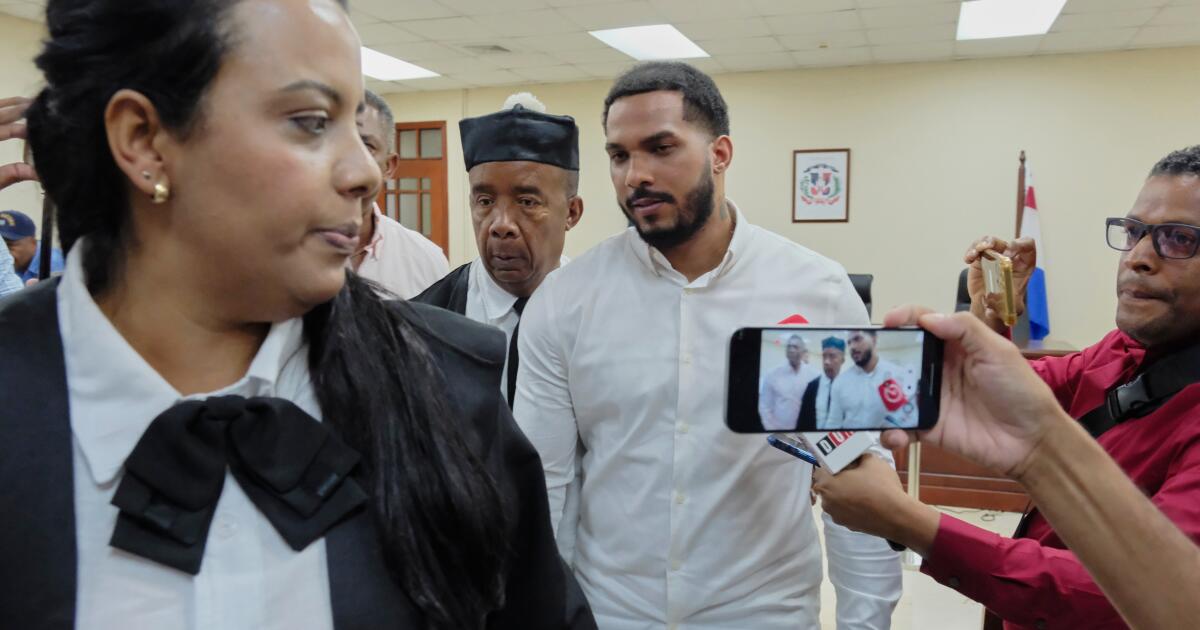
Ex-MLB star Wander Franco granted judicial pardon despite being found guilty of sexual assault
-

 World50 minutes ago
Russia slams US for not granting visa to diplomat for UN meeting
-
 News1 hour ago
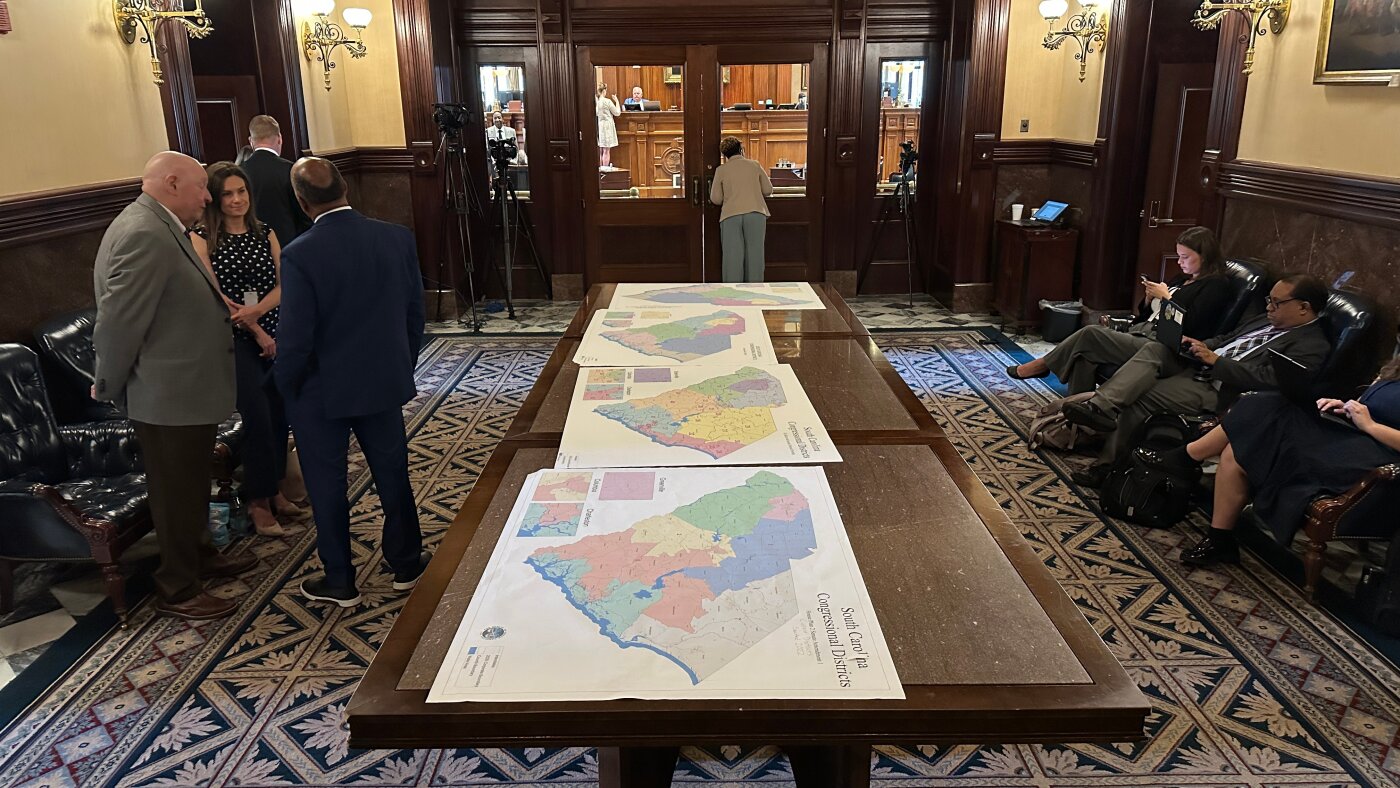
Trump-backed redistricting plan is rejected in the South Carolina Legislature

