Connect with us

Fitness

Women have specific exercise and nutritional needs. Dr. Stacy Sims explains | CNN

Published

on

Women have specific exercise and nutritional needs. Dr. Stacy Sims explains | CNN

Sign up for CNN’s Fitness, But Better newsletter series. Our seven-part guide will help you ease into a healthy routine, backed by experts.


CNN
 — 

As reproductive health remains a key issue in the 2024 US presidential election, a recent executive order signed by President Joe Biden to improve women’s health research grabbed headlines. The March 18 directive is notable for its aim to integrate women’s health across federal agencies and drive new research. The timing could not be better.

For centuries, medical researchers have exclusively studied men, downplaying or outright ignoring sex differences and extrapolating their findings to women. However, women are not physiologically the same as men — marked most plainly with the onset of menstruation at female puberty and two X chromosomes — and thus have often been given incomplete, poor and even harmful medical advice.

This long-standing lack of female-based research stemming from sex and gender bias spurred Dr. Stacy Sims, an exercise physiologist and nutrition scientist based in Mount Maunganui, New Zealand, to devote her career to determining how women should be eating and exercising for optimal health. “If we work with our physiology knowing that women are women and men are men, knowing that women are not small men, then imagine the (health) outcomes,” she said at a 2019 TED talk.

Advertisement

READ MORE: Lab rats are overwhelmingly male, and that’s a problem

Cardiac arrest is a good example. While it was known in 2007 that women are nearly twice as likely to die from heart attacks as men, and that they report many more symptoms associated with acute coronary syndromes, a National Institutes of Health study published that year still recommended against differentiating heart attack symptoms between men and women.

Even today, women remain broadly underrepresented in medical literature, according to a study published in 2022 in Women’s Health Reports. Misogynistic attitudes remain as well. And while the US National Institutes of Health in 2016 implemented a policy requiring researchers to consider sex as a variable in their biomedical research, the results were mixed.

The number of studies including women did noticeably increase after this policy debuted. However, a 2019 bibliometric analysis — a rigorous means of analyzing large volumes of data — showed the majority of more than 700 medical studies failed to analyze the resulting data by sex, limiting their usefulness.

Sims, who is also author of the science-based book “Roar,” which details sex-based differences in exercise and nutrition at different life stages, recently shared her thoughts on the topic with CNN.

Advertisement

Before beginning any new exercise program, consult your doctor. Stop immediately if you experience pain. This conversation was edited and condensed for clarity.

CNN: How can it possibly be that women are still so medically understudied in 2024?

Dr. Stacy Sims: I know! Isn’t it crazy? Historically, when you think about who developed science and research, women were pushed out right at the start. The men were like, “Oh, women are lesser beings than us. They have smaller brains.” Even Darwin said that women weren’t as smart because they have smaller brains. So when you think about scientific method and how it all started, who were the people in the room? It was all men. No one really questioned the lack of women being studied. They just assumed women were smaller versions of men, so whatever works for men works for women. Tradition is really hard to change.

One thing the Covid-19 pandemic did do that I appreciate is cause researchers to sit up and say, “Holy sh*t, we really need to look at sex differences.” Because Covid-19 was more severe in men, yet side effects of the vaccine were more prominent in women. Also, long Covid has hit women more severely and has affected their brain more than men. That’s why we’re seeing all of this sex-specific stuff coming out that’s really good science instead of just generalized.

CNN: What are some basic things all women should be doing when it comes to exercise?

Advertisement

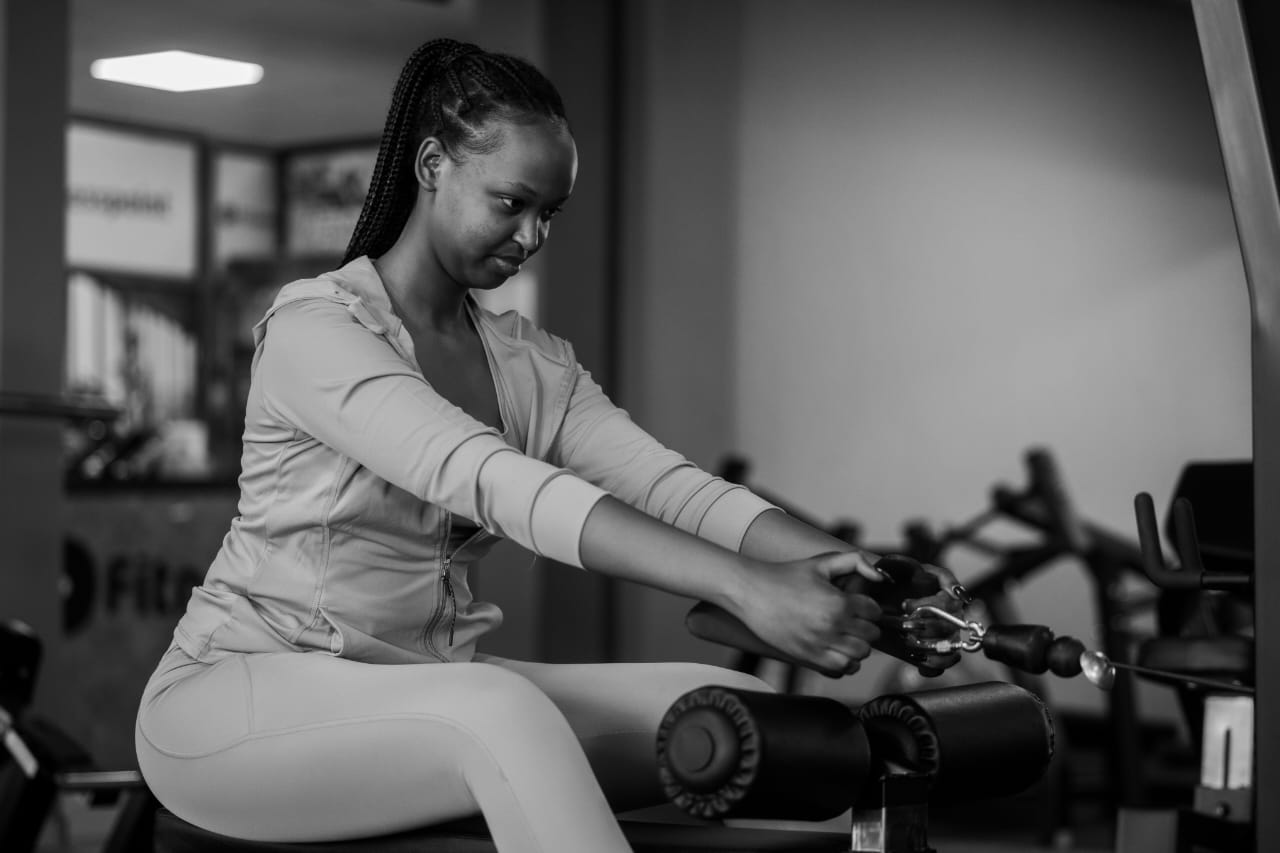
Sims: Any movement is good, but it’s more important that women put in strength or resistance training. It’s more for brain health. If we look at resistance training and the neural pathways it creates, we’re seeing it really does help attenuate dementia and Alzheimer’s — and there is a sex difference there as well. Historically, though, women haven’t been directed into doing resistance training. But across the board, from young to old, women should be doing strength training.

CNN: Does strength training have other impacts as women approach menopause?

Sims: Yes. When our hormones start changing between 40 and 50, it has a massive impact on our body composition. We start losing muscle and putting on more body fat. But if we have that lean mass from strength training, it really helps calm down that rate of change. Strength training also helps protect our bones and helps us keep our balance and proprioception (the awareness of where our body is in space). We don’t see these kind of changes in men until they’re in their late 50s to 70s.

CNN: What about exercise differences between the sexes when it comes to cardiovascular work?

Sims: Men can pretty much get away with everything. Women already have the capability of going long and slow, so we don’t need to do that kind of exercise — our bodies are already there. What we do need to do is high-intensity work: those true high-intensity intervals of 30 seconds or one minute. This helps women raise their metabolic rate, it helps reduce visceral (deep belly) fat and, most importantly, it helps keep our gut microbiome diverse and helps improve cardiovascular health. So when we look at all the research on high-intensity versus moderate-intensity versus low-intensity workouts, we really need to push the emphasis for that high-intensity work, plus resistance training.

Advertisement

CNN: Do women recover from exercise the same as men?

Sims: Right after exercise, there is a blood pressure difference. Women will experience vasodilation, so all their blood will go to the periphery, whereas men will have vasoconstriction, which means all of their blood comes back to their heart and can be pumped a lot faster for a quicker recovery. So women tend to get lightheaded and feel a little dizzy after a hard session, because all of their blood is pooling out. Drinking something cold right after exercise helps bring that blood back centrally, reduces metabolites and starts the reparation process.

CNN: What about nutritional differences between the sexes?

Sims: There is a big conversation around protein intake and how the recommended daily allowance for women is really low. It’s also based on cadaver work on 70- to 80-year-old men. So while protein is important for both sexes, we need to emphasize it for women — and especially as we age, since women become more anabolically resistant to exercise and protein intake, which means their bodies don’t respond as well to exercise and protein intake to build muscle. So it takes more protein, post-exercise, and higher loads or more volume of resistance training to get muscle protein synthesis.

In general, women should have 1 to 1.1 grams of protein per pound of body weight per day. If you’re doing strength training, have 15 grams of protein before a session and 30 to 35 grams after, which helps with strength and facilitating reparation. For cardiovascular work, have 15 grams of protein with 30 grams of carbohydrates before — the carbs help bring your blood sugar up, because women’s bodies go through blood sugar quickly — but afterward is when you need protein — 30 to 35 grams, or 40 grams for perimenopausal and early post-menopausal women.

Advertisement

CNN: There has been a lot publicized recently about the benefits of intermittent fasting, training in Zone 2 — long and slow — and other fads. Are these equally beneficial to men and women?

Sims: Most of the trends out there are great for men, but it’s a different story for women. My voice is always, “Let’s show why what we’re seeing for the general population is not appropriate for women, but also, what is appropriate for women?” Because no one’s used to pausing and saying, “OK, I heard this. But what was the population it was studied on? If it was studied on men, it might not be great for me as a woman. Well, what is appropriate for me?” It’s too many steps.

Melanie Radzicki McManus is a freelance writer who specializes in hiking, travel and fitness.

Advertisement
Continue Reading
Click to comment

Leave a Reply

Your email address will not be published. Required fields are marked *

This site uses Akismet to reduce spam. Learn how your comment data is processed.

Fitness

The exercise more important than walking – especially if you’re older

Published

on

The exercise more important than walking – especially if you’re older

Walking is brilliant. It’s accessible, affordable and enjoyable, plus it comes with many health benefits, which is why it forms the backbone of most government exercise guidance.

But it is strength that underpins all movement. If you don’t have the strength to get out of your chair and put one foot in front of the other, what good is being told to walk more?

This was the key takeaway from recent research led by Dr Michael LaMonte and his team at the University at Buffalo, which shows the immense value of building skeletal muscle with strength training. It found that, in more than 5,000 women aged 63 to 99, greater strength levels were strongly linked to a lower risk of death from any cause.

Maintaining muscle should be seen as a savvy investment. Muscle allows you to stand, move and remain independent, all while offering further perks that extend far beyond physical function. It powers our breath, regulates blood sugar levels, emits anti-inflammatory myokines and constantly chats with other bodily systems to keep things running smoothly. In short, muscle is the medical marvel you already own.

Here is how to maintain your body’s largest, and in some ways smartest, organ for decades to come.

Advertisement

Why strength training matters

There is a wealth of research on the merits of aerobic exercise, such as walking, running, swimming and cycling. This is a major reason why it dominates government physical activity guidelines. There is far less research into strength training, and much of the data available centres around young, fit men.

By looking at the impacts of strength training in previously understudied demographics, such as women aged 60 and above, studies like this one from the University at Buffalo could change future exercise recommendations for the better.

“When women go through menopause and lose their body’s own secretion of oestrogen, the loss of skeletal muscle mass increases rapidly,” says Dr LaMonte. “We typically see a change in their body composition, where they start losing muscle and holding fat in the belly area, particularly. That’s not healthy.”

Both men and women also tend to become less active as they grow older, which can contribute to sarcopenia – the age-related loss of strength and muscle. Both menopause and sarcopenia are inflammatory processes, Dr LaMonte says.

Advertisement

Read more: Sitting all day wreaks havoc on your hips and spine – here’s how to stop that from happening

There is limited research around strength training in older populations – but that is changing (Getty/iStock)

This shift impacts fitness. “Muscle strength is fundamental for getting the body from point A to point B, especially when you’re working against gravity.” But it also throws off chemical signalling between skeletal muscle and other systems in the body, such as the heart.

“Fat tissue tends to secrete chemicals called cytokines that are pro-inflammatory,” Dr LaMonte explains. “There’s quite a bit of evidence to show that, when skeletal muscle contracts, it secretes counterbalancing cytokines that are anti-inflammatory.

“This was discovered by a scientist named Bente Pedersen in the 2000s. She published a compelling series of papers showing that these cytokines, which she called myokines, had regulatory functions outside the muscle itself.”

Advertisement

Exactly how skeletal muscle interacts with other crucial systems in our body is unclear, Dr LaMonte says. But it is constantly in deep discussions with them, and it is looking to help out where it can. For this reason, if you can keep your muscles strong and healthy, they can be a powerful force for good.

Read more: Expert warns why this daily habit is shortening your life – even if you exercise

Maintaining healthy muscle not only ensures independence and physical capacity, it can also lead to deeper-lying health benefits

Maintaining healthy muscle not only ensures independence and physical capacity, it can also lead to deeper-lying health benefits (Getty/iStock)

3 simple ways to gauge your strength

Dr LaMonte’s research used a series of simple tests to assess the strength levels of 5,472 women aged 63 and above:

Advertisement
  • Grip strength: a dynamometer was used to assess grip strength, with people asked to hold their upper arm at their side, elbow bent at a right angle, then squeeze the machine as hard as possible. This is an indication of upper-body strength.
  • Sit-to-stand: people were timed to see how quickly they could stand up from a chair, then sit back down again five times with their arms across their chest. This is an indication of lower body strength.
  • Gait speed: a timer was used to see how long it took subjects to walk 2.5m.

Women with greater grip strength – a good signifier of overall strength levels – and faster sit-to-stand times had a “significantly lower death risk over an eight-year follow-up”, the study discovered.

“Gait speed is another one of the most potent predictors of mortality,” Dr LaMonte adds.

“I’d like to see the health care profession embrace functional health as much as they do the things they can prescribe drugs for – because you can’t prescribe a drug for this. It’s a behaviour, and I think that’s why it probably doesn’t get the same kind of attention. Nobody makes money from this, but people do die from it.”

Dr LaMonte also suggests another bonus test anyone can use as a sign they need to work on their strength levels:

  • The pickle jar test – this is a proxy for any everyday task. If you notice it starts to feel more difficult, this is a good indication that your fitness has decreased, and it would be beneficial to gain strength and muscle through exercise.

“When you can’t open the pickle jar any more, don’t just assume they’re making the jars harder to open,” Dr LaMonte says. “That’s a good indicator that you might be at a phase of life where your strength levels have changed unknowingly.

“The same applies when you go to pick up a grandchild or climb the stairs, and you find you’re huffing and puffing – it could simply be that you’re getting more out of shape, or in the worst case scenario, it could be indicative of disease.

“Be mindful of your body. It’s going to tell you where you’re at, and we don’t want an injury to be that indicator.”

Advertisement

Read more: Four things you can do to reduce inflammation and cut heart disease risk, according to the experts

When daily tasks such as climbing the stairs start to feel markedly harder, it could be a sign that your strength levels are decreasing, Dr Michael LaMonte says

When daily tasks such as climbing the stairs start to feel markedly harder, it could be a sign that your strength levels are decreasing, Dr Michael LaMonte says (Getty/iStock)

How to start strength training at any age

The human body is a representation of the life it has lived, informed by genetics and altered by myriad interventions along the way. A robust life, filled with challenging physical tasks, often builds a robust body. As a result, someone who has always been active will likely find it easier to remain more active as they age.

“I wouldn’t want to convey a message that age becomes a constraint for people doing what they enjoy,” says Dr LaMonte. “I know people in their late, late years who still enjoy going to gyms and lifting weights. It’s effective for their strength goals, and the social aspect keeps them healthy in other ways.”

Advertisement

However, if you are new to strength training and exercise generally, you need to start more conservatively. As with any new skill, there is an obligatory learning curve that allows your mind and body to adapt to the fresh stimulus without being overwhelmed.

“You can use simple bodyweight exercises like press-ups against a wall or sit-to-stands – US adults in their 70s and 80s spend around nine-and-a-half hours each day sitting down, so you could break this up by doing a few sit-to-stands every hour, or each time there is an advert if you are watching television,” Dr LaMonte says.

“Resistance bands are another good option, or even using soup cans or books as a form of resistance provides stimulus to skeletal muscles.”

The common denominator behind these exercises is the act of overcoming resistance. That resistance needs to be slightly challenging, relative to your individual strength levels, to trigger an increase in muscle and strength levels. By consistently doing a task that requires you to be stronger, you are telling your body you want it to adapt to handle it better. If the task feels easy, the body has no reason to make any changes.

Advertisement

“If someone finds that lifting a soup can or book [for example, pressing it overhead 10 times] challenges them, that’s probably the level they should be working at, and they should not be trying to do more,” says Dr LaMonte. As you grow stronger, you can then gradually progress to slightly heavier items to continue to increase your strength levels.

“Older adults in particular should consult with their health care provider about the safety of beginning muscle-strengthening exercises,” Dr LaMonte adds.

In short, building and maintaining strength is important at any age. And if you do fall below this study’s 63-99 demographic, any strength and muscle you can develop now will likely serve you well for the rest of your life.

“We want to live as long as we can healthily, and I think resistance exercises are a part of that,” Dr LaMonte concludes. “When we can no longer get out of the chair and move around, we are in trouble.”

Read more: After 50, you need to train smarter – the eight rules for strength training in midlife, according to experts

Advertisement

Read more: The science-backed two-minute daily workouts for improving heart health

Continue Reading

Fitness

How much exercise is enough? A local doctor says you only need 15 minutes a day – WTOP News

Published

on

How much exercise is enough? A local doctor says you only need 15 minutes a day – WTOP News

Exercise is part of a healthy lifestyle and its benefits are well known and have been for a long time. What is only recently proven by doctors is just how much exercise makes a difference for one’s longevity.

By now, most people understand that exercise is part of a healthy lifestyle; its benefits are well known and have been for a long time. What is only recently proven by doctors is just how much exercise makes a difference for one’s longevity.

For most people who sit at desks or behind the wheel all day, the problem is often finding time to work out. The good news, according to Dr. Julie Chen, an internal medicine and lifestyle medicine doctor at Kaiser Permanente in Gaithersburg, is that a daily exercise routine can be broken down into brief segments.

“The general recommendation is for 150 minutes of moderate activity per week,” Dr. Chen said. “So that is roughly about 30 minutes a day, five days a week. But the important point is it does not have to all be done at once. You can break it up into shorter segments of exercise and still get the same great benefits.”

And those benefits can be tremendous. Chen said that studies have shown going from no exercise a day to only 15 minutes of total exercise a day can “can actually decrease their risk of death, death from all causes, by about 14%.”

Advertisement

“Any movement is actually better than being sedentary,” she said.

Movement can be divided up into short segments throughout the day instead of in one long, strenuous workout and it can still offer the same reductions in the risk of certain diseases.

Now, you might understand there are benefits of exercising for short periods of time, several times per day; but you might be wondering how you can get in the gym several times a day.

Chen advocates for what she calls “exercise snacks” — “small bursts of physical activity that you can get in, two to three minutes at a time throughout the day.”

For example, taking the stairs or doing squats while putting groceries away, walking around the office on a phone call or planking while your dinner is in the microwave. Chen said try to do whatever it takes to get a few minutes of movement in a few times a day.

Advertisement

Chen is also a big fan of fitness apps, including the ones that come built into our smartphones and watches: “Studies have shown that that is really motivating that you can actually track your progress in your app. You can see your trends.”

“Consistency is a really big goal of this effort, and so if you look at your trends over time, that’s going to be a really rewarding aspect of trying to improve your health,” she added.

Beginning an exercise regimen doesn’t need to be complicated or time-consuming. You don’t need to splurge on workout clothes or a gym membership; you just need a few minutes, several times a day, to start reaping the benefits.

Get breaking news and daily headlines delivered to your email inbox by signing up here.

© 2026 WTOP. All Rights Reserved. This website is not intended for users located within the European Economic Area.

Advertisement
Continue Reading

Fitness

Adults hop on viral ‘rebounding’ trend to make exercise fun again — ‘I feel like a kid’

Published

on

Adults hop on viral ‘rebounding’ trend to make exercise fun again — ‘I feel like a kid’

Forget boring home workouts, on-demand HITT classes and cold winter runs.

The latest wellness trend bouncing around TikTok involves a workout you might not even realize you’re doing, and that’s the point. It’s called rebounding. This low-impact exercise involves jumping on a mini fitness trampoline — called a rebounder — to get your heart pumping and support lymphatic drainage.

On Amazon, this best-selling model is currently on sale for just $129. It measures in at just 40 inches, making it ideal for small spaces while still offering room for an adult to jump, squat and jog in place. Users swear it gives them a seriously effective full-body workout, and many remark that it’s “so much fun” to use.

Clinical trials also back the benefits: a 12-week rebounding program for overweight women showed significant improvements in body composition as well as a decrease in diastolic blood pressure.

Ready to jump on the rebounding trend, too? You’d better hop on this Amazon deal fast.

Advertisement
Amazon

This sleek rebounder by BCAN is sturdy and easy to set up, thanks to pre-assembled bungees and simpel video tutorial.

Reviewers say it’s completely changed their workouts, with one remarking they “feel like a little kid again.” Others have also noted it’s much easier on their joints than higher-impact exercises.

“It absorbs impact well and allows for a nice, smooth rebound that is gentle on the joints, making it perfect for a low-impact cardio workout,” one person explained. “Whether I’m doing high-intensity intervals or simply bouncing for fun, the movement feels fluid and responsive.

The BCAN model features an upgraded handlebar for added stability. It’s 8mm premium bungee — with a durable woven outer layer and a 350-strand natural latex core — delivers smooth, quiet bounces, so you can enjoy your workout without disturbing others.


This article was written by Miska Salemann, New York Post Commerce Writer/Reporter. As a health-forward member of Gen Z, Miska seeks out experts to weigh in on the benefits, safety and designs of both trending and tried-and-true fitness equipment, workout clothing, dietary supplements and more. Taking matters into her own hands, Miska intrepidly tests wellness products, ranging from Bryan Johnson’s Blueprint Longevity Mix to the viral Oura Ring to Jennifer Aniston’s favorite workout platform – often with her adorable toddler by her side. Before joining The Post, Miska covered lifestyle and consumer topics for the U.S. Sun and The Cannon Beach Gazette.

Advertisement

Continue Reading

Trending