Kentucky
Kentucky Basketball Roster Tracker: Koby Brea and Kerr Kriisa join the show


Mark Pope’s debut roster in Lexington is coming together in a hurry, Kentucky adding not one but two commitments in a matter of hours on Wednesday. Dayton’s Koby Brea got things rolling to start the day, followed by a surprise pledge from West Virginia’s Kerr Kriisa.
Brea joins the program as the nation’s top 3-point shooter, someone Pope referred to as a “dangerous, dangerous man” at the time of his signing. He knocked down 49.8% of his threes on 6.1 attempts per contest a year ago, leading college basketball in effective field goal percentage among guards at 71.5% and was second in true shooting percentage among guards at 72.2%.
“By the numbers, Koby Brea is the most efficient mid-to-high major player in college basketball in the last decade,” Pope said. “He’s the best returning shooter in college basketball next year. … He will be key in allowing us to play the style of basketball that we love the most.”
As for Kriisa, he’s a knockdown shooter in his own right at 42.4% from three on 6.3 attempts per contest this past season. The 6-3 guard averaged a career-high 11.0 points to go with 4.7 assists and 2.5 rebounds per contest on 42.9% shooting during his lone season in Morgantown and fourth year of college basketball after starting at Arizona.
Entering this past weekend with just three players, the Wildcats now have nine signed on for the upcoming 2024-25 season.
IMPORTANT DATES
- April 27: NBA Early Entry Eligibility Deadline (11:59 p.m. ET)
- May 1: Transfer Portal Closes
- May 12: NBA Draft Lottery
- May 13-19: NBA Combine
- May 29: NCAA early entrant withdrawal deadline (11:59 pm ET)
- June 16: NBA Draft Early Entry Entrant Withdrawal Deadline (5 p.m. ET)
- June 26: NBA Draft 2024 First Round
- June 27: NBA Draft 2024 Second Round
Want more Kentucky Basketball roster intel? Join the KSR Club for access to bonus content and KSBoard, KSR’s message board, to chat with fellow Cats fans and get exclusive scoop.
UPDATES
May 1: Koby Brea, Kerr Kriisa commit to Kentucky
- Brea chose the Wildcats over UConn, Kansas, Duke and North Carolina coming off an official visit to Lexington
- Kriisa averaged 11.0 points, 4.7 assists and 2.5 rebounds at West Virginia in 2023-24
- The 6-3 guard shot 42.4% from three on 6.3 attempts per game
May 1: Utah State’s Great Osobor cuts Kentucky from his list
- Will now consider Louisville, Texas Tech and Washington
- Averaged 17.7 points, 9.0 rebounds, and 2.8 assists per game in 2023-24
- Was tabbed the Mountain West Player of the Year this past season
May 1: Utah’s Deivon Smith reportedly cuts Kentucky, down to three
- The standout guard is down to St. John’s, Washington and West Virginia, according to Matt Norlander
- Was set to visit Lexington, but dealt with reported transcript issues during admissions process, breaking down conversations between the two sides
- Averaged 13.3 points, 6.3 rebounds, and 7.1 assists in 29.5 minutes per game in 2023-24
April 30: Minnesota’s Elijah Hawkins commits to Texas Tech
- 5-foot-11 point guard averaged 9.5 points and 7.5 assists per game in 2023-24, tied for the most in the Big Ten.
- Last year he shot 37.6% from three and scored in double figures 18 times on a Minnesota team that finished with 19 wins.
- Was rumored to be down to Kentucky and Texas Tech before the Red Raiders secured his commitment during a visit
April 30: Oklahoma State’s Brandon Garrison commits to Kentucky
- The 6-11 freshman averaged 7.5 points and 5.3 rebounds per game this season, shooting 57.2% from the field
- Visited Texas, Arkansas and Oklahoma before choosing Kentucky without ever making the trip to Lexington
April 29: Dayton transfer Koby Brea visits Kentucky
- 6-foot-5, 175-pound combo guard who averaged 11.1 points and 3.8 rebounds in 33 games as a junior in 2023-24.
- Started four games while averaging 29.1 minutes per outing. Shot 49.8 percent from deep on 201 attempts this past season.
- Originally heard from the Wildcats on April 16
April 29: Saint Mary’s transfer Aidan Mahaney commits to UConn
- 6-foot-3 guard chose the Huskies over Kentucky, Creighton and Virginia, among others
- Averaged 13.9 points, 2.6 rebounds, and 2.6 assists in 33.3 minutes per game for Saint Mary’s this past season, starting all 34 games.
- A two-time First Team All-WCC performer.
April 28: Wake Forest’s Andrew Carr picks Kentucky
- Averaged 13.5 points, 6.8 rebounds, 1.5 assists, and 1.5 blocks in 32.5 minutes per outing for the Deamon Deacons in 2023-24. Started all 35 games played.
- Also visited Texas Tech and Villanova before signing with UK
April 27: Otega Oweh, you are a Wildcat
- Committed to Kentucky over Oregon after visiting Lexington earlier in the week.
- Nicknamed “Otega-Tron” for his ability to transform into whatever kind of defender his team needed.
- The fifth player on board for Kentucky’s 2024-25 roster.
April 27: Andrej Stojakovic commits to California
- With a final three of Kentucky, North Carolina, and California, the West Coast native elected to stay close to home, choosing the Golden Bears.
- A visit to Kentucky was reportedly in the works, but Stojakovic committed to California before he could make it to Lexington.
- Averaged 7.8 points and 3.4 rebounds in 22.3 minutes per contest. He shot 40.9 percent from the floor, 32.7 percent from deep, and 52.8 percent from the line.
- Son of longtime NBA veteran and three-time All-Star Peja Stojakovic.
April 27: BYU’s Jaxson Robinson enters the transfer portal
- Big 12 Sixth Man of the Year this past season after posting per-game averages of 14.2 points, 2.5 rebounds, and 1.3 assists in 26.4 minutes per game.
- Entered the NBA Draft on April 23
- Says his recruitment is “100% open” should he decide to return to school, though Kentucky is seen as a heavy favorite to land his commitment
April 26: Lamont Butler commits to Kentucky
- Another significant defensive piece for Mark Pope going into year one. Along with Williams, UK has five conference Defensive Player of the Year awards between them.
- A trip to Las Vegas from Pope and Co. sealed the deal.
- One year of eligibility remains for the point guard.
April 25: Miami’s Wooga Poplar added to contact list
- 6-foot-5 guard averaged 13.1 points, 4.8 rebounds, and 2.8 assists in 31.1 minutes this past season.
- St. John’s, Kansas, Villanova, Temple, Ole Miss, Florida State, and Arizona State have also reached out.
April 23: Kentucky reaches out to Duke’s TJ Power
- Played sparingly as a freshman last season, averaging just 2.1 points and 0.7 rebounds in seven minutes per outing across 26 appearances.
- Arkansas, Michigan, BYU, Wake Forest, Southern California, Miami (FL), Notre Dame, West Virginia, Boston College, and Iowa have also reached.
April 23: Former Kentucky center Ugonna Onyenso enters transfer portal
- Alabama, Oklahoma, Georgetown, Louisville, and Florida were among the first schools to reach out
- The Crimson Tide have since emerged as the favorite to land his commitment
- Originally declared for the NBA Draft on April 16, but was not included on the early entrant list
April 22: Collin Chandler signs with Kentucky, Travis Perry reaffirms commitment
- Chandler committed to Kentucky on April 16 but was not announced as signed until almost a week later. The former BYU signee is officially a Wildcat.
- The same day, Perry confirmed that he would join Kentucky for the 2024-25 season.
April 21: Amari Williams is a Wildcat
- Defense was not a strength of Mark Pope’s teams at BYU. Defense is what his first significant transfer portal addition does best. Williams was a three-time CAA Defensive Player of the Year for Drexel.
- Williams picked Kentucky over Mississippi State.
- The 6-foot-10 big man made the decision after officially visiting Lexington this weekend.
April 20: Kentucky contacts Duke’s Sean Stewart
- Kentucky joins Kansas State, Indiana, Arkansas, USC, Florida State, Cincinnati, Georgetown, Arizona State, Miami, Michigan, Ohio State, Baylor, Texas A&M, Tennessee, Vanderbilt, Cal, Stanford, South Carolina, Washington, Howard, UCSB and Harvard to express interest
- Was the No. 12 overall prospect in the 2023 recruiting cycle
- The 6-9 freshman out of Windermere, Florida averaged 2.6 points and 3.2 rebounds in just 8.4 minutes per game this season for the Blue Devils
April 19: Joey Hart commits to Ball State
- The 6-5 sharpshooter out of Linton, IN entered the portal as a redshirt freshman on April 8 after playing just ten minutes in his debut season as a Wildcat.
- He scored three points in Lexington — a made 3-pointer in Kentucky’s win over Marshall back on November 24.
- Also considered Ole Miss, West Virginia and UCF before choosing Ball State
April 19: Jordan Burks enters the transfer portal
- Averaged 1.9 points and 1.7 rebounds in 7.2 minutes per outing as a freshman
- Was a three-star recruit in high school out of Overtime Elite
- The 6-8 forward only saw at least 10 minutes in seven of his 20 games played
April 19: Adou Thiero cuts list to five, includes Kentucky
- Previously entering the portal on March 28, the 6-8 forward is down to Kentucky, North Carolina, Pitt, Indiana and Arkansas
- Took a visit to Pittsburgh — the hometown school
April 19: Kentucky makes final six for Villanova’s TJ Bamba
April 18: Reed Sheppard declares or the NBA Draft
- The star guard is the No. 7 overall prospect in ESPN’s list of best available draft prospects
- He has decided to forgo the remainder of his college eligibility
- “I’m going all-in,” Sheppard told ESPN. “The opportunity I have is great. I’ve gotten really good feedback showing where I can be in the draft. I had an unbelievable year at Kentucky. It was such a fun year. It’s not easy leaving the fans and the school I dreamed of playing at. I need to do what’s best for me, and that’s heading to the NBA.”
April 18: BYU’s Aly Khalifa commits to Louisville over Kentucky
- The 6-11, 270-pound center out of Alexandria, Egypt previously announced three finalists: Kentucky, Louisville and BYU
- Khalifa averaged 5.7 points, 4.0 assists and 3.7 rebounds in 19.4 minutes per game on 38.6/31.5/62.1 shooting splits
- Originally entered portal on April 12 with a ‘do not contact’ tag
- He will be redshirting in 2023-24 while rehabbing a knee injury
April 16: Oklahoma’s Otega Oweh hears from Pope
- Pope reached out to Oweh this week, according to KSR+’s Jacob Polacheck
- The 6-foot-4, 210-pound combo guard averaged 11.4 points and 3.8 rebounds, playing in 32 games for Oklahoma as a sophomore in 2023-24
- He started in 28 games and averaged 24.8 minutes per contest
- Oweh is set to visit Oregon on April 19 and Texas A&M on April 23
April 16: Collin Chandler commits to Kentucky
- The 6-4 scorer is rated as the No. 34 overall prospect and No. 6 combo guard in the final 2022 On3 Player Rankings
- Chandler spent two years on mission ahead of his college basketball debut in 2024-25
- 2022 Utah Gatorade Player of the Year, averaged 21.7 points, 4.3 rebounds, 2.8 assists and 1.7 steals as a senior in high school
- Committed to BYU over Arizona, Gonzaga, Oregon, Stanford and Utah, among others
April 15: Zvonimir Ivisic transfers to Arkansas
- “I made the lifetime decision to come to college for a few reasons,” Ivisic announced. “Main one’s to win a national championship and go to the NBA. Monumental part of that decision was Coach Cal, and no one does both of those at the same time than him. That’s why I am excited to announce that I am committing to Coach Cal and the Arkansas Razorbacks!”
- Ivisic racked up 15 total appearances in Lexington, averaging 5.5 points, 3.3 rebounds and 1.3 blocks per game while shooting 57.7% from the field and 37.5% from three.
April 15: Aaron Bradshaw commits to Ohio State
- Bradshaw took an official visit to Columbus over the weekend and announced his commitment to open the week on Monday.
- The former top-five recruit was the first portal entry for the Wildcats to commit elsewhere
- He originally entered the transfer portal on April 8
- The 7-foot-1 freshman averaged 4.9 points and 3.3 rebounds per game this season while shooting 57.6% from the field.
April 15: DJ Wagner enters transfer portal
- The 6-foot-3 former five-star recruit averaged 9.9 points, 3.3 assists, and 1.9 rebounds in 25.8 minutes per game for Kentucky this past season
April 15: Northern Illinois transfer David Coit hears from the Wildcats
- Kentucky joins TCU, Louisville, Utah, Washington State and Oregon State as schools to reach out, according to The Portal Report
- Averaged 20.8 points, 3.4 assists and 3.2 rebounds per game
- 40.7% FG, 33.7% 3PT, 88.5% FT
April 14: Kentucky reaches out to Oklahoma State transfer Javon Small
- Kansas, Miami, Indiana, Texas and Louisville are other schools with mutual interest, sources tell KSR
- Averaged 15.1 PPG, 4.7 RPG, and 4.1 APG, shooting 44% overall last season
- Set to take official visit to Miami this week
April 12: BYU’s Jaxson Robinson becomes name to know for Kentucky
- The 6-7 guard averaged a team-high 14.2 points, 2.5 rebounds, and 1.3 assists in 26.4 minutes per outing.
- He shot 42.6 percent from the field, 35.4 percent from deep (6.9 attempts per game), and 90.8 percent from the free throw line.
April 9: Rob Dillingham enters the NBA Draft, forgoes remaining eligibility
- Dillingham’s time in Lexington comes to a close with a season average of 15.2 points, 3.9 assists and 2.9 rebounds per game while shooting 47.5% from the field and 44.4% from three.
- He is currently the No. 4 overall prospect in ESPN’s list of best-available players in the 2024 draft
April 4: Justin Edwards enters the NBA Draft
- The former five-star wing becomes the first player to forgo his time at Kentucky and enter the NBA Draft
- He is currently rated as the No. 30 overall prospect in ESPN’s list of best available players in the draft pool, good for third on the team behind Rob Dillingham and Reed Sheppard


LEXINGTON, Ky. (WKYT) – Recent heavy rainfall has left soil across the state completely soaked, contributing to localized flooding in some areas.
When rain falls, some water soaks into the ground through a process called percolation.
Soil can only hold a limited amount of water. Once the small air spaces within the soil fill with water, the ground becomes saturated and additional rainfall has nowhere to go.
Soil type plays a role in how quickly water drains.
Much of Kentucky has clay-heavy soil, which is made up of very small, flat particles packed tightly together.
That composition makes it harder for water to move through. In clay soil, water may drain at a rate of only 0.02 to 0.17 inches per hour.
When rainfall comes down faster than the ground can absorb it and water cannot drain into a stream or storm drain quickly enough, it begins to build up.
That buildup is what leads to localized flooding.
Copyright 2026 WKYT. All rights reserved.

BOWLING GREEN, Ky. (WBKO) – Cyclosporiasis is a microscopic parasite that can contaminate food and water — is making people sick across several states, including Kentucky.
Dr. Patricia Tellez-Watson said, the illness is caused by Cyclospora cayetanensis and spreads when someone ingests contaminated food or water. “It is an intestinal infection caused by this water-borne, food-borne microscopic parasite,” she said.
Symptoms can include diarrhea, nausea and vomiting.
Tellez-Watson said, cases are often sporadic, but outbreaks can happen — especially during hot, wet months, when the parasite can survive in the environment long enough to become infectious.
Health experts recommend taking extra precautions with food and water. Washing hands and thoroughly rinsing produce before eating or cooking can reduce risk.
Watson also urged people to be cautious with fresh produce, particularly pre-packaged items, and to consider using bottled water.
Officials have confirmed cases in Bowling Green, though it’s unclear how many.
Copyright 2026 WBKO. All rights reserved.


What will Moeller’s Matt Ponatoski bring to Kentucky football, baseball?
Hear what Moeller senior had to say about signing to play football and baseball at the University of Kentucky.
Dual-sport star and Moeller alum Matt Ponatoski’s final decision still awaits, but signs are pointing towards Lexington, KY.
After committing to the University of Kentucky as both a quarterback and pitcher, Ponatoski was selected in the 18th round (No. 542 overall) of the 2026 MLB Draft by the hometown Cincinnati Reds. While Ponatoski was ranked No. 208 on the MLB’s draft board and expected to be selected higher, doubts around whether he intended to go pro this year caused his stock to fall.
Ponatoksi has until the MLB’s signing deadline on July 27 to make a final decision, but the Moeller product has seemingly signaled his intention to stick with the University of Kentucky. He enrolled at the University of Kentucky on Wednesday, July 15, per a Kentucky Sports Radio report, indicating he will join the Wildcats football team in the fall.
The Man of Moeller was just the third player in the history of the Gatorade Player of the Year award to win for two different sports in the same season. Doing so in his junior year, he joined Pro Football Hall of Fame receiver Randy Moss and National Baseball Hall of Fame catcher Joe Mauer.
For Wildcats football, Ponatoski would come in as a four-star quarterback prospect and helped give new head coach Will Stein a top-25 recruiting class in the nation. He threw just one interception in his senior season for the Moeller Crusaders, completing 66% of his passes for 2,395 yards and 28 touchdowns.
For Kentucky baseball, Ponatoski would join up with fellow freshman and former Louisville Trinity pitcher Grayson Willoughby, who won Kentucky Mr. Baseball and withdrew his name from the draft. Willoughby, a top-rated pitching prospect, felt MLB teams were attempting to low-ball him and thus chose to stick with the Wildcats. Ponatoski is fresh from a season leading Moeller to the state championship game, recording a 1.37 ERA on the year.
-

 Sports2 minutes ago
Olympic great Lindsey Vonn reveals her ankle is ‘still broken’ months after shocking crash
-

 Technology8 minutes ago
Apple AirDrop, Android Quick Share flaws put phones at risk
-
 Business14 minutes ago
Netflix reports higher profits as investors worry about growth
-
 Entertainment20 minutes ago
Kris Jenner’s mom, beloved matriarch Mary Jo ‘MJ’ Shannon, dies at 91
-
 Politics32 minutes ago
Trump repeats debunked claims about voting vulnerabilities in prime-time speech
-
 Science38 minutes ago
Bass administration quietly replaced chief heat officer a month ago
-
 Sports44 minutes ago
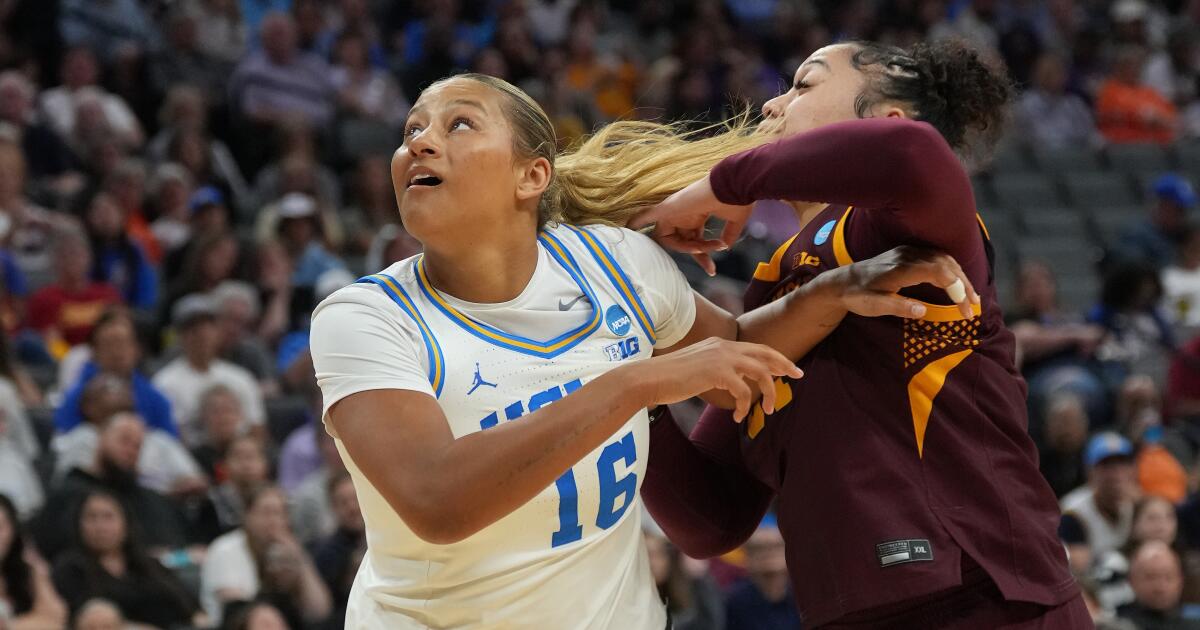
UCLA women embrace new players, tougher standards in bid to repeat as champs
-

 World56 minutes ago
China rebukes UK over nationalisation of British Steel

