Culture
How hockey helped make J.J. McCarthy one of NFL Draft's most intriguing prospects


Dan Capuano’s funeral at St. Rita of Cascia High School on Chicago’s Southwest Side was standing-room only. Hundreds of firefighters from Chicago and around the country attended. Members of the St. Jude Knights youth hockey club were there, too, wearing their jerseys.
Capuano’s sons, Andrew and Nick, played for the Knights, a Northern Illinois Hockey League program that feeds many of Chicago’s powerhouse Catholic schools. Nick was on the 2012-13 team that won the Squirt A state championship.
Dan had devoted much of his time to the Knights before he died in the line of duty while fighting a warehouse fire on the South Side on Dec. 14, 2015.
That title-winning Knights team wanted to get back together to honor Capuano and his family, so in March 2016, a new team was formed. “Team Capuano” would play in the Shamrock Shuffle at the University of Notre Dame over a weekend. Their jerseys would be red and white and include Dan’s badge number: 1676.
There was an early hiccup. “The guy that was running the tournament, he didn’t want to let us in,” said Ralph Lawrence, a former St. Jude coach. “He said that the competition would be way too high.”
Team Capuano just wanted to play together again. It got in. Things got chippy. During one game, a hit from behind sent center Luke Lawrence, Ralph’s son, hard into the boards.
“Could have paralyzed him,” Ralph said. “It was a bad hit.”
That’s when 13-year-old wing J.J. McCarthy rushed in. The future five-star recruit, Michigan quarterback, national champion and soon-to-be NFL draft pick was livid. He didn’t drop his gloves, but a scrum ensued.
“It was a little cheap hit in the corner,” Luke said. “J.J. was the first one to me, come into the corner and exchange a few words with the kid.”
“J.J. went off on the kid and got kicked out of the game,” Ralph said.
The whole scene was unlike McCarthy. He was typically more collected on the ice — his father, Jim, one of the primary organizers of Team Capuano, didn’t like the outburst — but Luke was J.J.’s close friend, and the tournament was an emotional experience. And in hockey, leadership often involves going into the corners.
“Those kids played for something more than hockey that weekend,” Ralph said.
When it was over, Team Capuano — the team some thought didn’t belong in South Bend — won the tournament. A year later, they returned and repeated as champions.
Ice is in McCarthy’s blood. His mother, Megan, was a competitive figure skater. He started playing hockey in kindergarten. Organized football came later.
McCarthy is on record calling hockey his first love. What he experienced on the ice would ultimately help make him a better quarterback — one now on the verge of being drafted in the first round.
He was 10 when the Knights defeated Winnetka in the Tier II Squirt A state championship in March 2013. He and Luke Lawrence assisted on the only goal of the game. It was a special season for a special group, one that eventually split up as players changed teams and levels.
McCarthy (far right) got used to winning early as part of a championship squad with the St. Jude Knights. (Courtesy of Ralph Lawrence)
McCarthy and Lawrence were inseparable for years. Competitive in everything, they played so much and so well together on the same line that they earned a nickname referencing Henrik and Daniel Sedin, the twin stars from the Vancouver Canucks.
The Lawrences and McCarthys stopped at Dunkin’ Donuts before practices or games. The dads would get coffee. Luke would get a bagel or a banana. McCarthy always ordered a strawberry frosted donut. Ralph Lawerence advised against the pre-skate pastry, but it became McCarthy’s go-to. (After McCarthy signed an NIL deal at Michigan, a medium iced coffee and a strawberry frosted donut became his official Dunkin’ Donuts meal in the Detroit area.)
“We laugh till this day,” Ralph said. “And it didn’t hurt him. His speed was fine. His stomach didn’t get upset.”
As a coach, Lawrence emphasized playing positionally strong in the neutral zone and the importance of forechecking and backchecking. But McCarthy played the game with feel.
“He knew where the puck was going to be,” Ralph said. “He knew what the other team was going to do.”
As Lawrence watched McCarthy play football, he saw similar things happen on the field.
“He had an instinct,” Lawrence said. “It was the same way he had it on the ice.”
McCarthy and Lawrence moved on to the Northern Express, another Tier II team that played in the Central States Development Hockey League, which expanded outside of Illinois. It was time for a new challenge.
“I don’t think I’ve ever been as excited as a coach,” Northern Express coach Brent Dolan said.
Dolan’s team excelled defensively. The team’s forecheck was relentless, but it didn’t score a lot.
“When J.J. and Luke came, that instantly changed,” Dolan said. “I would say our goals per game went up by two — and that’s massive in hockey.”
Checking was now permitted, too. There would be contact and a lot of it, a new and different level of physicality. McCarthy could give hits, take hits — and avoid them. The extra contact also meant extracurriculars, and McCarthy had no problem mixing it up.
“If I needed anything or if I was getting banged up in the corner, J.J.’s always there for me, getting in there and making sure that nothing’s gonna escalate,” Luke said. “He would always stick up for me.”

By the time he hung up his skates, McCarthy had developed into a fast, physical forward. (Courtesy of Ted Eagle)
Hockey requires quick decision-making under duress and amid contact. For McCarthy, as a forward, that often meant receiving the puck while exiting his own zone and deciding what to do as an opposing defenseman barreled his way.
Pass the puck quickly to a teammate? Make a quick cut around the defenseman? Chip the puck past the opponent and go after it?
“People who don’t play hockey don’t really understand how fast of a sport it is and how many different components go into it,” Dolan said. “You have to make a decision with the puck, and you got to know where to go with it and execute that all in a split second. That’s not overexaggerating it. That probably helped J.J.’s vision in football.”
A shift on the ice can feel like standing in the pocket: chaos everywhere, violence nearby. You have to see it — or, more importantly, feel it — to overcome it. McCarthy, who was on Northern Express’ power play, had the poise and spatial awareness to operate in the maelstrom.
“Hockey definitely slowed down football,” Luke Lawrence said.
In particular, McCarthy developed a Patrick Kane-like knack for avoiding major hits. Dolan later saw him make hockey-like cuts playing for Michigan.
“He’s trying to avoid getting drilled,” Dolan said. “The quick, subtle movements that you make in hockey probably helped him in the pocket and then also while he’s out on the edge rushing or scrambling.”
In the summer between seventh and eighth grade, McCarthy started training with Greg Holcomb, a private QB coach from Next Level Athletix. Holcomb saw a lot of natural ability. He also saw hockey’s influence.
“One of the reasons why he was so good at throwing off platform and moving around and changing direction is probably because in hockey he would get absolutely killed if he wasn’t able to skate past guys or make them miss,” Holcomb said. “Hockey definitely helped him.”
The first game of McCarthy’s final hockey season came, fittingly enough, at Yost Ice Arena on the University of Michigan campus.
He was playing for the 14-and-under Chicago Young Americans, a Tier I team, during his freshman year at Nazareth Academy high school. McCarthy had always been talented enough to play at the highest level of youth hockey, but football overlapped with hockey too much, especially on the weekends.
CYA coach Ted Eagle didn’t mind the conflict because of who McCarthy was.
McCarthy had good hands and a quick release. He played hard, generated turnovers and scored. “He was a beast in hockey,” Eagle said. “He threw the body around and he wasn’t kind of this less skilled, bigger guy. He was just fast and physical.”
And he was a spark — a tone-setter. In hockey, you need that.
“I relied on him, too,” Eagle said. “It kind of sets the tone for the rest of the team when one or two guys are kind of pushing the pace.”

GO DEEPER
J.J. McCarthy’s draft ceiling: What film shows about Michigan QB’s NFL potential
McCarthy missed the first game of the tournament at Michigan because of a Nazareth football game then showed up in the first period of their second game against the Pittsburgh Penguins Elite junior team. Eagle considers it one of his favorite hockey memories. “He raced up, and he showed up mid-game and scored a couple of goals against one of the top teams in the country,” Eagle said.
There were three hockey practices every week, mostly after football practice, which resulted in some very late nights for a high school freshman. And there were the out-of-town games missed because of football games on Friday nights or Saturday mornings. CYA would play nearly 70 games that season, many that required travel, and McCarthy made more than 40 of them, according to Eagle.
The back-and-forth between football and hockey required discipline, but McCarthy was different. Eagle described him as a “front-of-the-line guy” in practice. He paid attention to the smallest details, asked plenty of questions, talked through different scenarios. Eagle said McCarthy craved the information to get better. Teammates were drawn to him.
“I’m sure a lot of people are aware of this by now,” Eagle said, “but he was just like an ultimate leader.”
McCarthy hung up his skates after his freshman year of high school to focus on football. During his sophomore season the next year — and just days before Illinois’ Class 7A state championship game in 2018 — McCarthy’s throwing hand collided with a defensive lineman’s helmet as he released a pass.
“As a quarterback, it’s the kiss of death,” said Brody Budmayr, Nazareth’s former quarterbacks coach.
Everything stopped. McCarthy was in pain — serious, excruciating pain. After a few nervous moments, the sophomore starter with Division-I interest wanted to test his hand. He dropped back to pass, and then …
“It’s just the pain and anguish of you know it’s broke,” Budmayr said. “It’s him actually dropping to his knees and us thinking, ‘Wow, this is not good.’”
But there was no way he was missing Nazareth’s state championship game against St. Charles North. His parents found an orthopedic surgeon to work on Thanksgiving, and playing became a matter of pain tolerance.
That wasn’t a problem. McCarthy was a hockey player.
In the state championship game, McCarthy was 15-for-21 passing for 201 yards and a touchdown as Nazareth dominated 31-10. A legend was born.
“Ultimately, he was the one that had to go out there,” Budmayr said. “He taped it up and he led us to a state championship.”

McCarthy’s hockey coaches are convinced his experience on the ice informed his play on the gridiron. (Gregory Shamus / Getty Images)
On May 11, 2019, McCarthy announced he was committing to Michigan and coach Jim Harbaugh. During the recruiting process, Nazareth head coach Tim Racki told the story about McCarthy and his broken thumb.
“When I told him he was a hockey player, (Harbaugh’s) eyes lit up,” Racki said. “And then when I told him that story, that sealed the deal in terms of the kid’s toughness and the grit that he had.”
When McCarthy announced his college decision on social media, he thanked three hockey coaches — Lawrence, Dolan and Eagle — for allowing him to play both sports together.
“I would not be where I am without having had hockey in my life,” he wrote.
(Illustration: Sean Reilly / The Athletic; photos: courtesy of Ted Eagle, Scott Taetsch / Getty Images



Welcome to Lit Trivia, the Book Review’s regular quiz about books, authors and literary culture. This week’s challenge is all about an influential group of writers, editors and other creative types known as the Algonquin Round Table. In the five multiple-choice questions below, tap or click on the answer you think is correct. After the last question, you’ll find links to related books and other information about the era if you’d like to do further reading.

A strong sense of place can deeply influence a story, and in some cases, the setting can even feel like a character itself. But as it’s summer here in the Northern Hemisphere and travel adventures abound, this week’s literary geography quiz takes you on a trivia tour of notable libraries around the world. To play, just make your selection in the multiple-choice list and the correct answer will be revealed. At the end of the quiz, you’ll find links to more information if you’d like to do further reading.

Welcome to Literary Quotable Quotes, a quiz that tests your recognition of classic lines. This week’s installment highlights observations from future or alternate worlds depicted in popular science fiction. In the five multiple-choice questions below, tap or click on the answer you think is correct. After the last question, you’ll find links to the books if you’re intrigued and inspired to read more.
-

 Arizona6 minutes ago
Proposed data centers, ICE facility create mixed emotions in rural Arizona town
-

 Arkansas8 minutes ago
Central Arkansas bike trail breaks ground in Cabot – The Arkansas Leader
-

 California13 minutes ago
California bill to block registered sex offenders from local office rejected by Senate committee
-

 Colorado21 minutes ago
Where to watch Miami Marlins vs Colorado Rockies: TV channel, start time, streaming for July 1
-

 Connecticut23 minutes ago
Lamont signs law in Norwich to stop pay to contractors violating wages
-

 Delaware29 minutes ago
Delaware has gotten these 15 verbal commitments from football recruits
-
 Florida35 minutes ago
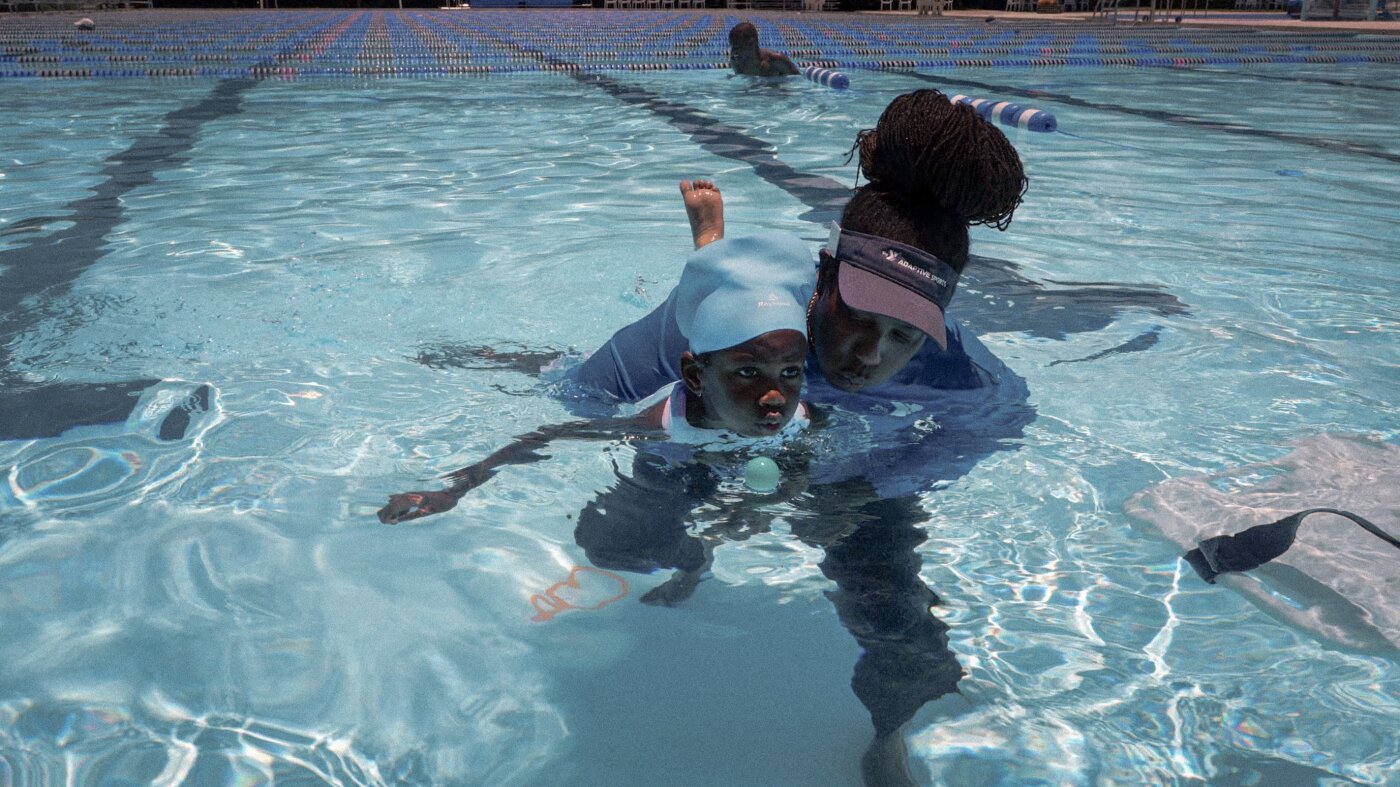
Kids with autism are prone to drowning. Florida is trying to prevent that
-

 Georgia38 minutes ago
Bradenton man wanted for murder is found hiding in Georgia

