Southwest
Arizona rancher defense consultant claims 'cartel influence' in murder probe, rips sheriff's past comments

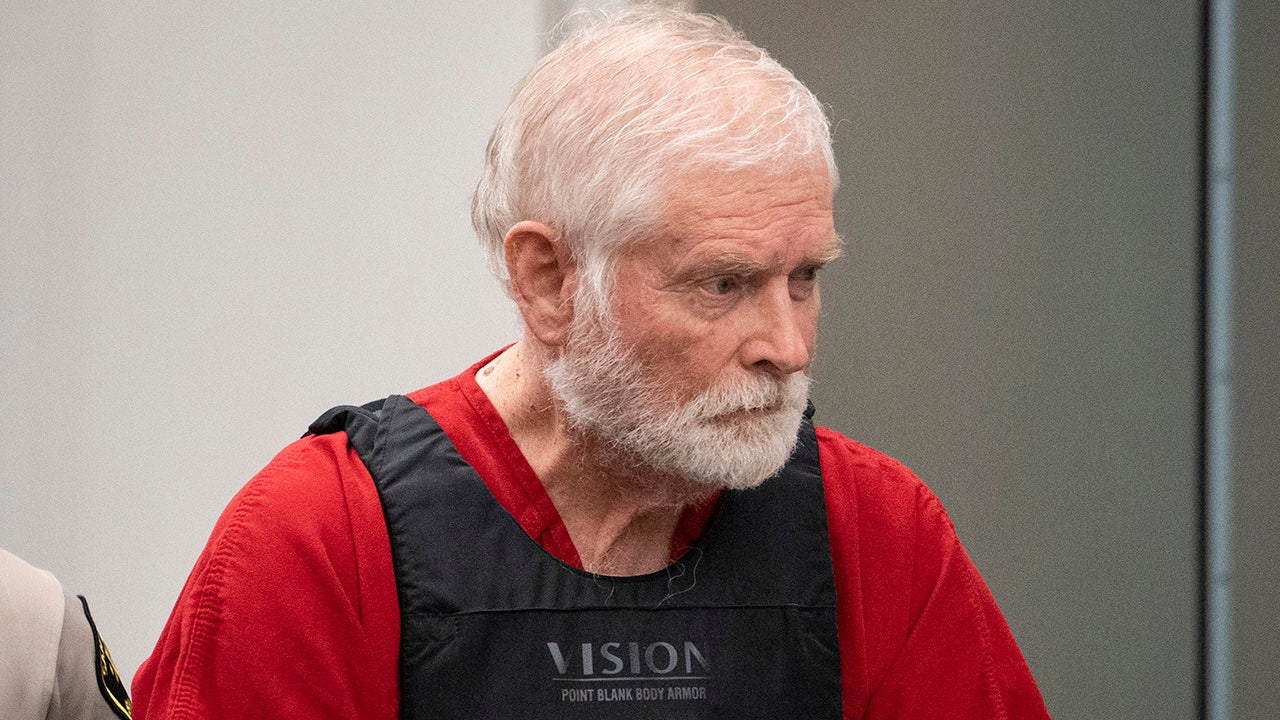
A consultant for Arizona rancher George Alan Kelly’s defense team told Fox News Digital that they believe the murder investigation was mired by “cartel influence,” as Santa Cruz County Sheriff David Hathaway is expected to take the stand this week to testify about traveling across the border to Mexico to interview the prosecution’s main witness.
Hathaway, who the defense told the judge last week they plan to call as a witness, was notably featured in a YouTube video published about a month ago by real estate agent Sydney Wilburn, who goes by Big Super online, in which the sheriff gives a tour of his home and the borderlands neighborhood where his family has resided since the 1800s.
The sheriff referenced the Kelly case on camera, without using the rancher’s name, describing how “there are people that’ll come to the border thinking they’re going to find some action.”
“Like, we had a rancher here that had been writing fan fiction on Amazon, and he was describing himself hunting migrants with his AK-47, and he actually even used his name, and his wife’s name, and his ranch’s name, and he came from somewhere else,” Hathaway said. “Then we caught him out there actually shooting at some people out there, shooting at some migrants, killed one of them, and one of them got away, so now he’s being prosecuted for homicide in the county.”
ARIZONA RANCHER GEORGE ALAN KELLY’S WIFE TESTIFIES IN MURDER TRIAL, DESCRIBES ARMED MEN NEAR BORDERLANDS HOME
George Alan Kelly enters court for his preliminary hearing in Nogales Justice Court in Nogales, Arizona, Feb. 22, 2023. (Mark Henle/The Arizona Republic via AP, Pool, File)
Walking his property, and speaking to the camera, the sheriff continued, “That’s an example of a guy with that mentality. They come out here, and they want to say, ‘I’m out here in the Wild West,’ and they want to have a big tough story to tell. ‘I’m gonna go out there, and hunt me some Mexicans,’ you know? And that appeals to some people, but that’s not a common thing.”
“He’s an extremist,” Wilburn, who has 120,000 YouTube subscribers, chimes in from off-camera.
“Yeah, you would not see people like that,” Hathaway added in the 52-minute video viewed by Fox News Digital. “It’s not like there’s a bunch of groups wandering around with that attitude.”
Fox News Digital reached out to Hathaway for comment, but he did not immediately respond.
Dr. Ron Martinelli, a forensic criminologist who is working pro-bono for the Kelly defense as their lead consultant with the forensic death investigation, told Fox News Digital that “these are completely inappropriate, prejudicial and extremely biased statements about a criminal defendant.”
The consultant said the video was referencing Kelly because, although Hathaway didn’t mention Kelly by name, the sheriff had been “literally driving through Mr. Kelly’s neighborhood.”
“But what is Mr. Kelly’s motive? So we have a rancher on a very nice ranch with an impeccable background of cooperation with law enforcement. He’s never been in trouble in his life. And according to Sheriff Hathaway and the state’s theory of criminality, Mr. Kelly woke up one morning and just decided he was going to kill him, a Mexican?” Martinelli said. “That’s absurd.”
ARIZONA RANCHER GEORGE ALAN KELLY TRIAL WITNESS ADMITS TO DRUG SMUGGLING
Kelly’s wife testified earlier in the trial that she saw a group of armed men dressed in camouflage and carrying packs near their residence on their 170-acre cattle ranch near Keno Springs outside Nogales, Arizona, before calling Border Patrol. Her husband went outside, and according to the defense, fired warning shots into the air.
Law enforcement responded, and hours passed before Kelly called for help again to report finding Gabriel Cuen-Buitimea’s body on his property on Jan. 30, 2023.
Kelly was charged with first-degree premeditated murder and held on $1 million bond for weeks as the case gained national scrutiny. The highest charge was later downgraded to second-degree murder.
Last week, Santa Cruz County Det. Mario Barba testified that he accompanied Hathaway to Mexico to interview Daniel Ramirez, the prosecution’s key witness who claims to have seen first-hand when Buitimea was shot on Kelly’s ranch before fleeing across the border. Weeks after the shooting, Hathaway arranged a meeting with Ramirez at a hotel in Nogales, Mexico, and though the sheriff interviewed him for about 40 minutes, he only recorded about six minutes, Barba said. The detective said Ramirez “couldn’t cross into the United States legally” to be interviewed.
“You could have spoken to Mexican officials to arrange something? Correct?” Kelly’s defense attorney, Brenna Larkin, asked.
Santa Cruz County Chief Deputy Attorney Kim Hunley listens as she plays a 911 call for the jury during George Alan Kelly’s trial at Santa Cruz County Superior Court on Friday, March 22, 2024, in Nogales, Arizona. (Angela Gervasi/Nogales International via AP, Pool)
“Correct,” the detective responded.
“And you didn’t do that. Did you?” Larkin said.
Barba replied, “No.”
Taking the stand earlier in the trial, Ramirez admitted that he previously carried drugs across the border before and had been deported several times.
The defense believes that the people contacted by the Santa Cruz County Sheriff’s Office to conduct their investigation into Kelly’s case are related or connected to the Sinaloa Cartel, Martinelli said.
“The Sinaloa Cartel and Manos Malas, an organized crime ring which is in league with Sinaloa, do not allow independent drug smugglers. So you have to be associated with the cartel,” Martinelli said. “When they meet with him, that was actually facilitated by another convicted, twice convicted felon — one of his last convictions that he did prison time for was bringing guns across the border.”
George Alan Kelly, right, exits the Santa Cruz County Courthouse with defense attorney Kathy Lowthorp, Friday, March 22, 2024, in Nogales, Arizona. (Angela Gervasi/Nogales International via AP, Pool)
ARIZONA RANCHER GEORGE ALAN KELLY JURY TO TAKE FIELD TRIP TO BORDERLAND PROPERTY AT CENTER OF MURDER TRIAL
“The false narrative is out there that Buitimea and all these so-called witnesses are people seeking the American dream. Migrants seeking the American Dream do not smuggle drugs across the border or smuggle weapons across the border. And again, that is an indication of cartel influence, cartel membership,” the consultant said. “That has nothing to do with the narrative that the prosecutor and the sheriff were putting out there, that Mr. Buitimea was an innocent migrant seeking the American Dream.”
While with Barba in Mexico, Hathway introduced himself as the supervising investigator in the case, Martinelli told Fox News Digital, meaning “he is the supervising investigator in an international investigation that he initiated in a foreign country.” The defense believes that was a violation of U.S. State Department protocols, as well as Mexican law created by Mexican President Andrés Manuel López Obrador and the country’s legislature providing guidelines for U.S. authorities while conducting criminal investigations in Mexico.
George Alan Kelly listens to the prosecution during opening arguments at Santa Cruz County Superior Court Friday, March 22, 2024 in Nogales, Arizona. (Angela Gervasi/Nogales International, via AP)
“There is no evidence he ever advised the Mexican government or requested permission to enter the country to conduct an international homicide investigation involving Mexican nationals. And that includes the federal police. The Mexican federal police,” Martinelli said. “What we want to find out today is how that meeting came about. How did they cross into Mexico? You know, did they drive there in a marked car? Were they in uniform with, you know with their, even plainclothes, with their badges and firearms? How did that take place? Because procedurally, that’s a huge thing.”
Also on camera in the same YouTube video, Hathaway said that the U.S. Supreme Court has ruled that Border Patrol can search, detain and interrogate anybody within 100 miles of the U.S. international border.
“And the Supreme Court had called that extended border search authority,” Hathway said. “To me, it’s a real problem to have a policy like that within the U.S. government because this is supposed to be America. This is supposed to be a free country, right? I mean, you shouldn’t have people who can pull you over for no reason like they’re the Gestapo or something like that. For me, that’s a problem.”
Hathaway also went on to criticize the sheriffs of other neighboring counties for decrying the border crisis.
“He minimizes the victimization of migrants coming across the border. The rape of migrants. The murder and the robberies of migrants,” Martinelli said. “But at the same time, he is enjoying a financial grant from DHS to patrol the border with his deputies… He doesn’t have any problem taking money from the United States government for his deputies’ patrol.”
Read the full article from Here


A woman was struck and killed by a driver while crossing the street on Pacific Coast Highway in Long Beach.
On June 3, the female pedestrian was using the crosswalk at Pacific Coast Highway and Pacific Avenue around 4:50 a.m.
She had walked against a red light and was hit by a 19-year-old driver in a Chevy sedan, Long Beach police said.
Despite lifesaving efforts, the woman was pronounced dead at the scene. The driver remained at the scene and is cooperating with the investigation.
“At this time, impaired driving, distracted driving and excessive speed are not believed to be a factor in this collision,” police said.
The woman’s name is being withheld pending identification by the Los Angeles County Medical Examiner.
Anyone who witnessed the crash or has information on the incident is asked to call Detective Joseph Johnson at 562-570-7355.
Anonymous tips can be provided to L.A. Regional Crime Stoppers at 1-800-222-8477 or online at lacrimestoppers.org.

A man wanted for a deadly road rage shooting in Los Angeles was arrested and extradited from Mexico after fleeing the U.S. in 2024.
The suspect was identified as Christian Rojas, 21, of Bellflower, according to the California Highway Patrol.
Authorities had been searching for him since the deadly incident on October 10, 2024.
Rojas and a second suspect, Joshua Rojas Sr., 47, of Downey, were driving on the northbound 5 Freeway in Boyle Heights around 4 p.m. when they became involved in an altercation with another driver that escalated into a shooting.
-

Video obtained exclusively by KTLA shows the terrifying moment a road rage suspect opened fire the driver of another car on the 5 Freeway in Los Angeles, fatally wounding him and seriously injuring a passenger, on Oct. 10, 2024. (Credit: @hugoboss01) -
Video obtained exclusively by KTLA shows the terrifying moment a road rage suspect opened fire the driver of another car on the 5 Freeway in Los Angeles, fatally wounding him and seriously injuring a passenger, on Oct. 10, 2024. (Credit: @hugoboss01) -
Video obtained exclusively by KTLA shows the terrifying moment a road rage suspect opened fire the driver of another car on the 5 Freeway in Los Angeles, fatally wounding him and seriously injuring a passenger, on Oct. 10, 2024. The alleged gunman is circled. (Credit: @hugoboss01) -
Video obtained exclusively by KTLA shows the terrifying moment a road rage suspect opened fire the driver of another car on the 5 Freeway in Los Angeles, fatally wounding him and seriously injuring a passenger, on Oct. 10, 2024. (Credit: @hugoboss01) -
Video obtained exclusively by KTLA shows the terrifying moment a road rage suspect opened fire the driver of another car on the 5 Freeway in Los Angeles, fatally wounding him and seriously injuring a passenger, on Oct. 10, 2024. (Credit: @hugoboss01) -
Christian Rojas, 21, of Bellflower, was arrested and extradited to the U.S. from Mexico on June 2, 2026, in connection with a deadly road rage shooting in Los Angeles. (California Highway Patrol)


Video of the tense confrontation showed the suspects, who were driving a Dodge Durango SUV, opening fire on two men in a Cadillac sedan.
The shooting forced the victim to pull over abruptly. That’s when a suspect ran up to the Cadillac, opened the passenger-side door and fired several shots at close range.
In a panic, the Cadillac driver tried to escape by making a sudden U-turn and driving against oncoming traffic. He eventually crashed head-on into several vehicles.
The suspects ditched their SUV and fled toward a freeway exit on foot. The Cadillac driver was left with serious injuries and his passenger was killed. Their identities were not released.
The incident caused a miles-long backup that left thousands of motorists stranded on the freeway for hours and authorities worked to clear the scene.
Following an extensive investigation, detectives identified the two men as the suspects involved.
Joshua Rojas Sr. was arrested in San Bernardino on October 22, 2024, on a murder charge. He remains in custody awaiting trial.
Meanwhile, Christian Rojas had fled the U.S. and was hiding in Mexico, detectives said. A $4.3 million bail warrant was issued for his arrest.
“Through a coordinated international effort, investigators determined that Rojas was living in Palomo de Arriba, Mexico,” CHP officials said. “The U.S. Marshals Service worked with Mexican state police to locate and arrest him on the outstanding warrant.”
On June 2, 2026, Christian was arrested and extradited to the U.S. to face a murder charge.
“This arrest demonstrates that time and distance will not shield violent offenders from justice,” said CHP Southern Division Chief Chris Margaris. “For nearly two years, our detectives remained relentless in their pursuit of those responsible for this senseless act of violence. Through exceptional collaboration with the United States Marshals Service and our law enforcement partners in Mexico, we located and apprehended this suspect and brought him back to face the charges. We remain committed to protecting the public, supporting victims and their families, and holding violent criminals accountable wherever they may try to hide.”

The northbound 405 Freeway will remain closed for several hours near Los Angeles International Airport after a police pursuit ended with officers opening fire Friday morning. Unconfirmed reports indicated the incident began with a robbery at a 7-Eleven store, which ended with Los Angeles Police Department officers pursuing the suspect in a Kia. The chase […]
-
 Entertainment3 minutes ago
Phones banned on Phoebe Bridgers’ tour, including her Halloween shows at Intuit Dome
-
 Lifestyle9 minutes ago
Farewell, my Smilodon: La Brea Tar Pits to close for two years
-
 Politics13 minutes ago
Commentary: For mayoral candidates and all of L.A., here’s the homelessness conversation we must have
-
 Science18 minutes ago
One label, many risks: how grouping Asian Americans hides deadly cancer patterns
-
 Sports25 minutes ago
Most dangerous World Cup ever? Climate change poses growing risks for players
-

 World32 minutes ago
Groom killed hours before his wedding in Gaza
-

 News53 minutes ago
Park Ranger Dies After Falling Into a Crevasse on Mt. McKinley
-

 New York2 hours ago
How Tony Danza Spends a Day Playing a Villain and Frank Sinatra

