Florida
Florida Clinics and Funds Prepare for ‘Catastrophic’ Abortion Ban


Staff work at a Planned Parenthood clinic in West Palm Beach, Florida, on July 14, 2022.
Photo: CHANDAN KHANNA/AFP via Getty Images
The team at the independent abortion clinic A Woman’s Choice has been overwhelmed with patients at its North Carolina and Florida locations since the overturn of Roe v. Wade. People from all over the South travel hundreds of miles to get care at the clinics, with staff doing the best they can to meet the crushing need. Hoping to alleviate some of the strain, the team decided to open a fifth location in Danville, Virginia, which borders North Carolina, last month. “We opened the clinic in Virginia because of the 12-week ban in North Carolina but then also in anticipation of the six-week ban in Florida,” says Amber Gavin, the organization’s vice-president of advocacy and operations. “We knew that there was really nowhere in the Southeast that folks were going to be able to access care after 12 weeks.”
The move was prescient: As has happened so frequently in the nearly two years since Dobbs, the ax suddenly came down in the Sunshine State last week. The Florida Supreme Court ruled that the state’s constitution does not protect abortion rights, overturning decades of precedent and allowing the six-week ban to go into effect on May 1 (patients can get an abortion up to 15 weeks of pregnancy until that date).
The situation is “catastrophic and devastating for all of the South,” Gavin says. In 2023, there were around 84,000 abortions performed in the Sunshine State, making up about 1 in 12 abortions in the U.S. Florida has seen one of the most dramatic increases in abortion seekers from out of state since Dobbs, which Gavin says the A Woman’s Choice clinic in Jacksonville has experienced firsthand, with nearly half of its patients coming from other states.
Those people will now face even more challenges when accessing abortion care. The six-week ban — which outlaws abortion two weeks after a missed period — is in effect a total ban, Gavin says. Most people don’t know they are pregnant at that stage. Additionally, Florida has a mandatory 24-hour waiting period that requires abortion seekers to visit a clinic in-person twice, a requirement that already represented a significant burden for patients and now will make getting an abortion nearly impossible. Gavin says she’s specifically concerned about minors who require a judicial bypass to get care, as that process can take days. “Overall, I think some folks may self-manage while a lot of folks are gonna fall through the cracks, and they’re gonna be forced to remain pregnant against their will,” she says. “That’s really cruel and immoral.”
A Woman’s Choice is now adding more days to its appointment schedule and actively recruiting more staff for the Virginia location. The organization is also part of Floridians Protecting Freedom, the umbrella group behind Amendment 4, the ballot measure that would codify abortion rights in the state’s constitution. It’s using the bulk of its advocacy resources to campaign for the amendment and educate voters on how the measure offers a path to restore access in the state.
Planned Parenthood of South, East, and North Florida, Inc., has been training more staff at its eight clinics to perform ultrasounds so that they can see as many patients as possible and help date pregnancies more efficiently, according to Michelle Quesada, vice-president of communications and marketing at the organization. (A separate affiliate, Planned Parenthood of Southwest and Central Florida, has its own nine health centers.) Quesada says her affiliate’s clinics are also extending their appointment times in preparation for the six-week ban, coordinating with health centers in other states, and educating every patient coming through their doors about the new law — regardless of whether they’re there for an abortion.
“We still get patients who don’t even know there’s a 15-week ban right now,” Quesada says. “So we are having those conversations with patients — whether they are coming to us for STI testing and treatment, for cancer screenings, or for any type of service that we offer — that come May 1 abortion will be illegal beyond six weeks.”
Groups that offer financial and practical support to abortion seekers, such as the Tampa Bay Abortion Fund, have been preparing for this moment since before the 15-week ban even went into effect, says McKenna Kelley, one of the fund’s volunteer board members. The organization has been working to build partnerships with clinics and funds in other states since the 15-week ban was first introduced in early 2022. When determining who to partner with, the organization took into consideration whether there are direct flights out of Tampa; whether there are local funds that can help clients on the ground, either with funding or practical support; and whether there are clinics available in the area. “Primarily we’ve been sending people to Illinois, D.C., Maryland, Virginia, and New York a little bit,” she says.
But the fund now has to tighten its belt at the precise moment Florida abortion seekers need its help most. Despite receiving an extraordinary amount of donations around the time Roe was overturned, Kelley says the group hasn’t seen this type of substantial giving since — not even in the past week following the court’s ruling. The organization stretched those 2022 donations and the grants they’ve received as much as it could; it even shut down its helpline to conserve cash for about a month last fall, around the time the justices heard oral arguments in the case. They’ve also limited the population of people they can help. “We decided that all our budget is $55,000 a month and we have to stick to that. We only fund people from the Tampa Bay area who are having their abortions here and people who are either leaving Tampa Bay for care or coming directly into Tampa Bay,” Kelley says. “We can’t fund anyone else from Florida. We can’t do solidarity pledging anymore.”
With the six-week ban now looming, the fund is sticking to those decisions to ensure its longevity. “We’re anticipating that once the ban goes into effect, almost all of our callers will be over six weeks and will be needing practical support such as plane tickets and hotel stays,” she says. In 2023, the fund helped 2,660 callers, including 303 patients traveling out of state. Those clients received an average of $1,100 in practical support. Kelley can’t imagine pledging that amount to the thousands of callers that’ll contact the fund starting next month. “That’s millions of dollars. We don’t have millions of dollars,” she says. “I don’t even know where we would get millions of dollars.”
Florida Access Network, another abortion fund, is bracing for similar financial challenges, says executive director Stephanie Loraine Piñeiro. The fund is increasing its budget this month to help accommodate as many patients as it can. But the longer-term effects of the ban are concerning to Piñeiro, who notes that around nine independent providers have shut down in the past five years in a state where about 70 percent of counties already did not have an abortion clinic. Once the new ban kicks in, it’s unclear whether providers will remain open and pivot to other services; if any close, it’s unlikely they’ll come back. (Texas gave an early preview of what happens when providers are forced to shut down: 22 of the state’s 41 clinics shuttered when HB2 went into effect in 2013. After the U.S. Supreme Court struck down the law in 2016, only four of those providers re-opened.)
“A lot of people already have to leave their community to get their care. In many communities, what you may actually find is an anti-abortion pregnancy center, not a clinic,” Piñeiro says. “Regardless of the election, the abortion-access landscape here in Florida has been damaged and changed forever.” Still, she’s hopeful that Amendment 4 will pass in November and restore abortion rights in the state; until then, the fund will continue to raise money and help people get the abortion care they need, regardless of where they need to go to get it. She adds, “We’re in this for the long haul.”
The Cut offers an online tool that allows you to search by Zip Code for professional providers, including clinics, hospitals, and independent OB/GYNs, as well as abortion funds, transportation options, and information for remote resources like receiving the abortion pill by mail. For legal guidance, contact Repro Legal Helpline at 844-868-2812 or The Abortion Defense Network.



Florida
Pilot program aims to build $200K homes in Central Florida to help low-income families buy, not rent

ORLANDO, Fla. – For many Central Florida families, the dream of owning a home feels further out of reach than ever.
With the median home price now topping $400,000, a new pilot program in Orlando is trying to change that by building new homes for about half the cost.
A lot off Quill Avenue in Parramore may not look like much right now, but organizers say it could soon be the site of a new home priced around $200,000 for low-income families.
“We just really wanted an opportunity to bring actual affordable housing to people who have basically been forever renters,” said Satrina Whithead with the GXVE Homes Initiative.
The GXVE Homes Initiative says the goal is to help families earning between $16,000 and $65,000 a year get a chance at homeownership. Whithead said the homes could range from 500 to 1,400 square feet, depending on the lot size and location.
The Orlando Regional Realtor Association reports the median home price in the area is now more than $400,000. Whithead said GXVE hopes to sell homes for about half that.
“There’s nothing wrong with profit, but at the end of the day, I want to help where the need is greatest,” Whithead said.
Organizers say they are already planning to build in Parramore and are working to close on two additional properties. They also say they have properties planned in Sanford and Mims, with a goal of bringing eight homes a year to Central Florida.
“You can pay 80 percent of your salary on rent just to have a place to live. So getting that number back down to around 50 percent is extremely important,” said Mike Harris, vice president of GXVE Homes.
Florida Made Tiny Homes, which is partnering with the organization, said it plans to build concrete homes that exceed safety requirements for the area.
“I don’t think there’s going to be anything available on the market in that price range, much less new construction,” said Dylan Grace, co-founder of Florida Made Tiny Homes.
Program organizers say they expect to start construction in the fall and hope to complete the first home within six to eight months after work begins. For more information please click here.
Copyright 2026 by WKMG ClickOrlando – All rights reserved.

ORANGE COUNTY, Fla. (CBS12) — A former Florida juvenile probation officer is facing more than 100 felony charges after investigators said she leaked confidential court and law enforcement information to people tied to a drug trafficking investigation.
Crystal Gaynell Ann Lawson was booked into the Orange County Jail on Thursday, according to Orange County Corrections records.
Investigators said Lawson improperly accessed the Comprehensive Case Information System, or CCIS, more than 100 times and shared information from active criminal cases with members of a drug trafficking organization.
FOX 35 Orlando reported Lawson was arrested on 113 felony counts of computer crimes for unauthorized access. Investigators said she allegedly accessed the database 106 times between January and May.
Lawson is accused of using the database to search for active criminal cases tied to members of the organization. Authorities said some of the information that was leaked included arrest warrants and documents connected to an active investigation.
Lawson was hired by the Florida Department of Juvenile Justice in February 2022. As part of that job, she was given access to the CCIS database. Authorities said she was fired later that year after an arrest, but her database access was not terminated.
See also: ‘Elf,’ ‘Couples Retreat’ actor jailed with no bond after Florida arrest
Investigators said the leaks resulted in lost evidence, unrecovered assets and at least one person fleeing to avoid arrest before later being taken into custody.
Lawson previously worked for the Florida Department of Juvenile Justice, where she had access to the court information system as part of her job. Authorities said she was later fired, but her database access was not terminated.
Orange County Corrections records list Lawson’s case status as “presentenced” and show multiple entries for “offense against computer users.”
The records list the arresting agency as the Orange County Sheriff’s Office and show bond amounts of $10,000 on several listed case sequences. The jail record also notes an “ICJIS Affidavit.”

ORLANDO, Fla. – Strong thunderstorms continue to push across Central Florida Thursday evening, with a few storms capable of producing gusty winds, frequent lightning, torrential rainfall and isolated damage before activity gradually winds down later tonight.
The strongest storms are expected through about 10 p.m., with most of the activity weakening and moving offshore by around 11 p.m. Storms are being fueled by sea breeze collisions and abundant moisture across the state. In addition to strong wind gusts, torrential downpours could lead to ponding of water on roads and minor flooding in low-lying and poor-drainage areas.
While storms remain the immediate concern this evening, another round of impactful weather is expected Friday.
The News 6 Weather Team has designated Friday as a Weather Aware Day due to the combination of dangerous heat and the threat for strong to severe thunderstorms.
Before storms develop, temperatures will climb into the low to mid-90s Friday afternoon. Combined with high humidity, it will feel more like 102 to 107 degrees across much of Central Florida. Some locations could once again approach or exceed Heat Advisory criteria.
Scattered thunderstorms are expected to develop during the afternoon and evening hours. The atmosphere will be loaded with tropical moisture, allowing storms to produce frequent lightning, damaging wind gusts, and torrential rainfall.
The Storm Prediction Center has placed all of Central Florida under a Level 1 out of 5 risk for severe weather Friday. While widespread severe weather is not expected, a few storms could become strong enough to produce damaging winds.
In addition, the Weather Prediction Center has highlighted portions of Central Florida for a Level 1 out of 4 risk of excessive rainfall. Any storm will be capable of producing very heavy rain in a short amount of time, which could lead to localized flooding.
The unsettled pattern continues into the weekend. Storm coverage is expected to increase Saturday, and some locations could see multiple rounds of heavy rain. While a few stronger storms remain possible, the flooding threat may become a greater concern by Saturday afternoon and evening.
Looking ahead to next week, rain chances are expected to gradually decrease, but the heat is not going anywhere. High temperatures will remain in the low to mid-90s, with heat index values frequently climbing above 100 degrees. Forecast guidance suggests a higher heat risk could develop once again across Central Florida as we head deeper into next week.
At the beaches, a moderate risk of rip currents continues. Make sure you swim near a lifeguard if you’re heading to the beach.
Copyright 2026 by WKMG ClickOrlando – All rights reserved.
-
 Entertainment6 minutes ago
At the Fonda, Jane Remover’s violent yearning heralds a new kind of stardom
-
 Lifestyle8 minutes ago
Beer, with a twist? SoCal dads find solidarity through an unexpected activity
-
 Politics14 minutes ago
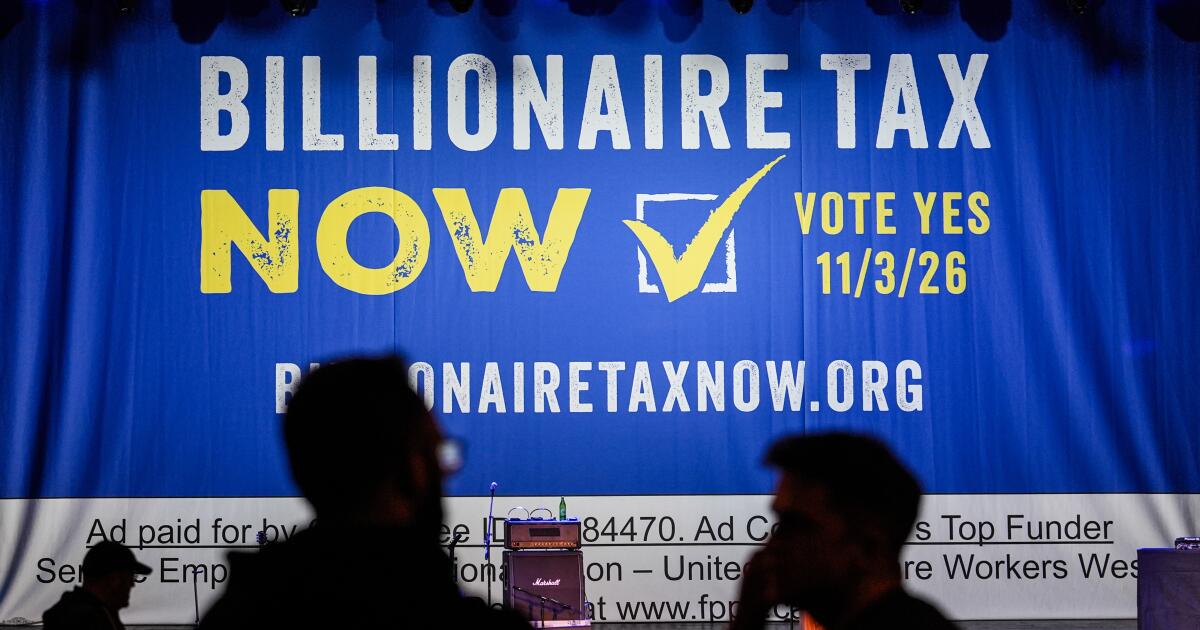
Billionaire tax proposal faces hurdles as it moves closer to November ballot
-
 Science21 minutes ago
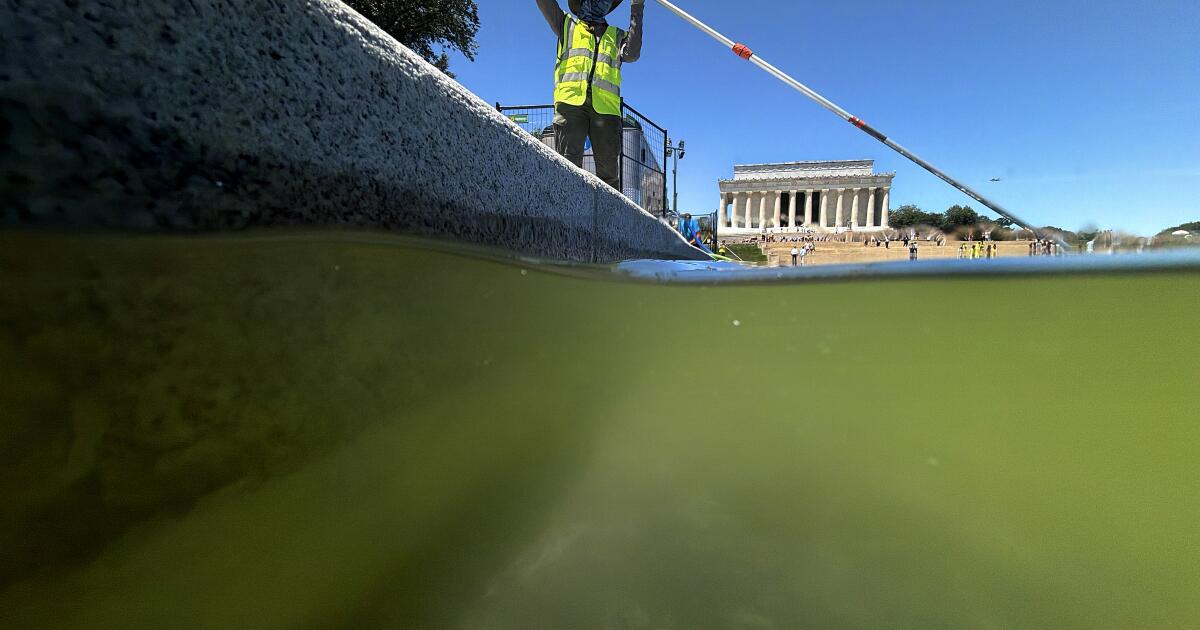
Here’s why the Lincoln Memorial Reflecting Pool went green so fast
-
 Sports24 minutes ago
Shohei Ohtani out of Dodgers’ lineup vs. Orioles for birth of his second child
-

 World36 minutes ago
Lebanese influencer organises World Cup event amid Israel’s attack on Leban
-
 News58 minutes ago
Air Force One, gifted to Trump from Qatar, arrives at Joint Base Andrews
-

 New York2 hours ago
Video: Fans Show Up to the Parade in Their Best Knicks-Themed Attire

